
A groundbreaking study, spearheaded by researchers from Tel Aviv University, has brought forth compelling evidence suggesting that certain feathered dinosaurs, living approximately 160 million years ago, may have already forfeited the capacity for aerial locomotion. This remarkable discovery, which analyzed rare fossils from eastern China, provides an unprecedented window into the complex evolutionary tapestry of flight in both dinosaurs and their modern avian descendants. The research team emphasizes that this finding dramatically reshapes prevailing theories on the origins and development of flight, underscoring its intricate and often non-linear evolutionary path.
The study, led by Dr. Yosef Kiat from the School of Zoology and the Steinhardt Museum of Natural History at Tel Aviv University, in collaboration with international partners from China and the United States, was published in the esteemed journal Communications Biology by Nature Portfolio. Its central tenet revolves around the analysis of fossilized feather molting patterns – a seemingly minor detail that, when meticulously examined, can unravel profound truths about an ancient creature’s lifestyle and capabilities.
Unraveling the Enigma of Ancient Flight
For decades, the scientific community has grappled with the precise mechanisms and timeline of avian flight evolution. The prevailing narrative often suggested a more linear progression, where feathers evolved primarily for flight, and their presence almost invariably indicated aerial capabilities. However, this new research challenges that simplification, proposing that the evolutionary journey of flight was far more convoluted, potentially involving species that developed rudimentary flight abilities only to lose them later in their lineage. This phenomenon, known as secondary flightlessness, is well-documented in modern birds, from the towering ostrich to the aquatic penguin, but its prevalence among feathered dinosaurs has been a subject of ongoing debate.
The significance of this study extends beyond mere paleontological curiosity. It forces a re-evaluation of the entire evolutionary tree connecting dinosaurs to birds, suggesting that the development of flight was not a singular, unidirectional event but rather a dynamic process marked by innovation, adaptation, and even reversal. As Dr. Kiat aptly notes, "Feather molting seems like a small technical detail — but when examined in fossils, it can change everything we thought about the origins of flight, highlighting how complex and diverse wing evolution truly was."
A Glimpse into the Mesozoic: The Anchiornis Revelation
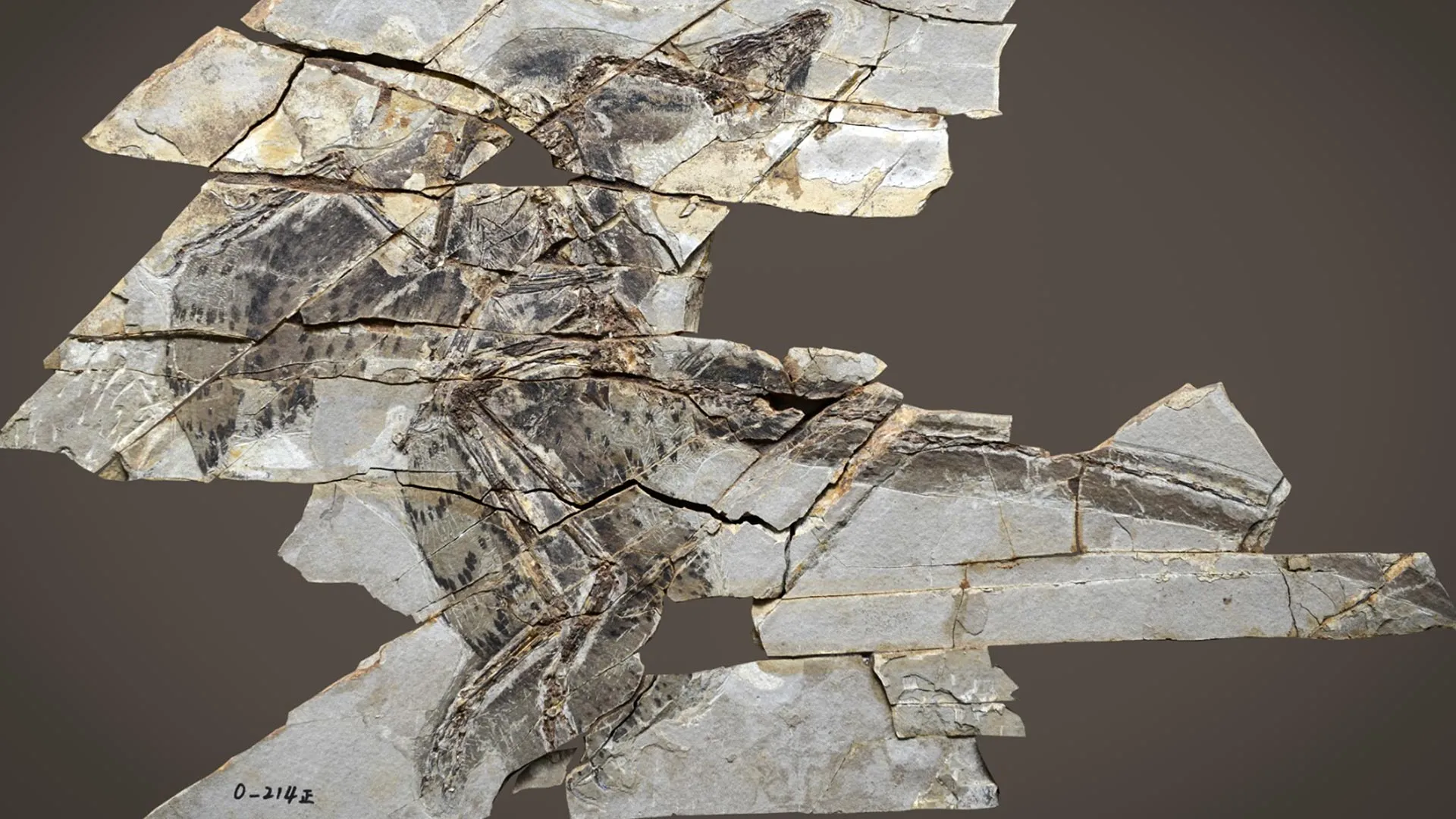
The focus of this pivotal research was Anchiornis, a genus of feathered dinosaur belonging to the Pennaraptora group, discovered in the rich fossil beds of eastern China, particularly in the Liaoning Province, renowned for its exceptionally preserved feathered dinosaur specimens. These particular fossils, dating back approximately 160 million years to the Jurassic period, are extraordinarily rare. What sets them apart is not just the preservation of feathers, but crucially, their original coloration. This remarkable preservation, likely due to rapid burial in fine-grained sediments, often volcanic ash, allowed researchers to meticulously examine the structure, growth, and even pigment patterns of the ancient plumage.
The study centered on nine Anchiornis specimens, each displaying wing feathers that were predominantly white, adorned with a distinct black spot at the tip. This preserved coloration proved to be an invaluable asset, enabling scientists to study the intricate details of feather development and replacement in ways that are typically impossible with most fossilized remains, which usually only preserve impressions or skeletal structures. The ability to discern specific color patterns allowed for an unprecedented level of analysis, providing direct insight into the life processes of these ancient creatures.
The Evolutionary Saga of Feathers: More Than Just Flight
To fully appreciate the study’s implications, it’s essential to understand the broader evolutionary context of feathers. Dinosaurs, as a distinct group, diverged from other reptiles approximately 240 million years ago during the Triassic period. Relatively soon thereafter, on an evolutionary timescale, many species began to develop feathers. Initially, these structures were likely not used for flight. Paleontologists theorize that early feathers served multiple functions, including thermoregulation (insulation against heat loss or gain), display (for attracting mates or intimidating rivals), and potentially even rudimentary camouflage.
Around 175 million years ago, during the Middle Jurassic, a critical group known as Pennaraptora emerged. This lineage is of immense importance as it includes the direct ancestors of modern birds. These animals possessed more complex, pennaceous feathers, which are characterized by a central shaft and interlocking barbs and barbules, making them aerodynamic. While many Pennaraptorans are thought to have possessed some form of flight or gliding capability, the evolutionary pressures and environmental changes over millions of years may have led certain species within this group to lose that ability. This phenomenon mirrors the diverse adaptations seen in modern birds, where flightless species have thrived in specific ecological niches, free from the energetic demands and potential risks associated with flight. The Pennaraptora lineage was also the only dinosaur group to survive the catastrophic mass extinction event at the end of the Mesozoic era, approximately 66 million years ago, eventually giving rise to the vast diversity of birds we see today.
Molting: An Ancient Indicator of Aerial Prowess
The cornerstone of Dr. Kiat’s research lies in the detailed analysis of molting patterns. Feathers are not permanent structures; they are lightweight, protein-based appendages that grow over a period of two to three weeks. Once they reach their full size, they detach from the blood vessels that nourished them during growth, becoming "dead" material. Over time, these feathers wear out due to environmental exposure and use, necessitating their replacement through a process called molting. This seemingly mundane biological process, however, holds critical clues about an animal’s flight capabilities.
In modern birds that rely heavily on flight for survival – such as raptors, songbirds, or migratory species – molting is a highly organized, gradual process. To maintain aerodynamic efficiency and ensure continuous flight capability, feathers are shed and replaced in a symmetrical and sequential manner across both wings. This ensures that the bird’s flight surfaces remain balanced and functional, even during periods of feather replacement. Conversely, in flightless birds, where the energetic and survival demands of flight are absent, molting tends to be a more random and irregular process. Without the need to maintain constant aerodynamic symmetry, feathers can be shed and replaced in a less orderly fashion, sometimes even synchronously across multiple areas, leading to periods where the bird might have significant gaps in its plumage without adverse effects on its terrestrial or aquatic locomotion.
By applying this fundamental ornithological principle to the fossilized remains of Anchiornis, Dr. Kiat and his team were able to draw profound conclusions. The preserved coloration of the Anchiornis wing feathers, specifically the distinct black tips, allowed for an unprecedented level of detail in observing the molting sequence. Researchers identified a continuous line of black spots along the wing edges, indicating fully grown feathers. Crucially, they also observed developing feathers whose black spots were clearly out of alignment with the continuous line, signifying that these feathers were still in various stages of growth and replacement. A meticulous, high-resolution analysis of these patterns revealed an irregular, rather than orderly, molting sequence.
Evidence for Flightlessness in Anchiornis
Based on his extensive knowledge of modern avian biology and feather dynamics, Dr. Kiat concluded that the irregular molting pattern observed in Anchiornis strongly indicated a lack of flight capability. This was a pivotal moment in the research, as it provided direct functional insight into these ancient creatures, going beyond mere skeletal morphology.
"Based on my familiarity with modern birds, I identified a molting pattern indicating that these dinosaurs were probably flightless," Dr. Kiat stated. "This is a rare and especially exciting finding: the preserved coloration of the feathers gave us a unique opportunity to identify a functional trait of these ancient creatures — not only the body structure preserved in fossils of skeletons and bones."
The implications are far-reaching. Anchiornis, with its beautifully preserved plumage, now joins a growing list of feathered dinosaurs that, despite possessing wing-like structures and elaborate feathers, were likely not capable of sustained flight. This roster includes other well-known genera such as Caudipteryx and Sinosauropteryx, which also exhibited feathers but lacked the skeletal adaptations for true powered flight. These discoveries collectively paint a picture of a dinosaurian world where feathers were a widespread adaptation, serving a multitude of purposes, and flight was but one, often fleeting, outcome of their evolution.
Broader Impact and Implications for Avian Evolution
This study significantly enriches our understanding of the origins of flight, suggesting a much more intricate and less straightforward evolutionary trajectory than previously assumed. It challenges the idea of a simple, linear progression from feather development to flight capability, instead advocating for a model of dynamic evolutionary experimentation.
- Complexity of Flight Evolution: The finding reinforces the notion that flight did not evolve once and then persist, but rather emerged, was lost, and perhaps re-emerged in different lineages or under varying environmental pressures. This "mosaic" evolution highlights the opportunistic nature of natural selection.
- Secondary Flightlessness in Dinosaurs: The identification of secondary flightlessness in Anchiornis provides compelling evidence that this evolutionary pathway was not unique to modern birds. Just as ostriches adapted to terrestrial life in open grasslands, and penguins to aquatic hunting in marine environments, some feathered dinosaurs may have found ecological advantages in forsaking flight. This could have been driven by factors such as a lack of aerial predators, an abundance of ground-based food sources, or the high energetic cost of maintaining flight muscles and structures.
- Re-evaluation of Feather Function: The study further underscores that feathers served diverse functions beyond flight. For Anchiornis, even if flightless, its elaborate plumage could have been vital for thermoregulation, display, or even gliding from elevated perches. This reinforces the idea that the evolution of feathers was a multi-stage process, with different functions emerging and adapting over millions of years.
- Interdisciplinary Research: The success of this study exemplifies the power of interdisciplinary research, blending paleontology with modern ornithology and developmental biology. Applying knowledge from living species (molting patterns in modern birds) to interpret ancient fossil evidence proved crucial in unlocking new insights.
Future Directions and Unanswered Questions
While this research provides groundbreaking insights, it also opens avenues for further investigation. Scientists will undoubtedly seek to:
- Identify more flightless feathered dinosaurs: Applying similar molting analysis techniques to other exceptionally preserved feathered dinosaur fossils could reveal additional instances of secondary flightlessness, helping to map its prevalence across the dinosaur family tree.
- Investigate ecological pressures: Further research could focus on understanding the specific environmental and ecological factors that might have driven Anchiornis and other similar species to lose the ability to fly. Was it predator pressure, changes in habitat, or shifts in food availability?
- Refine the timeline of flight origins: By understanding where flight was gained and lost, researchers can build a more precise and nuanced timeline of avian flight evolution, identifying key transitions and divergences.
- Explore other functional traits: The success of using feather coloration to infer molting patterns suggests that other seemingly minor fossilized details might hold keys to understanding functional traits beyond skeletal morphology.
In conclusion, the Anchiornis study from Tel Aviv University marks a significant milestone in our quest to understand the ancient world. By meticulously analyzing the subtle clues embedded in fossilized feathers, researchers have painted a more intricate and fascinating picture of how flight evolved. It was not a simple, linear ascent, but a dynamic, branching, and sometimes even backtracking journey, reminding us that evolution is a perpetual experiment, full of surprises and remarkable adaptations. The "small technical detail" of feather molting has indeed changed everything we thought about the origins of flight, revealing the profound complexity and diversity of wing evolution.
