
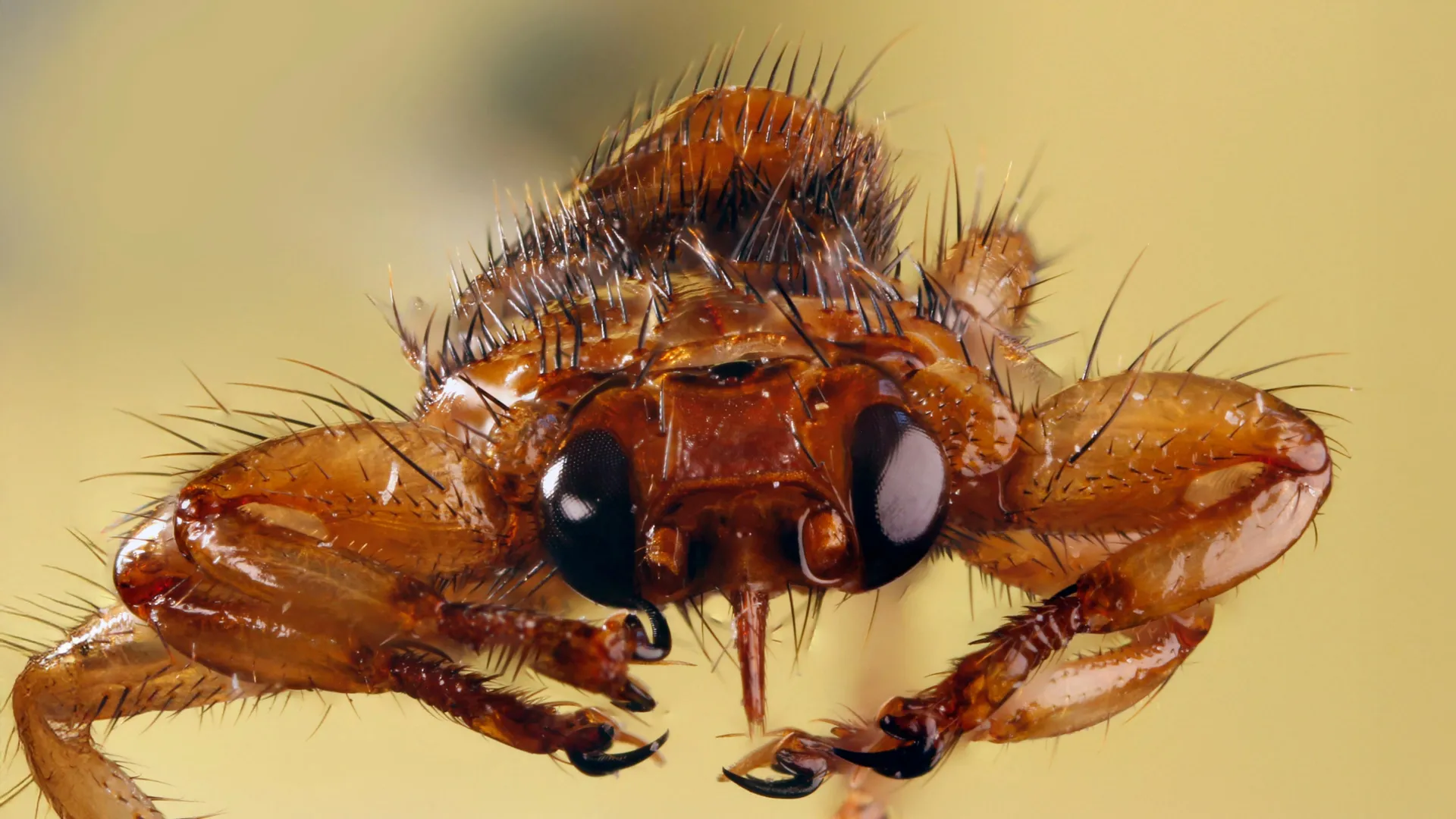
New research from a collaborative team at Aberystwyth University and the University of Florence has unveiled a fascinating physiological adaptation in deer keds, a common blood-feeding fly. The study, published in the Journal of Experimental Biology, demonstrates that these insects significantly reduce their visual sensitivity after successfully locating a host and permanently abandoning flight, a profound shift that redirects crucial energy from sight to other vital parasitic functions. This discovery offers compelling insights into the dynamic interplay between an organism’s behavior, its environment, and the evolutionary pressures shaping its sensory systems.
From Hunter to Permanent Resident: The Life Cycle of a Deer Ked
Deer keds, scientifically known as Lipoptena cervi and related species, are widespread biting flies found across vast swathes of Europe, Asia, Africa, and the Americas. Their life cycle is characterized by a dramatic transformation, moving from an active, winged hunter to a sedentary, wingless ectoparasite. As adults, these insects are initially free-flying and rely heavily on both flight and vision to actively search for a suitable host. Their preferred hosts are typically large mammals, most often deer species such as red deer, roe deer, moose, and elk. However, they are opportunistic feeders and will readily target other mammals, including cattle, sheep, horses, and occasionally humans, causing considerable irritation and discomfort.
The initial, winged phase of the adult deer ked is short-lived but crucial. These flattened, leathery-bodied flies emerge from pupal cases, which typically overwinter in soil or leaf litter, usually in late summer or early autumn. Upon emergence, they are driven by an innate imperative to find a host quickly. Their keen vision plays a pivotal role during this period, allowing them to detect the movement, size, and possibly even the thermal signature of potential hosts from a distance. Their flight is often described as clumsy or erratic, but effective enough to navigate forest environments in pursuit of a blood meal.
The moment a deer ked successfully lands on a host marks a point of no return and triggers an irreversible lifestyle change. Once securely embedded in the host’s fur or hair, the insect promptly sheds its wings. This dramatic physical alteration is not merely cosmetic; it signifies a complete commitment to a parasitic existence. The wings, which were essential for host-seeking, become redundant and even a hindrance in the dense environment of an animal’s coat. For the remainder of its life, which can span several months, the deer ked will live exclusively on its host, navigating through the fur and feeding on blood, reproducing, and laying eggs or larvae (depending on the species). This permanent residency in the host’s pelage necessitates a complete overhaul of its physiological priorities.
The Energetic Cost of Vision and Evolutionary Trade-offs
The scientists, led by Dr. Roger Santer from the Department of Life Sciences at Aberystwyth University, recognized that such a profound behavioral and morphological shift must be accompanied by corresponding changes in the insect’s sensory biology. Vision, while critical for many animals, is known to be an energetically expensive sense. Maintaining photoreceptor cells, continuously regenerating visual pigments, and powering the complex neural pathways required for visual processing demand a significant metabolic investment. Evolution, a master of efficiency, consistently favors organisms that allocate their limited energy resources optimally to maximize survival and reproduction.
Dr. Santer elaborated on this fundamental principle: "Vision plays a vital role in animal behavior, but it is also energetically expensive. Evolution favors sensory systems that are efficiently matched to an animal’s way of life. Some blood-feeding flies rely heavily on vision, while others live permanently on hosts and have little need for it. Deer keds are especially interesting because they switch between these two lifestyles." This unique dual lifestyle makes deer keds an ideal model organism for studying sensory plasticity and the evolutionary economics of sensory investment.
The core hypothesis driving the research was that once a deer ked no longer needs to actively search for a host from the air, the metabolic cost of maintaining a high-fidelity visual system would become an unnecessary burden. Instead, this precious energy could be reallocated to other functions that become paramount for a permanent parasite, such as digestion of blood meals, immune responses to host defenses, and, crucially, reproduction. For an insect living in the dark, dense fur of a host, where navigation is primarily tactile and chemical, the benefits of acute long-range vision diminish considerably.
Investigating Sensory Adaptation: The Role of Opsin Genes
To investigate how deer keds adapt their sensory systems to this dramatic transition, the researchers meticulously studied the insects at different points in their life cycle. They collected two distinct groups: winged adult deer keds that were actively engaged in host-seeking flight, and wingless adult deer keds that had already settled on a host and adopted their parasitic lifestyle. This comparative approach allowed them to pinpoint the specific changes occurring after the critical moment of host attachment and wing shedding.
The team focused their analysis on genes associated with visual sensitivity, specifically opsins. Opsin proteins are light-sensitive receptors found in the photoreceptor cells of the eye. They play a fundamental role in converting light into electrical signals, which are then interpreted by the brain as vision. Different opsins are tuned to different wavelengths of light, allowing animals to perceive various colors and light intensities. By measuring the activity of these opsin genes, the researchers could quantitatively assess the level of investment the flies were making in their visual system at each life stage. Advanced molecular techniques, such as quantitative polymerase chain reaction (qPCR) or RNA sequencing, would have been employed to precisely quantify gene expression levels.
The findings were striking and provided clear empirical support for their hypothesis. "We found that a flying deer ked’s visual system is much like that of a tsetse fly, which famously hunt out mammal hosts in Africa," Dr. Santer explained. Tsetse flies are known for their highly developed visual systems, essential for locating hosts in complex savanna and forest environments. This comparison underscores the initial visual acuity and hunting prowess of free-flying deer keds.
However, the contrast post-parasitism was stark. "After a deer ked loses its wings and becomes an ectoparasite, activity of its opsin genes reduces to around half the previous level," Dr. Santer revealed. This substantial downregulation of opsin gene expression indicates a significant reduction in the insect’s investment in visual function. It suggests that while the flies do not become entirely blind – they likely retain some rudimentary light perception – their visual sensitivity is considerably diminished. The energy conserved from this reduction is then presumably redirected to functions more critical for survival and reproduction within the host’s fur.
Implications for Parasite Biology and Control Strategies
The study, published in a leading journal for experimental biology, provides fresh and important insights into how parasites adjust their sensory systems in response to profound lifestyle changes. This phenomenon, known as phenotypic plasticity, is a key mechanism by which organisms adapt to varying environmental conditions. For deer keds, the "environment" dramatically shifts from an open, light-filled aerial realm to a dark, confined, and tactile world within an animal’s fur.
The implications of this research extend beyond a mere curiosity of insect biology. A better understanding of how deer keds and other biting flies utilize and adapt their senses could pave the way for improved monitoring and control strategies. Current control methods for ectoparasites on livestock and wildlife often rely on broad-spectrum insecticides, which can have non-target effects and lead to resistance. Targeting specific sensory pathways or understanding the physiological trade-offs parasites make could open doors for more precise and environmentally benign interventions.
For instance, if the initial host-seeking phase is heavily reliant on vision, understanding the specific visual cues deer keds respond to could lead to the development of more effective traps or repellents that interfere with their ability to locate hosts. Furthermore, comprehending the metabolic shifts that occur post-attachment could inform strategies that exploit the parasite’s altered physiology, potentially disrupting their ability to digest blood, reproduce, or withstand host immune responses.
From an ecological and evolutionary perspective, this study serves as a compelling example of resource allocation under strong selective pressures. It highlights how evolution fine- tunes organisms to their specific ecological niches, even within the lifespan of a single individual. The deer ked’s journey from a visually acute aerial hunter to a visually diminished, tactile parasite offers a microcosm of broader evolutionary principles concerning adaptation and efficiency.
While deer keds are primarily a nuisance, causing irritation, hair loss, and potentially secondary skin infections in their hosts, their impact on animal welfare can be significant, particularly in heavily infested populations of deer or livestock. Some studies have also investigated their potential role in transmitting pathogens, such as Bartonella species or Anaplasma phagocytophilum, although their efficacy as primary vectors is still under debate. Nevertheless, understanding their fundamental biology, including their sensory adaptations, contributes to the broader field of veterinary parasitology and public health entomology.
The collaborative efforts between Aberystwyth University and the University of Florence underscore the international nature of cutting-edge scientific research. This study not only deepens our knowledge of a specific, intriguing insect but also enriches our understanding of fundamental biological processes related to sensory evolution, energy trade-offs, and parasite adaptation. Future research could explore the precise mechanisms of opsin gene regulation, investigate other sensory modalities (e.g., olfaction, mechanoreception) in both life stages, and examine the metabolic consequences of this visual reduction in greater detail, potentially uncovering even more avenues for controlling these persistent parasites.
