
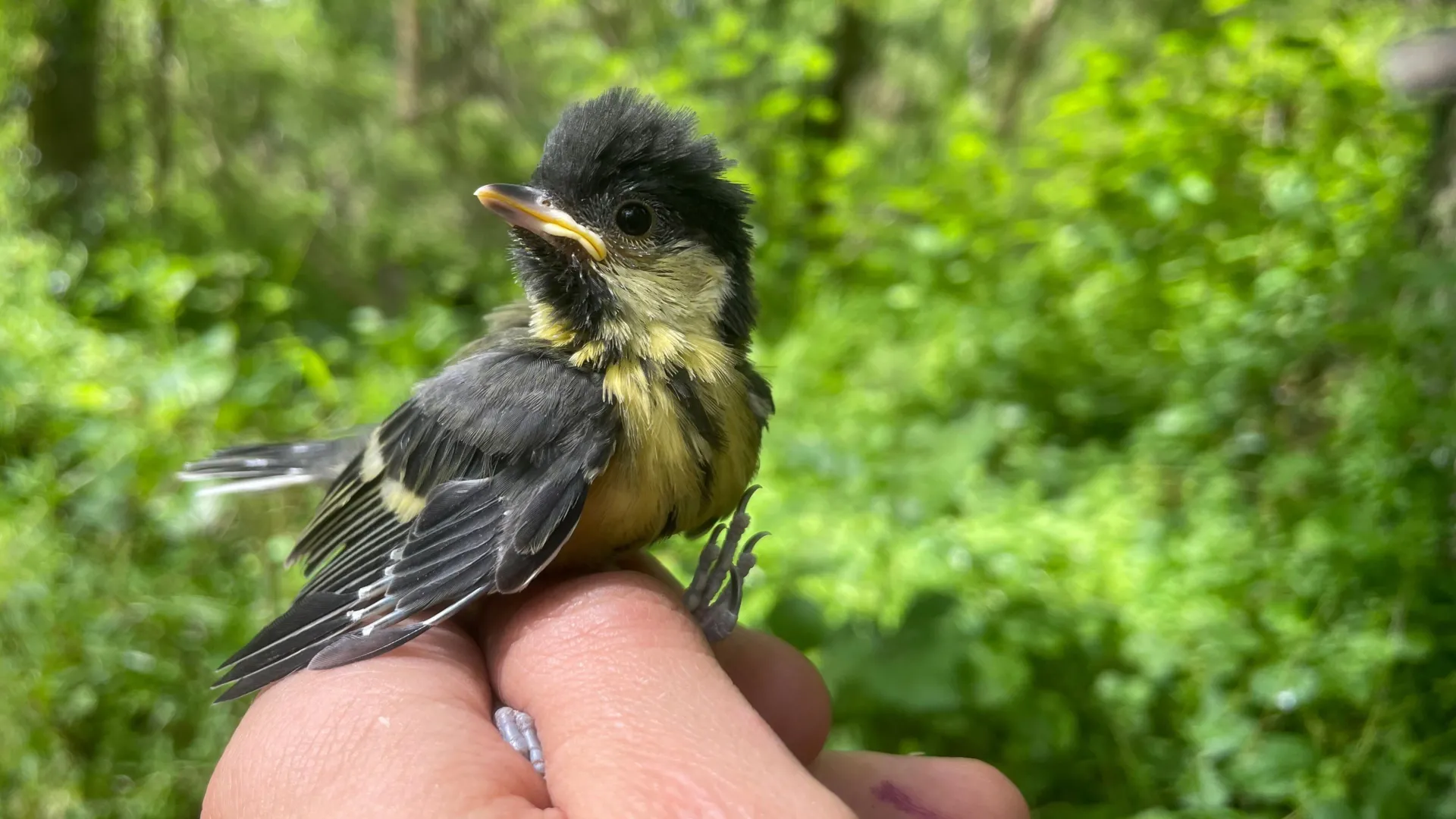
A groundbreaking study from the University of Oxford, published on March 11, has unveiled critical insights into how sudden cold spells and heavy rainfall are significantly impeding the growth and reducing the survival prospects of young great tits across the United Kingdom. The research further indicates that great tit populations that commence their breeding activities earlier in the season may possess a crucial advantage, potentially sidestepping many of the detrimental consequences associated with these increasingly frequent extreme weather phenomena. This comprehensive investigation leverages an unparalleled six-decade-long dataset, offering a profound temporal perspective on the intricate interplay between avian ecology and a changing climate.
Unprecedented Data Illuminates Avian Vulnerabilities
The foundation of these revelatory findings is an exceptionally extensive and meticulous dataset, painstakingly compiled over 60 years. Scientists meticulously analysed records pertaining to more than 80,000 individual wild great tits (Parus major) inhabiting Wytham Woods, a renowned research woodland situated near Oxford. This vast biological archive was then intricately cross-referenced with highly detailed daily weather records spanning the same period. By precisely identifying the coldest, wettest, and even the hottest days within each annual breeding season, researchers were able to quantify the frequency and intensity of these extreme weather events during the most critical stages of chick development. Crucially, they then measured the direct influence of these conditions on the body mass of nestlings when they reached the fledging stage – the point at which young birds leave their nest – a metric widely recognised as a vital predictor of their subsequent survival into adulthood. The sheer scale and longevity of this dataset lend considerable weight and credibility to the study’s conclusions, providing a rare glimpse into long-term ecological dynamics.
The Perilous Impact of Cold and Rain on Nestling Survival
The study’s revelations paint a stark picture of the threats posed by adverse weather. It definitively established that severe cold conditions during the first week following hatching are particularly devastating for newly emerged chicks. During this delicate period, nestlings are at their most vulnerable, lacking the developed plumage and physiological mechanisms necessary for effective thermoregulation. As the chicks mature, the primary meteorological threat shifts, with heavy rainfall emerging as the more significant hazard. Both prolonged periods of intense cold and episodes of torrential rain were found to reduce the body mass of fledglings by as much as 3%. While seemingly a modest reduction, such a deficit in early-life mass can have profound and lasting implications for a bird’s ability to forage efficiently, evade predators, and withstand further environmental stresses, ultimately diminishing their chances of surviving to reproductive age.
Furthermore, the research uncovered a particularly concerning synergistic effect: when intense heat coincides with heavy rainfall, the cumulative impact on nestling development becomes dramatically more severe. In such scenarios, the fledging mass of young great tits can plummet by an alarming 27%. This aggravated impact was observed to be particularly pronounced for broods that hatched later in the breeding season, suggesting that the combination of these extremes creates a "perfect storm" for avian development at specific times.
Devi Satarkar, the lead researcher from the Department of Biology at the University of Oxford, articulated the urgency of these findings: "In the Wytham population, great tits have demonstrated a remarkable adaptive capacity, adjusting to warmer springs by initiating their breeding cycles earlier. This shift is primarily driven by their need to synchronise with the peak abundance of their main prey, caterpillars. This overall earlier laying strategy is undeniably beneficial, serving as a crucial buffer against many of the impacts of extreme weather. However, it also inadvertently exposes them to the heightened risk of unseasonal cold spells early in the breeding season. Even seemingly small early-life deficits, such as a slight reduction in body mass, can cascade into large implications for long-term survival. It will only become increasingly challenging for these birds, and indeed many other species, to keep pace with these environmental shifts as extreme weather events continue to increase in frequency and intensity due to ongoing climate change."
The Biological Mechanisms Behind Weather-Induced Vulnerability
The study delved into the fundamental biological reasons why cold and rain exert such a powerful negative influence on developing great tit chicks. Newly hatched chicks are inherently ill-equipped to regulate their own body temperature, a critical physiological function known as thermoregulation, largely due to their underdeveloped plumage. Consequently, during periods of cold, a disproportionate amount of their metabolic energy must be diverted simply to maintain core body temperature, energy that would otherwise be channelled into growth and development. This energetic trade-off directly translates into reduced growth rates and lower body mass at fledging.
Beyond the direct physiological stress on the chicks, adverse weather conditions also severely disrupt the crucial process of provisioning – the delivery of food by parent birds to their offspring. Extreme cold and heavy rainfall significantly limit how often adult great tits can safely leave the nest to forage for food. Parental foraging efficiency is reduced, meaning fewer trips and smaller food deliveries. Simultaneously, heavy rainfall can physically dislodge caterpillars, the primary food source for growing great tit chicks, from their host plants. This dual impact – reduced parental foraging effort and diminished prey availability – creates a critical energy deficit for the rapidly developing nestlings, whose energy demands are exceptionally high during their growth phase. The quality and quantity of food received directly correlates with their eventual fledging success and subsequent survival.
The Unforeseen Benefits of Mild Heat
In a somewhat unexpected turn, the research uncovered a nuanced aspect of temperature extremes: warmer periods, surprisingly, were sometimes linked to heavier fledging weights during the nestling stage. While high temperatures are typically associated with heat stress and its detrimental effects on avian physiology, the specific context of Oxfordshire appears to be key. The "warmer extremes" recorded in this region during the study period were characterised as relatively mild compared to the scorching heatwaves experienced in more southerly European regions, such as the Mediterranean.
Devi Satarkar elaborated on this intriguing finding: "Extreme weather events are impacting wild bird populations in incredibly complex and often counterintuitive ways. The level of warmth we observed during these heat extremes in Oxfordshire might actually boost chick growth. This is likely because moderate warmth can significantly increase insect activity and visibility, making caterpillars easier for parent birds to find and capture. Concurrently, it allows parent birds to forage more extensively and efficiently, while also reducing the nestlings’ own thermoregulatory costs – they expend less energy keeping warm. Furthermore, the high water content inherent in caterpillars may also contribute to chick hydration, acting as a safeguard against dehydration during warmer spells. This contrasts sharply with much hotter regions, like the Mediterranean, where similar ‘extreme’ events can regularly exceed 35°C, creating severe heat stress and directly harming nestlings." This finding underscores the importance of regional context when assessing climate change impacts.
Early Breeding: A Double-Edged Sword in a Changing Climate
The study strongly reinforces the idea that the timing of breeding within a season plays a pivotal role in determining the success of great tit broods. Broods that hatch earlier in spring generally tend to benefit from occasional warm spells, which often coincide with the peak abundance of caterpillars and when ambient temperatures remain within safe, non-stressful limits. These early breeders are better positioned to exploit the ephemeral boom in food resources.
Conversely, great tits that breed later in the season face considerably tougher environmental conditions. Their fledglings were found to be approximately one-third lighter on average, even though the warmest days they experienced reached similar temperatures of about 16-17°C. This suggests that the later season itself brings other compounding factors, such as potentially lower food availability even at moderate temperatures, or increased prevalence of other stressors.
Over the longer term, the cumulative effect of extreme cold and heavy rainfall was shown to slightly reduce the overall odds that young birds would survive to adulthood. In stark contrast, warm extremes, within the moderate range observed in Oxfordshire, demonstrated small but consistently positive effects on survival probabilities. The overarching conclusion is that initiating breeding earlier within a given season appears to act as a significant protective mechanism, shielding a substantial proportion of the great tit population from the most severe consequences of increasingly unpredictable weather patterns. This adaptive strategy, however, comes with its own risks, as highlighted by the vulnerability to early-season cold spells.
Climate Change and the Urgent Need for Conservation Strategies
As the global climate continues to warm and the intensity and frequency of extreme weather events escalate, the scientists involved in this Oxford study emphasize the critical importance of monitoring small-scale environmental conditions. Factors such as localized microclimates – the climate of a very small or restricted area, especially when this differs from the climate of the surrounding area – and subtle differences in habitat structure become increasingly vital considerations. This granular level of research is indispensable for guiding effective conservation strategies. Practical interventions, such as the strategic placement of nestboxes in sheltered locations or targeted woodland management practices that promote diverse and resilient undergrowth, could play a crucial role in better protecting vulnerable chicks during their most sensitive developmental stages.
The great tit population in Wytham Woods, with its unparalleled longitudinal dataset, remains a living laboratory for understanding ecological responses to climate change. Researchers are committed to continuing their long-term monitoring efforts, aiming to elucidate how these complex weather effects may evolve and shift in the coming decades. A key question that remains unanswered, and one that future research will undoubtedly address, is whether heatwaves that are currently considered moderate and even beneficial within the Oxfordshire context could eventually transcend this threshold, becoming genuinely harmful as global temperatures continue their upward trajectory. The study serves as a potent reminder that climate change impacts are multifaceted, often subtle, and require continuous, detailed ecological scrutiny to inform timely and effective conservation action.
Broader Ecological Implications and the Phenomenon of Phenological Mismatch
The findings from Wytham Woods extend beyond the great tit population, offering crucial insights into the broader ecological consequences of climate change, particularly concerning phenological mismatch. This phenomenon occurs when the timing of biological events in an ecosystem—such as flowering, breeding, or migration—gets out of sync with each other due to environmental changes. In the case of great tits, their early breeding strategy is a direct adaptation to the earlier emergence of caterpillars, their primary food source, which is itself driven by warmer spring temperatures. While this adaptation initially provides a buffer, as Satarkar notes, it simultaneously exposes them to the risks of early-season cold snaps, creating a precarious balance.
Many insectivorous bird species, particularly those in temperate zones, rely heavily on the synchronized emergence of insect prey to feed their fast-growing young. If climate change causes prey species to emerge even earlier or more erratically, and birds cannot adjust their breeding phenology with equal speed or precision, then widespread reproductive failures could become more common. This study, therefore, serves as a significant case study for understanding these complex ecological domino effects.
The great tit, a common and widespread species across Europe, acts as an excellent indicator species for environmental health. Its relatively short lifespan, high reproductive rate, and dietary specialisation make it particularly responsive to changes in its environment. Fluctuations in great tit populations can signal broader ecological distress within woodland ecosystems. The meticulous 60-year monitoring program at Wytham Woods, initiated in 1947, is one of the world’s longest-running studies of a wild bird population, making it uniquely positioned to detect subtle, long-term trends that would be invisible in shorter-term projects. This historical context allows researchers to disentangle natural population fluctuations from those driven by anthropogenic climate change.
The Role of Woodland Management and Future Outlook
The study’s emphasis on microclimates and habitat differences highlights the potential for localised conservation efforts. Woodland management practices, such as maintaining a diverse tree species composition, creating varied canopy structures, and ensuring ample understory vegetation, can all contribute to buffering birds against extreme weather. A dense, multi-layered canopy, for instance, can provide insulation against cold snaps and heavy rain, while also creating cooler, shadier spots during heatwaves. Such nuanced approaches to habitat management become increasingly vital as global temperatures rise and weather patterns become more unpredictable.
Conservation organisations, drawing upon research like this, are increasingly advocating for climate-resilient landscapes. This involves not only direct interventions but also broader policy changes to mitigate greenhouse gas emissions, which remain the fundamental driver of climate change. The long-term implications of this Oxford study underscore that while species may exhibit adaptive capacities, there are limits to how quickly and effectively they can respond to the accelerating pace of environmental change.
As the research team at Oxford continues its invaluable work, future investigations will likely explore the genetic basis of early breeding, the long-term fitness consequences of smaller fledging masses, and the potential for demographic shifts within the great tit population in response to continued climate warming. The question of when a "moderate" heatwave becomes genuinely detrimental is a critical one, pointing to a future where even currently beneficial conditions could turn into new threats. The ongoing saga of the great tits in Wytham Woods offers a compelling, real-time narrative of life adapting, or struggling to adapt, in an era defined by rapid environmental transformation.
