
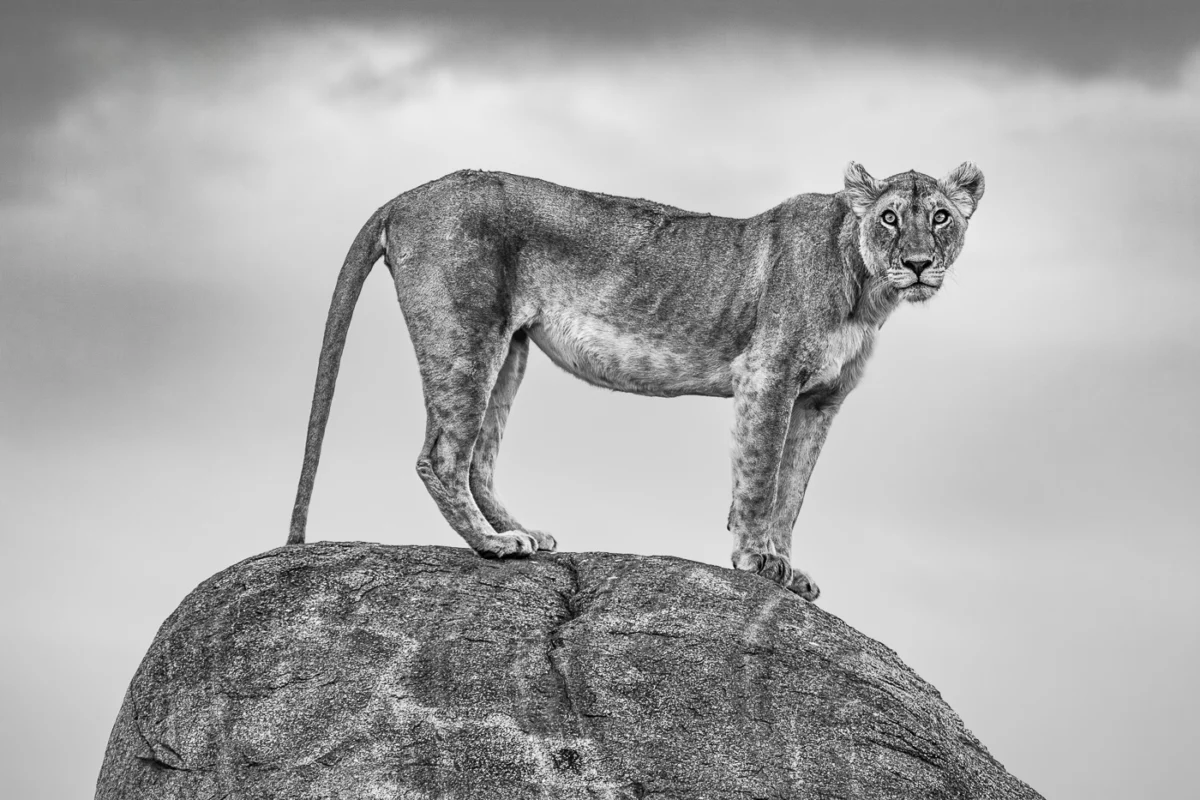
The journey of an artist often twists through unexpected paths, yet the underlying current of passion invariably guides them to their true calling. For Gabi Guiard, a deep-seated fascination with the natural world, cultivated since childhood, eventually converged with her professional trajectory, giving rise to a distinctive voice in wildlife photography. What began as an innocent curiosity about animal behavior and presence evolved into a profound connection to the planet, shaping her worldview and artistic expression. This intrinsic pull towards wildlife, however, initially took a detour through the vibrant, fast-paced world of graphic design and art direction within advertising.

From Commercial Art to Wild Canvas: A Professional Metamorphosis
Guiard’s early career was marked by a commitment to commercial artistry, a field where visual communication is paramount, albeit often driven by market demands. She honed her skills in graphic design and art direction, crafting compelling visuals for advertising campaigns. This period, while seemingly divergent from her core passion, proved to be an invaluable crucible. It was here that her interest in photography, initially a peripheral skill, began to crystallize. Drawing inspiration from the masters of black-and-white fashion and advertising photography—artists renowned for their ability to sculpt light and shadow, and convey narrative without the distraction of color—Guiard progressively integrated photography into her repertoire. This exposure to high-level visual artistry, combined with her innate understanding of composition and storytelling, laid the groundwork for her eventual pivot. The advertising world, with its rigorous demands for impactful imagery and clear messaging, inadvertently equipped her with a robust technical foundation and a refined aesthetic sensibility. The transition was not an abandonment of her past but a synthesis, allowing her to apply her extensive knowledge of visual art to her enduring love for wildlife, thus bridging two worlds that had always captivated her.

Black and White: A Language of Authenticity
For Guiard, black-and-white photography transcends mere stylistic preference; it is a deliberate artistic choice, a fundamental language through which she communicates. It serves as her primary medium for storytelling, a conduit for expressing the profound emotions she experiences when immersed in nature. Her choice is not driven by a desire to appear "artistic" or "classic" but by a deep conviction that monochrome allows her to distil reality to its absolute essence. In a world saturated with color, removing it becomes an act of intentional simplification, eliminating visual noise and directing the viewer’s gaze to the core subject.

Historically, black-and-white photography has been revered for its ability to convey timelessness and depth, qualities that resonate deeply with Guiard’s approach. Pioneering photographers like Ansel Adams demonstrated how the interplay of light and shadow in monochrome could transform a landscape into a monumental work of art, emphasizing texture, form, and emotional resonance. Similarly, documentary photographers often favored black and white to underscore the raw authenticity of their subjects, stripping away superficiality to reveal truth. Guiard embraces this legacy, believing that by foregoing color, she strips away distractions, allowing textures, shapes, and contrasts to speak with unparalleled clarity. For her, black-and-white photography is an exercise in honesty, presenting an unvarnished reality where only the most essential elements remain, inviting a deeper, more meditative engagement from the observer.
The Essential Over the Superfluous: A Philosophy of Focus

Guiard’s artistic philosophy is firmly rooted in the principle that true impact lies not in revealing everything, but in highlighting what truly matters. She articulates this as "simplifying reality and taking it to the most essential so that the wild character of nature… takes center stage." This intentional reduction of visual information ensures that a mere glance, a subtle silhouette, or an evocative gesture is sufficient to narrate a complete story. In her black-and-white compositions, the aim is to forge an unmediated connection between the viewer and the raw power of the moment, as if the silence of the instant itself could be perceived.
This approach aligns with minimalist aesthetics, which prioritize clarity and directness. By focusing on the intrinsic qualities of her subjects—the rugged texture of an animal’s fur, the intensity in its eyes, the graceful curve of its form—Guiard creates images that resonate on a primal level. The absence of color forces the viewer to engage more actively with the image, interpreting shades of grey, the nuances of light, and the starkness of contrast. This deliberate omission of the "superfluous" fosters a more profound emotional and intellectual connection, allowing the untamed spirit of nature to dominate the narrative without competition from chromatic distractions. The objective is not just to capture an image, but to distill an experience, presenting the viewer with a purified vision of the wild.

Less Is More: Crafting Compelling Narratives through Simplicity
The dictum "less is more" is a cornerstone of Guiard’s photographic practice. By meticulously simplifying an image, she eliminates any element that might dilute the central message, guiding the viewer’s eye directly to the heart of the scene. Often, a single, potent detail—a subtle gesture, a dramatic shadow, an intense gaze, or a clean line—is enough to imbue a photograph with profound power. This minimalist approach is not about emptiness but about intentional space, allowing the primary subject to breathe and command attention.

In her work, Guiard believes that by reducing the number of visual elements, the remaining components become exponentially more compelling. This deliberate reduction ensures that the viewer is not overwhelmed by unnecessary details, but rather drawn instinctively to the essence of the composition. This apparent visual sparseness, this "noise-free" space, is designed to invite active participation from the observer. It creates an intimate void that each individual can fill with their own memories, emotions, and interpretations, transforming the viewing experience into a personal dialogue with the image. This technique is particularly effective in wildlife photography, where an animal’s solitary presence against a vast, undifferentiated background can powerfully convey themes of isolation, resilience, or the sheer majesty of nature.
Composition as the Backbone: Guiding the Eye, Building the Narrative

Composition, for Guiard, is the structural foundation upon which every photograph is built. It extends beyond the mere arrangement of elements within the frame; it is the strategic art of directing the viewer’s gaze, meticulously leading them through the story she intends to tell. In the monochromatic realm, where the guiding cues of color are absent, composition assumes an even more critical role, becoming the primary architect of visual hierarchy and emotional impact.
Lines, shapes, and the judicious use of space acquire an elevated significance in black and white. The precise placement of an animal within its natural habitat, the delicate equilibrium between light and shadow, or the powerful silence of negative space all collaborate to create a harmonious yet dynamic tension. Guiard often seeks elegant simplicity in her compositions, deliberately avoiding extraneous elements that could dilute the central message. A diagonal line subtly leading the eye to a lion’s intense gaze, the graceful curve of a tree branch framing a solitary silhouette, or the expansive negative space enveloping a subject can, by themselves, imbue an image with immense strength and intimacy. For instance, the renowned wildlife photographer Nick Brandt, a master of black-and-white, often uses vast landscapes and careful animal placement to emphasize vulnerability and grandeur, a philosophy echoed in Guiard’s work. Good composition, in her view, is not a rigid adherence to established rules but an intuitive understanding of when and how to artfully transgress them to evoke a more potent emotion. It serves as the invisible framework that allows the image to breathe, simultaneously anchoring and empowering its narrative.

Contrast as a Tool: Sculpting with Light and Shadow
In Guiard’s artistic lexicon, light and shadow are not merely photographic phenomena but essential brushes with which she paints each image. This dramatic interplay of contrast is far more than an aesthetic preference; it is a fundamental communicative tool, her chosen method for giving voice to the messages she wishes to convey. The profound depths of black serve to conceal what she deems unnecessary to show, while the luminous highlights meticulously reveal what she intends for the viewer to feel. In the absence of color, shadows possess as much narrative weight and evocative power as the subjects themselves, becoming integral characters in the visual drama.

This mastery of chiaroscuro—the use of strong contrasts between light and dark, usually bold contrasts affecting a whole composition—allows Guiard to imbue her images with a sense of drama, depth, and three-dimensionality that might be less pronounced in color photography. Shadows can suggest mystery, hide vulnerabilities, or create a sense of scale and vastness. Highlights, conversely, can draw immediate attention to crucial details—the texture of an animal’s fur, the gleam in its eye, or the sharp edge of its form against a darker background. The dramatic shifts between light and dark can evoke a range of emotions, from stark realism to poetic abstraction, making each photograph a carefully constructed interplay of visual forces. This technique not only enhances the visual appeal but also deepens the emotional resonance, compelling the viewer to confront the image with heightened awareness.
Emotion Behind Every Image: Beyond Mere Representation

While Guiard’s photographs are undeniably born from the meticulous observation of wildlife, her ultimate quest transcends mere documentation: she seeks to evoke profound emotion. Her ambition is for each photograph to do more than simply depict an animal or a landscape; she desires it to transmit a deeper sentiment—be it power, solitude, majesty, or even a poignant fragility. This focus on emotional conveyance transforms her work from factual reporting into a potent form of storytelling, making her a visual poet of the wild.
For Guiard, lions are not merely biological specimens; they embody the regal spirit of their territory, living in harmony with its ancient rhythms. She envisions each image as preserving a fragment of their unique narrative: a calm gaze that belies immense strength, a serene gesture that communicates inherent dignity. This interpretive lens allows her to imbue her subjects with a deeper, almost mythic quality. Black-and-white photography, in her estimation, significantly intensifies this narrative power. By stripping away the sensory information of color, it compels the viewer to concentrate on the emotional core, the subtle expressions, and the underlying drama, fostering a more intimate and empathetic connection with the majestic creatures she portrays. This approach resonates with the goals of conservation photography, where emotional impact is crucial for inspiring action and fostering a deeper appreciation for endangered species and their habitats.

The Timelessness of Black and White: An Eternal Dialogue
A compelling reason for Guiard’s unwavering commitment to black-and-white photography lies in its inherent magical quality: it renders images timeless. A photograph captured today, devoid of color, possesses the remarkable ability to appear as if it could have been taken forty years ago, and equally, it will retain its impactful resonance four decades into the future. This enduring quality allows her to portray nature as an eternal entity, a powerful mirror reflecting both humanity’s present and its ancestral past.

This timelessness is not merely an aesthetic advantage but a profound philosophical statement. In a rapidly changing world, black-and-white photography offers a stable, unchanging perspective on the natural world, suggesting its enduring cycles and ancient wisdom. Furthermore, by deliberately removing color, Guiard intentionally creates a vast, interpretive space for each viewer to project their own memories, experiences, and emotions onto the image. This absence of specific chromatic cues encourages a deeply personal and introspective engagement. Black-and-white thus transforms every photograph into an intimate, silent dialogue between the visual narrative and its observer, transcending momentary trends and fostering a connection that is both universal and deeply personal. This universal appeal contributes to its enduring relevance in art galleries and publications focused on profound natural imagery.
Technique, Yes… but Above All, Sensitivity: The Heart of the Craft

Undeniably, a rigorous technical foundation underpins every one of Guiard’s images. Her work reflects a meticulous search for optimal light, a precise understanding of composition, and an unwavering attention to detail. Yet, she firmly asserts that what truly imbues her work with meaning and resonance is the profound sensitivity with which she observes the world. For Guiard, the art lies in the delicate balance of deciding what to reveal and what to deliberately shroud in shadow, knowing precisely when to depress the shutter and, crucially, when to simply remain silent, observing without intrusion.
This emphasis on sensitivity highlights the ethical dimension of wildlife photography. It speaks to the patience required to wait for the perfect, undisturbed moment, the respect for the animal’s space and natural behavior, and the intuitive understanding of when intervention would be detrimental. Technique, without this guiding sensitivity, she argues, merely produces technically proficient but soulless images. It is only when technical mastery seamlessly merges with an artist’s deep empathy and intuitive perception that a truly powerful photograph is born—one capable of moving the viewer, inspiring awe, and provoking profound reflection. This fusion of skill and spirit is what elevates her work beyond mere depiction, transforming it into a compelling artistic statement that speaks volumes about the wild heart of our planet.

In Summary: The Guiding Principles of a Visionary
Gabi Guiard’s compelling body of work is anchored in a set of four fundamental principles that define her unique artistic vision:

- Emotional Resonance: Her photographs aim to transcend mere visual representation, seeking to evoke deep feelings of power, solitude, majesty, or fragility within the viewer.
- Minimalist Clarity: Embracing the "less is more" philosophy, she distills scenes to their essential elements, removing distractions to highlight the core narrative.
- Compositional Integrity: With color absent, composition becomes the vital backbone, guiding the eye and structuring the story through lines, shapes, and space.
- Dramatic Contrast: Utilizing light and shadow as primary tools, she sculpts her images, revealing what matters and concealing the superfluous to amplify emotional impact.
For Gabi Guiard, black-and-white is not a mere filter or a stylistic affectation; it is a vital, conscious choice. It represents her profound way of asking the bustling world for silence, creating a space where she can truly listen to the unspoken narratives of nature. In that profound silence, stripped of the visual cacophony of color, she discovers and captures the images that most authentically represent her artistic soul and her unwavering connection to the wild. Her work stands as a testament to the enduring power of monochrome to reveal profound truths and evoke timeless emotions in the realm of wildlife photography.
