
The conventional wisdom in nature photography has long dictated that the "golden hours"—the periods just after sunrise and before sunset—offer the most favorable lighting conditions for capturing compelling images. However, a growing number of photographers are challenging this orthodoxy, finding profound artistic opportunities in the very conditions once deemed unsuitable: the harsh, high-noon sun. This evolving perspective is exemplified by a nature photographer currently on a multi-day trip in Austria’s easternmost national park, the Neusiedler See-Seewinkel National Park, who found himself compelled to pause his explorations to articulate this shift in photographic philosophy for Nature Photographers Network. While the urge to be out photographing was strong, the midday sun, traditionally a time for rest or administrative tasks, presented a paradoxical opportunity to reflect on the creative potential of intense light.

The Evolution of Photographic Perception: From Avoidance to Embrace
For decades, the dominant narrative in nature photography education and practice centered on avoiding direct, overhead sunlight. The reasoning was sound: intense midday sun often leads to stark contrasts, blown-out highlights, deep, featureless shadows, and a general flattening of colors. Photographers were taught to seek the soft, diffused light of overcast days or the warm, directional glow of the golden hours, which naturally sculpt landscapes and subjects with gentle transitions and rich hues. The period between 10 AM and 3 PM, particularly on clear days, was frequently referred to as "the photographer’s nap time," a lull in activity where the light was considered too challenging to yield aesthetically pleasing results.

This photographer’s personal journey mirrors a broader trend within the community. In earlier years, capturing images under clear, high skies would have been unthinkable, with a preference for softer light. Initially, like many aspiring nature photographers, he lamented cloudy skies, wishing for what he then perceived as "beautiful" weather. It took time to internalize the difficulty harsh light presented. Yet, a significant shift has occurred. Today, there’s a burgeoning attraction to the mesmerizing scenery and promising opportunities that hard sunlight can offer, a re-evaluation driven by both artistic curiosity and technological advancements. This paradigm shift acknowledges that there is no inherently "bad" or "good" weather, but rather diverse conditions that demand different creative approaches.
Unlocking the Creative Potential of Intense Light

Photographing in hard light is undeniably more challenging than working under soft, diffused conditions. The dynamic range—the difference between the brightest and darkest parts of a scene—can be extreme, often exceeding the capabilities of a camera sensor to capture detail in both ends of the spectrum simultaneously. However, it is precisely this challenge that can lead to extraordinary and unique outcomes. The effort, while demanding, can yield images that are far more exciting and mesmerizing, often standing out due to their rarity and surprising visual impact.
A key technique for navigating harsh light involves altering one’s relationship with the sun. Instead of having the sun directly behind the photographer (front-lighting), many now advocate for shooting toward the light (backlighting) or across it. This approach, while potentially increasing lens flare and contrast, can create dramatic rim lighting, strong shadows that add depth and texture, and a sense of atmosphere.

While traditional wide-angle landscape photography might still struggle under midday sun, particularly when shooting directly into it, the true magic of hard light often reveals itself in more intimate scenes. The harder the light, the smaller the photographic frame often becomes. This frequently means reaching for macro or telephoto lenses to isolate subjects, capture intricate details, and manage the intense light within a contained composition. For instance, capturing a dazzling sun star peeking through a forest canopy or a backlit bird silhouetted against a bright background are classic exceptions that thrive in these conditions.
Mastering Dynamic Range and Compositional Elements

High dynamic range (HDR) photography, which involves combining multiple exposures to capture detail across a broad range of tones, has often been touted as a solution for challenging light. However, many photographers now find that embracing the inherent high contrast of harsh light, rather than attempting to flatten it, can be more rewarding. Modern camera sensors, with their improved dynamic range capabilities, allow for capturing a wider spectrum of light, and post-processing software offers powerful tools for selectively recovering detail from shadows and highlights. Yet, the philosophy extends beyond technical recovery; it’s about accepting that some areas might be pure white or pure black, using these extremes to guide the viewer’s eye and create impactful visual separation.
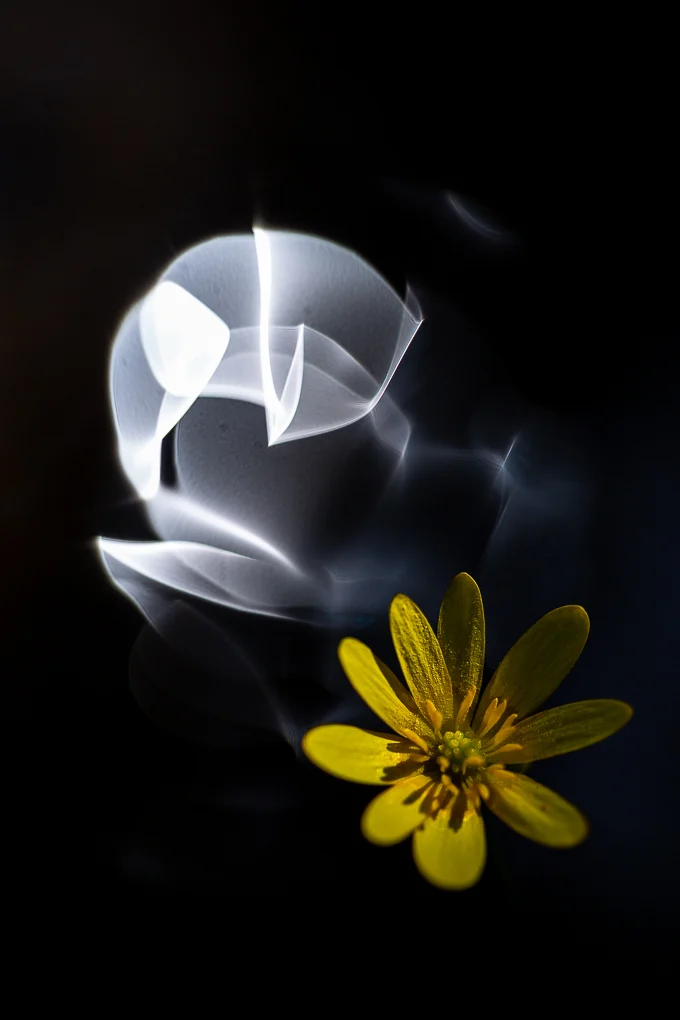
The stark difference in brightness between illuminated and shadowed areas can powerfully separate elements within a frame. This effect can manifest within a single object, such as the varied light and shadow play on a textured rock face, or between different elements, like a sun-drenched flower against a deep, shady background. This interplay of light and dark creates a visual drama that is often absent in softer light, allowing for bold graphic compositions and abstract interpretations of natural forms.

The Allure of Reflections and Translucent Beauty
One of the most compelling aspects of photographing in hard light is its interaction with various natural surfaces, particularly water. Water, being ubiquitous in most natural environments, becomes a canvas for light play. While an entire lake surface at noon might appear uninteresting, focusing on smaller, agitated sections reveals a world of mesmerizing textures and patterns. The interplay of wind, waves, and the photographer’s angle relative to the sun creates dynamic, ever-changing reflections and glittering highlights. These micro-scenes on water surfaces can transform an otherwise "unphotographable" hour into a treasure trove of abstract art.

Beyond water, a myriad of other surfaces become luminous under intense sunlight. Leaves glisten, insect wings shimmer, and wet rocks or wood gleam with reflected light. Some surfaces even refract light into a spectrum of colors and patterns, such as water droplets, delicate dragonfly wings, intricate spiderwebs adorned with dew, or pollen floating on still water. These phenomena are often best revealed when the sun is high and direct, creating a dazzling display of light and color that is unique to these conditions.
Furthermore, nature abounds with transparent or translucent structures that come alive when pierced by direct light. Insect wings, fine feathers, and certain leaves, which might appear opaque or dull in soft light, reveal their intricate veins, subtle colors, and delicate patterns when backlit by the sun. Even larger elements, like the wings of a bird in flight or broad leaves in the foreground, can showcase hidden depths and vibrant hues under hard light. Water itself, when flooded with sunlight, reveals its underlying colors and depths, transforming rivers and lakes into vibrant tapestries of blue, green, and brown.

Practical Advantages and Creative Liberation
Beyond the artistic and aesthetic benefits, shooting in bright, hard light offers several practical advantages for the nature photographer. The sheer intensity of the light allows for very fast shutter speeds. This is invaluable for freezing motion, whether it’s a bird in flight, a rustling leaf, or the rapid movement of water. Fast shutter speeds also significantly reduce the need for a tripod, liberating the photographer to move more freely, experiment with different angles, and react spontaneously to changing light and subjects. The ability to handhold a camera, without concerns about motion blur or excessive depth of field issues from slow shutter speeds, makes for a more fluid and enjoyable photographic experience. As one photographer noted, capturing a fast-moving sparrow under hard sun, revealing the colors in its wing feathers, was achieved handheld with settings like ISO 250, f/14, and an astonishing 1/5000 sec.

This streamlined approach means less gear to carry and manage. Often, just a camera body and a telephoto or macro lens suffice. For photographers who prefer to minimize equipment handling and maximize time spent observing and creating, this simplicity is a significant draw. It fosters a more immersive connection with nature, allowing the creative process to flow unimpeded by technical complexities.
Embracing Contrast and Unconventional Aesthetics

In a departure from the conventional pursuit of balanced exposures, some photographers actively seek out high-key or, more often, low-key compositions under the bright sun. High-key images, predominantly white with minimal dark tones, can convey a sense of lightness and purity. More frequently, however, the fascination lies in emphasizing the "bits of magic" within the brighter parts of the scene, allowing the majority of the image to fall into deep shadow or pure black. This deliberate underexposure, or exposing for the highlights, serves to protect the allure of the intense light and directs the viewer’s attention precisely to the main, illuminated elements. This technique further enhances the dramatic contrast and artistic impact, while also keeping shutter speeds exceptionally fast and manageable.
This approach challenges the long-held aspiration that every part of an image must retain texture and detail, advocating instead for the expressive power of pure blacks and whites. It frees the photographer from the often-counterproductive reliance on complex techniques like HDR, which can sometimes flatten the very contrast that makes harsh light so compelling. The less time spent tethered to gear or post-processing software, the more time can be dedicated to the core activities of authentic nature photography: exploration, experimentation, and creative development in the field. The images accompanying this article, all handheld and devoid of special equipment or artificial light, serve as a testament to the power of this minimalist yet impactful methodology. Moreover, this approach offers a practical solution for photographers constrained by time or location, allowing them to capture stunning images even when the coveted "golden hours" are inaccessible due to work schedules, travel logistics, or lengthy hikes.

Beyond Rules: The Pursuit of Creative Expression
Ultimately, the embrace of harsh midday light signifies a broader philosophical shift in nature photography: a movement away from rigid adherence to traditional "rules" and toward a more fluid, creative process. While specific recommendations for subjects, compositions, and light use can be made—such as focusing on smaller scenes, high contrasts, reflections, and glittering light—the true essence lies in individual interpretation. Creativity, by its very nature, thrives on breaking conventions and exploring new visual languages. By daring to step outside the comfort zone of "ideal" light, nature photographers are discovering new dimensions of beauty and expression, proving that every moment under the sun, no matter how bright, holds untold photographic possibilities. The invitation, then, is to experiment, to observe, and to enjoy the boundless creative journey that nature photography offers, unburdened by prescriptive traditions.
