
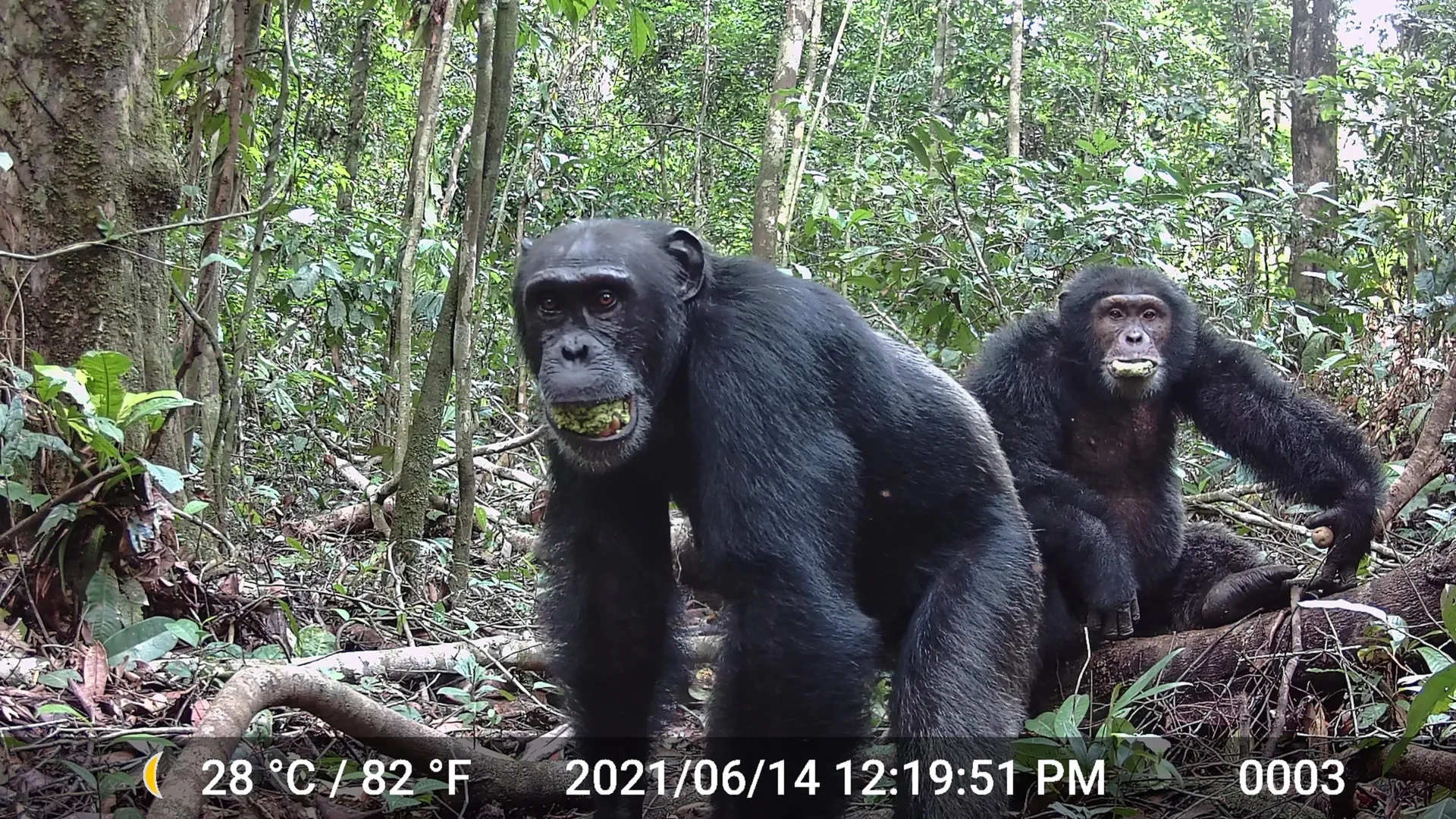
For the first time, direct measurements of ethanol content in fruits consumed by chimpanzees in their native African habitats have revealed that these intelligent primates could easily ingest the equivalent of more than two standard alcoholic drinks daily. This landmark finding, published in the journal Science Advances by researchers from the University of California, Berkeley, provides compelling new insights into the long-standing "drunken monkey" hypothesis and suggests that alcohol has been a routine, albeit low-level, component of primate diets, including those of our early human ancestors, for millions of years.
Quantifying Primate Alcohol Consumption
The research, led by UC Berkeley graduate student Aleksey Maro of the Department of Integrative Biology, involved meticulous analysis of 21 different fruit species regularly eaten by chimpanzees at two prominent long-term research sites: Ngogo in Uganda’s Kibale National Park and Taï National Park in Côte d’Ivoire. The findings indicated that, on average, these wild fruits contained approximately 0.26% alcohol by weight. Given that primatologists estimate chimpanzees typically consume around 10 pounds (4.5 kilograms) of fruit per day, accounting for roughly three-quarters of their total food intake, the daily ethanol exposure is substantial.
"Across all sites, male and female chimpanzees are consuming about 14 grams of pure ethanol per day in their diet, which is the equivalent to one standard American drink," stated Maro. To put this into perspective, a "standard drink" in the U.S. is defined as containing 14 grams of ethanol, irrespective of body size. However, when adjusted for body mass – chimpanzees typically weigh about 40 kilograms compared to an average human’s 70 kilograms – the daily intake for a chimpanzee escalates to nearly two human-equivalent alcoholic drinks. In many parts of Europe, where a standard drink is defined as 10 grams of ethanol, the chimpanzee intake would represent an even higher multiple.
This steady, low-level exposure to ethanol from fermenting fruits strongly implies that alcohol was a consistent, natural component of the diet of the last common ancestor shared by humans and chimpanzees. This nutrient is notably absent from the diets of most captive chimpanzees and, ironically, from many modern human diets that have diverged significantly from ancestral foraging patterns.
Methodology: Unveiling Hidden Ethanol in the Wild
The groundbreaking nature of this study lies in its direct measurement of alcohol in wild fruits, a feat previously considered challenging. Maro’s fieldwork, conducted during two field seasons at Ngogo (starting in 2019) and one season at Taï, involved a rigorous and innovative approach.
At Ngogo, home to Africa’s largest known chimpanzee community, chimps frequently climb trees to harvest fruits, often favoring several types of figs. Maro and his team collected intact, freshly fallen fruits directly beneath trees where chimpanzees had recently been feeding. Similarly, at Taï, where chimpanzees more often consume fallen fruit, the team gathered undamaged and unbitten fruits from the ground. Each collected fruit sample was meticulously sealed in an airtight container, with detailed records taken of its species, size, color, and softness. To prevent further ripening and fermentation, fruits were frozen back at base camp.
To determine alcohol content, Maro employed three distinct and validated analytical techniques adapted for field conditions: a semiconductor-based sensor, akin to a breathalyzer; a portable gas chromatograph; and a chemical assay that uses color-changing reagents. Before deployment, Maro validated each method in Professor Robert Dudley’s Berkeley laboratory using a standardized protocol, ensuring accuracy and reproducibility even in remote field settings where he often processed around 20 samples in a 12-hour day.
Two of the methods involved thawing the fruit, removing the peel and seeds, blending the pulp, and then allowing it to sit in a sealed container for a few hours. This process allowed any alcohol present to diffuse into the air above the pulp – the "headspace" – which was then sampled and analyzed for ethanol content. The third method involved extracting liquid directly from the pulp for analysis with the color-changing chemicals. The consistency of readings across all three methods underscored the reliability of the data. When averaged and weighted by how frequently chimps consume each fruit species, the alcohol content was found to be 0.32% by weight at Ngogo and 0.31% at Taï, confirming the ubiquitous presence of ethanol.
The "Drunken Monkey" Hypothesis: From Skepticism to Scientific Acceptance
This new research provides powerful empirical support for the "drunken monkey" hypothesis, a concept first proposed more than two decades ago by Robert Dudley, UC Berkeley professor of integrative biology and senior author of the paper. Dudley theorized that humans’ inherent interest in alcohol has deep evolutionary roots, stemming from ancient primate foraging habits. He later expanded on this idea in his influential 2014 book, The Drunken Monkey: Why We Drink and Abuse Alcohol.
Initially, Dudley’s hypothesis faced considerable skepticism within the scientific community, particularly from primatologists who argued that wild primates rarely, if ever, consumed fermented fruits or nectar containing alcohol. The prevailing view was that alcohol was an incidental, negligible component of their diets. Fermentation, the process by which yeast digests sugars to produce alcohol, is the same mechanism that transforms grape juice into wine.
However, over the past decade, a growing body of observational and experimental evidence has steadily accumulated, bolstering Dudley’s perspective. Field researchers have increasingly reported instances of monkeys and apes consuming fermented fruit. A notable observation included chimpanzees in Guinea-Bissau demonstrating an interest in naturally fermented palm sap, which can have significant alcohol content.
Beyond wild observations, studies with captive animals have further illustrated a preference for alcohol among some primates. In 2016, researchers from Dartmouth University found that captive aye-ayes and slow lorises, when presented with nectar containing varying alcohol levels, consistently consumed the most alcoholic nectar first and then returned repeatedly to the empty containers, suggesting a deliberate preference. More recently, in 2022, Dudley collaborated with researchers in Panama to show that wild spider monkeys not only consume fermented fruit containing alcohol but also excrete detectable alcohol metabolites in their urine, providing direct physiological evidence of intake and processing. Maro’s current plans to collect chimpanzee urine for metabolite analysis further builds on this evidence chain.
Beyond Primates: Widespread Animal Alcohol Intake
The consumption of ethanol is not limited to primates, as Dudley’s broader research indicates. In a study published earlier this year, Dudley and his Berkeley colleagues analyzed feathers from 17 bird species and discovered alcohol metabolites in 10 of them. This suggests that the diets of these birds – which can include nectar, grains, insects, and even small vertebrates – contained significant amounts of ethanol. This wider biological context underscores that exposure to and consumption of alcohol is a far more common evolutionary phenomenon across the animal kingdom than previously understood, especially among fruit- and nectar-eating species.
Evolutionary Implications and the Human Connection
The consistent, albeit low-level, intake of alcohol by wild chimpanzees carries profound evolutionary implications for understanding human behavior. "Chimpanzees consume a similar amount of alcohol to what we might if we ate fermented food daily," Maro observed. "Human attraction to alcohol probably arose from this dietary heritage of our common ancestor with chimpanzees."
The presence of ethanol in ripe fruits serves several potential ecological and evolutionary advantages. One hypothesis suggests that the distinctive smell of ethanol helps animals locate foods that are riper and thus richer in sugars, providing a greater energy yield. In an environment where energy sources are crucial for survival, detecting highly caloric, fermented fruits would have been a significant adaptive advantage. Furthermore, the consumption of alcohol may induce a mild rewarding sensation, making the act of eating these energy-rich fruits more pleasurable, akin to the human experience of sipping wine with a meal.
While chimpanzees do not appear visibly intoxicated from their daily fruit intake – an animal would need to consume such an excessive quantity of fruit that its stomach would become painfully distended before reaching visible drunkenness – this constant, low-level exposure implies a long evolutionary history of alcohol metabolism. The ability to efficiently process ethanol would have been selected for, enabling our ancestors to safely derive caloric benefits from fermented fruits without severe impairment.
Chimpanzee Behavioral Patterns and Fruit Preferences
Maro’s research also sheds light on specific chimpanzee dietary preferences. The study found that the fruits most frequently consumed by chimps at each site were also the most alcohol-rich. For example, at Ngogo, a fig species known as Ficus musuco was a staple, and its fruits contained higher ethanol levels. Interestingly, groups of male chimpanzees are often observed gathering high in the canopy of F. musuco trees to eat fruit before embarking on strenuous patrols along their territory borders, suggesting a potential role for these energy-rich, mildly alcoholic fruits in their social and territorial behaviors. Similarly, at Taï, the plum-like fruit of the evergreen Parinari excelsa, also a favorite of elephants known for their attraction to alcohol, was found to be particularly alcohol-rich.
"If the chimps are randomly sampling ripe fruit as did Aleksey, then that’s going to be their average consumption rate, independent of any preference for ethanol," noted Professor Dudley. "But if they are preferring riper and/or more sugar-rich fruits, then this is a conservative lower limit for the likely rate of ethanol ingestion." The data suggests that chimps might indeed be preferentially selecting fruits that happen to be more fermented and, consequently, higher in both sugar and alcohol.
Future Directions and Broader Impact
The establishment of this baseline data for wild chimpanzee alcohol intake opens numerous avenues for future research. Maro’s next steps involve returning to Ngogo to collect urine samples from sleeping chimpanzees – a challenging task requiring an umbrella – to test for alcohol metabolites using kits similar to those employed in human workplaces. This will provide direct physiological confirmation of ethanol processing. Alongside undergraduate Laura Clifton Byrne, Maro also plans to shadow foraging chimpanzees, retrieving freshly dislodged fruits from beneath the canopy to immediately measure their alcohol content, aiming to understand real-time selection preferences.
This research not only deepens our understanding of primate ecology and evolution but also holds significant implications for human public health. "It just points to the need for additional federal funding for research into alcohol attraction and abuse by modern humans," Dudley asserted. "It likely has a deep evolutionary background." Understanding the ancient, natural roots of human attraction to alcohol could inform more effective strategies for addressing alcohol abuse and addiction in contemporary society.
The study, co-authored by Aaron Sandel of the University of Texas, Austin; Bi Z. A. Blaiore and Roman Wittig of the Taï Chimpanzee Project; and John Mitani of the University of Michigan, Ann Arbor, one of the founders of the Ngogo Chimpanzee Project, was funded by UC Berkeley. This comprehensive work stands as a testament to the power of interdisciplinary research, combining meticulous fieldwork with advanced analytical techniques to unravel a fascinating chapter in our shared evolutionary history.
