
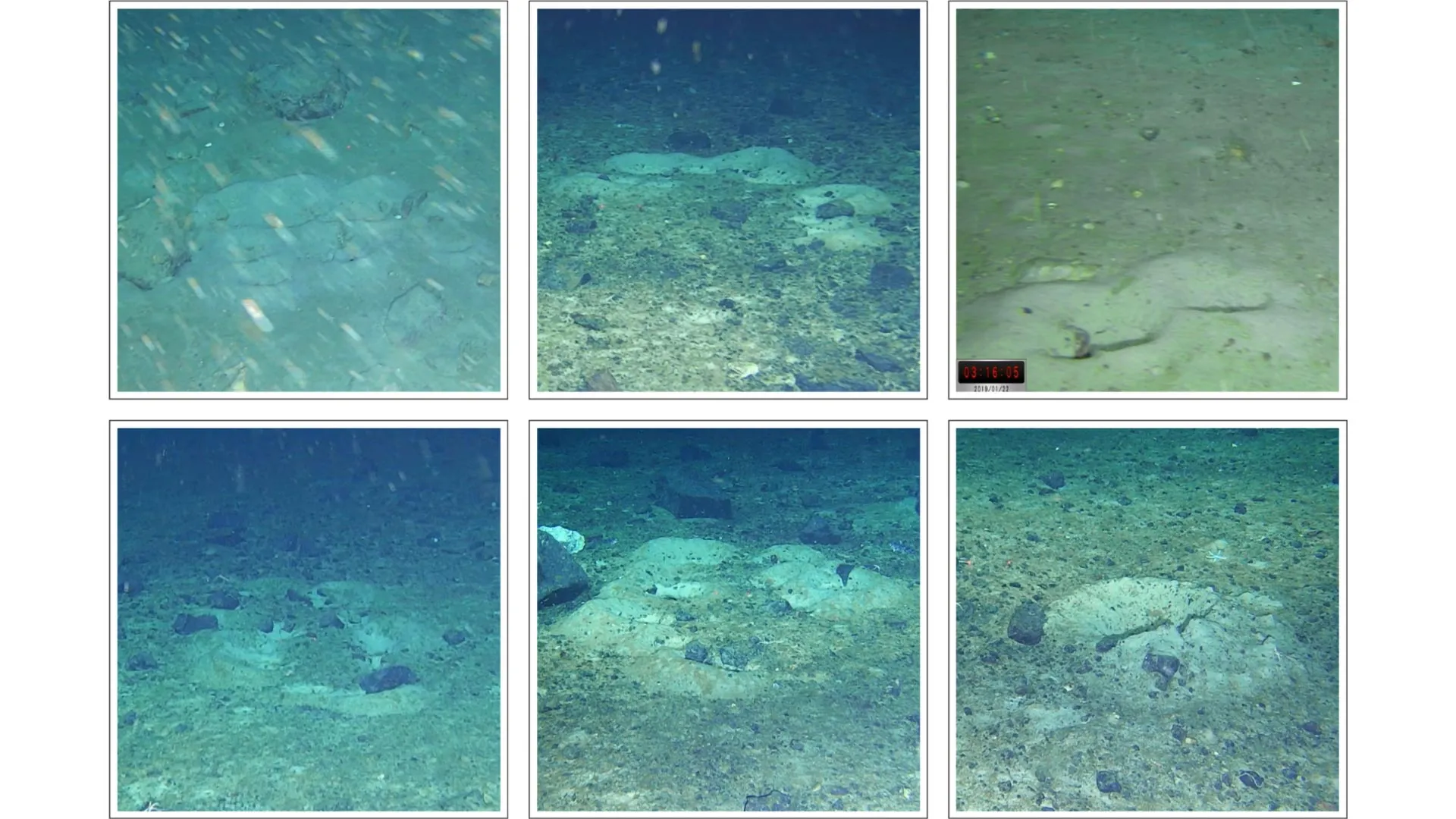
In a profound testament to life’s tenacity and organization in Earth’s most extreme environments, researchers operating in a remote sector of Antarctica’s western Weddell Sea have uncovered an extraordinary ecosystem previously concealed beneath an immense expanse of solid ice. This remarkable discovery, made possible by the retreat of a colossal iceberg, reveals vast, meticulously organized fields of fish nests, arranged in striking geometric patterns and appearing to be carefully maintained by their inhabitants. This finding offers unprecedented insights into the reproductive strategies of Antarctic fish and underscores the critical importance of protecting the rapidly changing polar regions.
The Retreat of Ice and the Opening of a New Frontier
The opportunity for this groundbreaking exploration arose following the dramatic calving of the A68 iceberg in 2017. Spanning an astonishing 5,800 square kilometers—an area roughly equivalent to the state of Delaware or four times the size of Greater London—A68 detached from the Larsen C Ice Shelf, a floating platform of ice on the eastern side of the Antarctic Peninsula. This monumental event effectively opened a new, previously inaccessible window into the deep-sea environment that had been sealed off for millennia, hidden beneath an estimated 200 meters of solid ice. The subsequent scientific expeditions were thus granted a unique chance to study an ecosystem responding in real-time to profound environmental change.
Utilizing state-of-the-art remotely operated vehicles (ROVs), scientists meticulously surveyed the newly exposed seafloor. What they observed was nothing short of astonishing: more than a thousand circular nests, each precisely crafted and swept clean of the plankton debris that typically blankets the surrounding sediment. This meticulous maintenance created a stark visual contrast and a landscape of remarkable geometric order across the ocean floor. Images captured by the ROVs reveal individual nests, some standing in solitary precision, others forming graceful curved lines, and still more clustered together in dense groupings. All shared the common characteristic of being pristine, free from the layer of phytoplankton detritus that covered the nearby seabed, a sharp and easily discernible contrast in the central portions of the captured imagery.
The Weddell Sea Expedition of 2019: A Dual Mandate
The pivotal discovery occurred during the Weddell Sea Expedition of 2019, an ambitious scientific undertaking with two primary objectives. First, the expedition aimed to conduct a wide-ranging scientific survey in the waters around the Larsen C Ice Shelf, meticulously mapping the oceanography, geology, and biology of this newly accessible region. The second, equally compelling, objective was to locate the wreck of Sir Ernest Shackleton’s legendary ship, the Endurance, which was famously crushed by pack ice and lost in the Weddell Sea in 1915 during his ill-fated Imperial Trans-Antarctic Expedition.
Scientists on board the South African polar research vessel SA Agulhas II were particularly focused on understanding the vital role played by Antarctica’s floating ice shelves. These massive ice formations act as crucial buttresses, slowing the flow of colossal glaciers from the continent’s interior into the ocean. When these shelves thin, fracture, or disintegrate, their stabilizing effect diminishes or disappears entirely. This allows the vast reservoirs of land ice to accelerate their movement into the ocean, directly contributing to global sea-level rise. The calving of iceberg A68, therefore, represented an unparalleled scientific opportunity to observe and study a part of the seabed that had been completely sealed off from direct observation until the ice broke away, offering a unique glimpse into the immediate biological and oceanographic responses of a pristine deep-sea environment.
Navigating the Frozen Frontier: Technology and Perseverance
The expedition’s scientific team deployed a suite of advanced underwater technologies, including autonomous underwater vehicles (AUVs) and remotely operated vehicles (ROVs), to navigate the same kind of formidable, dense sea ice that had claimed Shackleton’s ship over a century earlier. The pack ice proved to be an enduring challenge, testing the limits of the vessel and its crew. Despite their cutting-edge equipment and relentless efforts, the extreme ice conditions in 2019 ultimately prevented the team from locating the Endurance. However, the invaluable experience gained in maneuvering through these challenging polar conditions and operating advanced underwater technology in such a hostile environment laid critical groundwork. This expertise directly paved the way for the later Endurance22 expedition, which, in March 2022, successfully found the remarkably preserved wreck of Shackleton’s ship, resting at a depth of 3,008 meters below the surface, a testament to both historical exploration and modern technological prowess.
The ROV used for the biological survey was equipped with high-resolution cameras, sonar, and environmental sensors, allowing researchers to collect detailed imagery, map the seafloor topography, and measure parameters such as water temperature, salinity, and oxygen levels. These data points are crucial for understanding the environmental conditions that support such a thriving, yet hidden, ecosystem. The ability of the ROV to maneuver precisely and capture clear images in the frigid, dark depths was instrumental in identifying the intricate patterns and maintenance efforts associated with the fish nests.
The Architects of the Nests: The Yellowfin Notothenia
The diligent architects behind these impressive underwater structures were identified as a species of Antarctic rockcod known as the yellowfin notothenia (Lindbergichthys nudifrons). These fish, adapted to the extreme cold of the Southern Ocean, exhibit a remarkable level of parental care. Each circular nest, typically about 75 centimeters in diameter, was likely tended by a parent fish, meticulously guarding its clutch of eggs from potential predators. This behavior is crucial for survival in an environment where resources can be scarce and threats ever-present.
Researchers believe this collective nesting behavior reflects a sophisticated survival strategy, demonstrating elements of both cooperation and competition. The dense groupings of nests illustrate what scientists refer to as the "selfish herd" concept. In this evolutionary strategy, individuals in the center of a group gain protection from predators, which are more likely to target those on the periphery. This provides a significant survival advantage for the centrally located fish and their offspring. Conversely, the solitary nests observed along the perimeter of the larger colonies are thought to belong to larger, stronger, or more dominant fish, capable of defending their territory and eggs independently. The overall result is a delicately balanced mix of cooperation and competition that collectively enhances the entire colony’s chances of survival and reproductive success, a fascinating display of socio-ecological dynamics in a deep-sea environment.
The yellowfin notothenia is a demersal species, meaning it lives on or near the seabed. Like many Antarctic fish, it possesses unique adaptations to its cold habitat, including antifreeze proteins in its blood that prevent ice crystal formation. The sheer number of nests discovered suggests a significant population size, challenging previous assumptions about the distribution and abundance of fish in this previously unexplored part of the Weddell Sea.
Ecological Significance: A Vulnerable Marine Ecosystem
This discovery holds far more than mere academic interest; it carries profound ecological implications. The vast fish nursery provides compelling evidence that the region represents a Vulnerable Marine Ecosystem (VME). VMEs are defined by the United Nations Food and Agriculture Organization (FAO) as fragile yet vital habitats that are susceptible to damage from human activities and play a critical role in supporting marine biodiversity. The criteria for identifying VMEs include uniqueness or rarity, functional significance, structural complexity, and fragility. The sheer scale, organization, and ecological importance of this newly found breeding ground unequivocally meet these criteria.
The finding significantly adds to earlier scientific studies, including the groundbreaking work by Purser et al. (2022), which identified another of the world’s largest known fish breeding colonies, also within the Weddell Sea. While the exact relationship between the current discovery and the Purser et al. finding requires further research, it strongly suggests that the Weddell Sea harbors multiple, extensive, and vital deep-sea nurseries that are fundamental to the health and resilience of the Antarctic marine ecosystem. These nurseries act as crucial recruitment grounds, replenishing fish stocks that form the base of the food web, ultimately supporting iconic Antarctic wildlife such as penguins, seals, whales, and seabirds. The presence of such a large, active breeding ground underscores the region’s immense ecological productivity and its foundational role in sustaining the broader Antarctic food web.
The Imperative for Conservation: Designating a Marine Protected Area
Together, these cumulative findings—the discovery of vast fish nurseries, the identification of a significant VME, and the increasing understanding of the Weddell Sea’s ecological importance—strengthen the urgent case for designating the Weddell Sea as a Marine Protected Area (MPA). The Commission for the Conservation of Antarctic Marine Living Resources (CCAMLR), an international body responsible for managing fisheries and protecting marine life in the Southern Ocean, has been considering proposals for an MPA in the Weddell Sea for several years.
A designated MPA would provide a vital layer of protection for this unique and vulnerable region. Such a designation would help safeguard not only its iconic and charismatic wildlife, such as various species of penguins and seals, but crucially, also the hidden nurseries and breeding grounds that underpin the entire Antarctic food web. MPAs typically restrict or prohibit certain human activities, such as fishing, deep-sea mining, and other extractive industries, thereby allowing ecosystems to recover and thrive. Protecting these fragile deep-sea habitats is essential for preserving the genetic diversity and ecological integrity of the Southern Ocean.
The process of establishing an MPA in the Antarctic is complex, requiring consensus among CCAMLR member states, which represent diverse national interests. However, scientific discoveries of this magnitude provide powerful, data-driven arguments for immediate and decisive conservation action. The long-term implications of failing to protect such critical areas could be devastating, not only for Antarctic biodiversity but also for global ocean health.
Broader Implications: Climate Change and the Future of Polar Ecosystems
This discovery also serves as a potent reminder of the rapid and profound changes occurring across the planet’s polar regions due to climate change. The retreat of the A68 iceberg, a direct consequence of ongoing ice shelf dynamics influenced by a warming climate, allowed access to this previously hidden world. While the direct causal link between this specific ice retreat and climate change can be complex, the broader trend of Antarctic ice loss is undeniable and well-documented. As more of Antarctica’s ice shelves thin and disintegrate, more of the deep-sea floor will be exposed, potentially revealing other unknown ecosystems or, conversely, exposing existing ones to new environmental pressures and human activities.
Understanding how these newly exposed environments are colonized and how established ecosystems adapt to changing conditions is critical for predicting the future of polar marine life. The discovery of a thriving, complex breeding colony in a region that was so recently under thick ice highlights the resilience of life, but also its vulnerability to rapid environmental shifts. It emphasizes the need for continued scientific exploration and monitoring in these rapidly changing frontiers.
In conclusion, the revelation of these vast, organized fish nurseries beneath the retreating ice of the Weddell Sea is a profound scientific achievement. It not only expands our understanding of marine biodiversity and ecological strategies in extreme environments but also issues a powerful call to action. It underscores that even in the planet’s most remote and seemingly inhospitable environments, life finds intricate ways to organize, adapt, and thrive. Protecting these hidden wonders and the fragile ecosystems that support them is not merely a scientific imperative but a global responsibility, essential for the health of our oceans and the future of our planet.
