
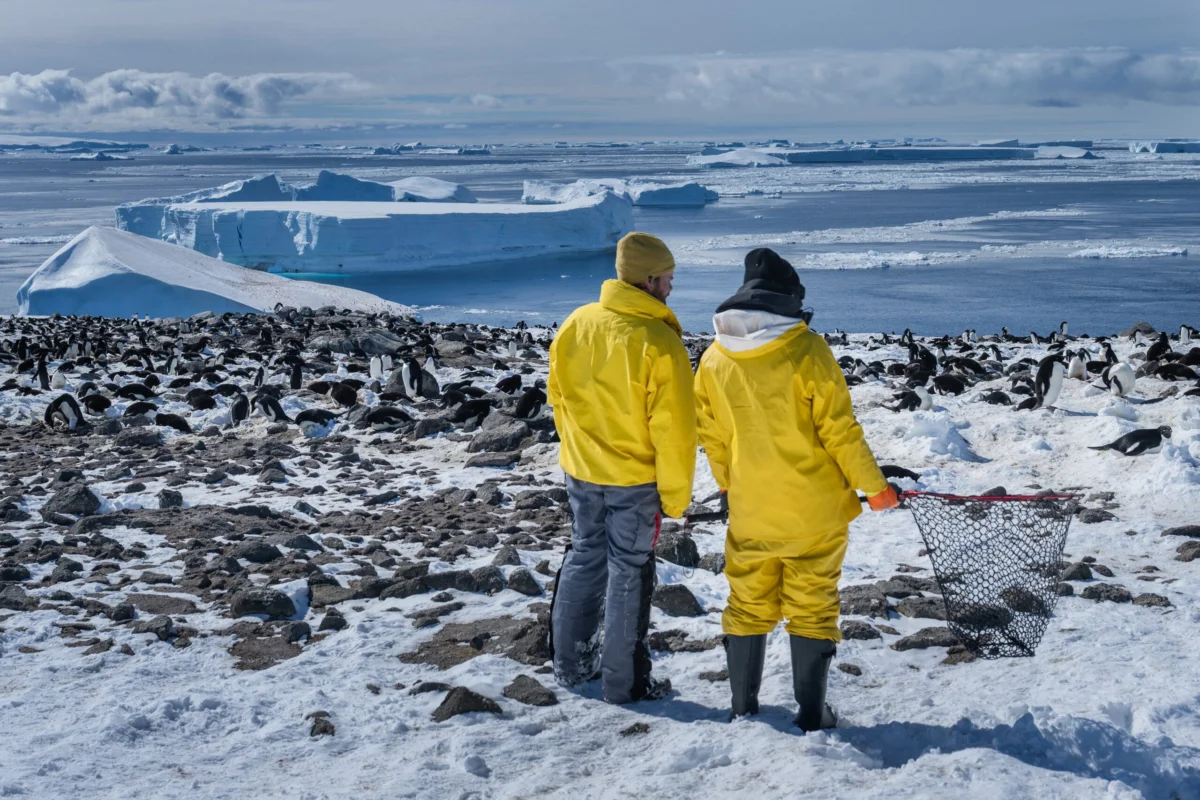
The remote and treacherous Danger Islands, home to the world’s largest known Adélie Penguin population, recently secured protected-area status for their terrestrial habitats, a vital step in safeguarding one of Earth’s most significant avian breeding colonies. However, a scientific expedition in late 2025 has revealed that this land-based protection is insufficient. Researchers are now urgently advocating for the expansion of this protective designation to encompass the surrounding marine environments, arguing that the seas around this crucial Antarctic archipelago are equally vital for the penguins’ survival, particularly to secure their dwindling food supply amidst a rapidly changing climate. The findings underscore a complex interplay of environmental threats, from warming oceans and food scarcity to the looming specter of avian influenza, all converging on a fragile ecosystem that demands comprehensive and immediate international action.
The Discovery and Significance of the Danger Islands
For centuries, the Danger Islands lived up to their name, remaining largely hidden and inaccessible beneath thick pack ice, posing significant navigational hazards to early explorers. This remoteness inadvertently shielded their most precious secret: an colossal colony of Adélie Penguins. It was only about a decade ago, through a combination of satellite imagery and subsequent on-the-ground expeditions, that the true scale of this avian metropolis was revealed. Situated near the tip of the Antarctic Peninsula, these seven craggy outcrops cover a mere 1.7 square miles, yet they provide essential breeding grounds for approximately one-fifth of the entire global Adélie Penguin population. Every November, an estimated 1.5 million Adélie Penguins converge here, transforming the barren landscape into a bustling hub of life, noise, and activity. Beyond Adélies, the islands also support at least nine other bird species, including significant numbers of Gentoo Penguins, cementing their status as a biodiversity hotspot in an otherwise desolate continent. The sheer density and size of these colonies make the Danger Islands a critical anchor for the Southern Ocean’s delicate food web and an invaluable natural laboratory for studying penguin ecology.
A Timeline of Conservation Efforts and Emerging Threats
The journey towards protecting the Danger Islands has been a multi-faceted international effort, driven by increasing awareness of their ecological importance and the growing pressures they face.
- Circa 2014: Initial discovery of the massive Adélie Penguin colony through satellite imagery and subsequent ground verification. This revelation immediately flagged the islands as an area of significant conservation interest.
- 2023: The highly pathogenic avian influenza (HPAI) strain, H5N1, makes its unprecedented leap to the Antarctic continent, detected in birds and mammals on the sub-Antarctic islands and the Antarctic Peninsula. This event sends shockwaves through the scientific community, raising fears for highly colonial species like penguins.
- 2024: Following extensive campaigning led by Germany and the United States, the Danger Islands successfully achieve the designation of an Antarctic Specially Protected Area (ASPA). This status provides a robust framework for managing human activities within the designated terrestrial boundaries, aiming to minimize disturbance and preserve the ecological integrity of the breeding grounds.
- Late 2025: As part of its new responsibilities in managing the conservation zone, Germany spearheads a pivotal scientific expedition to the Danger Islands. The mission, initiated by German Environment Agency ecologist Fritz Hertel, aimed to conduct a comprehensive assessment of the penguin populations, monitor emerging threats, and gather crucial data to inform future conservation strategies. This expedition included biologists Simeon Lisovski from the Alfred Wegener Institute and Noelle Heid from ThINK Jena, focusing on direct penguin studies.
- Current Situation (2026): The findings from the 2025 expedition underscore the urgency of extending protection beyond the land. The current ASPA status is deemed insufficient to address the primary threats to the penguins’ food supply, which originates in the marine environment.
- Future Outlook (2029): Hertel and his colleagues plan biennial expeditions to the archipelago, with the ambitious goal of accumulating enough compelling data by 2029 to build a robust case for expanded marine protections. This data is intended to influence international policy bodies, particularly the Commission for the Conservation of Antarctic Marine Living Resources (CCAMLR).
The 2025 Expedition: Unveiling Hidden Pressures
The scientific expedition in late 2025, while brief, yielded critical insights into the challenges facing the Danger Islands’ penguins. The team faced the inherent difficulties of Antarctic exploration. The "Danger" in the islands’ name still resonates, as the surrounding waters are notoriously shallow and poorly mapped. Large icebreakers, typically used for Antarctic research, cannot safely navigate these treacherous areas. Consequently, the team opted for a nimbler sailboat, the Malizia Explorer, which offered greater flexibility but also heightened the risks associated with the unpredictable Antarctic winds and ice. First mate Marin-Louis Moreau often spent hours perched on the mast, meticulously searching for a safe passage through the ice-choked waters. Despite these logistical hurdles and being limited to a mere 12 hours on land, the scientists maximised their time. Photographer Esther Horvath, who specializes in polar exploration, captured the essence of this "adventurous scientific expedition," noting the "beautiful weather and the most stunning scenery and light" that accompanied their vital work.
The expedition’s primary objectives were multifaceted: to gain a more precise count of Adélie Penguins breeding on the islands, to assess the immediate threat of avian flu, and crucially, to understand where the penguins forage for food while rearing their chicks. To achieve the latter, biologists Lisovski and Heid meticulously fitted 22 Adélie Penguins with satellite GPS tracking devices. These small transmitters, carefully glued to the penguins’ backs, are designed to transmit positional data every 10 minutes, allowing remote monitoring from Germany until they naturally fall off, ideally after the breeding season concludes in March.
Alarming Findings: Climate Change, Food Scarcity, and Disease
The data collected from the 2025 expedition, combined with broader scientific observations, paints a worrying picture for the future of the Danger Islands’ Adélie Penguins.
1. Rapid Warming and Krill Decline: The Antarctic Peninsula region, where the Danger Islands are located, is experiencing climate change at an accelerated rate, warming five times faster than the global average. This rapid warming has profound consequences, most notably the significant dwindling of sea ice. Sea ice is not merely a frozen platform; it is a critical habitat for krill, the small, shrimp-like crustaceans that form the bedrock of the entire Southern Ocean food chain. Krill feed on algae growing under the ice, and their populations are directly impacted by ice extent and thickness. As sea ice has dwindled, so too have krill populations. This decline is directly affecting top predators, including Adélie Penguins. Scientists have already observed concerning declines in Adélie Penguin populations in other parts of the Antarctic Peninsula where krill availability has become a limiting factor. The expedition aimed to understand how these changes might be impacting the Danger Islands’ robust population.
2. Avian Influenza: A Ticking Time Bomb: The detection of highly pathogenic avian influenza (HPAI) in Antarctic wildlife since 2023 represents an unprecedented and grave threat. While the disease had not been detected in penguins on the Danger Islands during the late 2025 mission, the risk remains exceptionally high. Biologist Simeon Lisovski articulated the profound concern: "Millions of penguins that are so close together could really be heaven for a virus." The densely packed colonies of Adélie Penguins, a defining characteristic of the Danger Islands, create an ideal environment for rapid disease transmission. An outbreak could decimate populations, with devastating ecological consequences. The expedition’s vigilance regarding avian flu is a testament to the proactive measures researchers are taking to anticipate and mitigate potential catastrophes.
3. Worrying Foraging Journeys: Perhaps the most striking and immediately concerning finding from the GPS tracking data was the surprisingly long distances some penguins were traveling to find food. In their pursuit of krill, some Adélie parents were making weeklong journeys stretching up to 124 miles northward from the colony. Fritz Hertel, who initiated the expedition, expressed his alarm, noting that such extensive foraging trips are highly unusual and energetically demanding for penguin parents, who need to return frequently to feed their constantly growing chicks. This behavior strongly suggests that there is an insufficient supply of krill available in the immediate vicinity of the Danger Islands colony. This forces the penguins to expend critical energy on long-distance travel, potentially reducing feeding frequency for their chicks and impacting breeding success.
The Urgent Case for Expanded Marine Protection
The findings of the 2025 expedition solidify the argument that the current protected status, limited to the Danger Islands’ terrestrial areas, is incomplete. The lifeblood of these vast penguin colonies—their food supply—lies entirely within the surrounding marine environment, an area currently unprotected and vulnerable.
1. The Threat of Overfishing: The Southern Ocean is a significant fishing ground, particularly for krill. While krill fishing is regulated by CCAMLR, the increasing demand for krill in aquaculture, animal feed, and human nutritional supplements puts immense pressure on these vital stocks. If the foraging areas identified by the GPS trackers are not adequately protected, they remain at risk from industrial fishing operations. Overfishing in these critical zones would directly compete with the penguins for their primary food source, exacerbating the challenges posed by climate-induced krill declines. This competition could push an already stressed population to the brink.
2. Broader Ecological Implications: Protecting the marine environment around the Danger Islands is not just about penguins; it’s about safeguarding an entire ecosystem. Krill are a keystone species, supporting not only penguins but also whales, seals, and other seabirds. A collapse in krill populations due to combined pressures of climate change and overfishing would ripple through the entire Southern Ocean food web, with cascading and potentially irreversible consequences for Antarctic biodiversity.
3. International Precedent and Governance: The call for expanded marine protection aligns with broader international efforts to establish a network of marine protected areas (MPAs) in the Southern Ocean, such as the existing Ross Sea MPA. These initiatives are managed under the framework of the Antarctic Treaty System and CCAMLR, which seeks to balance conservation with sustainable resource use. The data gathered by Hertel’s team will be crucial in presenting a compelling, science-based case to these international bodies, demonstrating the specific areas vital for the Danger Islands’ penguins and the urgent need for their protection. This requires diplomatic effort and scientific consensus to overcome geopolitical and economic considerations that often complicate the establishment of large-scale MPAs.
Looking Ahead: A Global Responsibility
The Danger Islands represent a microcosm of the larger environmental challenges facing Antarctica and the planet. The story of their Adélie Penguins is a powerful testament to the resilience of nature, but also to its vulnerability in the face of rapid anthropogenic change. The commitment of Germany and the international scientific community to study and protect this unique ecosystem is commendable, but the clock is ticking.
The planned biennial expeditions and the target of gathering sufficient data by 2029 for expanded marine protections are critical steps. However, the urgency of the situation—marked by rapid warming, the threat of avian flu, and evidence of food scarcity—demands a swift and decisive response. Protecting the marine environment around the Danger Islands is not merely a regional issue; it is a global responsibility. The health of this immense penguin colony serves as an indicator of the health of the Southern Ocean, an ecosystem that plays a crucial role in regulating global climate and supporting a vast array of marine life. The scientific community, policymakers, and the public must work in concert to ensure that these "dangerous" islands become a beacon of successful conservation, securing a future where Adélie Penguins continue to thrive in their icy sanctuary.
This story originally ran in the Spring 2026 issue as "Navigating Danger." To receive our print magazine, become a member by making a donation today.
