
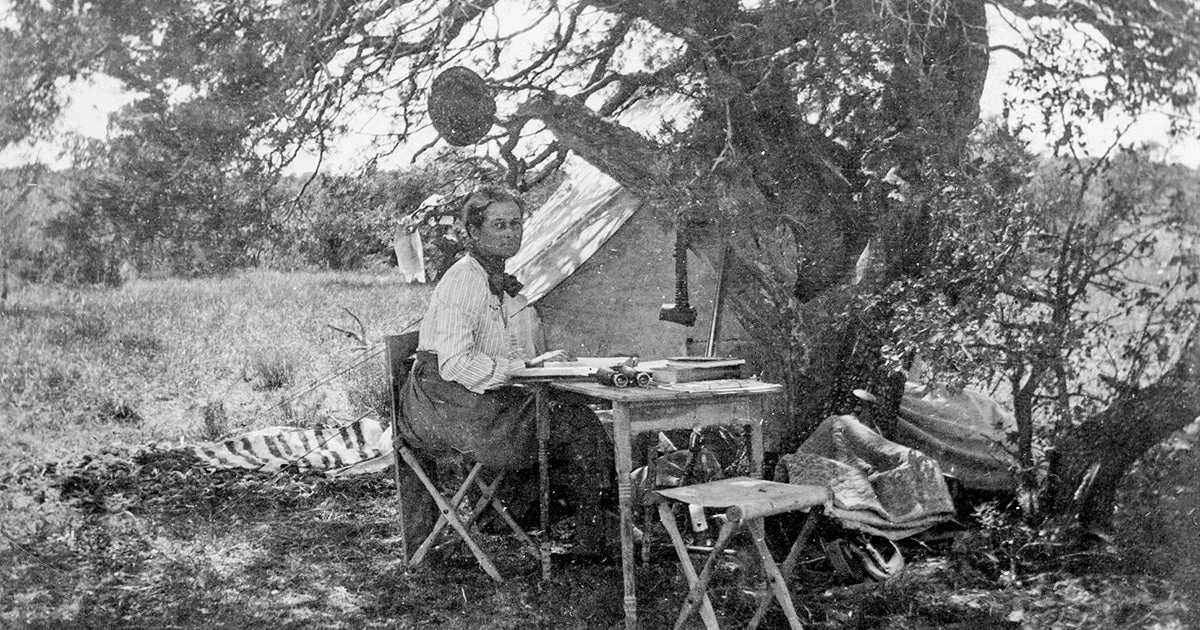
How to ignite public enthusiasm for birds is a question whose answer, remarkably, has remained largely consistent for over a century, a testament to the pioneering methods championed by figures like Florence Merriam Bailey. Her work in the late 19th and early 20th centuries laid critical groundwork for modern birdwatching and conservation, demonstrating that direct engagement with nature remains the most potent tool for fostering environmental stewardship.
The Dawn of Modern Birdwatching and Conservation
Florence Merriam Bailey (1863-1948) stands as a pivotal figure in American ornithology and conservation, particularly for her radical shift in approach to bird study. Born into a family steeped in natural history—her brother was Clinton Hart Merriam, a prominent zoologist and ethnographer—Bailey cultivated an early and profound passion for birds. Diverging from the prevailing scientific practice of collecting specimens, she advocated for the observation of live birds in their natural habitats. Her influential works, including Birds Through an Opera Glass (1890), Birds of Village and Field (1898), and the authoritative Handbook of Birds of the Western United States (1902), served as accessible guides for amateur birdwatchers, effectively reorienting public interaction with avian life from hunting and collecting to appreciative, non-consumptive observation.
Bailey’s contributions emerged during a critical period in American environmental history. The late 19th century was marked by a devastating decline in bird populations, primarily driven by unchecked market hunting and the insatiable demand for feathers to adorn women’s hats. Millions of birds, particularly wading birds like egrets and terns, faced slaughter, pushing several species to the brink of extinction. This crisis spurred the nascent conservation movement. In 1886, George Bird Grinnell, a naturalist and editor of Forest and Stream, founded the first Audubon Society to advocate for bird protection. Although this initial organization was short-lived, the movement quickly gained momentum, leading to the formation of numerous state Audubon societies and eventually the National Association of Audubon Societies (later the National Audubon Society) in 1905.
Florence Merriam Bailey was an early and influential contributor to Bird-Lore, the predecessor to Audubon magazine. Her writings, including a column published around 1900, offered profound insights into practical, engaging methods for connecting people with nature. This particular column underscored her conviction that fostering a direct, heartfelt connection with birds was the most effective pathway to cultivating a lasting conservation ethic—a philosophy that, despite over a century of scientific advancement and technological change, retains remarkable contemporary relevance.
Bailey’s Foundational Pedagogical Philosophy
Bailey’s strategic approach to inspiring interest in birds was both shrewd and deeply empathetic. She astutely recognized that simply condemning the fashion for feathered hats, while morally justifiable, was less effective than cultivating an intrinsic, deeply felt appreciation for the birds themselves. This principle was vividly illustrated by the "wily schemes" hatched by two amateur ornithologists at Smith College in 1886. Rather than merely admonishing their peers for wearing feathers, they established an Audubon Society with the express purpose of taking students "afield, and let them get acquainted with the birds." Their firm belief was that once individuals experienced the vibrant life of birds firsthand, the desire to wear their feathers would naturally dissipate. This pioneering method, firmly rooted in experiential learning, rapidly disseminated, powerfully demonstrating the efficacy of direct connection over abstract prohibition.
Central to Bailey’s pedagogical philosophy was the conviction that true naturalism extended beyond mere taxonomic classification. While acknowledging the utility of species lists and scientific nomenclature, she passionately cautioned against reducing bird study to a "formal basis" devoid of living context. "A list of species is good to have, but without a knowledge of the birds themselves, it is like Emerson’s Sparrow brought home without the river and sky," she eloquently wrote, emphasizing the necessity of a holistic understanding of an organism within its natural environment. This holistic perspective, she contended, mandated an "open heart as well as mind," echoing the ethos of John James Audubon, who seamlessly blended scientific rigor with artistic passion and immersive fieldwork.
The influence of celebrated naturalists played a crucial role in these early educational endeavors. John Burroughs, a renowned essayist and naturalist, notably joined the Smith College students for early morning field excursions. His "fine enthusiasm" and profound ability to connect with nature left an indelible impression. Students observed him standing "calmly beside a stump in the rain, naming unerringly each bird that crossed the sky," absorbing not only lessons in bird identification but also an appreciation for meditative stillness and a receptive attentiveness to nature’s subtle messages. This emphasis on patient observation, mindful presence, and a receptive spirit was fundamental to Bailey’s teaching, fostering a deeper, more personal, and ultimately more empathetic relationship with the natural world.
Practical Field Instruction: Principles for Engaging Beginners
Bailey’s detailed guidance on leading field classes offered practical advice that continues to resonate with educators today. She advocated for initiating classes in early spring, strategically timing them to coincide with the arrival of the first migratory birds. This approach generated initial enthusiasm without overwhelming beginners with the "confusion of tongues" that often characterizes the peak of migration season, where numerous species can make identification daunting. Her insights into managing student interest were particularly astute. She advised leaders to prioritize engaging "beginner" birds, such as the vividly colored Scarlet Tanager, even if the instructor personally yearned to study more elusive warblers. "The one vital point is to keep the class interested," she stressed, recognizing that initial captivation was paramount to cultivating long-term dedication. This required instructors to temporarily set aside their own advanced interests and meet students at their current stage of understanding, focusing on "the plainest of everyday birds" if those best served the immediate learning objective.
The "quiz method," where students were actively encouraged to think critically and compare observations rather than simply memorizing facts, formed another cornerstone of her approach. Bailey provided concrete examples to illustrate this: contrasting the distinct markings and songs of various sparrows (Chipping, Song, Field, White-throated) or highlighting the morphological differences between sparrows and swallows (e.g., strong, conical, seed-cracking bills and labored flight versus long wings, weak, fly-catching bills, and free flight). This comparative analysis not only fostered keen observational skills but also instilled a deeper understanding of avian adaptations and ecological niches.
For practical application in the field, she recommended carrying bird skins (taxidermy specimens) and pocket field guides, such as Chapman’s Handbook, which was then a leading reference. These tools facilitated immediate review of observed species and allowed for self-correction of doubtful points, thereby reinforcing learning while the experience was still fresh. Furthermore, Bailey underscored the value of quick, descriptive cues from the instructor when birds were rapidly moving, followed by student note-taking through concise sketches or memoranda. Her examples—a "chip-churr" to represent the Tanager’s characteristic call or an outline sketch of a Waxwing’s crest—illustrate how brief, evocative observations could capture essential characteristics and even expressions of emotion, significantly aiding recall and classification.
Beyond mere identification, Bailey championed the intensive study of bird behavior and life histories, particularly during the nesting season. She firmly believed that "consecutive visits to a young family" offered unparalleled insights into a bird’s "range of expression in movement, call, note, and song, and of its general intelligence and individuality," thereby awakening a profound sympathetic interest in avian life. Observing pairs diligently building nests, males feeding their mates, and parents selflessly caring for hungry nestlings provided a powerful, unfolding narrative of avian existence, fostering empathy and a deeper connection to their struggles and triumphs. She even suggested utilizing photography as a means to encourage individual observation, recognizing that the pursuit of a good photograph often necessitates intimate knowledge of "bird ways" and patience.
Broader Impact and Enduring Relevance in Conservation
Florence Merriam Bailey’s pioneering work extended far beyond simple ornithological instruction; it established foundational principles for what would evolve into modern environmental education and the burgeoning field of citizen science. Her insistence on direct experience, empathetic engagement, and the cultivation of intrinsic interest rather than purely didactic lectures proved remarkably prescient. The methods she advocated, from tailored field trips for beginners to the meticulous observation of nesting behaviors, remain central to effective nature education programs worldwide today.
The impact of her work, and that of the nascent Audubon movement she helped shape, was profound and far-reaching. By the early 20th century, public sentiment, largely fueled by such educational initiatives and the stark realities of declining bird populations, had shifted dramatically. This groundswell of public awareness and outcry directly contributed to significant legislative victories, such as the Lacey Act of 1900, which prohibited the interstate transport of illegally harvested wildlife, and the landmark Migratory Bird Treaty Act of 1918, which provided robust federal protection for migratory birds across North America. These crucial legal frameworks were not solely the product of scientific findings but were critically underpinned by a growing public awareness and emotional connection to birds—precisely the connection Bailey sought to cultivate.
Today, birdwatching has blossomed into a global phenomenon, attracting millions of participants annually. Digital platforms like eBird, countless citizen science projects, and numerous local birding groups continue Bailey’s legacy of observation, data collection, and community engagement. While modern technology offers unprecedented tools for identification, sharing, and conservation, the core principle of stepping "under the sun-filled heavens and open your soul to the song of the Lark" remains the primary driver of enduring interest and participation. Bailey’s emphasis on the "live bird" over abstract names serves as a perennial reminder in an increasingly digitized and abstracted world: true understanding and effective conservation ultimately stem from direct, appreciative interaction with nature.
Her work also established a powerful precedent for women in science and conservation. In a field largely dominated by men, Bailey carved out a significant and respected role through her meticulous research, accessible writing, and dedicated advocacy. Her example inspired countless others and powerfully demonstrated that scientific rigor could be seamlessly combined with a profound sense of wonder and an unwavering commitment to public outreach.
The environmental challenges confronting bird populations today—habitat loss, climate change, pesticide use, and light pollution—are vastly different from the feather trade crisis of Bailey’s era. However, the fundamental need to excite people about birds, to connect them emotionally and intellectually to the avian world, has not changed. Florence Merriam Bailey’s "delightful, forward-thinking advice" continues to provide an essential blueprint for fostering generations of informed and passionate conservationists, ensuring that the vital message nature holds for each human heart is not only heard but also acted upon. Her enduring legacy is measured not just in the birds saved, but in the countless human hearts opened to the wonder and imperative of protecting the natural world.
