
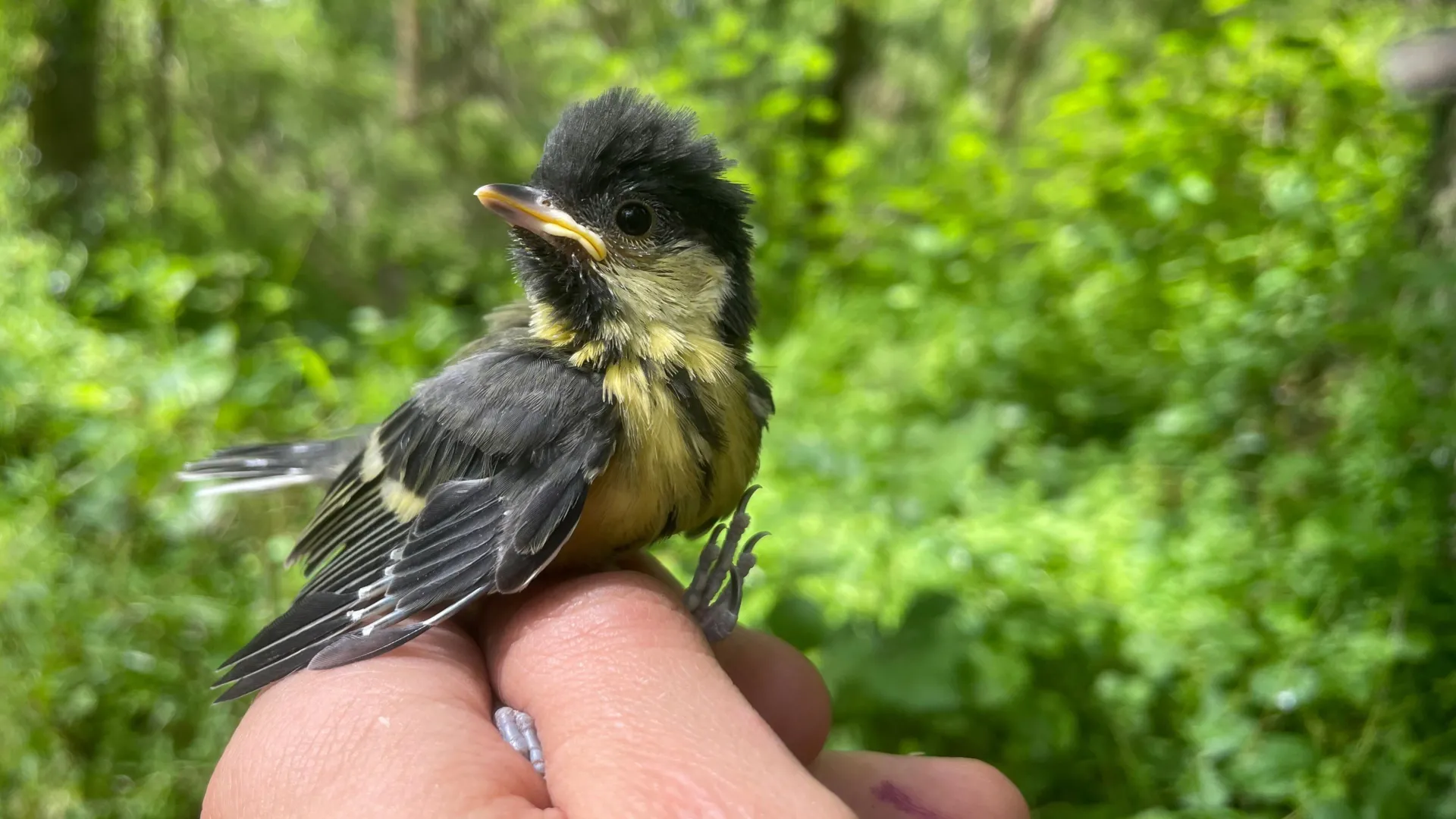
A groundbreaking study from the University of Oxford, published on March 11, has unveiled critical insights into how unpredictable weather patterns are impacting one of the UK’s most familiar bird species, the great tit (Parus major). The research, leveraging an extraordinary six-decade dataset, finds that sudden cold spells and heavy rainfall can significantly impede growth and diminish the survival prospects for young great tits. However, the study also highlights a crucial adaptive strategy: birds that commence their breeding cycle earlier in the season appear to circumvent many of the detrimental effects associated with these severe weather events, underscoring the complex interplay between climate change, ecological adaptation, and species survival.
A Legacy of Long-Term Research: The Wytham Woods Dataset
The foundation of these compelling findings lies in an exceptionally robust and unusually long-term ecological dataset originating from Wytham Woods, a 400-hectare ancient woodland owned and managed by the University of Oxford. For 60 consecutive years, scientists have meticulously monitored the great tit population within this globally renowned research site, accumulating records on over 80,000 individual wild great tits. This unparalleled longitudinal study, initiated in the 1960s, provides an invaluable window into the long-term dynamics of a wild population in response to environmental shifts.
Researchers systematically paired this comprehensive biological information with detailed daily weather records spanning the same period. By precisely identifying the coldest, wettest, and hottest days within each breeding season, the team was able to quantify the frequency of these extreme events during the critical stages of chick development. The primary metric for assessing impact was the body mass of nestlings at fledging—the moment they leave the nest—a well-established and powerful predictor of a young bird’s subsequent survival into adulthood. The continuity and scale of the Wytham Woods project are unparalleled in many aspects of ecological research, allowing for the detection of subtle yet significant trends that would be invisible in shorter-term studies. The woodland itself, a mosaic of habitats from ancient semi-natural woodland to more recently planted areas, offers a rich environment for studying ecological processes, making it a living laboratory for understanding biodiversity and ecosystem responses to change.
The Vulnerability of Young Lives: Cold Spells and Heavy Rainfall
The study’s detailed analysis revealed a clear and concerning pattern: severe cold weather during the first week after hatching poses a particularly acute threat to great tit nestlings. Newly hatched chicks, being altricial, are born largely featherless and are incapable of regulating their own body temperature effectively. During cold spells, their nascent metabolic systems are forced to expend a disproportionate amount of energy simply to maintain warmth, diverting vital resources away from growth and development. This early-life energy deficit can have cascading effects on their physiological development, potentially compromising organ function and overall health.
As chicks mature beyond their first week, heavy rainfall emerges as the predominant environmental hazard. Both types of extreme weather—cold in early life and heavy rain later—were found to reduce a nestling’s body mass at fledging by as much as 3%. This seemingly modest percentage can represent a critical difference in the competitive world outside the nest. Heavier fledglings typically possess greater fat reserves, stronger musculature, and a more developed immune system, all of which enhance their chances of navigating the perilous period immediately after leaving the nest, including finding food independently and evading predators.
The mechanisms through which heavy rainfall impacts older chicks are primarily linked to food availability. Extreme cold and incessant rain can severely limit the frequency and duration of parental foraging trips. Adult great tits, themselves susceptible to the elements, may be less willing or able to leave the relative shelter of the nest to search for food. Simultaneously, heavy rainfall can physically dislodge caterpillars, the primary and most energy-rich food source for growing great tit chicks, from their host plants. This double blow—reduced parental foraging effort combined with a diminished food supply—creates a significant energetic bottleneck for rapidly developing nestlings, whose daily energy demands are extraordinarily high.
A Complex Threat: The Synergy of Heat and Rain
While cold and rain each present their own challenges, the Oxford research highlighted an even more severe impact when intense heat occurs concurrently with heavy rainfall. In such instances, the consequences for fledging mass were drastically amplified, with reductions observed by up to 27%. This synergistic effect points to a complex physiological and ecological challenge for the young birds. The combination of high temperatures and high humidity can create stressful conditions, potentially exacerbating the energy demands on chicks and parents alike, even as food sources may be disrupted by the rain.
This intensified negative impact was particularly pronounced for broods that hatched later in the breeding season. These later broods often face an already challenging environment, as the peak abundance of their primary food source, caterpillars, may have passed. Compounded by the combined stress of heat and rain, their developmental trajectory is severely compromised, leading to significantly lighter and less resilient fledglings. This finding underscores the importance of timing in the breeding cycle and how environmental stressors can disproportionately affect those birds whose reproductive efforts are not perfectly synchronized with optimal conditions.
Adaptive Strategies: The Timing of Breeding
One of the most intriguing aspects of the study is the great tits’ observed adaptive response to a changing climate. Over the decades, great tits in the Wytham population have demonstrated a clear adjustment towards earlier breeding in response to warmer springs. This shift is a crucial evolutionary strategy aimed at tracking the peak abundance of their main prey, caterpillars, which themselves emerge earlier in warmer conditions. This phenomenon, known as phenological plasticity, is a key mechanism by which species attempt to cope with climate change.
Lead researcher Devi Satarkar from the Department of Biology at the University of Oxford emphasized the dual nature of this adaptation. "In the Wytham population, great tits have adjusted to warmer springs by breeding earlier to track peak abundance of their main prey, caterpillars. This overall earlier laying is beneficial, buffering them against many impacts of extreme weather—but it also exposes them to cold spells early in the season. Even small early-life deficits can have large implications for survival. It will only get tougher for birds to keep up as extreme weather increases in frequency and intensity with climate change."
This earlier laying, while largely beneficial in aligning with caterpillar availability and buffering against many later-season extreme weather impacts, introduces a new vulnerability. By initiating breeding earlier, great tits are more likely to encounter the early spring cold spells that are still a feature of the UK climate. Thus, the very adaptation that helps them cope with one aspect of climate change exposes them to another, highlighting the complex and often trade-off-laden nature of evolutionary responses to rapid environmental shifts.
The Unexpected Upside: Mild Warmth as a Growth Catalyst
In a surprising counter-intuitive finding, the study also revealed that certain warmer extremes were linked to heavier fledging weights during the nestling stage. While high temperatures are frequently associated with heat stress in many species, the warmer periods experienced in Oxfordshire appear to be relatively mild when compared to the scorching heatwaves routinely observed in southern Europe or other hotter climates.
Devi Satarkar further elaborated on this unexpected benefit: "Extreme weather events are affecting wild bird populations in complex ways. The level of warmth we see in these heat extremes in Oxfordshire might boost growth because it can increase insect activity and visibility—making caterpillars easier to find—while letting parents forage more and reducing nestlings’ thermoregulatory costs. The high water content in caterpillars also helps against dehydration. This contrasts sharply with hotter regions like the Mediterranean, where similar events can exceed 35°C and harm nestlings."
This suggests that within a certain temperature range, increased warmth can create optimal foraging conditions. Higher temperatures can accelerate insect development and activity, making caterpillars more abundant and conspicuous. Simultaneously, milder conditions reduce the energy expenditure required by parent birds to keep their chicks warm, freeing up more time and energy for foraging. Moreover, the water content of caterpillars can provide a crucial source of hydration for chicks, especially beneficial during warmer periods when dehydration might otherwise be a concern. This nuanced finding underscores that the impact of "extreme" weather is highly context-dependent, varying significantly based on regional climate and the specific thermal tolerances of a species.
Broader Ecological Implications: From Fledgling to Future Generations
The immediate impacts on fledging mass have profound implications for the long-term survival of great tits. The study indicated that, over longer periods, extreme cold and rainfall slightly reduce the odds that young birds will survive to adulthood. Conversely, the mild warm extremes, which boost fledging weight, can have small but significant positive effects on overall survival rates. This demonstrates that even subtle advantages or disadvantages experienced during early life can compound over time, influencing the success of an entire cohort and, by extension, the trajectory of the population.
The findings highlight that birds that breed later in the season face consistently tougher conditions. Their fledglings were found to be approximately one-third lighter than their early-season counterparts, even when experiencing similar peak temperatures of around 16-17°C during their development. This reinforces the notion that the timing of breeding is not just about avoiding extreme weather, but also about capitalizing on the most favorable periods for food availability and overall environmental stability. Overall, the ability to breed earlier within a season appears to function as a crucial buffer, shielding many birds from the worst consequences of increasingly unpredictable weather patterns.
As a widespread and well-studied passerine species, the great tit serves as an excellent indicator species for broader ecological health. Their sensitivity to environmental changes, coupled with the extensive data available, makes them invaluable for understanding how climate change is affecting biodiversity across temperate regions. The insights gained from this study in Wytham Woods are therefore likely to have resonance for other avian species with similar life histories and ecological niches.
Voices from the Research Front
The research team at Oxford is keenly aware of the implications of their work. Devi Satarkar’s comments underscore the escalating challenge facing wildlife. "It will only get tougher for birds to keep up as extreme weather increases in frequency and intensity with climate change," she noted. This sentiment is echoed by conservationists and climate scientists globally, who point to a growing body of evidence indicating that many species are struggling to adapt to the unprecedented pace of environmental change.
Dr. Eleanor Green, a theoretical ecologist specializing in avian populations (not directly involved in this study, but reflecting broader expert opinion), commented on the significance: "This Oxford study is a vital contribution to our understanding of how climate change impacts species at a very granular level. Long-term datasets like the one from Wytham Woods are gold dust. They allow us to move beyond speculation and pinpoint the specific weather events and developmental stages where vulnerabilities lie. The discovery of both negative and surprisingly positive effects of different temperature extremes highlights the complex, non-linear ways in which climate change is reshaping ecosystems. It’s not just about average temperature increases; it’s about the increased variability and intensity of extreme events."
Climate Change and the UK Landscape: A Shifting Reality
The study’s findings are particularly pertinent in the context of the UK’s changing climate. Meteorological data from the Met Office and other climate monitoring bodies consistently show trends towards warmer, wetter winters, and hotter, drier summers, often punctuated by more frequent and intense rainfall events and heatwaves. These shifts create a highly volatile environment for wildlife, challenging established life cycles and ecological interactions.
The concept of "phenological mismatch" is central here. While great tits have attempted to adjust their breeding schedules to align with earlier caterpillar emergence, the unpredictability of extreme weather events—sudden cold snaps, torrential downpours, or unseasonably warm periods—can disrupt this delicate timing. If the weather extremes become too frequent or severe, the adaptive capacity of species like the great tit may be overwhelmed, leading to declining reproductive success and, ultimately, population declines. This study provides concrete evidence of these challenges playing out in real-time in a wild population.
Charting a Course for Conservation: Proactive Strategies
As climate change intensifies weather extremes, the researchers emphasize the growing importance of monitoring small-scale environmental conditions, often referred to as microclimates, and understanding subtle habitat differences. This detailed level of research can directly inform and guide targeted conservation strategies designed to better protect vulnerable chicks during critical developmental stages.
Specific actions could include strategic nestbox placement. By considering factors such as aspect (north-facing to avoid intense sun, south-facing for warmth in early spring), proximity to dense foliage for shelter, and elevation, conservationists can create microclimates that offer greater resilience against temperature fluctuations and heavy rainfall. Woodland management practices also play a crucial role. Promoting a diverse array of tree species, for instance, can help ensure a more consistent and varied food supply, even if some tree species are negatively affected by specific weather events. Creating varied canopy structures and maintaining a healthy understory can also provide crucial shelter and thermal buffering for nests. These interventions, informed by detailed ecological research, represent proactive steps to mitigate the impacts of a changing climate on vulnerable wildlife populations.
The Road Ahead: Unanswered Questions and Future Monitoring
The Wytham Woods great tit population will continue to be a vital subject of study for the Oxford researchers. A key question for future research is whether heatwaves, which currently appear to offer a mild benefit in Oxfordshire, could eventually become harmful as global temperatures continue to rise. As the baseline climate shifts, what is considered "mild" today could become physiologically stressful in the future, crossing a critical threshold where the benefits observed reverse into detrimental effects.
The necessity of continued long-term monitoring cannot be overstated. Only through sustained, meticulous data collection can scientists accurately track these complex ecological shifts, refine predictive models, and develop effective conservation strategies that are agile enough to respond to the dynamic challenges posed by climate change. The Wytham Woods study serves as a powerful testament to the enduring value of long-term ecological research in understanding and addressing the most pressing environmental issues of our time.
