
Rising global temperatures threaten to unleash a cascade of catastrophic climate tipping points across the planet, pushing vital Earth systems past thresholds of irreversible change. However, a recent landmark report underscores that the window for action has not entirely closed, revealing that concerted efforts can still pivot humanity towards a future defined by "positive tipping points" and sustainable stability. This dual reality—a race against accelerating environmental degradation balanced by the potential for transformative progress—defines the current epoch of climate action.
The Alaskan Bellwether: A Glacier in Retreat
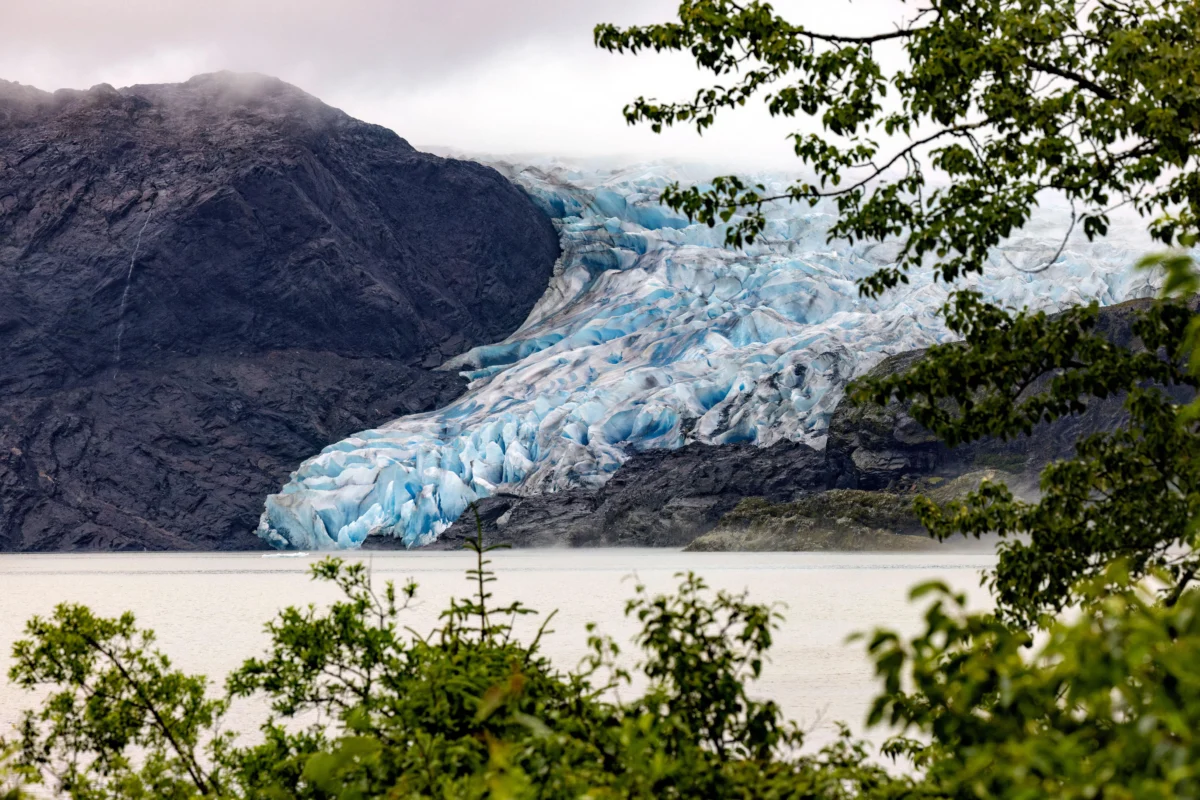
In the rugged expanse of southeast Alaska, the Mendenhall Glacier, known to the local Tlingit people as Aak’w Táak Sít’i (meaning "glacier behind the town"), stands as a stark testament to the planet’s warming trajectory. For Jeremy Aantiyéili Timothy, a cultural ambassador program manager for the Central Council of Tlingit and Haida Indian Tribes of Alaska, his childhood summers were intrinsically linked to the glacier. He recalls the invigorating sprints up its moraines—the steep hills of silt and debris deposited by the glacier—a ritual preparing him for winter ski runs. Today, at 48, Timothy bears witness to a profoundly altered landscape. "Seeing how much the glacier has receded in that timeframe is heartbreaking," he states, articulating a deep, personal connection. "You feel like this glacier is a part of you."
For the communities of Juneau and the surrounding region, the climate crisis is not an abstract concept but a palpable, rapidly unfolding reality. The visible impacts include accelerated thawing and thinning of the ice, rendering the moraines increasingly unstable, and dramatically shifting local habitats. A particularly concerning phenomenon is the rise of "outburst" floods, known scientifically as Glacial Lake Outburst Floods (GLOFs). These events occur when glacial lakes, formed by meltwater, suddenly breach the ice or sediment dams containing them, unleashing dangerous torrents. The Mendenhall River has experienced an increasing frequency and intensity of these floods, sending destructive waves through Juneau and incurring tens of millions of dollars in damages to infrastructure and property. In 2014, a significant GLOF caused the destruction of several homes and bridges, illustrating the immediate and devastating economic toll. The once easily accessible glacier and its mesmerizing ice caves have become increasingly perilous and out of reach for both locals and tourists. Gwen Baluss, conservation chair for the Juneau Audubon Society, laments, "We can still see it, but we can’t reach it."
Scientists warn that Aak’w Táak Sít’i, like many other mountain glaciers globally, is precariously close to a critical "tipping point." If global temperatures continue their ascent towards and beyond the 1.5 degrees Celsius warming target outlined in the Paris Agreement, the glacier could fracture into multiple segments, initiating a self-sustaining cycle of ever-faster ice loss. This would represent a non-linear, irreversible change, akin to falling off a cliff rather than merely sliding down a predictable slope, with profound implications for regional hydrology, ecosystems, and human settlements.
Defining Climate Tipping Points: A Global Wake-Up Call
The perilous state of Aak’w Táak Sít’i serves as a microcosm for the larger global climate crisis, a central theme explored in the comprehensive Global Tipping Points Report, published in October 2023. Compiled by a collaborative effort of over 160 scientists, this groundbreaking report details how numerous Earth systems are perilously close to crossing irreversible thresholds. These tipping points, once breached, can trigger self-amplifying feedback loops, leading to total ecosystem collapse and, critically, facilitating even more rapid global warming.
Tim Lenton, a climate scientist at the University of Exeter and lead author of the report, articulated the sobering reality: "The biggest picture is that we’re sadly already starting to cross climate tipping points, and the risk of crossing others increases with every fraction of a degree of global warming." The concept of climate tipping points refers to critical thresholds in the Earth system that, when exceeded, lead to large, often abrupt, and irreversible changes. These changes can propagate through different systems, creating domino effects that are difficult to predict and nearly impossible to reverse on human timescales. The scientific community has been increasingly focused on these non-linear responses, recognizing that traditional linear models of climate change may underestimate the true risks.
The Cascade of Negative Thresholds: Ecosystems Under Duress
The Global Tipping Points Report identifies several critical Earth systems already at high risk or demonstrably past their tipping points. The most prominent and widely recognized example is the widespread dieback of warm-water coral reefs. Researchers confirm that this ecosystem has already reached its first major climate tipping point. As ocean temperatures rise and absorption of atmospheric carbon dioxide leads to ocean acidification, corals are increasingly unable to regenerate. The Intergovernmental Panel on Climate Change (IPCC) estimates that even at 1.5°C warming, 70-90% of coral reefs will be lost, with virtually all expected to vanish at 2°C. This loss has devastating consequences for marine biodiversity, coastal protection, and the livelihoods of millions dependent on reef ecosystems.
Beyond coral reefs, other critical systems teeter on the brink:
- The Amazon Rainforest: Often referred to as the "lungs of the planet," the Amazon is under severe threat from a combination of drought and deforestation. Satellite data indicates that significant portions of the rainforest are experiencing increased dry season length and reduced rainfall, pushing it towards a potential transition into a dry savanna-like ecosystem. This shift would release vast amounts of stored carbon, accelerate global warming, and lead to an unparalleled loss of biodiversity. Recent studies suggest that up to 75% of the Amazon has lost resilience since the early 2000s.
- Arctic Sea Ice: The Arctic region is warming at least two to three times faster than the global average. The melting of reflective white sea ice exposes the darker ocean beneath, which absorbs more solar radiation. This feedback loop, known as the "albedo effect," further accelerates warming and ice melt. The September Arctic sea ice minimum extent has declined by approximately 13% per decade relative to the 1981-2010 average, with projections indicating a potentially ice-free Arctic summer by mid-century, with profound implications for global weather patterns and sea level rise.
- Thawing Permafrost: The vast permafrost regions of the Arctic and boreal forests contain an estimated 1,700 billion tons of organic carbon, more than twice the amount currently in the atmosphere. As these frozen soils thaw, ancient organic matter decomposes, releasing potent greenhouse gases like methane and carbon dioxide. This process creates a powerful positive feedback loop, further intensifying global warming. Research indicates that permafrost thaw is already contributing to observed emissions, though the exact rate and scale of future releases remain an area of active scientific inquiry.
- Ocean Circulation Collapse: The Atlantic Meridional Overturning Circulation (AMOC), a large system of ocean currents that transports warm water from the tropics into the North Atlantic, is a critical regulator of global climate. Paleoclimate data and recent observations suggest a weakening of the AMOC, possibly due to freshwater input from melting ice sheets. A significant slowdown or collapse of the AMOC could lead to abrupt and drastic shifts in global weather patterns, including more extreme winters in Europe, altered monsoon systems in Africa and Asia, and potentially significant sea-level rise along the U.S. East Coast, disrupting food webs and global ecosystems.
The Counter-Narrative: Positive Tipping Points for a Resilient Future
While the dire warnings about negative tipping points are critical, the Global Tipping Points Report also offers a powerful counter-narrative: the identification and acceleration of "positive tipping points." These are transformative social, economic, and technological drivers that can initiate chain reactions, flipping failing systems towards stability and locking in progress for the planet. These positive feedback loops, if nurtured and amplified, hold the key to mitigating the worst effects of climate change.
Lenton emphasizes that there is compelling evidence of a global acceleration towards these positive tipping points. A prime example is the exponential rise in the adoption of solar energy. Solar photovoltaics have become the fastest-growing source of electricity in history. Globally, solar power capacity has increased by an average of over 20% annually for the past two decades. This rapid deployment has led to dramatic cost reductions, making solar power cheaper than new fossil fuel plants in many regions, thereby accelerating decarbonization. Similarly, the electric vehicle (EV) market is experiencing unprecedented growth. In 2023, global EV sales surpassed 14 million, representing a 35% increase from the previous year, and now account for over 18% of the total car market. As manufacturing scales up and battery technology improves, EVs become increasingly affordable and attractive compared to internal combustion engine vehicles, creating a self-reinforcing cycle of adoption.
Beyond technological advancements, the report highlights the critical role of restoration and conservation efforts. Initiatives aimed at rewilding degraded landscapes, restoring vital wetlands, and protecting old-growth forests can help struggling habitats regain health and resilience, buying precious time for ecosystems to adapt. These efforts not only sequester carbon but also enhance biodiversity, improve water quality, and provide essential ecosystem services.
Local Resilience, Global Lessons: The Juneau Model
The importance of localized action and community-led initiatives is powerfully demonstrated in Juneau, where Indigenous groups are playing a central and proactive role in adapting to the evolving environmental realities. The Central Council of Tlingit and Haida Indian Tribes of Alaska exemplify this leadership. Last year, the Mendenhall River reached a record-high water level, a scenario that could have decimated parts of the city were it not for recently installed flood barriers and robust community preparedness. Sabrina Grubitz, the Tlingit and Haida public safety manager, highlights the proactive stance of tribal leaders, who are working collaboratively with state and federal partners to safeguard the community from increasing risks.
Furthermore, the tribal government has forged a critical partnership with the U.S. Forest Service for the co-stewardship of Aak’w Táak Sít’i and its surrounding lands. This collaborative model recognizes the invaluable traditional ecological knowledge held by Indigenous communities, accumulated over millennia of living in harmony with the land. A key component of this effort involves hiring cultural ambassadors to educate visitors, offering insights into the glacier’s significance beyond its geological features. This includes advocating for the use of ancestral names, such as Aak’w Táak Sít’i, over colonial labels, thereby restoring cultural identity and respect for the land. Such initiatives are vital not only for local resilience but also for fostering a deeper understanding of human-environment relationships.
Policy and Collective Action: Charting a New Course
Tim Lenton underscores that such on-the-ground collaboration, particularly with Indigenous communities, is absolutely essential for staving off ecosystem collapse and accelerating positive change. When local projects succeed, they do more than merely address immediate concerns; they create replicable blueprints for effective climate action. The challenge then becomes scaling these successes, integrating them with broader policy frameworks that incentivize clean energy, sustainable land use, and green innovation.
This integrated approach, combining bottom-up community action with top-down policy support, builds critical momentum towards a safer and healthier planet. The transition to a decarbonized global economy requires significant investment, technological breakthroughs, and sustained political will. Governments, industries, and civil society organizations must work in concert to accelerate the deployment of renewable energy, enhance energy efficiency, invest in carbon capture technologies, and protect and restore natural carbon sinks. The implications of achieving positive tipping points are profound: not only would they mitigate climate risks, but they would also spur economic growth in green sectors, improve public health through cleaner air and water, and enhance overall societal well-being.
"It very much involves people and communities and bottom-up action deciding to make the change," Lenton asserts, emphasizing the human element at the heart of this transformation. "That change becomes infectious." The journey to avoid catastrophic climate tipping points and trigger a wave of positive ones is undoubtedly challenging, requiring unprecedented global cooperation and commitment. Yet, the lessons from places like Juneau, coupled with the accelerating deployment of sustainable technologies, offer a powerful vision of a future where humanity not only adapts to a changing climate but actively shapes a more resilient and equitable world. The balance hangs precariously, but the opportunity for transformative action remains.
