
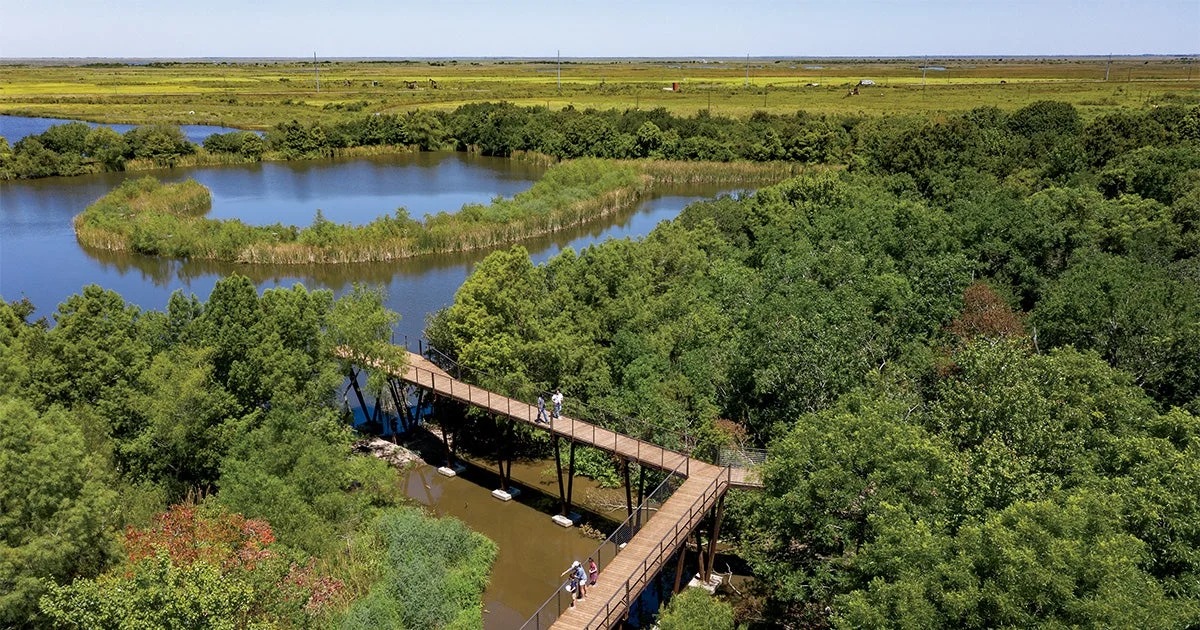
The advent of elevated canopy walkways across North America has fundamentally reshaped the experience of birdwatching, offering unprecedented access to the vibrant ecosystems thriving high above the forest floor. Once a pursuit often constrained by ground-level views and neck strain from craning upwards, birding has been transformed into an immersive, eye-level encounter with elusive avian species. These innovative structures, ranging from intricate boardwalks to soaring towers, provide a unique vantage point, fulfilling what many naturalists describe as "every birder’s dream—to be up in the treetops with the birds," as noted by British Columbia-based naturalist Ann Nightingale. Beyond their appeal to seasoned ornithologists, many of these facilities are designed with accessibility in mind, often featuring wheelchair-friendly ramps, ensuring that the wonders of the forest canopy are available to a broader public. This growing network of elevated pathways represents a significant step forward in both nature appreciation and environmental education, providing not only unique observational opportunities but also serving as vital platforms for ecological research and conservation advocacy.
The Evolution of Elevated Nature Access and Conservation
The concept of observing nature from an elevated perspective is not entirely new, but the widespread development of robust, accessible canopy walkways has gained significant momentum in recent decades. Historically, birdwatching involved navigating dense undergrowth or relying on binoculars from afar, often missing the intricate behaviors of canopy-dwelling species. Modern engineering and a heightened focus on ecological tourism have converged to create these sophisticated structures. The design philosophy often balances minimal environmental impact with maximum visitor engagement, ensuring that the construction process disturbs the natural habitat as little as possible while providing safe and stable viewing platforms. This allows visitors to step directly into the world of arboreal wildlife, offering intimate glimpses into nesting sites, foraging patterns, and migratory stopovers that were previously challenging to observe. The increasing number of such installations, including the newly constructed canopy walk at Blacklick Woods Metro Park in Ohio (opened in 2024), underscores a growing trend towards more immersive and inclusive nature experiences. These structures often become focal points for local conservation efforts, raising awareness about the delicate balance of forest ecosystems and the critical role birds play within them. They also align with broader conservation goals by fostering public connection to nature, which is a precursor to environmental stewardship.
Economic and Ecological Significance of Birdwatching
Birdwatching, or birding, is a significant component of ecotourism and conservation. According to the U.S. Fish and Wildlife Service, millions of Americans engage in birdwatching annually, contributing billions of dollars to the economy through travel, equipment, and related services. A 2016 report indicated that wildlife watching activities, including birding, generated $75.9 billion in economic output and supported 832,000 jobs. This economic impact often directly supports local communities and conservation initiatives. Canopy walkways enhance this by providing a premium, unique experience that attracts both casual observers and dedicated birders, potentially increasing visitor numbers and associated revenue for parks and refuges. From an ecological standpoint, these elevated paths offer unparalleled opportunities for scientific research and public education. They allow researchers to study canopy biodiversity, which is often distinct from ground-level ecosystems, and provide educational institutions with living laboratories. For the public, the direct engagement with nature from a new perspective fosters a deeper appreciation for biodiversity and the importance of habitat preservation. These walkways are particularly valuable during peak migration seasons, such as spring, when countless songbirds undertake arduous journeys, often relying on specific forest types for rest and refueling. Being at canopy level during these periods provides an extraordinary window into one of nature’s most spectacular events, highlighting the critical need to protect these migratory corridors.
Featured Canopy Walkways: Gateways to the Treetops
Smith Oaks Bird Sanctuary – High Island, Texas
Located at the crucial nexus of the Gulf Coast migratory flyway, the Kathrine G. McGovern Canopy Walkway at Smith Oaks Bird Sanctuary in High Island, Texas, offers an unparalleled spring birding experience. This region is renowned as a stopover point for millions of neotropical migrants crossing the Gulf of Mexico, making the timing of the walkway’s peak usage particularly significant. Each spring, the small patch of woodland at High Island becomes a vibrant sanctuary for warblers, vireos, and tanagers exhausted from their trans-Gulf flight. Ascending a gentle ramp, visitors are immediately transported to eye level with dazzling species like the Prothonotary Warbler, whose brilliant golden plumage flashes against the green foliage. The strategic placement of overlook platforms provides intimate views of nesting colonies, a spectacle that draws birders globally. Here, Great Egrets, Roseate Spoonbills, and Black-crowned Night Herons are observed in their most vulnerable and vital stages of life, often with alligators providing a contrasting primeval presence in the murky waters below. Jed Aplaca, president and CEO of Houston Audubon, which operates the walkway, succinctly captures the essence of the experience: "You’re in the realm of birds." The sanctuary, opening daily at 7 a.m. with a $10 day pass, ensures early access for optimal bird activity, aligning with the dawn chorus that marks the start of a productive birding day. The walkway not only enhances birding opportunities but also serves as a vital tool for public education about the importance of coastal habitats for migratory birds, particularly in the face of environmental challenges such as coastal erosion and habitat loss.
Malahat Skywalk – British Columbia, Canada
Perched majestically at the southern tip of Vancouver Island, the Malahat Skywalk in British Columbia, Canada, represents a fusion of architectural innovation and natural immersion. Rising 65 feet above ground for much of its length and culminating in a dramatic 130-foot spiral tower, this walkway provides breathtaking panoramic views of fjords, peninsulas, and the vast Pacific Ocean. While renowned for its stunning vistas, it is equally a prime location for observing the diverse avian life of the Pacific Northwest and even marine mammals. The temperate rainforest ecosystem here supports a unique array of species. Birders can expect to see Violet-green Swallows performing acrobatic aerial displays, while Townsend’s Warblers and Red-breasted Nuthatches flit among the ancient Douglas firs that dominate the landscape. The elevated perspective also offers unique opportunities to spot raptors, such as the majestic Bald Eagle and the swift Peregrine Falcon, often perched in treetops or soaring on thermals. For the more patient and keen-eared, the elusive Sooty Grouse can occasionally be detected by its distinctive low booming call during the spring breeding season, a sound often missed from the forest floor. The possibility of witnessing whales traversing the waters below adds another layer of awe to this experience, connecting visitors to the broader marine ecosystem. Opening at 9 a.m. with an admission fee of $46.95 CAD (approximately $34.50 USD), the Malahat Skywalk is a testament to how human ingenuity can enhance engagement with spectacular natural environments, while simultaneously promoting awareness of the region’s rich biodiversity.
Blacklick Woods Metro Park – Ohio
The newest addition to North America’s elevated nature experiences, the 40-foot-high canopy walk at Blacklick Woods Metro Park in Ohio, constructed in 2024, has quickly become a significant draw for local birders and nature enthusiasts. This facility represents a deliberate effort to bring immersive nature experiences closer to urban populations, making it an accessible retreat for residents of the Columbus metropolitan area. The walkway is strategically designed to provide an optimal perch for spotting migratory songbirds as they pass through Ohio’s deciduous forests. Species like the vibrant Cerulean Warbler, a species of conservation concern, the distinctive Black-throated Green Warbler, and the energetic American Redstart are commonly observed darting through the foliage of mature oaks, maples, and beeches. The walkway incorporates unique interactive elements, including rope bridges, a fireman’s pole, and a treehouse, which are particularly popular with younger visitors, fostering early engagement with nature and science. Furthermore, hanging feeders along the boardwalk attract species such as Red-bellied Woodpeckers and Rose-breasted Grosbeaks, offering close-up viewing opportunities. Recognizing the critical timing of spring migration, Blacklick Woods thoughtfully extends its opening hours from April 20 to May 22, allowing access two hours early at 7 a.m. This provides birders with prime viewing during the most active periods of the day, maximizing chances of observing peak bird activity. With free admission and a focus on community engagement, Blacklick Woods exemplifies how metro parks are evolving to offer sophisticated and enriching natural experiences, proving that significant natural immersion is possible even within metropolitan areas.
Santa Ana National Wildlife Refuge – Texas
Deep within the Lower Rio Grande Valley, one of the most biodiverse regions in the United States, lies the Santa Ana National Wildlife Refuge, home to a 20-foot-high swinging bridge that offers a unique treetop perspective. This refuge is a critical haven for wildlife, particularly birds, serving as a biological crossroads where temperate and subtropical zones meet, resulting in an extraordinary array of species rarely seen elsewhere in the country. The swinging bridge provides an immersive experience into this unique ecosystem, allowing visitors to observe tropical birds such as the strikingly colorful Great Kiskadee, the iridescent Green Jay, and the distinctive Groove-billed Ani at eye level. Beyond its resident species, Santa Ana is a vital refueling station for numerous migrating songbirds, including the exquisite Golden-winged Warbler and the boisterous Yellow-breasted Chat, both of which undertake extensive migrations. It is also a renowned destination for migrating raptors, with Broad-winged and Swainson’s Hawks frequently seen overhead during their impressive flights south. For the truly fortunate, rare raptors like the enigmatic Hook-billed Kite can make an appearance, adding to the refuge’s allure. The refuge opens at sunrise, acknowledging the early activity of its avian inhabitants, with a modest $5 parking fee contributing to the ongoing conservation efforts of this irreplaceable habitat. The walkway here is not just an attraction but a direct window into the urgency of preserving such rich ecological treasures, especially given the threats posed by habitat fragmentation and border development in the region.
Whiting Forest, Dow Gardens – Michigan
In the heart of Michigan, Whiting Forest at Dow Gardens boasts one of the longest canopy walkways in the country, a sprawling 1,400-foot-long structure that immerses visitors 40 feet above a diverse forest landscape. This extensive walkway is meticulously designed to traverse a variety of habitats, offering a comprehensive ecological journey through Michigan’s mixed deciduous and coniferous forests. Visitors glide above towering stands of mature red pines, known for their distinctive bark and ecological value, meander past vibrant wildflower meadows that burst with color in spring, and overlook not one, but two serene forest ponds. This varied terrain ensures a wide array of bird species are encountered throughout the journey, each adapted to specific microhabitats within the larger forest. Birders can peer into the dense canopy for species like the brilliant Baltimore Oriole, the deep blue Indigo Bunting, and the elusive Pine Warbler, whose subtle calls often betray its presence. Near the water features, Tree Swallows are frequently observed dipping and soaring, hunting insects with aerial grace, a common sight during the warmer months. The sheer length and habitat diversity of the Whiting Forest canopy walk provide an extended opportunity for bird identification and observation, making it a standout destination for those seeking a prolonged and varied nature experience. Open at 9 a.m. (10 a.m. in winter) with a $15 admission for adults, it represents a significant investment in public engagement with Michigan’s rich natural heritage, offering a contemplative and expansive experience for all who visit.
Myakka River State Park – Florida
Florida’s Myakka River State Park offers a unique blend of elevated views and subtropical wilderness, featuring a canopy walkway that lifts visitors 25 feet high above the park’s characteristic hammock forests. These hammocks, raised islands of hardwood trees within a wetland landscape, are crucial habitats for numerous species. For those seeking an even higher perspective, an accompanying tower ascends to an impressive 75 feet, accessible via a climb of 100 stairs, providing panoramic vistas of the park’s extensive wetlands and forests. This elevated position provides spectacular opportunities to observe the diverse wildlife of southwest Florida. Overhead, Black Vultures circle lazily on thermals, acting as nature’s clean-up crew, while the elegant Swallow-tailed Kites might be seen soaring gracefully in the distance, their distinctive forked tails a hallmark of the Floridian skies during spring and summer. Closer to the walkway, Palm Warblers flit amidst the oak canopy, their active movements a constant delight, often seen bobbing their tails. Beyond the avian spectacle, the Myakka walkway is also an excellent vantage point for observing the park’s vibrant insect life, including colorful treehoppers, and the ubiquitous alligators that bask and swim in the wetlands far below, showcasing the rich reptilian life. The contrast between the canopy and the watery ecosystems below underscores the interconnectedness of Florida’s subtropical environment. Opening at 8 a.m. with a $6 parking fee per vehicle, the Myakka River State Park canopy walkway offers an adventurous and educational journey into the heart of one of Florida’s most cherished natural preserves, promoting understanding of its unique ecological dynamics.
Wild Walk at the Wild Center – New York
In the majestic Adirondack Mountains of New York, the Wild Walk at the Wild Center takes the concept of a bird’s perspective to an extraordinary level. Towering up to 30 feet above balsam firs, a quintessential Adirondack tree species, this immersive walkway is not merely a path through the trees but an interactive journey designed to simulate the experience of being a part of the forest canopy. The Wild Walk features large tree snags that visitors can explore, providing insights into the natural decomposition process, swinging bridges that add an element of playful adventure, and even a life-size replica of a Bald Eagle nest, offering a unique photo opportunity and a tangible sense of scale to these impressive structures. A dedicated observation area, equipped with bird feeders, baths, and blinds, provides excellent opportunities for close-up views of resident species like Black-capped Chickadees and the industrious Hairy Woodpeckers, allowing for detailed observation of their feeding behaviors. Furthermore, the walkway allows birders to scan the extensive conifer forest for migratory species unique to northern environments, including the secretive Ovenbird, known for its "teacher, teacher, teacher" call, the melodious Blue-headed Vireo, and the solitary Hermit Thrush, a symbol of northern wilderness. The Wild Walk, opening at 10 a.m. with a $26 admission fee, embodies an innovative approach to environmental education, blending recreation with profound insights into the natural world, fostering a deeper connection between visitors and the Adirondack wilderness, and highlighting the importance of preserving these vast forest ecosystems.
Broader Implications and Future Outlook
The proliferation of canopy walkways across North America signifies a broader shift in how public lands and nature centers engage with their audiences. These structures are more than just tourist attractions; they are critical tools for environmental education, promoting conservation awareness, and fostering a sense of stewardship for natural habitats. By offering accessible, immersive experiences, they democratize access to nature, allowing individuals of all ages and physical abilities to connect with ecosystems that were once out of reach. This inclusivity is vital for ensuring that environmental appreciation is cultivated across all demographics.
The continued development of such infrastructure is likely to incorporate even more sophisticated design elements, perhaps integrating augmented reality features to enhance species identification or provide real-time data on migratory patterns and climate impacts. As climate change continues to impact avian populations and habitats, these elevated platforms can also serve as crucial monitoring sites, providing valuable data for scientists studying long-term ecological shifts, such as changes in migratory timing or species distribution. The success of these walkways, as evidenced by visitor numbers and positive feedback, suggests a strong public appetite for authentic, yet comfortable, encounters with the wild. They represent a sustainable model for ecotourism, generating revenue that can be reinvested into
