
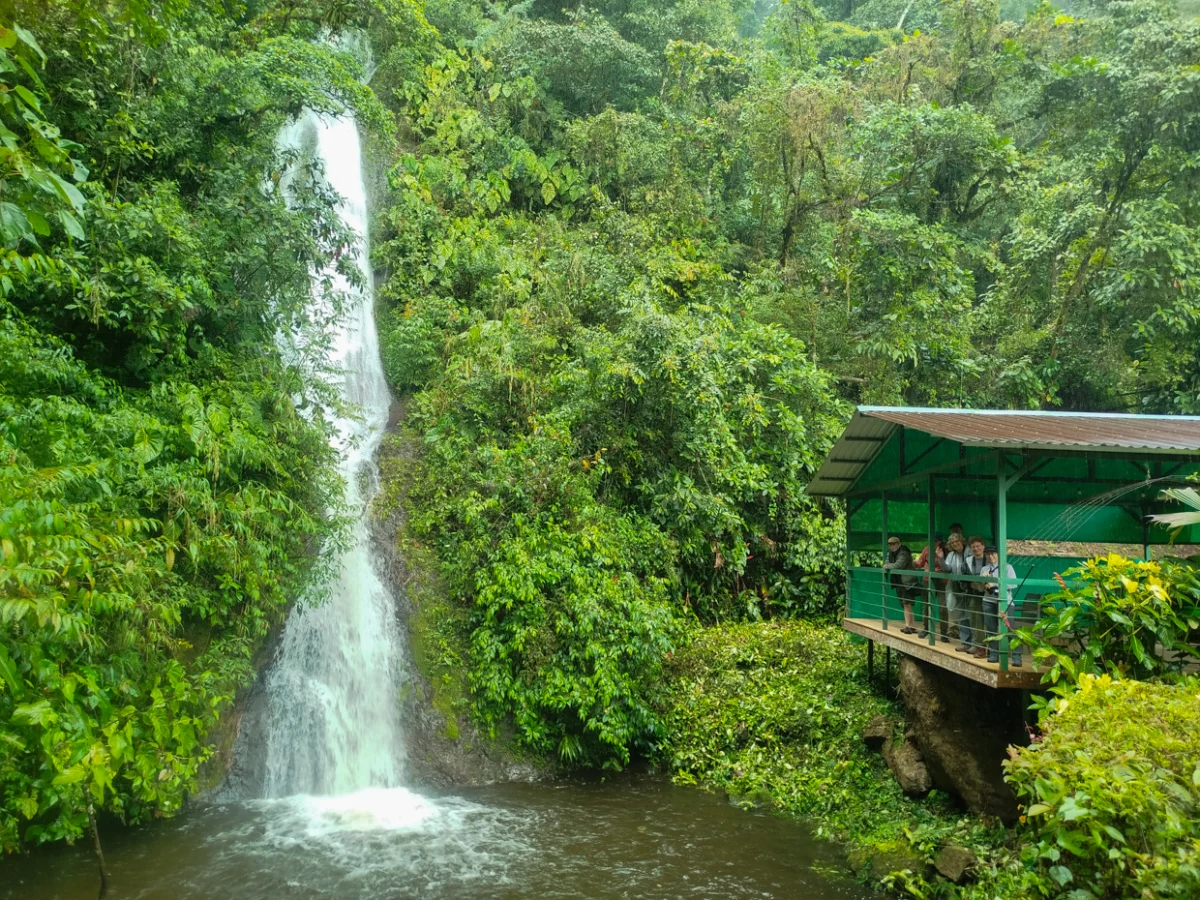
The 2026 Costa Rica Sampler expedition, conducted from February 16 to February 27, has concluded with a significant documentation of the nation’s avian diversity, spanning the Pacific mangroves, the Talamanca highlands, and the Caribbean lowlands. Led by expert ornithologists including Ernesto Carman, the eleven-day field survey provided critical data on resident and migratory species, emphasizing the importance of diverse microclimates in maintaining Neotropical biodiversity. The expedition documented hundreds of species, ranging from the endangered Mangrove Hummingbird to the iconic Resplendent Quetzal, while also observing the peak of the northward raptor migration.

Costa Rica, despite its small geographic footprint, remains a global priority for conservation, housing nearly 5% of the world’s known biodiversity. This expedition served as a microcosm of the country’s ecological health, traversing various life zones and recording the interactions between wildlife and human-modified landscapes, such as organic coffee plantations and biological research stations.
Phase One: The Pacific Lowlands and Coastal Mangrove Ecosystems
The survey commenced in the Central Valley at the Hotel Bougainvillea, where baseline observations were established in a peri-urban garden setting. Early recordings included the Crimson-fronted Parakeet (Psittacara finschi) and the resident Mottled Owl (Strix virgata). These species represent the adaptable "yard birds" of the Central Valley, which provide essential ecosystem services in increasingly urbanized environments.

On the second day, the team transitioned to the Pacific coast, focusing on the Caldera mangroves. This habitat is vital for specialized species that cannot survive in other forest types. The timing of the survey coincided with the blooming of the native Chameleon Vine (Combretum farinosum), a high-nectar producer that acts as a focal point for both resident hummingbirds and North American migratory warblers. Observers noted high densities of Prothonotary Warblers and Tennessee Warblers utilizing these nectar sources.
Critically, the expedition secured sightings of the Mangrove Hummingbird (Amazilia boucardi), a species endemic to the Pacific coast of Costa Rica and currently listed as endangered by the IUCN. The survival of this species is inextricably linked to the health of the mangrove forests, which are under constant pressure from coastal development and rising sea levels. Further inland, along the Guácimo Road and the Tárcoles River, the team recorded the Double-striped Thick-knee and the Boat-billed Heron, indicating a robust aquatic food web despite the proximity of the Tárcoles to industrial and agricultural runoff.

Phase Two: Transition Zones and Rainforest Dynamics in Carara National Park
Days three and four were dedicated to Carara National Park, a globally recognized "transition zone" where the dry forests of the north meet the humid rainforests of the south. This unique overlap results in high species richness. Field observations on the Quebrada Bonita Trail revealed a complex understory hierarchy, featuring the Black-hooded Antshrike and the Chestnut-backed Antbird.
One of the most significant ecological events recorded was an active army ant swarm. In Neotropical birding, these swarms are considered a biological "jackpot," as they flush out thousands of arthropods, creating a feeding frenzy for specialized "ant-followers." The expedition documented Bicolored Antbirds and various woodcreepers—Northern Barred, Cocoa, and Tawny-winged—tracking the swarm. This behavior illustrates the intricate symbiotic relationships within mature tropical rainforests, where the presence of one species (the ants) is a prerequisite for the survival of several others.

The Tárcoles River boat tour provided a broader perspective on the region’s raptor and parrot populations. The team observed the Yellow-naped Parrot, a species facing severe population declines due to the illegal pet trade. Seeing these birds in their natural habitat, alongside Scarlet Macaws and three species of kingfishers, reinforces the value of the Tárcoles watershed as a biological corridor.
Phase Three: Highland Specialization and the Talamanca Mountains
As the expedition moved east into the Talamanca Mountains, the focus shifted from tropical heat to the temperate, high-altitude cloud forests. In the town of Paraíso, the team investigated local conservation efforts for the Cabanis’s Ground-Sparrow (Melozone cabanisi), a species endemic to Costa Rica. The county of Paraíso has adopted this bird as its official symbol, highlighting a successful integration of community identity and wildlife preservation.

The survey reached its highest elevation at Cerro de la Muerte, 3,400 meters above sea level. This sub-alpine paramo habitat is home to the Volcano Junco, a regional endemic found only in the high peaks of Costa Rica and western Panama. Despite the challenging weather conditions characterized by rain and low temperatures, the team successfully documented the junco and several highland hummingbirds, including the Fiery-throated Hummingbird.
The highlight of the highland phase was the observation of the Resplendent Quetzal in the village of La Esperanza. The quetzal is a specialist feeder, relying almost exclusively on the fruit of wild avocado trees (Lauraceae). The team’s documentation of the bird feeding in these trees underscores the necessity of protecting specific fruiting corridors to ensure the survival of this culturally and ecologically significant species.

Phase Four: The Caribbean Slope and Agricultural Symbiosis
The latter half of the expedition explored the Ujarrás Valley and the Caribbean slope. A key point of study was Cafe Cristina, an organic, shade-grown coffee farm. This location served as a case study for "bird-friendly" agriculture. Unlike sun-grown coffee monocultures, shade-grown plantations maintain a canopy of native trees that provide habitat for migratory birds. The presence of Summer Tanagers and Montezuma Oropendolas at the farm demonstrates that sustainable agricultural practices can mitigate habitat loss.
In the Ujarrás Valley, the expedition collaborated with researcher Paz Angulo to observe Hook-billed Kites. Angulo’s research into the feeding habits of these raptors—which specialize in land snails—provides vital data on how land-use changes in the Central Valley affect specialized predators. The team also observed the Sunbittern nesting near Hotel Quelitales, providing rare insights into the breeding behavior of this ancient avian lineage.

Phase Five: The Northern Lowlands and Migratory Corridors
The final leg of the tour took the team to the Arenal Observatory Lodge and the La Selva Biological Station. The Arenal region, dominated by the volcano’s influence, offered a glimpse into Caribbean middle-elevation rainforests. Despite persistent rain, the team recorded a diverse array of tanagers and honeycreepers, species that are vital for seed dispersal and pollination in the rainforest canopy.
The visit to La Selva Biological Station, operated by the Organization for Tropical Studies (OTS), provided a scientific bookend to the journey. La Selva is one of the most important sites for tropical research in the world. The expedition witnessed a massive raptor migration event, with hundreds of Turkey Vultures and Swainson’s Hawks streaming northward. This annual migration is one of the great spectacles of the natural world, as millions of birds funnel through the narrow land bridge of Central America.

At La Selva, the team also documented the Great Green Macaw, a species that is critically endangered due to the loss of the Almendro tree (Dipteryx oleifera), its primary nesting and food source. The station’s resident guide, Jehudi, emphasized that the long-term monitoring conducted at La Selva is crucial for understanding how climate change is altering the timing of these migrations and the availability of forest resources.
Analysis of Implications and Conservation Outlook
The 2026 Costa Rica Sampler expedition provides several key takeaways for the scientific and conservation communities. First, the high number of species recorded across various habitats suggests that Costa Rica’s network of national parks and private reserves continues to function effectively as a refuge for biodiversity. However, the reliance of many species on specific, often unprotected, resources—such as the Chameleon Vine in the mangroves or the wild avocados in the highlands—highlights the need for "corridor-based" conservation rather than just "island-based" park management.

Second, the observation of several endemic and endangered species (Mangrove Hummingbird, Cabanis’s Ground-Sparrow, Great Green Macaw) underscores the responsibility of the local government and international partners to maintain strict habitat protections. The integration of eco-tourism, as demonstrated by this expedition, provides the economic incentive necessary to sustain these efforts.
Finally, the impact of weather patterns observed during the trip—ranging from extreme heat on the Pacific to unseasonable rain in the Caribbean lowlands—serves as a reminder of the volatility introduced by global climate change. Ornithological surveys like this one are essential for tracking how bird populations shift their ranges and behaviors in response to these environmental stressors.

As the participants gathered for their farewell dinner at Hotel Robledal, the consensus was clear: the avian richness of Costa Rica remains a world-class treasure, but its future depends on the continued intersection of scientific research, sustainable agriculture, and dedicated habitat preservation. The data collected during these eleven days will be uploaded to global databases like eBird, contributing to the collective understanding of Neotropical ornithology for years to come.
