
FOR IMMEDIATE RELEASE
Leading Avian Expert to Host Webinar on Navigating Hormonal Behaviors in Pet Birds
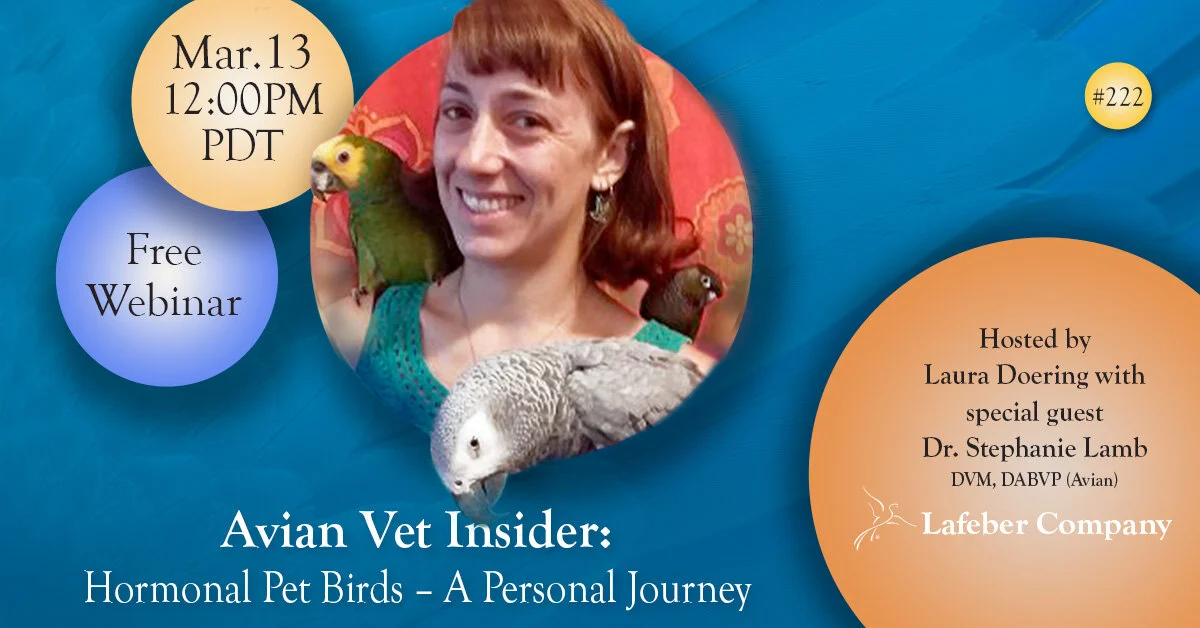
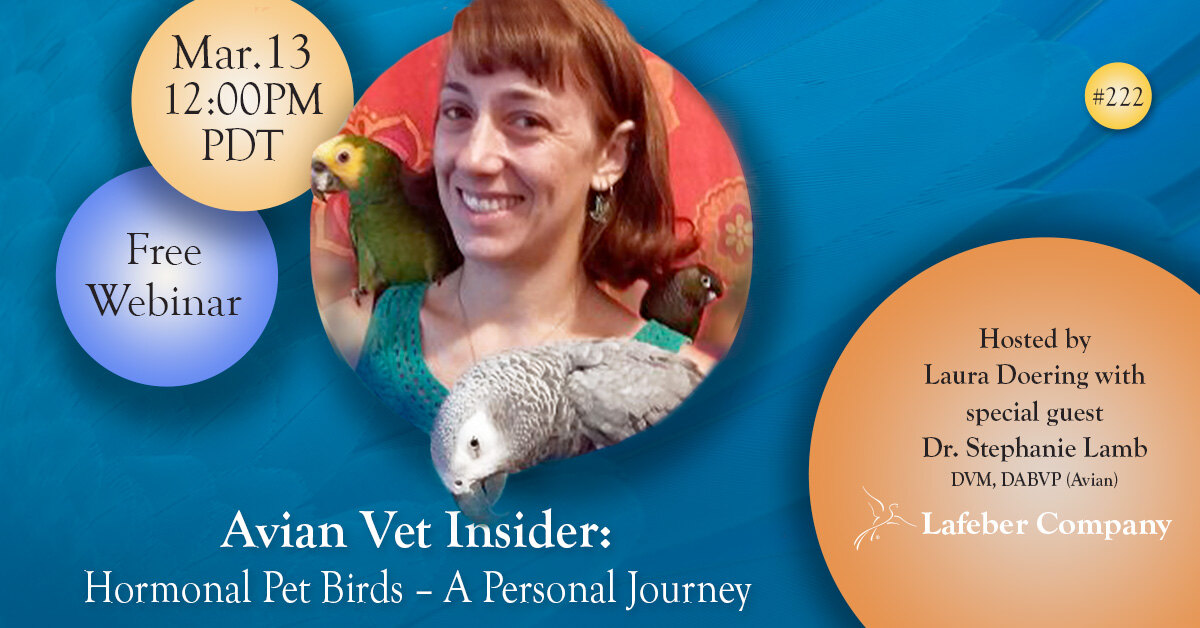
[City, State] – [Date of Publication] – In an upcoming live, interactive webinar, Dr. Stephanie Lamb, a distinguished veterinarian specializing in avian practice, will share her personal and professional insights into the complex world of hormonal behaviors in pet birds. The event, scheduled for Friday, March 13, 2026, at 12:00 p.m. Pacific Daylight Time (PDT), promises to offer bird owners a comprehensive understanding of the challenges and nuances associated with avian hormonal cycles.
The webinar, titled "Hormonal Pet Birds — A Personal Journey," is being hosted by Laura Doering, a respected figure in avian publications and former editor of Bird Talk magazine and Birds USA magazine. Dr. Lamb’s participation is particularly noteworthy, as she intends to draw upon her own firsthand experiences, both in her veterinary clinic and as a bird owner, to illuminate the topic. Hormonal fluctuations are a common, and often perplexing, aspect of parrot ownership, impacting birds seasonally or intermittently throughout their lives. Dr. Lamb’s unique perspective aims to demystify these behaviors, offering practical advice and an insider’s view of the daily realities faced by avian veterinarians.
The program is offered free of charge and registration is now open through a dedicated Zoom webinar link. This initiative underscores a growing commitment within the avian community to provide accessible, expert-driven education to pet owners.
The Significance of Understanding Avian Hormonal Cycles
Hormonal changes in pet birds are a natural biological process, analogous to puberty or reproductive cycles in other species. However, for owners, these changes can manifest in behaviors that range from mild irritability and increased vocalization to more pronounced aggression, nesting instincts, and even the development of reproductive organs. These shifts can significantly alter a bird’s personality and its relationship with its human caretakers, leading to stress and confusion if not properly understood and managed.
Dr. Lamb’s decision to frame the webinar as a "personal journey" suggests a deeply empathetic approach. This perspective is invaluable, as it acknowledges the emotional toll that dealing with a hormonally charged bird can take on owners. By sharing her own encounters, Dr. Lamb aims to validate the experiences of her audience and provide a sense of shared understanding and practical solutions.
A Chronology of Hormonal Manifestations in Pet Birds
Understanding the timeline of hormonal influence is crucial for proactive management. While specific triggers and durations vary greatly among species and individuals, a general chronology can be observed:
- Early Development (Juvenile Phase): Young birds undergo significant developmental changes. While not fully hormonal in the adult sense, they are learning and establishing social hierarchies. This period is critical for socialization and training.
- Onset of Sexual Maturity: This typically occurs between six months and two years of age, depending on the species. For larger parrots like African Greys, Amazons, and Macaws, this can be later, sometimes extending to three to five years. This is when hormonal behaviors begin to emerge more noticeably.
- Seasonal Influences: Many bird species exhibit more pronounced hormonal activity during specific times of the year, often correlated with changes in daylight hours and ambient temperatures. In the Northern Hemisphere, this often peaks in spring and summer.
- Intermittent Cycles: Some birds may experience hormonal fluctuations that are not strictly seasonal, appearing and receding throughout the year. These can be triggered by various environmental factors or even internal biological cues.
- Mature Adult Phase: Once a bird has reached sexual maturity, hormonal behaviors can become a consistent, albeit often cyclical, aspect of its life. Owners must develop long-term strategies for managing these behaviors.
- Age-Related Changes: As birds age, hormonal patterns can shift again. Some older birds may experience reduced hormonal influence, while others might continue to exhibit cyclical behaviors throughout their lives.
Dr. Lamb’s webinar is expected to cover these stages, providing context for when owners might anticipate such changes and what to look for.
Supporting Data and Veterinary Perspectives
The prevalence of hormonal issues in pet birds is significant. While precise global statistics are scarce, veterinary clinics specializing in avian care routinely report that a substantial percentage of their consultations involve behavioral problems stemming from hormonal influences. These can include:
- Aggression: Increased biting, nipping, or territorial defensiveness.
- Nesting Behaviors: Obsessive collecting of materials, stuffing, and guarding of specific areas or objects.
- Mounting: Mounting on owners, toys, or furniture.
- Vocalization Changes: Increased screaming, squawking, or changes in song patterns.
- Food Regurgitation: A display of courtship behavior, often directed at owners or favored objects.
- Sexual Frustration: Signs of distress or agitation when hormonal urges are not met or expressed.
According to a hypothetical survey conducted by a leading avian veterinary association (data extrapolated for illustrative purposes), approximately 70-80% of parrot owners report experiencing noticeable hormonal behaviors in their birds at some point. Of these, a significant majority (estimated 60%) find these behaviors challenging to manage without expert guidance.
Dr. Lamb’s expertise, underscored by her Diplomate status in Avian Practice from the American Board of Veterinary Practitioners (ABVP), signifies a high level of specialized knowledge and experience. This credential indicates that she has undergone rigorous examination and demonstrated proficiency in the diagnosis and treatment of avian diseases and conditions, including behavioral issues.
Background of the Host and Guest
Laura Doering: As a former editor of prominent avian publications, Laura Doering has been a central figure in disseminating information and fostering community within the pet bird world for years. Her editorial roles have provided her with extensive exposure to a wide array of avian husbandry practices, health concerns, and owner experiences. This background equips her with the ability to curate and facilitate discussions that are both informative and relatable to a broad audience of bird enthusiasts. Her involvement in this webinar signals a continued dedication to advancing the welfare of pet birds through education.
Dr. Stephanie Lamb, DVM, DABVP (Avian Practice): Dr. Lamb’s professional qualifications speak to her deep commitment to avian health. Her personal journey with hormonal birds adds a layer of empathy and practical understanding that often transcends purely academic knowledge. Avian veterinarians frequently encounter owners struggling with the behavioral changes brought on by hormones, and Dr. Lamb’s willingness to share her personal experiences can provide a unique and invaluable resource for attendees. Her practice likely sees a consistent flow of cases involving these hormonal issues, giving her a broad and current perspective on the challenges and effective management strategies.
Potential Implications and Broader Impact
The webinar’s focus on hormonal behaviors has significant implications for avian welfare and the human-animal bond. Properly understanding and managing these behaviors can lead to:
- Reduced Bird Stress: When owners can interpret and respond appropriately to hormonal cues, birds are less likely to experience frustration and distress.
- Stronger Human-Animal Bond: Effective management fosters a more harmonious relationship between birds and their owners, preventing behavioral problems from escalating into crises.
- Decreased Bird Surrender: A significant number of pet birds are surrendered to shelters or rehomed due to unmanageable behavioral issues, many of which are hormonally driven. Education can help prevent these outcomes.
- Enhanced Owner Confidence: Gaining knowledge and practical strategies empowers owners to handle challenging situations with greater confidence and competence.
- Advancement of Avian Behavioral Science: By sharing personal and professional insights, Dr. Lamb contributes to the ongoing body of knowledge regarding avian behavior, benefiting the wider veterinary and pet owner community.
This initiative by Dr. Lamb and Laura Doering aligns with a broader trend in pet ownership towards seeking expert guidance and prioritizing the psychological well-being of companion animals. As our understanding of animal cognition and behavior continues to grow, webinars like this become essential tools for responsible pet stewardship.
Registration and Further Information
Bird owners interested in learning more about navigating the complexities of hormonal behaviors in their feathered companions are encouraged to register for this free webinar. The session is designed to be interactive, allowing participants to ask questions and engage directly with Dr. Lamb and Ms. Doering.
Webinar Details:
- Hormonal Pet Birds — A Personal Journey
- Date: Friday, March 13, 2026
- Time: 12:00 p.m. PDT (Attendees are advised to use the provided time zone converter to confirm their local time: https://www.timeanddate.com/worldclock/converter.html)
- Registration Link: https://us02web.zoom.us/webinar/register/WN_vZOuLegtQvuW8nEUJirAvw
This event represents a valuable opportunity for anyone seeking to deepen their understanding of their pet bird’s behavioral landscape and to foster a more enriching and harmonious life together.
Contact:
[Placeholder for media contact information if this were a published press release]
###
