
The 2026 Costa Rica Sampler expedition, a comprehensive 11-day field survey of the nation’s diverse ornithological landscape, concluded this February with the documentation of hundreds of avian species across five distinct microclimates. Led by renowned ornithologist Ernesto Carman, the expedition spanned from the urbanized Central Valley to the Pacific mangroves, the high-altitude Talamanca cloud forests, and the Caribbean lowland rainforests. The findings from this survey provide a critical snapshot of the current state of biodiversity in one of the world’s most significant ecological corridors, highlighting both the success of local conservation efforts and the challenges posed by shifting weather patterns.

Initial Observations in the Central Valley
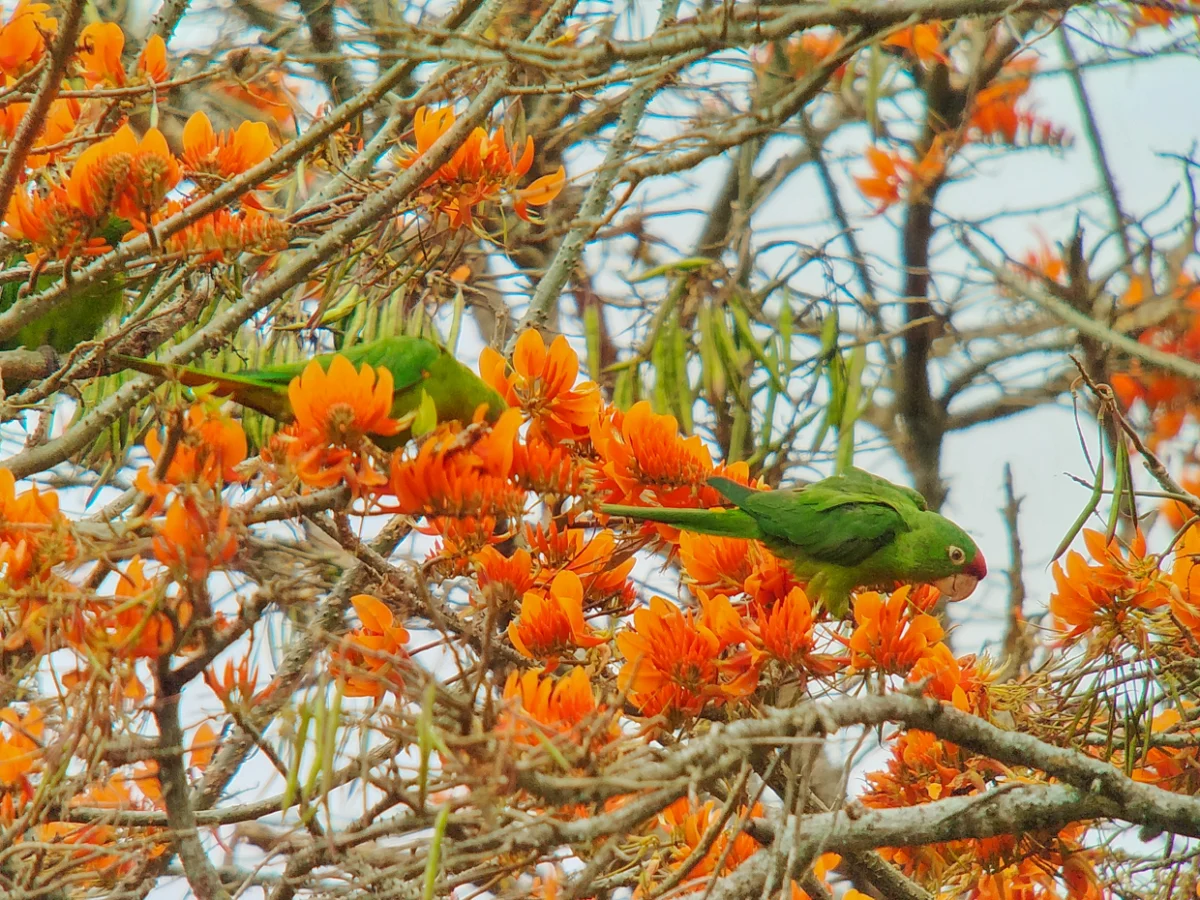
The survey commenced in the Central Valley, specifically within the botanical gardens of the Hotel Bougainvillea. While often overlooked in favor of remote national parks, these urban green spaces serve as vital refuges for resident species. Early observations documented the Crimson-fronted Parakeet (Psittacara finschi) and the Blue-and-white Swallow (Pygochelidon cyanoleuca), alongside a resident pair of Mottled Owls (Strix virgata) nesting in bamboo thickets. Experts suggest that the maintenance of these "urban islands" is essential for maintaining genetic connectivity between larger forest fragments.

Following the initial assessment, the team moved westward toward the Pacific coast to analyze the transition between dry and moist tropical forests. This transition zone is a biological "ecotone" where species from different environments overlap, creating a high-density area of biodiversity.

Pacific Mangroves and the Carara Biological Corridor
The second phase of the expedition focused on the Caldera mangroves and the Guácimo Road. Despite soaring temperatures, the team recorded a high frequency of Turquoise-browed Motmots (Eumomota superciliosa) and several hummingbird species, including the Cinnamon Hummingbird (Amazilia rutila) and the Blue-vented Hummingbird (Saucerottia hoffmanni). A significant find in the Guácimo region was the Double-striped Thick-knee (Burhinus bistriatus), a ground-dwelling bird often associated with dry open lands, found in close proximity to livestock—a testament to the species’ adaptation to agricultural landscapes.

The survey then moved to the Tárcoles River and Carara National Park. Carara is globally recognized as one of the few places where the Northern dry forest meets the Southern wet forest. The expedition documented the iconic Scarlet Macaw (Ara macao), a flagship species for Costa Rican conservation. Once nearly extinct in the region, the Macaw population has rebounded significantly due to strict anti-poaching laws and community-led habitat restoration.

In the deep forest of Carara, the team encountered an "army ant swarm," a phenomenon that serves as a cornerstone of Neotropical forest ecology. Several species, including the Bicolored Antbird (Gymnopithys bicolor) and various woodcreepers, were observed following the swarm to capture insects flushed out by the ants. This interaction highlights the complex interdependencies within the rainforest floor.

High-Altitude Endemism in the Talamanca Mountains
The expedition’s third phase ascended the Talamanca Mountains, reaching elevations of 3,400 meters at Cerro de la Muerte. This region is characterized by high levels of endemism—species found nowhere else on Earth. The primary objective in this sector was the Resplendent Quetzal (Pharomachrus mocinno), a bird of immense cultural and ecological significance. Despite unseasonably wet and cold conditions, the team successfully documented both male and female Quetzals feeding on wild avocados (Lauraceae), a critical food source for the species.

The survey at these altitudes also recorded the Volcano Junco (Junco vulcani), a species restricted to the highest peaks of the Costa Rica-Panama highlands. The presence of these birds at the 3,400-meter mark provides data on how high-altitude specialists are responding to climate shifts. Furthermore, the expedition visited the Paraíso Quetzal Lodge, where they observed the Fiery-throated Hummingbird (Panterpe insignis), noted for its iridescent plumage and territorial behavior at nectar sources.

Sustainable Agriculture and the Ujarrás Valley
Transitioning back toward the Central Highlands, the expedition integrated a study of the intersection between agriculture and conservation. At Café Cristina, an organic, shade-grown coffee farm, the team analyzed how traditional farming methods support avian populations. Unlike "sun coffee" monocultures, shade-grown farms provide canopy cover that mimics natural forest structures. This was evidenced by the presence of Tennessee Warblers (Leiothlypis peregrina) and Montezuma Oropendolas (Psarocolius montezuma) within the farm’s boundaries.

In the Ujarrás Valley, the team focused on the Cabanis’s Ground-Sparrow (Melozone cabanisi), a species endemic to Costa Rica and currently listed as threatened. Local conservation efforts in the town of Paraíso have adopted the bird as a regional symbol, fostering community pride in protecting its dwindling habitat. The expedition also documented the Hook-billed Kite (Chondrohierax uncinatus), a specialized raptor that feeds primarily on arboreal snails, which is the subject of ongoing research by Carman and his colleague, Paz.

The Volcanic Slopes of Arenal and Lowland Research
The final stages of the expedition took place at the Arenal Observatory Lodge and La Selva Biological Station. The Arenal region, dominated by the active Arenal Volcano, provides a unique volcanic soil profile that supports lush secondary and primary forests. Despite heavy rainfall during this period, the team recorded a rare sighting of an immature Ornate Hawk-Eagle (Spizaetus ornatus). This powerful raptor was observed at eye level for over 30 minutes, attempting to hunt at a bird feeder—a rare behavioral display for such a typically elusive forest predator.

Other significant sightings in the Arenal sector included the Yellow-eared Toucanet (Selenidera spectabilis) and the Keel-billed Motmot (Electron carinatum), both of which are indicators of high-quality forest habitat.

The survey concluded at La Selva Biological Station, a premier site for tropical research operated by the Organization for Tropical Studies (OTS). Here, the team met with resident guides to discuss the long-term impacts of climate change on lowland bird populations. Despite the rain, the team documented the Ocellated Antbird (Phaenostictus mcleannani), a "professional" ant-follower that is highly sensitive to forest fragmentation. Perhaps the most significant find at La Selva was a group of six Great Green Macaws (Ara ambiguus). This species is critically endangered, and their presence in the La Selva canopy suggests that the biological corridor connecting the lowlands to the highlands remains functional.

Supporting Data and Ecological Analysis
According to data collected during the 2026 sampler, the diversity of species recorded reinforces Costa Rica’s status as a global biodiversity hotspot. The country holds nearly 5% of the world’s known species despite occupying only 0.03% of the earth’s landmass. The expedition’s species list, archived via eBird, serves as a vital data point for citizen science and professional ornithology.

The 2026 survey noted a higher-than-average amount of rainfall in the northern and highland regions. While this posed logistical challenges for the team, it highlighted the resilience of the local avifauna. However, experts warn that prolonged shifts in precipitation patterns could disrupt the fruiting cycles of trees like the wild avocado, which the Resplendent Quetzal depends upon.

Official Responses and Conservation Impact
Ernesto Carman, the lead researcher for the expedition, emphasized the importance of community involvement in conservation. "Seeing the Cabanis’s Ground-Sparrow in the Ujarrás Valley isn’t just about ticking a box on a list," Carman stated during the farewell briefing. "It’s about recognizing that this bird survives because the local community in Paraíso decided it was worth saving. When a town builds a sculpture of a sparrow, it changes the way people view their environment."

Kenneth Alfaro, a resident guide at La Selva Biological Station, echoed these sentiments, noting that the presence of the Great Green Macaw is a sign of hope. "These birds require vast areas of primary forest. Their presence here tells us that our efforts to link protected areas are working, but we cannot afford to stop now."

Broader Implications for Global Biodiversity
The 2026 Costa Rica Sampler serves as more than a travel log; it is a testament to the economic and ecological value of birding tourism. Birding contributes significantly to Costa Rica’s GDP, providing a financial incentive for the government and private landowners to preserve natural habitats.

The findings from this 11-day survey suggest that while many species are thriving, others remain on the brink. The success of the Scarlet Macaw and the stability of the Resplendent Quetzal populations are high points, but the continued threat to endemics like the Cabanis’s Ground-Sparrow highlights the need for targeted conservation strategies. As climate change continues to alter tropical ecosystems, regular field surveys like the Costa Rica Sampler will be essential for monitoring the health of the planet’s most diverse avian populations.
