
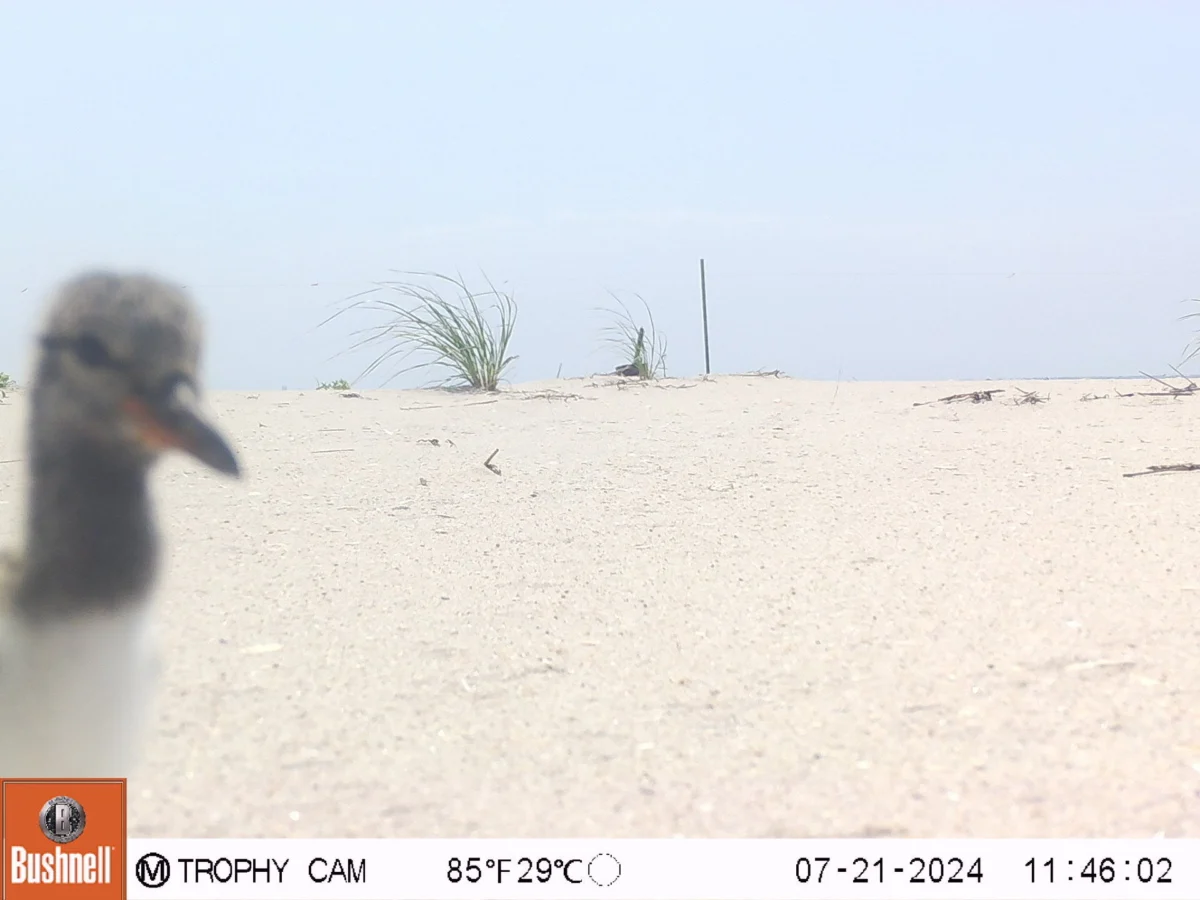
A groundbreaking initiative utilizing remote camera technology has begun to unravel the mysteries behind the long-standing reproductive struggles of American Oystercatchers on Long Island, revealing critical insights into predation and human disturbance that have hindered their nesting success for years. This innovative "American Oystercatcher Camera Project," spearheaded by Audubon, has not only documented the first successful hatch at Jones Beach in four years during its 2024 pilot but has also systematically identified key threats across multiple sites, paving the way for targeted conservation strategies.
A Decade of Concern: The Oystercatcher Enigma
The American Oystercatcher ( Haematopus palliatus) is a distinctive and charismatic shorebird, easily recognized by its striking black-and-white plumage, bright orange bill, and prominent yellow eyes. These robust birds are obligate feeders on bivalves, primarily oysters, clams, and mussels, which they expertly pry open with their specialized bills. Found along the Atlantic and Gulf Coasts of North America, they are a vital component of coastal ecosystems, often serving as an indicator species for the health of intertidal habitats. While their global population is currently classified as "Near Threatened" by the IUCN, regional populations, particularly in highly urbanized coastal areas like Long Island, face intense pressure.
Audubon has maintained a vigilant presence on Long Island’s beaches, monitoring American Oystercatchers since 2014. Over this decade, researchers observed a perplexing and concerning trend: despite consistent nesting attempts by oystercatcher pairs, the rate of successful hatching and fledging remained critically low. This phenomenon stood in stark contrast to the fortunes of other beach-nesting birds, such as the federally threatened Piping Plover (Charadrius melodus), which have shown demonstrable benefits from Audubon’s and its partners’ intensive stewardship and monitoring efforts. These efforts typically include early-season deployment of string fencing around nesting sites for oystercatchers, plovers, and terns, and the placement of protective exclosures around plover nests—a measure not feasible for the larger oystercatchers. Furthermore, community outreach days are routinely hosted to educate beachgoers on responsible behavior to protect vulnerable avian populations. The persistent failure of oystercatcher nests, despite these general protective measures, presented a significant ecological puzzle.
Pioneering Solutions: The Camera Project Takes Flight
Recognizing the urgent need to understand the underlying causes of this reproductive bottleneck, Audubon conceived the "American Oystercatcher Camera Project." The core premise was simple yet powerful: to gain an unfiltered, continuous view into the daily lives of nesting oystercatchers and, crucially, to identify the specific events leading to nest failure. Securing essential funding from the Robert F. Schumann Foundation and The National Fish and Wildlife Foundation, the project officially launched in 2024.
The inaugural 2024 season served as a pilot program, deploying two cameras strategically at Jones Beach, a historically significant but recently unproductive nesting site for oystercatchers. The results were immediate and profoundly encouraging. Against a backdrop of four years without a recorded hatch at the site, the cameras captured the astonishing moment of a chick emerging from its egg – the first at Jones Beach since 2020. This initial success was not isolated; by the end of that summer, an incredible four chicks had successfully fledged from three separate nests under the watchful eyes of the remote cameras. This early triumph not only validated the project’s methodology but also provided a much-needed glimmer of hope for the region’s beleaguered oystercatcher population. However, while celebrating these successes, researchers acknowledged the necessity of collecting more extensive data to fully comprehend the multifaceted factors impacting the nests that continued to fail.
Scaling Up: Unveiling the Hidden Threats of 2025
Armed with the promising results from the pilot season and a deeper understanding of the project’s potential, Audubon successfully secured additional funding for a significant expansion in 2025. The scope dramatically increased, with plans to monitor 24 nests across three key Long Island sites: Jones Beach, Tobay Beach (within Oyster Bay), and the combined areas of Lido Beach and Point Lookout (part of the Town of Hempstead). To manage the torrent of data – tens of thousands of triggered and time-lapse images – a dedicated staff person was brought on board, tasked with the meticulous assessment of this visual evidence.
Camera deployment between April and July was carefully orchestrated to minimize disturbance to late-season nests. Working in close collaboration with partners from state parks and local municipalities, researchers meticulously identified specific pairs for observation, varying camera placement to capture data from both older, experienced nesting pairs and newer, less established ones. This strategic approach aimed to gather a comprehensive understanding of nesting behaviors and threats across a broader demographic of the oystercatcher population.
The 2025 season yielded a trove of invaluable data, painting a clearer, albeit sometimes stark, picture of the challenges faced by these ground-nesting birds. Out of the 24 nests monitored, 9 successfully hatched, while a concerning 15 failed. The cameras unequivocally identified the primary culprits in these nest failures: opportunistic predators.
Predator Identification and Other Disturbances
The data from the camera project definitively highlighted three dominant predator species: domestic and feral cats, red foxes (Vulpes vulpes), and raccoons (Procyon lotor). Each poses a distinct and significant threat to beach-nesting birds. Feral and free-roaming domestic cats are a globally recognized invasive predator, responsible for the deaths of billions of birds and small mammals annually. Their presence on beaches, often near human settlements, introduces a highly efficient and persistent threat to eggs and chicks, which are entirely defenseless on the open sand. Red foxes, native to Long Island, are highly adaptable omnivores that have thrived in suburban and exurban environments. Their keen senses and nocturnal habits make them formidable nest predators, capable of locating and raiding nests under the cover of darkness. Similarly, raccoons, with their remarkable dexterity and intelligence, are notorious for their ability to exploit food sources, including bird nests, across a wide range of habitats. The clear visual evidence provided by the cameras underscored the pervasive and often decisive role these predators play in the reproductive failures of American Oystercatchers.
Beyond these primary mammalian predators, the cameras also documented more unusual forms of disturbance. In one instance, an owl landed near a nest, not to predate, but seemingly seeking a quiet spot to consume its own catch. While not a direct threat to the oystercatcher nest itself, such events can cause temporary abandonment by parents, potentially exposing eggs or chicks to other dangers or thermal stress. Human disturbance also emerged as a significant factor. Cameras captured instances of beachgoers discarding trash in or near nesting sites. Such seemingly innocuous actions have profound consequences, as discarded food scraps and waste can attract predators like raccoons and foxes, inadvertently drawing them closer to vulnerable nests. Direct human encroachment, such as walking too close to nesting areas, can also cause parents to flush, leaving nests exposed to the elements or opportunistic predators.
Methodological Refinements and Emerging Challenges
The 2025 season was not just about data collection; it was also a critical period for refining the project’s methodologies. Significant improvements were made in camera deployment techniques, enhancing efficiency and minimizing any potential impact on the birds. A notable success was the integrity of the equipment: despite being deployed in challenging coastal environments, none of the cameras were damaged or stolen, a testament to careful planning and robust setups. Crucially, the camera footage confirmed that the American Oystercatchers themselves remained largely undisturbed by the presence of the monitoring equipment, with only a few particularly curious chicks occasionally investigating the unfamiliar devices.
However, the project also identified areas for further improvement. Environmental factors, particularly dense fog and other adverse weather conditions, occasionally impacted camera visibility, leading to gaps in crucial data. A more subtle but equally important challenge emerged in the identification of smaller predators. While larger mammals were readily captured, tiny, often nocturnal predators such as ghost crabs (Ocypode quadrata) were frequently missed. Ghost crabs, despite their small size, are known opportunistic feeders on the eggs and hatchlings of ground-nesting birds, and their impact, though less dramatic than a fox raid, can be cumulatively significant in early nest failures. Addressing this blind spot will be critical for future seasons to provide an even more complete picture of nest predation.
Broader Context: The Plight of Coastal Shorebirds
The American Oystercatcher Camera Project’s findings resonate with the broader challenges confronting coastal shorebirds worldwide. These species are among the most imperiled avian groups, facing a relentless onslaught of threats. Habitat loss due to coastal development, beach erosion exacerbated by climate change, and rising sea levels directly diminish their nesting grounds. Increased human recreational activity on beaches, including unleashed dogs, trampling, and noise pollution, further degrades critical breeding areas. Predation, both from native and introduced species, remains a constant and often intensified pressure in human-modified landscapes.
The comparison with the Piping Plover offers valuable context. As a federally threatened species, Piping Plovers have benefited from stringent protections under the Endangered Species Act, leading to more robust and federally mandated conservation efforts. The ability to use protective exclosures around their smaller nests provides a crucial defense against larger mammalian predators, a luxury not afforded to the larger oystercatchers. Furthermore, the intense public awareness campaigns surrounding the plover’s plight have likely contributed to greater caution among beachgoers in their nesting areas. The oystercatcher project’s findings underscore that while general stewardship helps, species-specific threats require species-specific solutions, often necessitating a deeper, data-driven understanding of the precise mechanisms of failure. Long Island, with its high population density and extensive coastline, represents a microcosm of these global challenges, making the project’s local insights particularly impactful for broader coastal bird conservation efforts.
Charting the Future: Expansion and Enhanced Data Collection
Looking ahead, the American Oystercatcher Camera Project is poised for even greater expansion in the coming season. Plans are underway to deploy cameras at additional beaches and nesting sites across Long Island, further broadening the geographic scope and data collection. A significant new component will be the fitting of a small number of oystercatchers with miniature GPS transmitters. This advanced technology will provide invaluable data on their foraging ranges, migratory patterns, and overall habitat utilization, complementing the nesting data gathered from the cameras. By combining insights into where birds breed with where they feed and travel, researchers can develop comprehensive, holistic conservation strategies that address the full lifecycle needs of the species, moving beyond just nest protection to broader habitat management.
The ultimate goal remains to translate this robust, data-driven evidence into actionable conservation measures. As more conclusive evidence is gathered, Audubon looks forward to working collaboratively with the managers of each beach nesting site—including state park officials, town natural resource departments, and other conservation partners—to implement targeted solutions. This includes developing site-specific predator management plans, enhancing public education campaigns tailored to identified human disturbances, and adapting habitat management practices.
Collaborative Conservation: A Shared Vision
The success of the American Oystercatcher Camera Project is a testament to the power of scientific inquiry combined with dedicated conservation efforts. Audubon researchers, buoyed by the project’s early successes, emphasize the critical role of understanding specific threats to tailor effective interventions. Project managers underscore the importance of these findings for informing future land management decisions across Long Island’s crucial coastal habitats. Local officials, keenly aware of their responsibility to protect the region’s natural heritage, acknowledge the value of this precise data in guiding their stewardship efforts.
This collaborative approach, involving Audubon, local municipalities, state agencies, and funding partners, highlights a shared commitment to the long-term survival of the American Oystercatcher. The project’s detailed insights into predation and human impacts provide an unprecedented opportunity to refine conservation strategies, not just for oystercatchers, but potentially for other vulnerable beach-nesting species. By addressing the specific issues identified through direct observation, all parties involved are united in their goal: to protect these iconic birds, help their populations grow, and ensure the ecological vitality of Long Island’s precious coastal ecosystems for generations to come. The ongoing work, generously supported by the Robert F. Schumann Foundation and The National Fish and Wildlife Foundation, exemplifies how innovative research can illuminate complex ecological problems and forge pathways to meaningful conservation success.
