
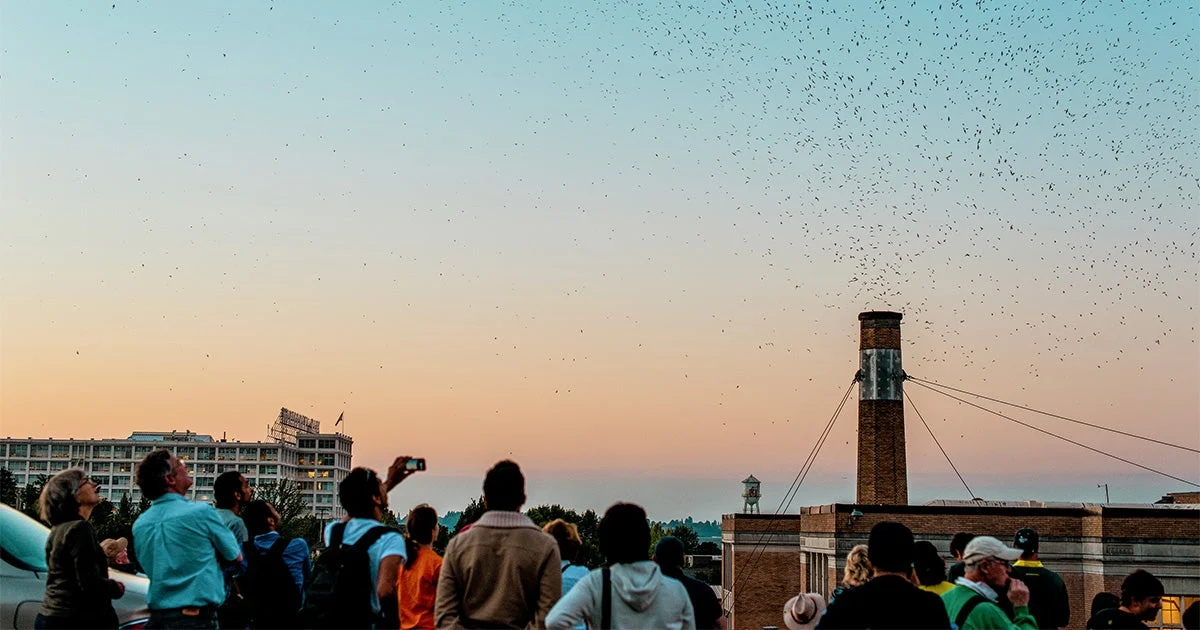
For nearly 20 years, a dedicated network of volunteers has meticulously tracked the mesmerizing aerial ballet of Vaux’s Swifts, counting vast swarms of these acrobatic birds as they spiral into their temporary nocturnal homes along the extensive Pacific Flyway. This enduring community science initiative, known as Vaux’s Happening, plays a pivotal role in identifying and protecting the vital stopover sites essential for the survival of this remarkable migratory species. From the bustling urban landscapes of the Pacific Northwest to the historic haciendas of central Mexico, these seemingly disparate locations—a blocky university building, a brickyard, or a crumbling former sugar plantation—share a crucial commonality: they provide sanctuary for millions of swifts during their arduous annual migrations.
The Vaux’s Swift: An Acrobatic Marvel of the Skies
The Vaux’s Swift (Chaetura vauxi) is a small, cigar-shaped bird renowned for its extraordinary aerial agility. Belonging to the swift family Apodidae (meaning "no feet" in Greek, referencing their small, weak feet unsuitable for perching but perfectly adapted for clinging to vertical surfaces), these birds spend nearly their entire lives in flight. They are aerial insectivores, feeding exclusively on insects caught on the wing, a characteristic that makes them highly sensitive to changes in insect populations and environmental health. Measuring just 4.3 to 4.7 inches in length with a wingspan of about 11 inches, their rapid, flickering wingbeats and distinctive flight patterns make them a spectacle, particularly at dusk when thousands gather to roost.
During their non-breeding season, Vaux’s Swifts migrate from their breeding grounds, which span from southeastern Alaska down through British Columbia, Washington, Oregon, and northern California, to their wintering grounds in Mexico and Central America. This incredible journey, covering thousands of miles, is punctuated by the critical need for communal roosting sites. These temporary homes, often large, vertical structures like disused chimneys, hollow trees, and industrial smokestacks, offer safety in numbers and a communal warmth that helps conserve energy after a day of intense foraging and during cold nights. The discovery and preservation of these roosts are paramount to the species’ continued health, especially given documented declines in many aerial insectivore populations across North America.
The Pacific Flyway: A Lifeline for Migratory Birds
The Pacific Flyway is one of four major migratory bird routes in North America, stretching approximately 10,000 miles from the Arctic breeding grounds of Alaska and Canada to the wintering regions of Patagonia in South America. It is a vital corridor, funneling billions of birds through diverse ecosystems, including wetlands, forests, deserts, and coastal areas. For Vaux’s Swifts, the section of the flyway from western Canada to central Mexico is particularly critical, serving as a series of interconnected rest stops where they can feed, rest, and recuperate before continuing their journey.
The integrity of the Pacific Flyway is constantly threatened by habitat loss, climate change, and human development. Each stopover site, no matter how small or seemingly insignificant, contributes to the overall resilience of the migratory system. The loss of a single major roost can have cascading effects, forcing birds to expend precious energy searching for alternative sites, increasing their exposure to predators, and potentially impacting their breeding success. This makes the work of Vaux’s Happening not just about one species, but about the health of an entire continental migratory system.
The Genesis of a Movement: Saving Monroe’s Chimney (2007)
The Vaux’s Happening initiative officially coalesced around 2007, stemming from a local conservation crisis in Monroe, Washington. The catalyst was a plan by the local school district to demolish a defunct chimney at an unused elementary school building. Citing earthquake safety concerns, the district sought to remove the brick structure. However, local residents and bird enthusiasts knew that this particular chimney was far more than an outdated architectural feature; it was a crucial, long-established communal roost for Vaux’s Swifts.
Cathy Clark, a dedicated volunteer with the Pilchuck Audubon Society, recounted stories from long-time residents who recalled the chimney’s historical significance: "They would tell the kids to bring sweaters to school, because they weren’t going to turn the boilers on until the birds left for the morning." This anecdotal evidence underscored the deep-rooted connection between the community and its swift inhabitants. The proposed demolition ignited a passionate local campaign. Members of multiple Audubon chapters, environmental groups, and concerned citizens rallied to save the roost. They organized public awareness events, launched petitions, and appealed to the state legislature for emergency funding to update the building to modern safety standards while preserving the chimney. Crucially, volunteers began counting the swifts using the site, providing tangible data to demonstrate its ecological value.
Their collective efforts proved successful. Enough support and funding were secured to reinforce and maintain the chimney. The roost in Monroe not only survived but thrived, becoming a beacon of local pride. During peak migration periods, typically in late May and early September, thousands of swifts funnel into the chimney each night. The community now celebrates this natural phenomenon with annual "Swifts Night Out" events, drawing hundreds of spectators. Eileen Hambleton, a long-time organizer, encapsulated the public’s fascination: "It’s better than any TV show. After all the swifts go in, everybody is clapping and cheering. It’s fun to see people get excited about something in the natural world." The Monroe success story became the blueprint for what Vaux’s Happening could achieve on a larger scale.
Expanding the Network: From Washington to Mexico (Post-2007)
Larry Schwitters, a retired science teacher with a passion for ornithology, was at the forefront of the Monroe effort. Inspired by its success, he envisioned a broader network of swift watchers. After retiring, he dedicated himself to the cause, issuing a challenge to birders across Washington and eventually far beyond: "See if you can find me a roost site." The response was overwhelming. Reports began to flood his mailbox – first via traditional mail, then increasingly through online submissions – detailing swifts swirling into schools, churches, factories, apartment buildings, and other tall structures.
Schwitters, with the backing of the Pilchuck Audubon Society, meticulously compiled these tallies into massive spreadsheets. This grassroots data collection effort transformed into Vaux’s Happening, creating a comprehensive map of key roost sites stretching from the swifts’ breeding grounds in the Pacific Northwest to their non-breeding ranges in Mexico and Central America. The project’s growth demonstrated the immense potential of community science to gather data on a scale that would be impossible for professional researchers alone. The methodology for counting varied, from volunteers using handheld clickers to more sophisticated approaches involving photography and later, video analysis, where individuals like Cathy Clark would meticulously circle and estimate groups of 10 swifts in images. These diverse methods, when aggregated, provide a robust dataset on swift populations and migratory patterns.
The Power of Community Science: Data and Discovery
The sheer volume of data collected by Vaux’s Happening volunteers has yielded invaluable insights into Vaux’s Swift behavior and ecology. To date, the project has tallied an astonishing 31 million swift sightings, a testament to the dedication of its participants. This extensive dataset allows researchers to track population trends, identify critical bottlenecks in the flyway, and understand how swifts utilize different types of roost structures.
Beyond simple counts, Vaux’s watchers have also employed innovative methods to delve deeper into the secret lives of roosting swifts. By deploying microphones and temperature sensors inside chimneys, they’ve uncovered fascinating details. Schwitters notes, for instance, that roosting swifts are "making all kinds of weird noises all night long," challenging previous assumptions that they were largely silent once settled. Perhaps even more surprising was the discovery that the interior of a chimney packed with thousands of swifts can be a staggering 25 degrees Fahrenheit warmer than the ambient air outside. This finding provides crucial evidence for why communal roosting in enclosed spaces is so vital for these small birds, allowing them to conserve energy during their energy-intensive migratory journeys.
The data gathered has not only contributed to scientific understanding but has also empowered conservation efforts. The Vaux’s Happening network has successfully advocated for the preservation of several other chimney roosts that were slated for demolition, replicating the Monroe success story in various communities. This proactive approach, driven by citizen-collected data, highlights the tangible impact of community science on conservation outcomes.
A Landmark Discovery in Mexico: The Oacalco Roost (2023)
For years, a significant gap existed in the understanding of Vaux’s Swift migration: the precise location and extent of their major roosts south of the U.S. border. The immense scale of swift migration suggested that truly massive communal roosts must exist in Mexico and Central America, but finding them in often remote or lesser-explored areas presented a significant challenge. After extensive searching and collaboration, a breakthrough occurred in 2023.
Bird guides and local collaborators working with Vaux’s Happening made a monumental discovery in Oacalco, Mexico. They identified a massive roost within an old hacienda featuring two tall, imposing chimneys. The scale of this roost was breathtaking; watchers have counted more than 250,000 swifts entering these chimneys in a single night. Kashmir Wolf, who played a key role in locating the roost while working for the conservation group Pronatura Veracruz, described the awe-inspiring spectacle: "It’s just the whole sky covered with birds." This discovery immediately became one of the most significant known Vaux’s Swift roosts, providing a critical piece of the migratory puzzle.
However, with discovery came a new challenge. A real estate developer had purchased the surrounding land with plans for housing development. The potential loss or alteration of such a vital roost would be a devastating blow to the species. Undeterred, the swift lovers and conservationists quickly engaged with the development company. Their objective is to collaborate with the developer to ensure the chimneys remain intact and protected, ideally integrating them into the new development as a conserved natural feature. This situation underscores the delicate balance between urban expansion and ecological preservation, requiring innovative solutions and strong partnerships. While specific details of the negotiations are ongoing, a spokesperson for the development company, speaking anonymously due to the sensitive nature of the discussions, indicated a willingness to explore solutions that integrate conservation with development plans, acknowledging the cultural and ecological significance of the site.
Challenges and Collaborative Solutions for Long-Term Protection
The challenges faced by Vaux’s Swifts and the Vaux’s Happening project are multifaceted. Beyond the immediate threat of demolition, long-term conservation requires addressing broader issues. The decline in insect populations due to pesticide use and habitat degradation directly impacts the swifts’ food supply. Climate change introduces unpredictable weather patterns that can disrupt migration timing and food availability. Furthermore, the increasing trend of capping or removing chimneys from older buildings for safety or aesthetic reasons continues to diminish available roosting sites.
The success of Vaux’s Happening demonstrates that collaborative, community-driven conservation can overcome these hurdles. The project embodies the "think globally, act locally" principle, empowering individuals to contribute to a continental-scale conservation effort. The sustained engagement with local communities, from school children attending "Swifts Night Out" to bird guides in Mexico, fosters a sense of stewardship and appreciation for the natural world.
The ongoing efforts in Oacalco highlight the critical need for dialogue and partnership between conservationists, local communities, and private developers. Finding common ground, where economic development can proceed hand-in-hand with ecological preservation, is crucial for the long-term viability of migratory species. As Kashmir Wolf articulates, "Every single site—every single protected land that we can achieve—is going to make a huge difference." This sentiment encapsulates the interconnectedness of the flyway, where the loss of one key roost site can have ripple effects across the entire migratory path, impacting swifts from Alaska to Mexico.
Broader Implications for Avian Conservation
The Vaux’s Happening project offers a powerful model for avian conservation. Its success underscores several key implications:
- The Power of Citizen Science: It demonstrates how large-scale, geographically dispersed data collection by volunteers can provide critical information for conservation that would otherwise be unattainable. This data informs policy, identifies conservation priorities, and tracks environmental health.
- The Value of Urban and Anthropogenic Habitats: The reliance of Vaux’s Swifts on human-made structures like chimneys highlights that conservation efforts must extend beyond pristine wilderness areas into developed landscapes. Integrating wildlife needs into urban planning and building preservation becomes essential.
- Transnational Conservation: The project’s reach across international borders emphasizes the necessity of cross-cultural and transnational collaboration for migratory species, whose survival depends on protected habitats in multiple countries.
- Public Engagement and Education: The excitement generated by "Swifts Night Out" events and the overall project fosters public awareness and appreciation for wildlife, creating a broader base of support for conservation initiatives.
The Future of Vaux’s Happening
As Vaux’s Happening approaches its two-decade mark, its mission remains as vital as ever. The ongoing monitoring of known roosts, the search for new ones, and the advocacy for their protection continue to be central to the project’s work. With potential threats like climate change, habitat fragmentation, and urban expansion continuously evolving, the role of dedicated volunteers and informed communities will only grow in importance. The simple act of counting birds at dusk transforms into a powerful act of conservation, ensuring that the spectacular aerial dance of the Vaux’s Swifts continues for generations to come, a testament to what can be achieved when people unite for the natural world.
