
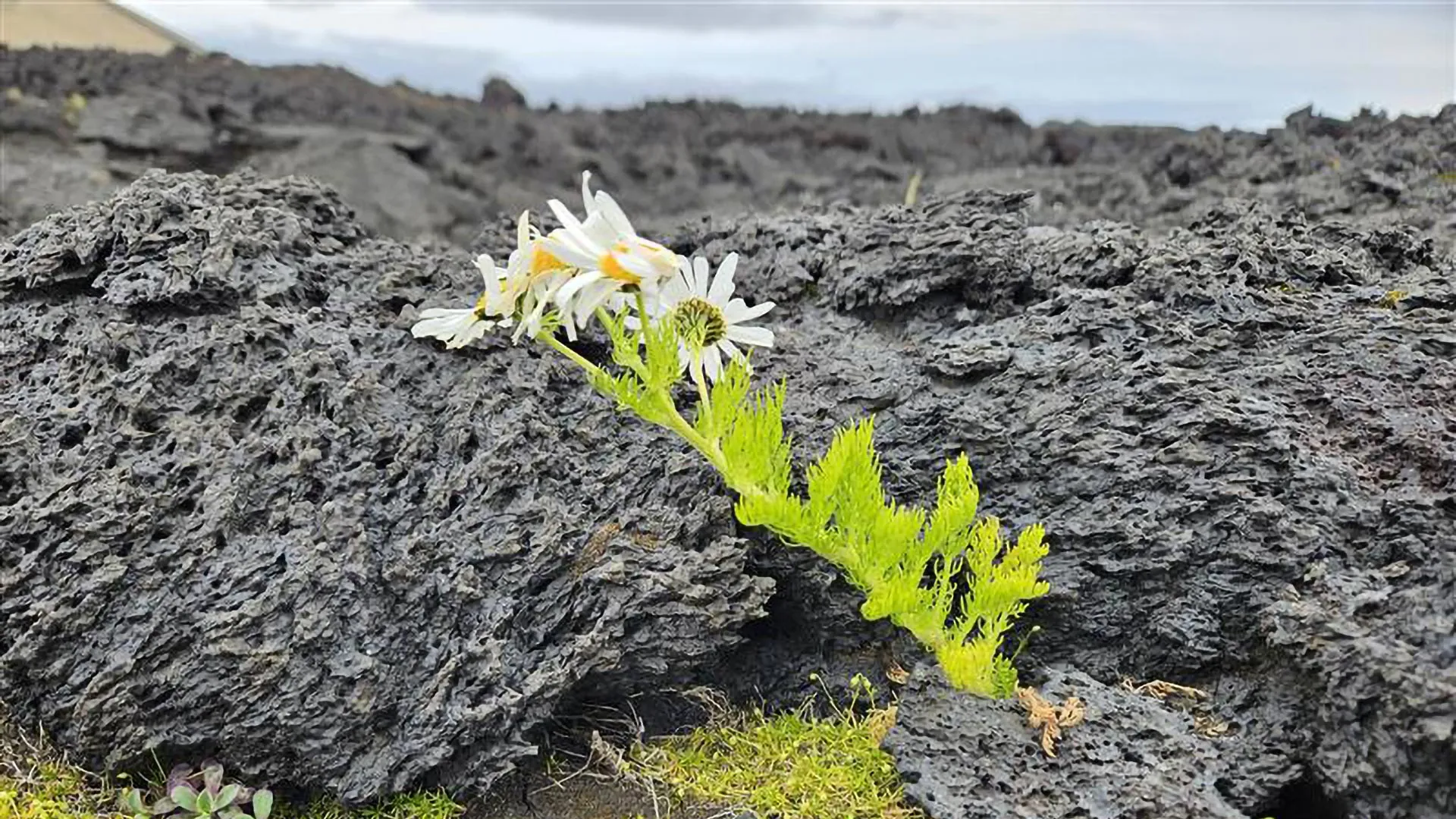
When the volcanic island of Surtsey dramatically emerged from the frigid North Atlantic Ocean in November 1963, following a spectacular submarine eruption, it instantly presented the scientific community with an unparalleled natural experiment: a pristine, untouched landmass born entirely de novo. This rare geological event offered a unique, real-time opportunity to observe and document the very earliest stages of ecological succession and the genesis of life on a completely barren landscape. For decades, the prevailing wisdom among ecologists regarding plant colonization of remote islands posited that species with specific, advantageous traits for long-distance travel held a decisive edge. These traits typically included seeds adapted for wind dispersal, buoyancy for oceanic currents, or fleshy fruits designed to attract birds, which would then consume and later disperse the seeds through their droppings. Such specialized characteristics were widely believed to be the primary determinants for successful establishment in new, isolated environments.
A groundbreaking recent study published in the esteemed journal Ecology Letters has significantly challenged and, in many respects, upended this long-accepted theoretical framework. Researchers hailing from Iceland, Hungary, and Spain meticulously analyzed the botanical colonization of Surtsey, revealing a surprising paradigm shift. Their findings indicate that the vast majority of the 78 vascular plant species identified on Surtsey since systematic monitoring began in 1965 conspicuously lack any of the conventional features traditionally associated with efficient long-distance seed dispersal. Instead, the study emphatically points to common avian species—specifically gulls, geese, and various shorebirds—as the principal agents of colonization. These birds, through their migratory movements and foraging activities, transported a remarkable diversity of plant seeds, predominantly within their digestive systems, subsequently depositing them via droppings onto the nascent island soil. This avian-mediated dispersal mechanism has proven instrumental in laying the foundational biological elements for Surtsey’s young and progressively complex ecosystem.
Surtsey’s Dramatic Genesis: A New Land Emerges
The birth of Surtsey began on November 14, 1963, approximately 32 kilometers off the southern coast of Iceland. Fishermen aboard the trawler Ísleifur II reported a dark column of smoke rising from the sea, initially mistaking it for a burning ship. It was, in fact, the beginning of a submarine volcanic eruption at a depth of 130 meters. The eruption, characterized by explosive phreatomagmatic activity where molten lava interacted violently with seawater, continued for over three and a half years, finally ceasing on June 5, 1967. During its most intense phase, volcanic ash and tephra accumulated rapidly, eventually breaking the ocean surface and forming a new landmass. At its peak, Surtsey reached a maximum area of 2.6 square kilometers, though relentless erosion by wind and sea has since reduced its size to approximately 1.3 square kilometers by 2008.
From its very inception, Surtsey was declared a protected natural laboratory. Icelandic authorities, recognizing its immense scientific value, restricted human access to prevent any external contamination or artificial introduction of species. This stringent protection ensured that all biological colonization observed on Surtsey would be entirely natural, offering an unparalleled "clean slate" for studying ecological succession. In 2008, Surtsey was inscribed on the UNESCO World Heritage List, further cementing its status as a site of outstanding universal value for scientific research.
The Traditional View of Island Biogeography
For decades, ecological understanding of island colonization was heavily influenced by the theory of island biogeography, primarily developed by Robert H. MacArthur and Edward O. Wilson in the 1960s. This seminal theory posits that the number of species on an island is determined by a dynamic equilibrium between immigration rates of new species and extinction rates of existing ones. Key factors influencing these rates include island size and, crucially for this discussion, distance from the mainland. The further an island is from source populations, the lower the immigration rate.
To overcome the immense geographical barriers of oceanic distances, it was largely assumed that colonizing species must possess specific adaptations for long-distance dispersal. These "super-disperser" traits include:
- Anemochory (wind dispersal): Lightweight seeds, often with wings, hairs, or parachutes (e.g., dandelions, orchids).
- Hydrochory (water dispersal): Buoyant seeds with waterproof coats, capable of floating for extended periods (e.g., coconuts).
- Zoochory (animal dispersal):
- Epizoochory (external attachment): Seeds with hooks, barbs, or sticky surfaces that adhere to animal fur or feathers (e.g., burdock).
- Endozoochory (internal dispersal): Fleshy fruits consumed by animals, with seeds passing through their digestive tracts unharmed, often aided by scarification (e.g., berries, figs).
The Surtsey experiment, initially designed to observe these predicted patterns, has now provided empirical evidence that challenges the absolute dominance of these specialized traits, highlighting the importance of more generalized dispersal mechanisms mediated by common fauna.
Birds as Unexpected Architects of Life
"Birds turned out to be the true pioneers of Surtsey – carrying seeds of plants that, according to conventional theories, shouldn’t be able to get there," explains Dr. Pawel Wasowicz of the Natural Science Institute of Iceland, one of the lead authors of the study. "These results overturn traditional assumptions about plant colonisation and show that to understand how life spreads and responds to environmental change, we must look at the intricate and often surprising interactions between plants and animals. Life does not move in isolation – it invariably follows life."
The study meticulously cataloged the 78 vascular plant species found on Surtsey since 1965, correlating their presence with known dispersal mechanisms. A striking revelation was that a significant majority of these colonizers lacked the highly specialized adaptations for long-distance travel previously deemed essential. Instead, the primary vectors were found to be common migratory and resident birds. For instance, species like the Lesser Black-backed Gull (Larus fuscus), Northern Fulmar (Fulmarus glacialis), and various species of geese and shorebirds, which frequent the Icelandic coastline and often migrate long distances, were identified as critical agents. These birds, feeding on a diverse diet of plant matter, insects, and fish in various locations, inadvertently became unwitting seed couriers.
The mechanism primarily implicated is endozoochory, where seeds are ingested, survive passage through the birds’ digestive tracts, and are then deposited in viable condition within nutrient-rich droppings. This method offers several advantages: protection from environmental stressors during transport, often enhanced germination due to digestive acids, and deposition with a small package of fertilizer. The sheer volume of bird traffic, particularly during breeding seasons and migratory stopovers, provided a consistent and diverse influx of seeds to Surtsey.
Dr. Andy Green of the Estación Biológica de Doñana (CSIC, Spain), who co-led the research, emphasizes the far-reaching implications of these findings for broader ecological understanding and pressing conservation efforts. "Animals – especially birds – are undeniably key drivers of plant dispersal and colonization. As global climate change continues to exert pressure, causing shifts in established migration routes and geographical ranges, birds will play an increasingly vital and dynamic role in facilitating plant movement and adaptation to new, potentially more suitable environments."
A Living Laboratory for Evolution and Ecology
The research underscores Surtsey’s extraordinary and enduring value as a living laboratory, a unique outdoor classroom where scientists can directly observe, in real-time, the earliest and most fundamental stages of ecosystem development, evolutionary processes, and adaptive responses to environmental flux. The island continues to yield invaluable insights into the intricate mechanisms by which life establishes itself, diversifies, and reacts to a constantly changing world.
The authors strongly suggest that future ecological models, particularly those attempting to predict species distribution and community assembly, should place a significantly greater emphasis on complex, real-world biological interactions between flora and fauna. This approach moves beyond an exclusive focus on the physical traits of seeds or simplistic classifications of plant species, recognizing the dynamic agency of animal vectors.
"Long-term research like that so diligently carried out on Surtsey is truly invaluable for the entire field of biology," says Dr. Wasowicz. "It uniquely allows us to witness ecological processes that would otherwise remain entirely invisible or purely theoretical – how life colonizes a barren landscape, how it evolves in isolation, and how it adapts to novel conditions. Such dedicated, sustained work is absolutely essential for formulating accurate predictions and effective strategies for the future of ecosystems in a rapidly changing world."
Broader Implications for Ecology and Conservation in a Warming World
The revelations from Surtsey hold profound implications that extend far beyond the Icelandic archipelago:
-
Revisiting Island Biogeography Theory: While the fundamental principles of island biogeography remain robust, the Surtsey study compels a more nuanced understanding of immigration dynamics. It highlights the often-underestimated role of stochastic events (random bird visits) and common vectors over highly specialized dispersal mechanisms, especially for plants not traditionally considered "long-distance dispersers." This suggests that even seemingly ordinary species can become colonizers if the right animal vector is present.
-
Conservation Strategies and Habitat Connectivity: Recognizing birds as primary dispersers underscores the critical importance of protecting avian migration routes and stopover sites. These corridors are not just vital for bird survival but also serve as indispensable conduits for plant genetic exchange across landscapes, including isolated habitats. Conservation efforts must therefore adopt a more holistic, landscape-scale approach that considers the interconnectedness of plant and animal populations.
-
Climate Change Adaptation: As global temperatures rise and habitats shift, many plant species face the urgent challenge of migrating to new, more climatically suitable zones. The Surtsey study suggests that birds could play an instrumental role in facilitating these range shifts, acting as crucial "climate change vectors." Understanding these avian-mediated dispersal pathways becomes paramount for predicting future plant distributions and for guiding assisted migration efforts.
-
Invasive Species Management: Conversely, the same mechanisms that allow native plants to colonize new areas can also facilitate the spread of invasive alien species. Birds, unfortunately, can be highly effective vectors for non-native plant seeds, particularly those with fleshy fruits. This research provides a stronger imperative to monitor bird movements and manage potential invasive seed sources in areas of high avian activity, especially near vulnerable ecosystems.
-
Ecological Restoration and Re-wilding: For projects aimed at restoring degraded ecosystems or re-wilding landscapes, the Surtsey findings offer valuable insights. Rather than solely focusing on direct seed planting or introducing plant species with specialized dispersal traits, incorporating bird-attracting features (e.g., fruiting shrubs, water sources) could significantly enhance natural colonization rates and biodiversity recovery.
-
The Value of Long-Term Ecological Research: Surtsey stands as a testament to the irreplaceable value of sustained, long-term ecological monitoring. Without decades of consistent observation, the subtle, cumulative patterns of bird-mediated dispersal might never have been fully appreciated or scientifically validated. Such enduring research provides the empirical bedrock necessary to challenge and refine fundamental ecological theories.
The remarkable story of Surtsey continues to unfold, revealing layer after layer of ecological complexity. This latest study serves as a powerful reminder that nature’s processes are often more intricate and less predictable than our theoretical models suggest. It compels the scientific community to look beyond established paradigms and embrace the dynamic, interactive reality of life’s relentless journey across the planet, carried, often unknowingly, on the wings of birds.
