
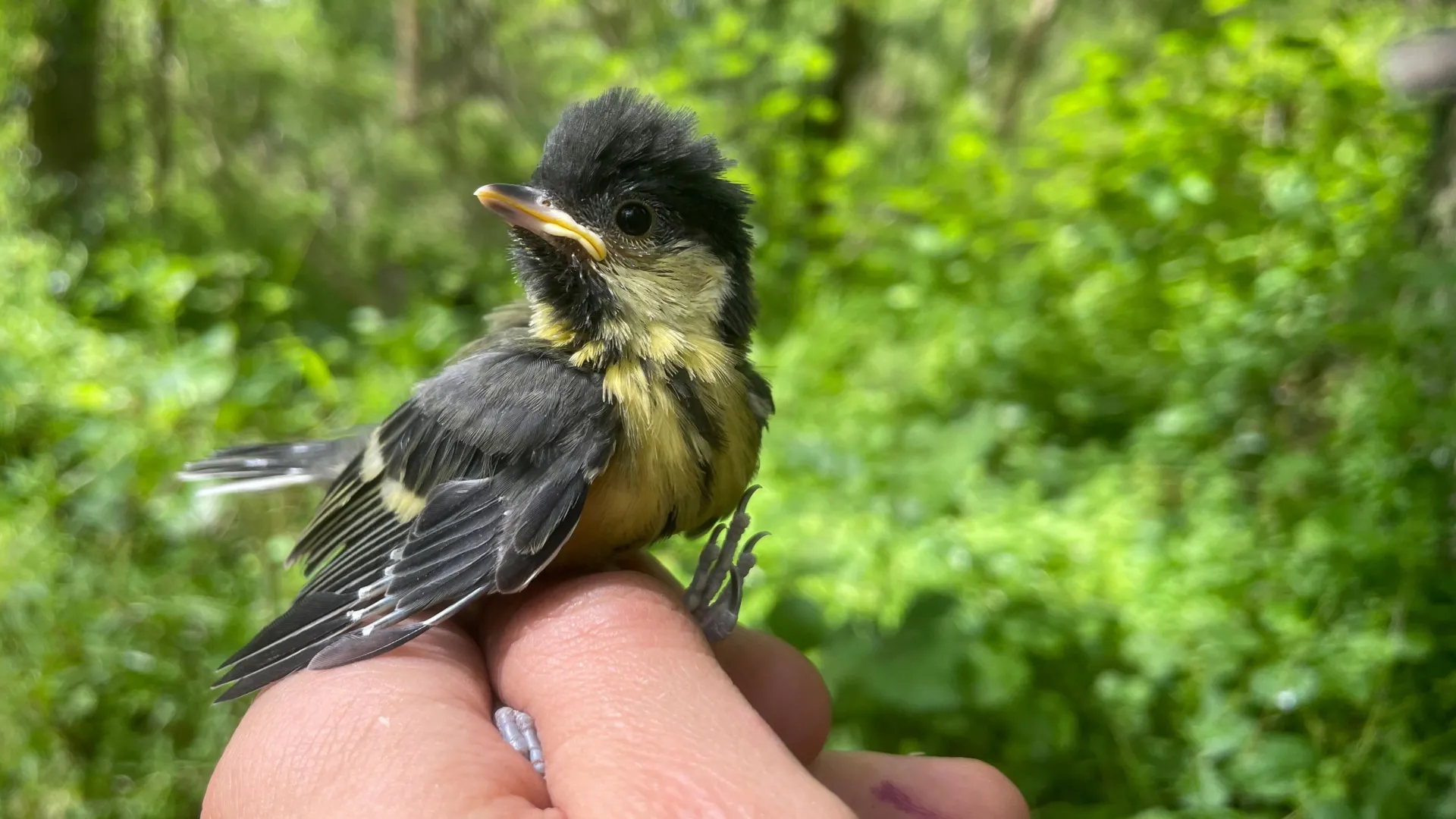
A groundbreaking study from the University of Oxford, published on March 11, has unveiled critical insights into how sudden cold spells and intense rainfall are impacting the survival and development of young great tits across the UK. The comprehensive research indicates that these severe weather events significantly impede growth and diminish the survival prospects of nestlings. However, the study also highlights a vital adaptive strategy: birds that commence their breeding season earlier appear to circumvent many of the detrimental effects associated with these increasingly prevalent climatic extremes. This extensive investigation, leveraging an unparalleled six-decade dataset, provides a sobering look at the challenges faced by wild bird populations in a rapidly changing climate, while also offering potential avenues for conservation.
The Great Tit: A Bellwether Species in a Changing Climate
The great tit (Parus major), a common and charismatic songbird found across Europe and Asia, serves as a crucial bioindicator species for environmental change. Its relatively short lifespan, high reproductive rate, and strong dependence on specific food sources, particularly caterpillars during the breeding season, make it highly sensitive to shifts in climate and habitat. Scientists often refer to such species as "canaries in the coal mine," providing early warnings of broader ecological disruptions. Understanding the great tit’s response to environmental stressors, therefore, offers invaluable insights into the health of wider ecosystems and the potential future trajectory of other avian populations.
A Legacy of Longitudinal Research: Wytham Woods’ 60-Year Tapestry
The findings emanate from an extraordinarily rich and unusually long-term ecological study conducted within Wytham Woods, a ancient semi-natural woodland just west of Oxford, England. This site has been a cornerstone of ecological research for over 75 years, renowned globally for its uninterrupted monitoring of various species, most notably its great tit population. Since 1947, researchers have meticulously collected data on individual birds, their breeding patterns, and survival rates. For this particular study, scientists painstakingly analyzed 60 years of records, encompassing detailed information on more than 80,000 individual wild great tits. This unparalleled depth and breadth of data allowed the researchers to move beyond short-term observations and identify long-term trends and complex interactions between climate and avian life history.
The strength of the Wytham Woods dataset lies not only in its sheer volume but also in its granularity. Each individual great tit within the study population is ringed, allowing for precise tracking of its life history, including hatching date, growth trajectory, fledging success, and subsequent survival. This demographic information was then meticulously paired with equally detailed daily weather records, providing a high-resolution picture of the environmental conditions experienced by each brood at critical stages of development. By pinpointing the coldest, wettest, and hottest days within each breeding season, researchers could quantify the frequency and intensity of these extreme events and, crucially, measure their influence on the body mass of nestlings at the point of fledging – a universally recognized and powerful predictor of a young bird’s subsequent survival into adulthood.
Decoding the Methodology: Unraveling Climate-Driven Impacts
The research team employed sophisticated statistical models to discern the subtle yet significant impacts of weather extremes. They focused on "critical stages" of chick development, understanding that vulnerability varies with age. For instance, newly hatched chicks, lacking developed feathers, are highly susceptible to cold, while older, more mobile chicks might be more affected by heavy rainfall that disrupts foraging. The metric of "fledging mass" was chosen as a primary endpoint because a heavier fledgling generally indicates better health, greater energy reserves, and a higher probability of navigating the challenging post-fledging period, including finding food independently and evading predators. A reduction in fledging mass, even a seemingly small one, can have profound implications for a bird’s lifetime fitness.
The Immediate Threats: Cold Snaps and Torrential Rains
The study unequivocally revealed that severe cold during the initial week after hatching poses an acute threat to great tit nestlings. During this delicate phase, chicks are altricial – meaning they are born helpless and dependent – with little to no feather development. Their ability to thermoregulate, or maintain their own body temperature, is minimal, making them highly vulnerable to hypothermia. As chicks mature and begin to develop feathers, their susceptibility shifts. Heavy rainfall emerges as a greater threat to older nestlings, primarily due to its disruptive effects on parental foraging and food availability. Both extreme cold and heavy rainfall were found to reduce body mass at fledging by as much as 3%. While 3% might seem modest, for a small bird weighing only a few grams, this deficit can be the difference between life and death.
The Synergistic Danger: When Heat Meets Heavy Rain
The research unearthed an even more alarming finding: when intense heat coincides with heavy rainfall, the cumulative impact on nestling development becomes dramatically more severe. In these specific circumstances, fledging mass can plummet by an astonishing 27%. This synergistic effect is particularly pronounced for broods that hatch later in the breeding season, suggesting that later-season conditions are already more challenging, and the combination of these extremes pushes them past a critical threshold. The precise mechanisms behind this amplified effect are complex but likely involve a combination of heat stress, reduced foraging efficiency due to rain, and potentially increased pathogen load in damp, warm conditions.
Devi Satarkar, the lead researcher from the Department of Biology at the University of Oxford, emphasized the complex adaptive strategies birds are employing: "In the Wytham population, great tits have adjusted to warmer springs by breeding earlier to track peak abundance of their main prey, caterpillars. This overall earlier laying is beneficial, buffering them against many impacts of extreme weather – but it also exposes them to cold spells early in the season. Even small early-life deficits can have large implications for survival. It will only get tougher for birds to keep up as extreme weather increases in frequency and intensity with climate change." This statement underscores a critical concept in ecology known as phenological mismatch, where the timing of biological events (like breeding) becomes decoupled from the timing of resource availability (like peak caterpillar numbers) due to asynchronous responses to climate change.
Why Weather Extremes Are Detrimental to Young Birds
The physiological and ecological reasons behind these impacts are multifaceted. For newly hatched chicks, the inability to regulate their body temperature efficiently means that during cold spells, a disproportionate amount of their metabolic energy must be diverted simply to stay warm. This energy, which would otherwise be channeled into growth and development, is effectively wasted, leading to slower growth rates and smaller body sizes.
Beyond direct physiological stress, bad weather significantly disrupts the delicate balance of food provision. Extreme cold and heavy rain can severely limit how often parent birds can leave the nest to forage for food. Parents are faced with a dilemma: stay on the nest to brood and keep chicks warm and dry, or venture out into adverse conditions to find food. Both options carry risks. Simultaneously, rainfall can physically dislodge caterpillars, the primary food source for growing chicks, from plants, making them harder to find and reducing their overall abundance in the foraging environment. Caterpillars are rich in protein and energy, vital for the rapid growth phase of nestlings, whose energy demands are extraordinarily high. A reduction in this crucial food supply directly translates to slower growth and lower fledging weights.
An Unexpected Twist: The Benefits of Mild Warmth
One of the study’s more intriguing and unexpected findings was that warmer extremes, specifically those experienced in Oxfordshire, were linked to heavier fledging weights during the nestling stage. While high temperatures are often associated with heat stress and negative outcomes for birds, in this particular context, the warmer periods observed appeared to be relatively mild compared with the more intense and prolonged heatwaves experienced in southern Europe or other hotter regions globally.
Devi Satarkar elaborated on this nuanced discovery: "Extreme weather events are affecting wild bird populations in complex ways. The level of warmth we see in these heat extremes in Oxfordshire might boost growth because it can increase insect activity and visibility – making caterpillars easier to find – while letting parents forage more and reducing nestlings’ thermoregulatory costs. The high water content in caterpillars also helps against dehydration. This contrasts sharply with hotter regions like the Mediterranean, where similar events can exceed 35°C and harm nestlings." This highlights the importance of geographical context and the specific thresholds at which environmental factors transition from beneficial to detrimental. In Oxfordshire’s temperate climate, mild warmth might optimize conditions for both prey availability and parental foraging efficiency, creating a temporary boon for chick development.
The Early Bird Advantage: A Crucial Adaptive Strategy
The study strongly underscored the adaptive advantage of early breeding. Broods that hatch earlier in spring tend to capitalize on occasional warm spells when caterpillar populations are typically at their peak abundance and temperatures remain within a safe, even beneficial, range. This timing allows them to maximize food intake and minimize energetic costs. In stark contrast, birds that breed later in the season face progressively tougher conditions. Their fledglings were found to be approximately one-third lighter, even though the warmest days they experienced reached similar temperatures of about 16-17°C. This suggests that the overall environmental context later in the season – potentially including depleted food resources, increased competition, or other unmeasured stressors – interacts with these temperatures to produce less favorable outcomes.
Over longer periods, the cumulative impact of extreme cold and rainfall was shown to slightly reduce the odds that young birds would survive to adulthood. Conversely, the mild warm extremes, as previously noted, could have small positive effects on long-term survival. Critically, the overarching conclusion remains that breeding earlier within a given season appears to act as a significant buffer, shielding a substantial portion of the great tit population from the most severe consequences of unpredictable and increasingly extreme weather patterns. This temporal adaptation is a key survival mechanism in the face of rapid environmental change.
Broader Ecological Ramifications and Conservation Imperatives
The implications of these findings extend far beyond the great tit population in Wytham Woods. As climate change continues to intensify the frequency, duration, and intensity of weather extremes globally, similar pressures are likely to be exerted on a myriad of other avian species, particularly those that are insectivorous and rely on precise phenological timing for successful reproduction. The disruption of these delicate ecological synchronies can have cascading effects throughout the food web, potentially impacting predator populations that rely on these birds as prey, and even affecting plant populations if insect populations fluctuate.
Scientists emphasize that it will become increasingly vital to monitor small-scale environmental conditions, such as microclimates and subtle habitat differences, to guide effective conservation strategies. Microclimates – localized atmospheric conditions that differ from those in the surrounding area – can offer crucial refugia during extreme events. For instance, a dense patch of woodland or a north-facing slope might provide cooler, damper conditions during a heatwave, or more sheltered spots during heavy rain. This type of nuanced research can inform targeted conservation interventions, including the strategic placement of nestboxes in areas offering better thermal regulation or protection from rain, and woodland management practices that promote a diverse understory and varied canopy structure to create a mosaic of microclimates and ensure a more stable supply of insect prey.
Conservation efforts could also focus on enhancing habitat resilience. Maintaining and restoring diverse woodland ecosystems, for example, can lead to a more varied phenology of insect prey, offering food sources over a longer period and potentially buffering against the impacts of a single prey species’ decline. Promoting native plant species that support a wide range of insects is also critical. Furthermore, the findings underscore the urgent need for broader climate change mitigation efforts to reduce the frequency and intensity of the very extreme weather events that are challenging these populations.
Looking Ahead: The Shifting Baseline of Climate Change
Researchers at the University of Oxford plan to continue their long-term monitoring of the great tit population in Wytham Woods. This ongoing commitment is essential for understanding how these weather effects may evolve and shift in the future. A key question for future research is whether heatwaves that are currently considered moderate and even beneficial in Oxfordshire’s temperate climate could eventually become harmful as global temperatures continue their upward trend. As the baseline climate warms, the threshold for "extreme heat" will undoubtedly shift, and what is currently a mild summer day could become a stressful, or even lethal, event for vulnerable nestlings.
This study serves as a potent reminder of the complex and often subtle ways in which climate change is reshaping natural ecosystems. While the great tit’s ability to adapt its breeding schedule offers a glimmer of hope, the increasing unpredictability and severity of weather extremes present an escalating challenge. Effective conservation in the Anthropocene will require not only continued rigorous scientific inquiry but also proactive management strategies and a global commitment to addressing the root causes of climate change to safeguard vulnerable wildlife populations for generations to come.
