
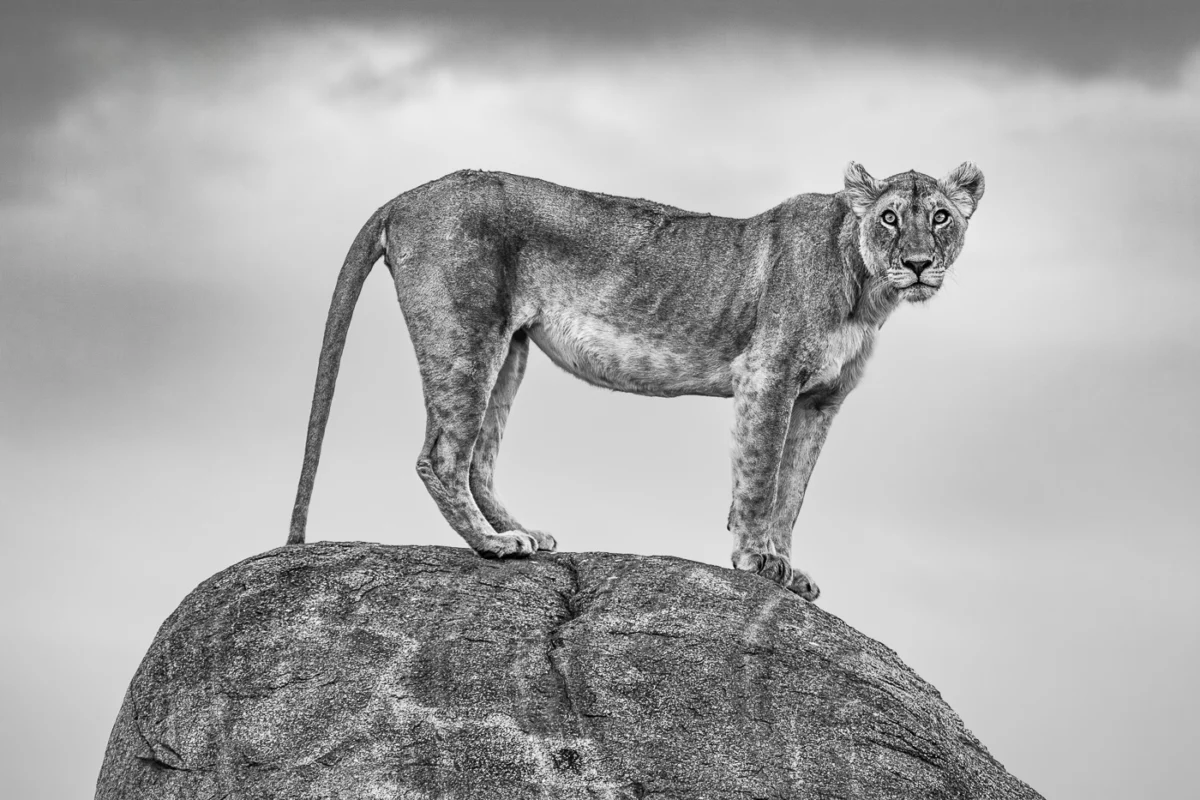
Wildlife photography, a genre often celebrated for its vibrant depiction of nature’s palette, finds a profound and evocative counterpoint in the work of Gabi Guiard. Her artistic journey, a compelling narrative of passion, professional evolution, and philosophical commitment, culminates in a distinctive black-and-white style that strips away the superfluous to reveal the raw essence and emotional depth of the wild. Guiard’s approach is not merely a stylistic choice but a deliberate artistic language, designed to foster a deeper, more intimate connection between viewer and subject.

A Lifelong Fascination with the Wild Transforms a Creative Career
Gabi Guiard’s inherent connection to the natural world began in early childhood. From a very young age, she recalls being irresistibly drawn to animals, captivated by their intricate behaviors and the sheer force of their presence. This primal attraction evolved beyond simple curiosity, profoundly shaping her worldview and influencing her understanding of connection within the broader ecosystem. This nascent passion, however, initially took a backseat to a career in the demanding world of advertising. Guiard dedicated herself to graphic design and art direction, honing crucial skills in visual communication, composition, and the powerful use of imagery to convey messages effectively.

It was within this commercial sphere that her latent interest in photography began to blossom. Surrounded by the compelling black-and-white works of iconic fashion and advertising photographers—masters whose use of light, shadow, and form transcended mere product promotion—Guiard recognized the profound expressive potential of the photographic medium. These visual maestros demonstrated how monochromatic imagery could distill a scene to its most potent elements, creating timeless and impactful narratives that resonated deeply. This realization sparked a gradual but undeniable shift in her professional trajectory. Photography became the conduit through which she could seamlessly merge her accumulated artistic knowledge from advertising with her enduring passion for wildlife, forging a path uniquely her own. This pivot highlights a common thread among creative professionals who, after mastering commercial disciplines, often seek to apply their refined skills to more personal and profound artistic expressions, ultimately finding their true calling in the intersection of craft and passion. This evolution underscores how diverse professional experiences can converge to inform and enrich a distinctive artistic voice.
Black and White: More Than a Style, It’s a Language of the Soul

For Guiard, black-and-white photography transcends mere aesthetic preference; it is her fundamental mode of communication. "When I think about my work," she states, "I feel that black-and-white is much more than a style: it is my way of speaking, telling stories, and showing what I feel when I am in front of nature." This is not an arbitrary choice for perceived "artistic" or "classic" appeal, but a deliberate decision rooted in its unparalleled ability to strip away visual noise. By eliminating color, Guiard intentionally removes a layer of information that, while often beautiful and descriptive, can sometimes distract from the core narrative and emotional impact she aims to achieve.
The decision to forgo color forces both the artist and the viewer to engage with the image on a more elemental level, emphasizing textures, shapes, and contrasts that might otherwise be overlooked. This approach resonates with a rich history of photography, where pioneers like Ansel Adams and Henri Cartier-Bresson demonstrated the enduring power of monochrome to capture the essence of a moment without the potential distractions of chromatic hues. Psychologically, the absence of color can heighten the viewer’s focus on form and emotional content, compelling a more direct and often more profound interaction with the subject. For Guiard, the monochromatic palette becomes an exercise in honesty, revealing what truly remains when all superficial elements are removed, thereby creating a direct and unfiltered visual dialogue that speaks volumes in its simplicity.

The Philosophy of Essentialism: Elevating the Core Message
Central to Guiard’s artistic credo is the principle of prioritizing the essential over the superfluous. "I have always felt that the important thing is not to show everything, but to show what truly matters," she explains. This philosophy, deeply rooted in the artistic maxim "less is more," guides every aspect of her photographic process. Her aim is to "simplify reality and take it to the most essential so that the wild character of nature… takes center stage." In a world increasingly saturated with visual information, Guiard’s work offers a refreshing antidote, inviting viewers to slow down and immerse themselves in the profound simplicity of nature.

This commitment to essentialism means that a mere gaze, a distinct silhouette, or a subtle gesture is deemed sufficient to convey a complete and compelling story. By working exclusively in black and white, Guiard ensures that the viewer’s attention is undiverted, allowing them to connect directly with the raw strength and profound stillness of the captured moment. The absence of color inherently amplifies the graphic qualities of an image, making lines, forms, and tonal variations the primary carriers of meaning. This reductionist approach clears the visual clutter, directing the eye precisely to the core subject and its immediate context, fostering a meditative appreciation for the subject’s inherent power. The viewer is encouraged to actively interpret the image, to feel the "silence of the instant," rather than being overwhelmed by a multitude of details. This active engagement enriches the viewing experience, allowing for a more personal and introspective connection with the wild, a connection that bypasses superficial aesthetics to touch upon deeper truths.
Composition: The Invisible Structure of Impact

In Guiard’s monochromatic world, composition ascends from a mere technical consideration to the fundamental backbone of every photograph. Without the guiding hand of color to differentiate elements or lead the eye, the precise arrangement of forms, lines, and spaces becomes paramount. "It is not only about arranging elements within the frame but about guiding the viewer’s eyes toward the story I want to tell," she emphasizes. This meticulous attention to structure ensures that even in the most simplified images, there is an inherent order and purpose, meticulously crafted to maximize impact.
The careful placement of an animal within its expansive environment, the delicate balance between areas of light and shadow, or the deliberate inclusion of negative space—all these elements coalesce to forge a harmonious yet often tension-filled visual narrative. Guiard actively seeks simplicity in her compositions, consciously avoiding any extraneous elements that might dilute the central message. A strong diagonal line leading to the piercing gaze of a lion, the graceful curve of a tree branch framing a solitary silhouette, or the expansive, silent void surrounding a subject can, in her hands, create immense strength and intimacy. This deliberate manipulation of visual elements allows her to construct powerful images that resonate deeply. Her understanding of composition extends beyond rigid adherence to established rules, demonstrating an intuitive grasp of when to subtly break those rules to elicit a stronger emotional response. This invisible scaffolding provides the image with both its breath and its inherent power, ensuring that every glance and every contour serves the overarching artistic intention, guiding the viewer through a carefully constructed visual journey.

Contrast: Painting with Light and Shadow
Guiard eloquently describes light and shadow as her "two brushes with which I paint each image," underscoring the vital role of contrast in her work. This isn’t merely an aesthetic preference for dramatic effect; it’s a profound communicative strategy, akin to a sculptor using light to define form and depth. The interplay of light and dark serves as her primary voice, dictating what is revealed and what remains veiled, thereby shaping the viewer’s emotional response and narrative understanding.

In her black-and-white compositions, deep blacks are strategically employed to conceal unnecessary details, guiding the viewer’s focus away from distractions and towards the core message. These dark areas are not simply voids but active participants in the visual story, creating mood, mystery, or a sense of vastness. Conversely, the illuminating whites highlight the elements Guiard intends for the viewer to truly feel and comprehend, drawing attention to the subject’s form, texture, or expression. This deliberate use of contrast transforms shadows from mere absences of light into active participants in the storytelling process, carrying as much narrative weight as the brightly lit subjects themselves. A stark silhouette against a luminous sky can evoke solitude and grandeur, while subtle tonal variations within a shaded area can convey depth and texture, revealing the intricacies of fur or feather. This mastery of contrast allows Guiard to sculpt her images, defining forms, creating drama, and enhancing the emotional intensity. The absence of color heightens the impact of these tonal shifts, making the stark realities of light and dark a powerful metaphor for the dualities of existence in the wild—strength and vulnerability, presence and absence, life and shadow.
Emotion as the Core Narrative

While Guiard’s subjects are undeniably rooted in the observation of wildlife, her ultimate quest lies in evoking profound emotion. Her aim extends far beyond mere documentation; she seeks to transcend the superficial portrayal of an animal or a landscape to convey something far deeper: the inherent power, the poignant solitude, the majestic grandeur, or even the surprising fragility embedded within the natural world. This focus on emotional narrative differentiates her work from purely scientific or journalistic wildlife photography.
For Guiard, the lions she photographs are more than biological specimens; they embody an ancient, regal presence, "kings and queens of a territory that breathes at its own rhythm." She endeavors to capture and preserve a fragment of their enduring story within each frame. A lion’s calm, unwavering gaze, for instance, is not just a photographic detail but a window into hidden strength and wisdom, while a serene, almost contemplative gesture conveys an innate dignity that commands respect. The choice of black and white serves to intensify this emotional narrative. By removing the potentially distracting hues of the environment, it compels the viewer to concentrate on the raw sentiment expressed by the animal, fostering an empathetic connection that transcends species boundaries. The monochromatic palette forces an engagement with the animal’s spirit, allowing emotions like awe, respect, and vulnerability to come to the forefront without the interference of chromatic noise. This ensures that each photograph resonates on a deeply personal level, inviting introspection and a renewed appreciation for the complex emotional lives of wild creatures.

The Timeless Resonance of Monochromatic Art
A compelling aspect of Guiard’s commitment to black and white is its inherent timelessness. This artistic choice imbues her images with a magical quality, allowing them to transcend specific eras and technological markers. "A photograph taken today could have been captured forty years ago, and in forty years it will still carry the same impact," she observes. This enduring quality ensures that her portrayal of nature remains perpetually relevant, serving as a powerful mirror reflecting not only contemporary existence but also our shared past and future relationship with the wild.

In an age often characterized by rapid technological advancement and fleeting visual trends, black-and-white photography offers a stable, enduring form of expression. By stripping away the temporal markers that color often imparts—such as specific lighting conditions or popular photographic filters—Guiard’s images focus on universal themes and enduring truths about nature. This timelessness allows viewers to project their own memories, experiences, and emotions onto the scene, fostering a deeply personal and intimate dialogue between the image and its observer. The absence of color creates a mental space, an interpretive void that each individual fills with their own unique perspective, making every viewing a bespoke experience. This universal appeal and the capacity for individual interpretation cement black and white as a powerful medium for connecting generations and cultures through shared emotional experiences of the wild, transcending geographical and cultural boundaries.
Technique Meets Sensitivity: The Unseen Force

While Guiard readily acknowledges the indispensable role of technique in her craft—the meticulous pursuit of optimal light, the precise execution of composition, and the unwavering attention to detail—she asserts that the true essence and meaning of her work stem from a deeper wellspring: sensitivity. For her, technical proficiency, however refined, remains hollow without the accompanying intuition and emotional intelligence that elevate an image from a mere record to a work of art.
"Technique without sensitivity tells nothing; when both come together, a photograph is born that can move, inspire, and invite reflection," she passionately states. This sensitivity manifests in critical decisions: what elements to highlight, what to deliberately obscure in shadow, the precise instant to press the shutter, and, crucially, when to simply observe in silent reverence. It requires an acute understanding of animal behavior, an ethical commitment to non-interference, and an almost meditative patience that allows the photographer to truly connect with the subject without disturbing its natural state. This fusion of technical mastery with profound artistic sensitivity is what elevates her photographs from mere visual records to evocative works of art. It allows her to capture not just the physical form of an animal, but its spirit, its environment’s subtle energies, and the fleeting, profound moments of its existence. This delicate balance ensures that each image is not only technically impeccable but also imbued with an emotional resonance that deeply connects with the human spirit, prompting contemplation and a heightened appreciation for the wild.

Broader Implications and a Legacy of Essentialism
Gabi Guiard’s distinctive black-and-white wildlife photography carves a significant niche within the broader genre, offering a powerful counter-narrative to the often-colorful and detail-rich imagery that dominates the field. Her work challenges viewers to look beyond superficial beauty and engage with the fundamental elements of existence, power, and vulnerability in the natural world. In a photographic landscape increasingly defined by hyper-realism and technological prowess, Guiard’s dedication to minimalism and monochrome stands as a testament to the enduring power of classic artistic principles. Her images serve as a potent reminder that sometimes,
