
The 2026 South Texas birding circuit, a premier event for ornithologists and enthusiasts alike, concluded its February expedition, documenting an extraordinary array of species ranging from coastal waterbirds to rare Neotropical vagrants. Spanning the coastal plains of Corpus Christi, the subtropical reaches of the Lower Rio Grande Valley, and the arid brushlands of the upper river, the tour provided a comprehensive survey of one of North America’s most ecologically significant regions. The expedition, which took place from February 5 to February 13, 2026, served as both a recreational pursuit and a critical observation period for documenting the shifting ranges of rare avian species.

Coastal Ecosystems and the Corpus Christi Gateway
The expedition commenced in Corpus Christi, a region recognized as the "Birdest City in America" due to its position at the convergence of several major migratory flyways. The initial phase of the tour focused on the coastal marshes and barrier islands, specifically Mustang Island. This area serves as a vital staging ground for a diverse assortment of waterbirds.
Early observations included the Long-billed Curlew, North America’s largest shorebird, characterized by its decurved bill used for extracting invertebrates from deep burrows. Alongside these were White Ibises and six distinct species of herons, illustrating the health of the local estuarine system. A significant highlight of the first day was the encounter with a flock of Roseate Spoonbills. These birds, often cited as indicators of wetland health, were observed foraging in shallow waters, their vibrant pink plumage a result of a diet rich in carotenoid pigments found in crustaceans.

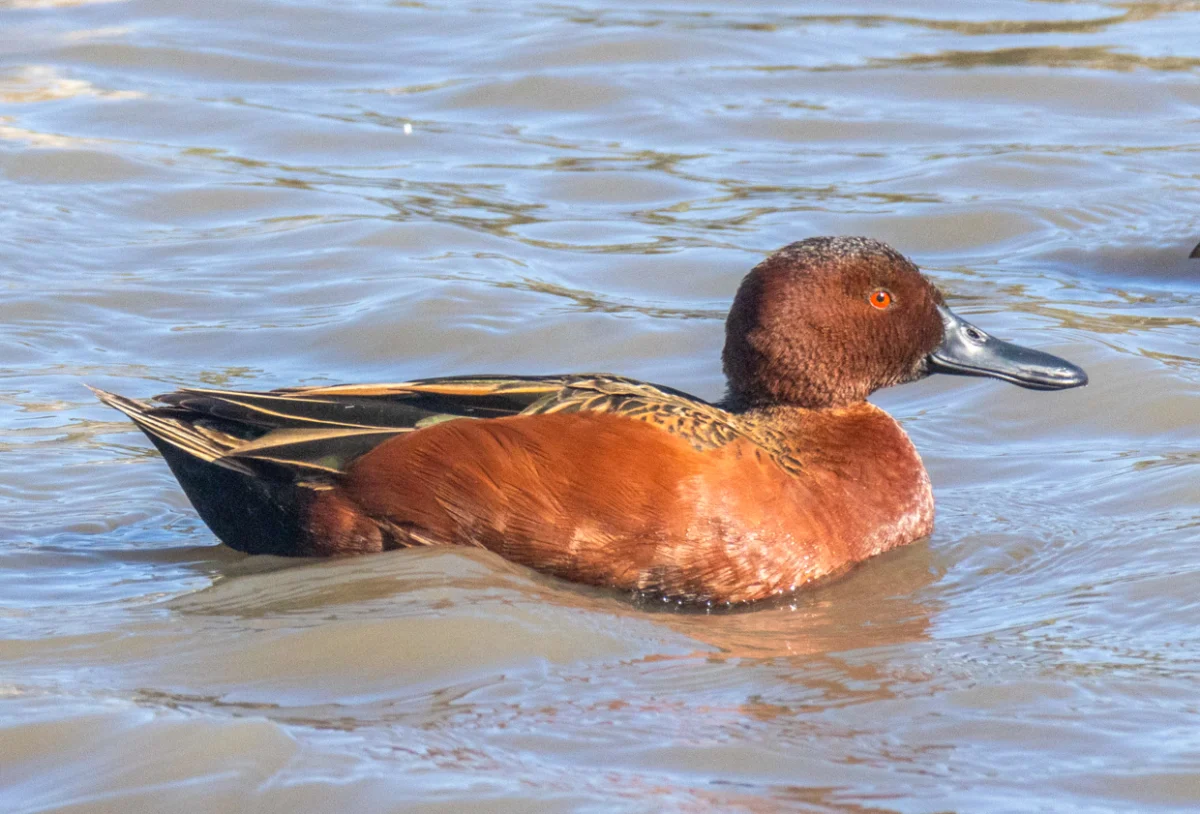
Further exploration of the island’s boardwalks revealed Black-necked Stilts and American Avocets, as well as a variety of dabbling ducks. Of particular interest was the presence of a male Cinnamon Teal, a species whose striking rufous coloration makes it a sought-after sight for birders. The group’s meticulous survey of dowitcher flocks yielded sightings of Stilt Sandpipers, while a "keen-eyed" participant identified the first Whooping Crane of the tour in the expansive marshlands.
The Phenomenon of the Cattle Tyrant and Urban Rarities
One of the most scientifically significant events of the 2026 tour occurred within the urban center of Corpus Christi. In a testament to the unpredictable nature of avian vagrancy, the group successfully located a Cattle Tyrant (Machetornis rixosa). This species is native to South America and was first documented in Texas in November 2023. Its continued presence in early 2026 marks a historic event in North American ornithology, as the bird has survived far outside its traditional range for over two years.

The Cattle Tyrant, which exhibits terrestrial foraging behavior similar to a North American Robin, has become a local celebrity. Its discovery near an open-air restaurant highlights the intersection of wildlife and urban development. Furthermore, the expedition documented a Red-footed Booby at Bayfront Park. Typically a pelagic bird of tropical oceans, the Red-footed Booby is an infrequent visitor to the Texas coast. Observations of the bird perching and swimming provided rare close-range data on its physical condition and behavior.
Conservation Success: The Whooping Crane of Aransas
A central pillar of the South Texas birding experience is the observation of the Whooping Crane (Grus americana), one of the rarest birds in North America. The tour’s transition to Rockport and the Aransas National Wildlife Refuge allowed for an in-depth study of these stately birds.

The Whooping Crane population is a flagship for conservation biology. Once reduced to a mere 15 individuals in the 1940s, the Aransas-Wood Buffalo population has grown to over 500 birds due to intensive federal and international protection. During a dedicated boat excursion into the refuge’s wilderness, participants observed the cranes foraging alongside Sandhill Cranes, offering a stark size comparison that underscored the Whooping Crane’s status as the tallest bird in North America.
Beyond the cranes, the Aransas refuge provided sightings of American Oystercatchers, Black Skimmers, and Marbled Godwits. The presence of the Reddish Egret, particularly the dark morph, allowed observers to witness its unique "canopy feeding" behavior, where the bird uses its wings to create shade, attracting fish into a false sense of security.

Transition to the Lower Rio Grande Valley
As the expedition moved south toward Brownsville, the ecological profile shifted from coastal marsh to subtropical thorn scrub. This region, known as the Lower Rio Grande Valley (LRGV), is home to several species found nowhere else in the United States. Initial sightings in this zone included the Golden-fronted Woodpecker, the Black-crested Titmouse, and the iconic Green Jay, whose tropical colors signal the transition into a different bio-region.
On South Padre Island, the group engaged with specialized wetland habitats, recording the Clapper Rail and Sora—two elusive species that inhabit dense marsh vegetation. The island also hosted hundreds of Redheads, a diving duck species that winters in massive numbers in the Laguna Madre. The diversity of the LRGV was further exemplified by sightings of the Great Kiskadee, a large, aggressive flycatcher with a diagnostic vocalization that is a staple of the valley’s soundscape.

Specialized Refuges and the World Birding Centers
The mid-point of the tour focused on the network of World Birding Centers (WBC) that have been established to preserve the remaining fragments of native habitat in the valley. At the Estero Llano Grande WBC, the group located two Common Pauraques. These nocturnal members of the nightjar family are masters of camouflage, often remaining invisible against the leaf litter until they are nearly stepped upon.
The expedition also documented the Eastern Screech-Owl, specifically the mccallii subspecies (McCall’s Screech-Owl), which is endemic to the Rio Grande Valley and northeastern Mexico. At Bentsen-Rio Grande Valley State Park, the group observed the Green Kingfisher and the Gray Hawk. The Gray Hawk, once a rare visitor, has expanded its breeding range in South Texas, serving as a case study for how raptors adapt to changing riparian corridors.

The National Butterfly Center provided a unique opportunity to observe ground-dwelling species such as the Olive Sparrow and the Long-billed Thrasher. These species are heavily dependent on the "Monte" (thick brush) that has been largely cleared for agriculture, making these protected pockets of land vital for their survival.
The Border Wall and the Rare Brown Jay
One of the most exclusive segments of the 2026 tour involved access to a private ranch situated directly on the Rio Grande. Navigating the complexities of the border wall, the group reached a bluff overlooking the river, providing a vantage point for observing species that cross freely between the United States and Mexico.

The primary objective at this location was the Brown Jay. In recent years, the Brown Jay has become increasingly rare north of the border, with this specific site being one of the only reliable locations for the species in the United States. The jays were observed at a feeding station, interacting with Altamira Orioles and Plain Chachalacas. The presence of these birds highlights the importance of private land conservation in maintaining biodiversity along the international boundary.
Additionally, the group recorded the Red-billed Pigeon, a shy forest species that is often difficult to detect. Its presence, along with the Audubon’s Oriole, indicates the high quality of the riparian forest remaining on this private tract.

Upper River Species and Final Rarities
The final days of the tour explored the drier, more arid country upriver from McAllen. This environment favors desert-adapted species such as the Greater Roadrunner, the Black-throated Sparrow, and the Pyrrhuloxia (a relative of the Northern Cardinal). The group also sought out the Black-tailed Gnatcatcher and the Green-tailed Towhee, species that thrive in the xeric scrublands.
A concluding highlight occurred at the Edinburg Scenic Wetlands WBC, where a female Crimson-collared Grosbeak had been reported. This species is an irregular visitor from Mexico, and its presence in Edinburg drew significant attention from the birding community. The grosbeak, with its olive-yellow and black patterning, was successfully located with the assistance of park staff.

The tour’s final new species was the Zone-tailed Hawk. This raptor is a master of mimicry, possessing a silhouette and flight pattern almost identical to that of a Turkey Vulture. By mimicking a non-threatening scavenger, the Zone-tailed Hawk is able to approach its prey undetected. The identification of this bird on the final day served as a fitting conclusion to a tour defined by careful observation and the pursuit of avian rarities.
Economic and Ecological Implications of Avitourism
The 2026 South Texas birding expedition underscores the immense economic and ecological value of "avitourism" to the region. Studies have shown that birding contributes hundreds of millions of dollars annually to the economy of the Rio Grande Valley, incentivizing the preservation of native habitats.

From a scientific perspective, the documentation of species like the Cattle Tyrant and the Crimson-collared Grosbeak provides valuable data on vagrancy patterns and the potential impacts of climate change on bird distribution. As tropical species continue to move northward, the South Texas border remains the most critical monitoring station for the arrival of new species into the Nearctic realm. The success of this tour, which balanced sightings of endangered residents with once-in-a-lifetime rarities, reaffirms South Texas’s status as a premier destination for global biodiversity.
