
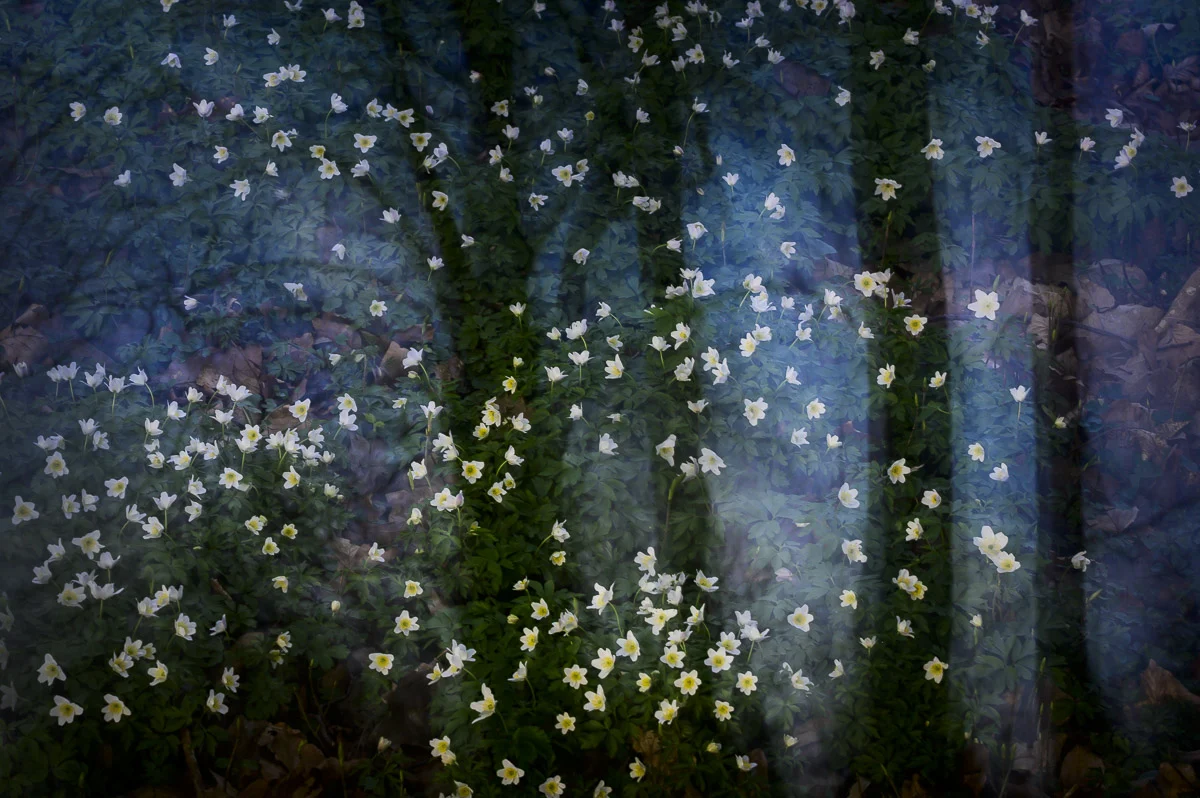
How do you take a good photo? While many often point to the finished image’s strong composition, clean technique, and pleasing color as hallmarks of success, a deeper dive into the creative process reveals that the crucial part frequently unfolds long before the final shutter click – out on location, in the dynamic moment of creation. This perspective shifts the focus from achieving a predefined result to a continuous, responsive engagement with the environment, emphasizing the journey of discovery over a pre-conceived destination.
The Philosophy of Emergent Imagery
For a growing number of photographers, the act of photography is less about ticking off a checklist of compositional rules and more about allowing a route toward an image to emerge organically. Instead of beginning with a "target photo" firmly in mind, the process starts with receptivity – observing what is present without forcing it into a predetermined conclusion. This approach acknowledges the inherent unpredictability of nature photography, where even well-laid plans often dissolve upon arrival at a scene. The light might not be as expected, wildlife might not appear where imagined, elements within the frame might pull attention in unforeseen directions, or the weather could shift dramatically. In these moments, the scene dictates its own priorities, and the photographer’s primary role becomes one of agile response.

Of course, experience, knowledge, and technical proficiency are indispensable. However, within this philosophy, these elements serve not as prescriptive rules dictating the outcome, but as a robust toolkit ready for deployment when needed. The picture’s final form is not decided in advance; rather, it is discovered through an interactive dialogue with the unfolding situation. This fluid methodology resonates with artistic traditions that value improvisation and the serendipitous moment, contrasting with more rigid, studio-based approaches where every element can be meticulously controlled. The embrace of uncertainty, therefore, becomes a powerful catalyst for unique and authentic imagery.
The Interactive Triad: Nature, Perception, and Design
At the heart of this dynamic photographic process lies an interactive triad: nature, perception, and design. Each element plays a distinct yet interconnected role, constantly influencing the others.
- Nature: This component provides the raw, unadulterated situation. It is the canvas upon which the photographic narrative unfolds, offering a boundless array of light, forms, textures, and living subjects. Nature is inherently dynamic, unpredictable, and often indifferent to human intentions, challenging photographers to engage with its reality rather than impose their will upon it.
- Perception: This is the photographer’s active engagement with nature. It determines what stands out from the overwhelming complexity of a scene – where the gaze lands, what details are consciously or subconsciously ignored, and what elements begin to coalesce into meaning. Perception reduces complexity, condenses visual information, and continually shifts the center of gravity within the frame, guiding the photographer’s attention toward potential compositions.
- Design: This is the photographer’s responsive answer to the interplay of nature and perception. It encompasses the technical decisions and creative choices made in the moment – framing, exposure, focus, the use of light modifiers, and the timing of the shutter release. Technique is a crucial part of this answer, but it is always in service of the image that is forming, rather than a pre-conceived idea. By not locking into a fixed outcome, photographers create space for chance to enter the creative process, often shaping the final work more profoundly than any initial plan.
The process is cyclical: the first photograph taken doesn’t conclude anything; instead, it serves as immediate feedback. The captured image returns to perception, altering what the photographer notices next, and nudging subsequent decisions. This iterative loop, greatly facilitated by modern digital cameras with instant review capabilities, allows for a continuous refinement of the artistic vision as it emerges. The three following examples, all arising spontaneously on location, vividly illustrate this triad in action, showcasing how the interaction between these elements shapes the final photograph.

Chronology of Creation: Frost Leaf
The genesis of the "Frost Leaf" image began on a night when temperatures plummeted unexpectedly in the photographer’s hometown. Without a specific destination, the photographer embarked on an impromptu drive, deciding en route to visit a local park pond fringed with bald cypress trees. Upon arrival, the scene presented a rich tapestry of frozen water, intricate ice formations, bare branches, stumps, and patterns, all dusted with a delicate layer of snow. Detail was ubiquitous, almost overwhelming.
Amidst this visual complexity, a single leaf, perfectly encased within the frozen surface, caught the photographer’s attention. This moment of focused perception marked the transition from broad observation to specific engagement. The initial impulse was to capture the delicate crystal structure of the ice. However, the first image, while technically sound, revealed a compositional challenge: the leaf felt isolated, detached from its surroundings. The critical relationship between the subject (the leaf) and its surface (the ice) was not yet articulated.
This feedback from the initial capture prompted a series of technical and creative adjustments. To better define the relationship, an external flash was introduced, paired with a wireless trigger, and strategically placed directly on the ice. The goal was to introduce low, side light, which is renowned for its ability to reveal texture and form. The process became highly iterative: small shifts in the flash’s position were immediately followed by reviewing the result on the camera’s display, then further adjustments. This rapid feedback loop allowed for precise sculpting of the light. As the light began to illuminate the ice’s surface in a more meaningful way, an LED light was added to subtly open up the shadows, further refining the tonal balance. Again, a cycle of testing, rejecting, and adjusting ensued.

The pivotal moment arrived serendipitously: the flash accidentally slipped, redirecting its beam more directly into the ice. This unforeseen incident, initially an error, produced an unexpected and profound shift. Noticed on the display, the change was dramatic: the leaf now separated from the surface in an entirely new way, and previously hidden structures beneath the ice became visible. The entire scene was transformed. What began as "a leaf on ice" evolved into a complex exploration of leaf, ice, and light, unified as a coherent, interconnected system. This instance perfectly encapsulates how chance, when embraced within a responsive framework, can elevate a photograph beyond initial intentions.
Chronology of Creation: Dragonfly in Backlight
The "Dragonfly in Backlight" image illustrates the challenges and rewards of capturing dynamic wildlife within a specific environmental context. The photographer journeyed to a nearby lake, a familiar location where dragonflies had been photographed before. Initial expectations, shaped by past experiences, leaned towards replicating similar imagery. However, upon arrival, the conditions had distinctly changed, requiring an immediate recalibration of approach.
The first element to command attention was the reed grass, bathed in glorious backlight. The low angle of the sun caused the stems to glow with an ethereal luminescence. The photographer’s immediate design response was to seek an angle where the background would fall into deep shadow, thereby isolating and enhancing the radiant glow of the reeds. As this compositional work unfolded, dragonflies continuously darted through the scene – appearing, vanishing, and reappearing with startling speed. The interplay of the intense backlight, the insects’ rapid motion, and the structural complexity of the reeds gradually shifted the photographer’s primary focus. A state of "focused waiting" ensued, where the camera was framed to allow space for the agile insects to enter, and a very fast shutter speed was selected to freeze their rapid movement, acknowledging that dragonflies do not politely hover for portraits.

Initially, despite the preparation, nothing decisive was captured. Many frames showed dragonflies out of focus, or positioned awkwardly. The feedback loop prompted further technical adjustments. The camera was switched to continuous shooting mode to increase the chances of capturing a decisive moment. Crucially, the photographer adopted a less direct mode of observation, softening their gaze away from staring intently through the viewfinder. This allowed for earlier detection of peripheral movement, making it easier to anticipate and react to the dragonflies’ unpredictable flight paths. Bursts of frames were fired whenever movement was sensed.
Reviewing these bursts revealed a persistent issue: the dragonflies were almost invariably outside the plane of focus. This critical feedback necessitated a more fundamental technical change. The photographer switched to manual focus, setting it for a specific distance, and stopped down the aperture. This strategic decision sacrificed some background blur but achieved a deeper zone of sharp focus, effectively covering both the reeds and the anticipated corridor where the dragonflies tended to pass. More waiting, more bursts. Out of hundreds of frames, a single image finally brought together the elusive elements of perfect focus, compelling position, and exquisite light, illustrating the triumph of perseverance and adaptive technique over challenging conditions.
Chronology of Creation: Slime Moulds
The "Slime Moulds" photograph exemplifies how an image can emerge from a state of general observation, leading to the discovery of hidden worlds. On an autumn day in the woods, nothing immediately announced itself as a compelling subject. The photographer, nonetheless, continued to shoot – capturing trees, leaves, and mushrooms – treating each image as feedback. The initial captures, however, lacked a certain "weight" or compelling narrative.

It was through the camera’s display that the truly significant subject revealed itself. In one frame, fine, threadlike structures on a fungus became apparent: slime moulds. The photographer hadn’t consciously seen them in the moment; the camera acted as an extension of perception, revealing what the naked eye had overlooked. This discovery triggered a profound shift in scale and attention. Moving closer, the photographer sat on the forest floor, deliberately attempting to bring this tiny, intricate world into focus. The sensory experience deepened, with the rich smell of earth filling the air, grounding the photographer in the micro-environment.
As time was spent with the slime moulds, sustained perception began to uncover further details: small, spherical swellings at the ends of the threads. These recurring forms provided a crucial focal point, giving the otherwise diffuse scene a center around which attention could tighten. The image began to coalesce.
The introduction of an LED light dramatically altered the scene. Shadows formed, shifted, and returned, creating dynamic interplay with light, blur, and structure. This immediately intensified the visual interest. The iterative process continued: checking the display, making minute adjustments to the light and camera position, and continuing to shoot. Frame by frame, this small, previously unnoticed world pulled the photographer deeper into its intricate details, culminating in an image that celebrates the hidden beauty of the forest floor. This case highlights the camera’s capacity to reveal the unseen, the power of sustained, deliberate observation, and the profound impact of controlled lighting in macro photography.
Broader Implications and The Role of Fluency

These three distinct situations – a frozen leaf, darting dragonflies, and microscopic slime moulds – share a common underlying logic. They compellingly demonstrate how photographic decisions grow out of continuously shifting attention, guided by real-time feedback from the scene and the camera. This approach stands in stark contrast to the rigid, faithful application of predetermined rules.
What truly carries a photograph, in this philosophy, is the dynamic moment when seeing and choosing converge. Technical competence, far from being a constraint, becomes an enabler. The more fluent a photographer is in composition, exposure, and various techniques, the less conscious effort is required to apply them on location. This technical mastery frees up mental space, allowing the photographer to be fully present and responsive to what is genuinely happening in the environment. It transforms technique from a directive into an intuitive tool, ready to serve the unfolding vision.
Rules, experience, and technique are thus viewed as essential tools – supportive of the work, but not its ultimate definition. They are utilized when they enhance the emerging image and readily set aside when they become an impediment to creative expression or responsiveness. This adaptability is critical in nature photography, where conditions are rarely static.
Ultimately, the interactive triad of nature, perception, and design remains central to this photographic ethos. Nature provides the unpredictable stage, perception directs the photographer’s evolving gaze, and design manifests as the responsive, iterative action. And every now and then, a small, unforeseen piece of chance or accident intervenes, shifting everything and leading to an image that transcends initial expectations, revealing a deeper connection between the artist and the natural world. This methodology not only fosters creative problem-solving but also encourages a profound, meditative engagement with the environment, yielding photographs that are both technically accomplished and deeply authentic.
