
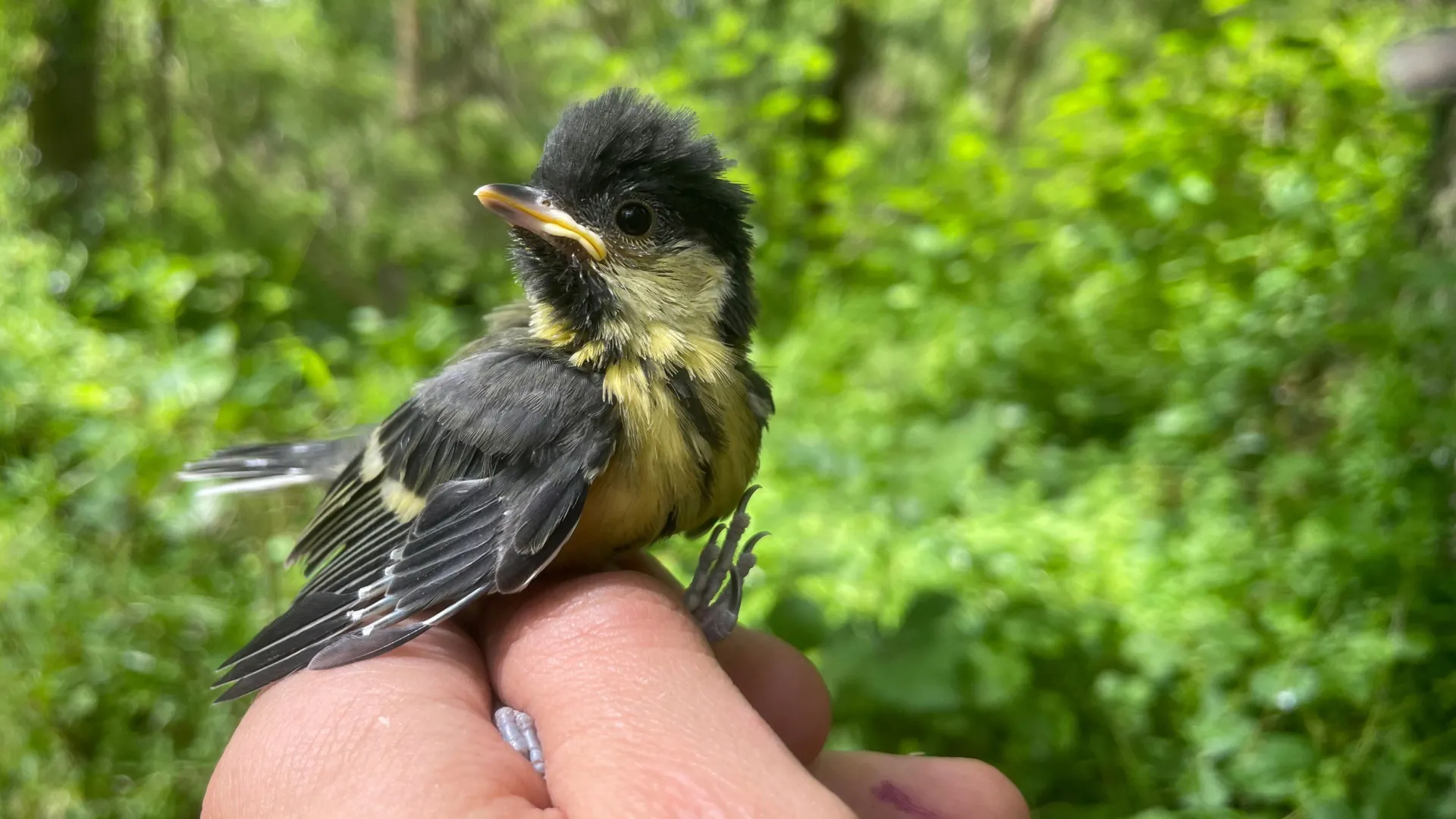
A groundbreaking study from the University of Oxford, published March 11, has illuminated the profound and complex impacts of sudden cold spells and heavy rainfall on young great tits ( Parus major) in the UK, revealing a significant slowdown in growth and a reduction in their chances of survival. Crucially, the research also suggests that populations of these common woodland birds that have begun breeding earlier in the season may be inadvertently shielding themselves from many of the most detrimental effects associated with these increasingly frequent weather extremes. The findings, drawn from an unusually extensive and long-term dataset, offer critical insights into how avian populations are adapting to, and struggling with, a rapidly changing climate, underscoring the delicate balance between environmental conditions and species survival.
A Half-Century of Data: Unlocking Ecological Secrets at Wytham Woods
The insights gleaned from this landmark research are testament to the power of sustained, long-term ecological monitoring. Scientists meticulously analyzed a staggering 60 years of records, encompassing data from more than 80,000 individual wild great tits inhabiting the ancient woodland of Wytham Woods, situated just outside Oxford. This unparalleled biological dataset, one of the most comprehensive for any wild vertebrate population globally, was then meticulously paired with detailed daily weather records, providing a granular understanding of environmental conditions across six decades. By pinpointing the coldest, wettest, and hottest days within each breeding season, researchers were able to quantify the frequency and intensity of these extreme events during critical stages of chick development. This allowed them to precisely measure how these weather anomalies influenced the body mass of nestlings at the point of fledging – a crucial metric, as fledging mass is a well-established and vital predictor of a young bird’s subsequent survival into adulthood.
Wytham Woods itself is not merely a research site; it is an ecological treasure trove, an ancient semi-natural woodland spanning approximately 400 hectares. Owned and managed by the University of Oxford since 1942, it has become one of the most thoroughly studied woodlands in the world. Research here spans multiple disciplines, from entomology and botany to zoology and climate science, creating an intricate web of data that offers a holistic view of ecosystem dynamics. The great tit population within Wytham has been continuously monitored since 1947, providing an unbroken lineage of data on breeding success, survival, and population fluctuations. This extraordinary temporal depth allows scientists to discern long-term trends and subtle ecological shifts that would be invisible in shorter-term studies, making the Wytham dataset invaluable for understanding the long-term impacts of environmental change, including climate change, on biodiversity.
The Great Tit: A Bellwether Species in a Changing Climate
The great tit, Parus major, is a ubiquitous and charismatic songbird found across Europe and Asia. Highly adaptable, it thrives in a variety of habitats, from deciduous woodlands to gardens and urban parks. Its widespread distribution, relatively short generation time, and ease of monitoring (especially through nestbox schemes) make it an ideal model species for ecological and evolutionary research. As a primary insectivore during the breeding season, great tits play a vital role in woodland ecosystems, helping to control insect populations, particularly caterpillars. Their breeding success is intimately linked to the availability of these insect prey, which in turn is highly sensitive to weather conditions. Consequently, the great tit serves as a vital bellwether, its population dynamics reflecting broader ecological health and the subtle, yet powerful, effects of climate change on avian communities. Understanding the challenges faced by great tits can provide predictive insights into the resilience of other insectivorous birds and the overall health of woodland ecosystems.
Cold and Rain: Direct Threats to Delicate Nestlings
The Oxford study unequivocally revealed that severe cold during the initial week after hatching poses an especially acute threat to great tit nestlings. This vulnerability stems from the physiological limitations of newly hatched chicks, which are largely devoid of feathers and thus incapable of effectively regulating their own body temperature. During periods of cold, a disproportionate amount of their precious energy reserves, which should ideally be channeled towards growth and development, must instead be expended merely to maintain a viable internal temperature. This energetic drain stunts growth and weakens the developing birds.
As chicks mature and grow older, the primary meteorological threat shifts from cold to heavy rainfall. Both types of extreme weather – severe cold and heavy rain – were found to significantly reduce the body mass of nestlings at fledging, by as much as 3%. This seemingly modest percentage can have substantial long-term consequences, given that fledging mass is a critical determinant of a young bird’s ability to survive its first winter and reach reproductive age.
The detrimental effects of bad weather extend beyond direct physiological impacts on the chicks themselves. Extreme cold and heavy rain critically impede the foraging efficiency of parent birds. Adverse conditions limit how often parents can safely leave the nest to search for food, and when they do venture out, their success rate is often diminished. Furthermore, heavy rainfall has a direct and devastating impact on the great tits’ primary food source: caterpillars. Rain can physically dislodge caterpillars from their host plants, washing them onto the ground where they become less accessible or even perish. This dual assault – reduced parental foraging and diminished prey availability – creates a severe nutritional deficit for growing chicks, whose energy demands are exceptionally high during their rapid developmental phase.
The Synergistic Danger of Combined Extremes
The research unearthed an even more alarming finding when considering the co-occurrence of multiple extreme weather events. When intense heat coincided with heavy rainfall, the negative impacts on nestlings became dramatically more severe. In such instances, fledging mass was observed to plummet by up to a staggering 27%, particularly for broods that hatched later in the breeding season. This synergistic effect highlights the complex and often unpredictable ways in which different climate variables can interact to amplify their detrimental consequences on wildlife. A scenario combining high temperatures, which can induce stress, with heavy rain, which reduces food availability, creates a perfect storm for vulnerable young birds, pushing their survival chances to the brink. This finding underscores the need for conservation strategies to consider not just individual extreme events, but also their potential co-occurrence and combined effects.
Devi Satarkar, the lead researcher from the Department of Biology at the University of Oxford, emphasized the adaptive responses observed within the Wytham population: "In the Wytham population, great tits have adjusted to warmer springs by breeding earlier to track peak abundance of their main prey, caterpillars. This overall earlier laying is beneficial, buffering them against many impacts of extreme weather — but it also exposes them to cold spells early in the season. Even small early-life deficits can have large implications for survival. It will only get tougher for birds to keep up as extreme weather increases in frequency and intensity with climate change." Her statement encapsulates the double-edged sword of adaptation in a rapidly changing environment: while some shifts provide immediate benefits, they can simultaneously create new vulnerabilities.
The Unexpected Benefit of Mild Warmth: A Regional Nuance
In a surprising deviation from expected patterns, the study also revealed that milder warmer extremes were, in fact, linked to heavier fledging weights during the nestling stage. High temperatures are commonly associated with heat stress and negative outcomes for avian populations, particularly in hotter climates. However, the warmer periods experienced in Oxfordshire appear to be relatively benign when compared to the scorching heatwaves prevalent in southern Europe or other truly tropical regions.
Devi Satarkar elaborated on this intriguing discovery: "Extreme weather events are affecting wild bird populations in complex ways. The level of warmth we see in these heat extremes in Oxfordshire might boost growth because it can increase insect activity and visibility — making caterpillars easier to find — while letting parents forage more and reducing nestlings’ thermoregulatory costs. The high water content in caterpillars also helps against dehydration. This contrasts sharply with hotter regions like the Mediterranean, where similar events can exceed 35°C and harm nestlings."
This finding highlights the crucial importance of regional context and the specific thresholds of "extreme" weather. What constitutes a beneficial warm spell in the temperate climate of the UK, potentially enhancing food availability and reducing energetic demands for nestlings, could be a lethal heatwave in a different biogeographical zone. The typical summer temperatures in Oxfordshire, even during "warm extremes," rarely reach the prolonged, intense levels that trigger heat stress in birds. Instead, these milder warm periods appear to create optimal conditions for caterpillar growth and activity, making them more abundant and easier for parent birds to locate and deliver to the nest. This nuanced understanding is vital for developing targeted conservation strategies that account for local climatic conditions rather than applying broad-brush generalizations.
Early Breeding: A Timely Adaptation with Emerging Challenges
The study strongly reinforces the hypothesis that early breeding offers a significant advantage to great tit populations in the face of increasingly unpredictable weather patterns. Broods that hatch earlier in spring tend to capitalize on occasional warm spells, which often coincide with the peak abundance of caterpillars – their primary food source – and when ambient temperatures remain within safe, beneficial limits. These early-season conditions provide an optimal window for rapid growth and development.
Conversely, birds that breed later in the season consistently face tougher conditions. Their fledglings were found to be approximately one-third lighter, despite experiencing warm days that reached similar temperatures of around 16-17°C. This stark difference underscores the critical role of timing in relation to resource availability and the specific sequence of weather events. Later broods are more likely to encounter the detrimental combination of declining caterpillar numbers and the increased frequency of severe rainfall or combined heat-and-rain extremes, which disproportionately affect their survival prospects.
Over longer timescales, the impact of these weather patterns becomes even clearer. Extreme cold and heavy rainfall were found to slightly reduce the overall odds that young birds would survive to adulthood. In contrast, the observed warm extremes, within the specific context of Oxfordshire’s climate, exhibited small but positive effects on survival. Collectively, the data indicates that an evolutionary shift towards earlier breeding within a given season acts as a vital buffer, shielding a substantial portion of the great tit population from the most severe consequences of unpredictable weather events. This phenomenon, known as phenological plasticity, is a key adaptive response to climate change, allowing species to adjust their life cycles to track shifting environmental cues. However, as Devi Satarkar noted, this adaptation also creates new vulnerabilities to early-season cold snaps, indicating that the race to adapt is a continuous and complex one.
Broader Ecological Implications and the Urgency of Climate Action
The findings from Wytham Woods extend far beyond the great tit population itself, offering a microcosm of the broader ecological challenges posed by anthropogenic climate change. The observed impacts on great tit growth and survival have ripple effects throughout the woodland ecosystem. A decline in great tit populations, or a reduction in their reproductive success, could lead to shifts in insect populations, potentially impacting forest health and the food web dynamics for other predators and prey. The sensitivity of a common, adaptable species like the great tit serves as a potent indicator of the escalating pressures on biodiversity worldwide.
Environmental scientists and conservationists emphasize that as climate change intensifies, leading to a greater frequency and intensity of extreme weather events, understanding these small-scale environmental conditions will become paramount. Factors such as microclimates – localized atmospheric conditions that differ from those in the surrounding area – and subtle habitat differences can play a crucial role in buffering wildlife from extremes. For instance, areas with denser canopy cover might offer greater shelter from heavy rain or extreme heat, while specific woodland management practices could enhance the availability of food sources during critical periods.
This type of detailed, localized research is indispensable for guiding effective conservation strategies. For great tits, this could include optimizing nestbox placement to provide maximum shelter and insulation during cold spells or to avoid areas prone to waterlogging during heavy rainfall. Woodland management practices could be tailored to promote a diversity of plant species that support caterpillar populations across a longer season, thereby providing more resilient food sources.
Conservation organizations, such as the Royal Society for the Protection of Birds (RSPB) and the British Trust for Ornithology (BTO), have consistently highlighted the importance of long-term studies like the one at Wytham Woods. Such datasets provide the evidence base needed to inform policy decisions and allocate conservation resources effectively. Experts within these organizations would likely underscore the findings as a stark reminder of the urgent need for comprehensive climate action to mitigate global warming and reduce the frequency and intensity of extreme weather events. They would also advocate for continued investment in ecological research and monitoring, as well as the implementation of landscape-scale conservation measures that enhance habitat resilience.
Researchers at Oxford plan to continue their meticulous monitoring of the great tit population in Wytham Woods. A key question for future investigation is whether the heatwaves that currently appear to be moderate and even beneficial in Oxfordshire could eventually become harmful as global temperatures continue their upward trajectory. This highlights the dynamic nature of climate impacts, where today’s "mild warmth" could become tomorrow’s "lethal heat," demanding continuous vigilance and adaptive management strategies. The great tit, a small bird in an ancient woodland, thus stands as a powerful symbol of nature’s resilience and its vulnerability in the face of an ever-changing world, calling for urgent attention and concerted action from humanity.
