
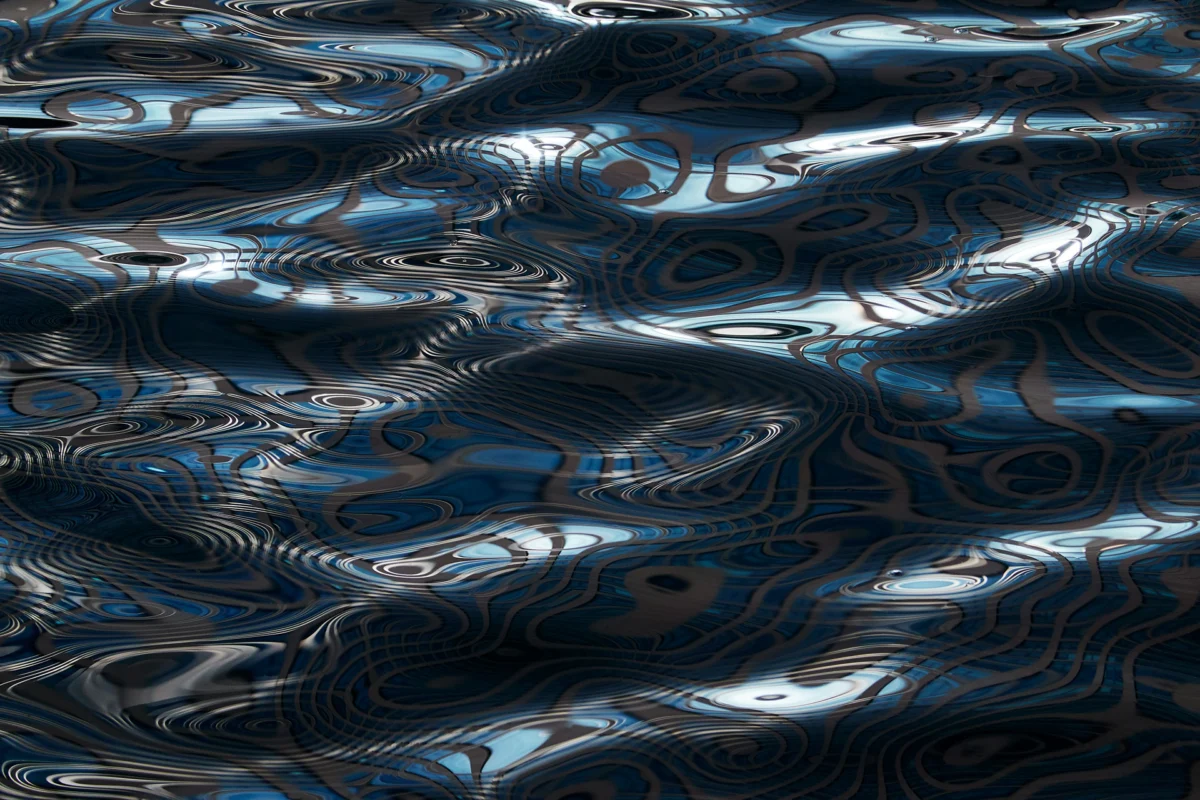
When encountering the captivating images of the Fleeting Reflections series for the first time, viewers frequently assume the ethereal compositions are products of sophisticated digital manipulation. However, the artist behind this acclaimed body of work takes pleasure in clarifying that these arresting visuals are born entirely in-camera, a testament to light, reflection, and an unwavering commitment to observation. What appears on the canvas or in print is the intricate dance of light off glass and steel, fracturing on the dynamic surface of water, meticulously captured – sometimes as a single, decisive frame, at other times through carefully layered in-camera multiple exposures. This approach, devoid of post-capture digital tricks, underscores a profound philosophy centered on attention, repetition, and the passage of time.
The concept of "time" forms the very bedrock of this photographic endeavor. Spanning over a decade, the artist’s sustained engagement with the docks surrounding Canary Wharf in London has illuminated three fundamental pillars essential for creating meaningful abstract and nature photography: accessibility, repeatability, and patience. While much of the popular discourse around photography often gravitates towards technical specifications – the latest cameras, lenses, or shooting modes – the true engine driving the Fleeting Reflections series lies in the synergistic relationship between a chosen place, persistent dedication, and disciplined practice. This long-term commitment has allowed the artist to transcend superficial observation, delving into the very essence of the urban waterscape.
The Genesis of Fleeting Reflections: A Decade in Canary Wharf
The Fleeting Reflections project began over ten years ago, an immersive journey into a seemingly unlikely landscape for abstract nature photography: the bustling financial district of Canary Wharf. This area, known globally for its towering skyscrapers and corporate gravitas, has been meticulously explored and reinterpreted. Once a vital part of London’s thriving port, the Isle of Dogs and its docks underwent a dramatic transformation from the mid-1980s onwards. What were once bustling commercial docks, part of the world’s largest port system in the 19th century, became derelict after the decline of traditional shipping. The subsequent regeneration efforts saw the rise of iconic structures like One Canada Square, transforming the area into a gleaming hub of international finance. This juxtaposition of historic waterways with contemporary architecture creates a unique visual environment, a compelling stage for an artist seeking to capture ephemeral beauty.

For the artist, Canary Wharf is not merely a collection of steel-and-glass edifices but a dynamic system of light sources. The imposing towers, designed by world-renowned architects, cast an ever-shifting palette of colors and geometric lines onto the water’s surface. The wind, a constant sculptor, then transmutes this reflected light into an infinite array of waves, shimmering ribbons, and sharp fractures. The artist’s role becomes that of an attentive listener, interpreting and capturing these ephemeral visual conversations. This deep engagement with the environment is a direct result of the chosen location’s unparalleled accessibility.
Challenging Photographic Myths: Accessibility as a Foundation
A pervasive, albeit quiet, myth within the realm of nature photography suggests that truly compelling images necessitate arduous journeys to dramatic, remote, or pristine wilderness locations. The Fleeting Reflections series stands as a powerful counter-narrative to this notion. The entirety of this extensive body of work has emerged predominantly from a single square mile of water, encircled by the very office towers that define Canary Wharf. This challenges conventional wisdom, asserting that profound artistic insight can be cultivated in one’s immediate surroundings.
Canary Wharf, though a symbol of urban development, offers an unexpected richness for abstract exploration. Its waters, a legacy of the old docks, are continuously influenced by the surrounding architecture, weather patterns, and maritime activity. The primary reason for such profound artistic immersion in this specific locale is its sheer accessibility. The artist can reach the site with ease, often on foot, and crucially, can return repeatedly without the logistical burdens typically associated with grand landscape photography. There is no need for costly flights, special permits, extended leaves of absence, or pre-dawn hikes to remote vistas. The opportunity to photograph arises even when only a brief window of 40 minutes is available. This allows for exploration under diverse and often conventionally "unfavorable" lighting conditions – be it the harsh midday sun or the diffused light of a rainy day, which transforms the water’s surface into a textured, hammered metal expanse.
The concept of accessibility might initially appear mundane, yet its importance is absolutely fundamental to the depth achieved in Fleeting Reflections. Without the practical ability to frequently engage with a subject, a photographer cannot cultivate the profound familiarity required to move beyond the superficial and capture truly original perspectives. The greater the ease with which one can stand before a subject, the more intimately and honestly one can study its myriad manifestations. This principle liberates the artist from the logistical constraints that often dictate creative choices, allowing for a sustained, intimate dialogue with the chosen environment. According to statistics from London’s tourism and transport authorities, Canary Wharf is one of the most well-connected and easily reachable areas in the capital, boasting extensive public transport links, which inherently supports this philosophy of regular, unburdened access for creative work.

The Dynamic Canvas: Repeatability and the Art of Observation
The second indispensable pillar underpinning the Fleeting Reflections project is repeatability. This refers to the deliberate selection of a subject that possesses an inherent capacity for constant change, surprising the observer with new visual possibilities each time it is encountered. The docks of Canary Wharf exemplify this quality in abundance. The environment is never truly static; each visit unveils a unique interplay of elements.
A tranquil morning might present long, glassy stretches of vibrant color reflected from the towering buildings. A blustery afternoon, however, could shatter those very same reflections into sharp, serrated lines, evoking the iconic waveform of Joy Division’s Unknown Pleasures album cover. The passage of a boat can momentarily smear the reflections, creating painterly, hand-drawn effects on the water’s surface. Even more transient are the iridescent interference patterns caused by trace amounts of diesel or oil, which might appear for mere minutes before dissipating, never to recur in precisely the same form. This constant flux transforms the water into a living canvas, reflecting the ephemeral nature of light and motion.
This inherent repeatability allows the artist to revisit the "same" scene hundreds, even thousands, of times, yet continuously discover new and evolving work. It is not uncommon for the artist to remain in a single vantage point for hours, meticulously observing a specific patch of water as it cycles through a spectrum of visual personalities. At this stage, the focus shifts from merely photographing architecture to documenting the dynamic "behavior" of light and water.
Within this context, in-camera techniques become crucial tools rather than ends in themselves. Fast burst rates are employed to precisely freeze fleeting micro-moments on the water’s surface before their ephemeral forms collapse. Multiple exposure modes are utilized to layer gestures, extending the inherent abstraction already present in the reflections. These techniques, however, only hold significance because the subject itself consistently offers a fresh trove of raw visual material. The color palette shifts with the changing weather, the geometric forms bend and contort with the wind’s caprice, and the overall mood of the scene transforms with the ebb and flow of the tide. Without the capacity for repeatability, the photographic output might resemble a collection of isolated postcards; with it, a cohesive and deeply studied body of work emerges.

The Unseen Work: Patience as the Project’s Core
The final and arguably most underestimated pillar of the Fleeting Reflections series is patience. This quality permeates every stage of the artistic process, beginning long before the shutter is pressed. Patience is first required in waiting for the alignment of suitable weather conditions with the artist’s available time. The interplay of hard sunlight on still water yields vastly different results from flat light under drizzle, and not every combination is conducive to the desired aesthetic. It is not uncommon for the artist to walk for miles, meticulously checking various angles and sections of water, only to find that the conditions on a particular day do not align with any viable photographic opportunities.
Even when conditions appear promising, patience transforms into a physical exercise. The artist might remain at a single location for up to four hours, capturing as many as 3,000 frames of what, to a casual passerby, might seem like "the same scene." The objective is to identify that precise instant where color, rhythm, structural integrity, and visual tension converge in perfect harmony. This cannot be rushed; it demands a sustained, active presence to recognize and seize the moment.
The exercise of patience extends into the post-capture phase. Upon returning home, thousands of near-identical images are downloaded, initiating a slow, deliberate culling process on the iMac. This is where discipline becomes paramount. The artist purposefully sifts through the vast archive, searching for the exact frame where all elements coalesce, rigorously rejecting the overwhelming majority. The "keep rate" is notably, almost brutally, low, underscoring the exacting standards applied to each image. For perspective, a 3,000-frame shoot with a "brutally low" keep rate might yield only a handful of final images, a stark contrast to the often rapid-fire, high-volume production cycles seen in other photographic disciplines.
The processing of these selected images is equally restrained. Working primarily in Capture One, the artist employs only global adjustments such as levels, clarity, sharpness, and contrast. Crucially, there is no manipulation of shapes or forms in Photoshop. The artistic intent is not to "create" forms but rather to "reveal" what was inherently present in the water at the moment of capture. This choice is as much philosophical as it is aesthetic, underscoring a deep commitment to the honesty and integrity of the work. The artist aims to be able to state, unequivocally and hand on heart, "this happened."

Beyond these immediate stages, there is an even longer form of patience: the patience required for the work to mature. The Fleeting Reflections project was not publicly presented in any significant capacity for several years. During this period, the artist continued to return to Canary Wharf, tirelessly shooting, refining, and discerning what felt essential from what constituted mere visual noise. It took approximately seven years before a coherent body of work emerged, deemed ready for presentation to a publisher. This culminated in the publication of the first book, Fleeting Reflections, by Triplekite in 2017. This milestone was followed by successful exhibitions at the Greenwich Gallery in 2017 and the Anise Gallery in London in 2019, eventually leading to a second volume, Fleeting Reflections II, in 2023.
Observers, witnessing these public milestones, might mistakenly conclude that the project’s journey was swift or effortlessly smooth. In reality, it was a protracted, deliberate, and often obsessive undertaking. The photographs themselves, stunning as they are, represent only the visible apex of the project. Beneath them lies an unseen foundation of thousands of hours dedicated to walking, watching, waiting, shooting, editing, rigorously rejecting, and consistently returning to the source.
A Chronology of Recognition: From Obscurity to Acclaim
The trajectory of Fleeting Reflections demonstrates a powerful example of sustained creative development culminating in significant recognition.
- Early 2010s: The project quietly begins, marked by consistent, almost daily, visits to the Canary Wharf docks. This period is characterized by intensive observation, experimentation with in-camera techniques, and a deepening understanding of the dynamic interplay of light, water, and architecture. The focus is purely on the creative process and the accumulation of a vast visual archive, with no immediate public dissemination.
- Circa 2017 (Seven-Year Mark): After approximately seven years of dedicated work, the artist feels the project has achieved sufficient coherence and maturity to be presented to a publisher. This critical self-assessment leads to a significant step in the project’s public life.
- 2017: The first volume, Fleeting Reflections, is published by Triplekite, a notable independent publisher specializing in fine art photography books. This publication marks the official introduction of the series to a wider audience and garners critical attention within the photography community. Concurrently, the work is exhibited at the prestigious Greenwich Gallery in London, providing a physical space for viewers to engage with the large-format prints. Feedback from early viewers and critics often highlighted the surprising origins of the images and the "painterly" quality achieved without digital artistry.
- 22 March – 20 April 2019: The series gains further prominence with an exhibition at the Anise Gallery in London, reinforcing its artistic merit and expanding its reach to a broader art-viewing public. Gallery representatives noted the unique appeal of work that blends abstract aesthetics with documented reality, a rare find in contemporary photography.
- 2023: Due to the continued evolution of the project and the demand for more work, a second volume, Fleeting Reflections II, is released. This demonstrates the enduring nature of the artist’s engagement with Canary Wharf and the ongoing discovery of new visual narratives within the same location. Publishers like Triplekite have inferred that the sustained interest in the series is largely due to its unique blend of artistic vision and ethical photographic practice.
This timeline illustrates a deliberate, patient progression, where artistic development preceded public acclaim, emphasizing the value of sustained creative investment over immediate gratification.

Broader Implications for the Photographic Community
The Fleeting Reflections project offers profound lessons for photographers across all genres, particularly those aspiring to create distinctive and personal bodies of work. Its central message is a powerful refutation of the belief that dramatic landscapes or exotic locales are prerequisites for impactful photography. Instead, the series champions the transformative power of three core principles: access, repeatability, and patience.
For aspiring photographers, this work serves as an inspiring exemplar of how to cultivate a unique vision within one’s immediate environment. It encourages a re-evaluation of the "ordinary" and a deeper engagement with accessible subjects. Whether it’s a local canal, a harbor wall, a marshland at the edge of town, or even rainwater pooling in a car park, the potential for artistic discovery is limitless, provided the photographer commits to repeated visits under varying conditions. By returning consistently, one can develop an intuitive understanding of how a place responds to different light, weather, and seasonal changes. This approach fosters a deeper connection with the subject, leading to more nuanced and original imagery than fleeting encounters with grand vistas.
This approach necessitates a commitment to the "slow work" – the iterative process of walking, observing, waiting, capturing, refining, and critically editing. It challenges the prevailing culture of instant gratification often associated with digital photography, advocating instead for a more contemplative and enduring relationship with the subject matter. In an age where smartphone cameras and powerful editing software make "good enough" images readily achievable, Fleeting Reflections highlights the enduring value of mastery through dedication. It suggests that true artistic distinctiveness often arises not from exoticism, but from profound intimacy with a chosen subject.
The Philosophy of Authenticity in the Digital Age

In an era increasingly defined by digital manipulation and artificial intelligence, the Fleeting Reflections series stands as a poignant statement on photographic authenticity. The artist’s unwavering commitment to in-camera capture and minimal, global adjustments in post-processing is not merely a technical choice but a deeply philosophical one. By explicitly stating, "I do not manipulate shapes in Photoshop… I’m not ‘creating’ the forms; I’m revealing what was already there in the water," the artist directly addresses the ongoing debate about integrity in photography.
This commitment to honesty resonates with a growing segment of the photography community and audience who value the verifiable reality of an image. It positions the work as a document of genuine observation, where the artistry lies in the photographer’s ability to see and capture, rather than to construct or invent. This philosophical stance enhances the impact of the abstract imagery, imbuing it with a sense of verifiable wonder. Viewers are invited not just to appreciate a beautiful composition, but to marvel at the inherent artistry of the natural world, as interpreted through a patient and dedicated lens. This aligns with a broader movement among certain photographic purists and documentary photographers who advocate for minimal intervention, ensuring that the photograph remains a faithful record of a moment in time, however abstract its final appearance.
Ultimately, patience in this context is far from passive. It is an intensely active decision to invest oneself, mind and spirit, in a subject for as long as it takes to truly understand its complexities and subtleties. Over extended periods, this profound level of patience becomes tangibly visible within the photographs themselves. While viewers might initially be drawn to the vibrant colors and intriguing shapes, what they are, in essence, truly perceiving is the distilled essence of unwavering attention and dedicated engagement. The Fleeting Reflections series thus offers a powerful narrative about finding extraordinary beauty in the everyday, demonstrating that the most profound artistic expressions often arise from deep, sustained observation of the world immediately around us. The legacy of this project lies not just in its stunning visual output, but in its eloquent articulation of a timeless photographic philosophy that champions patience, persistence, and authenticity.
