
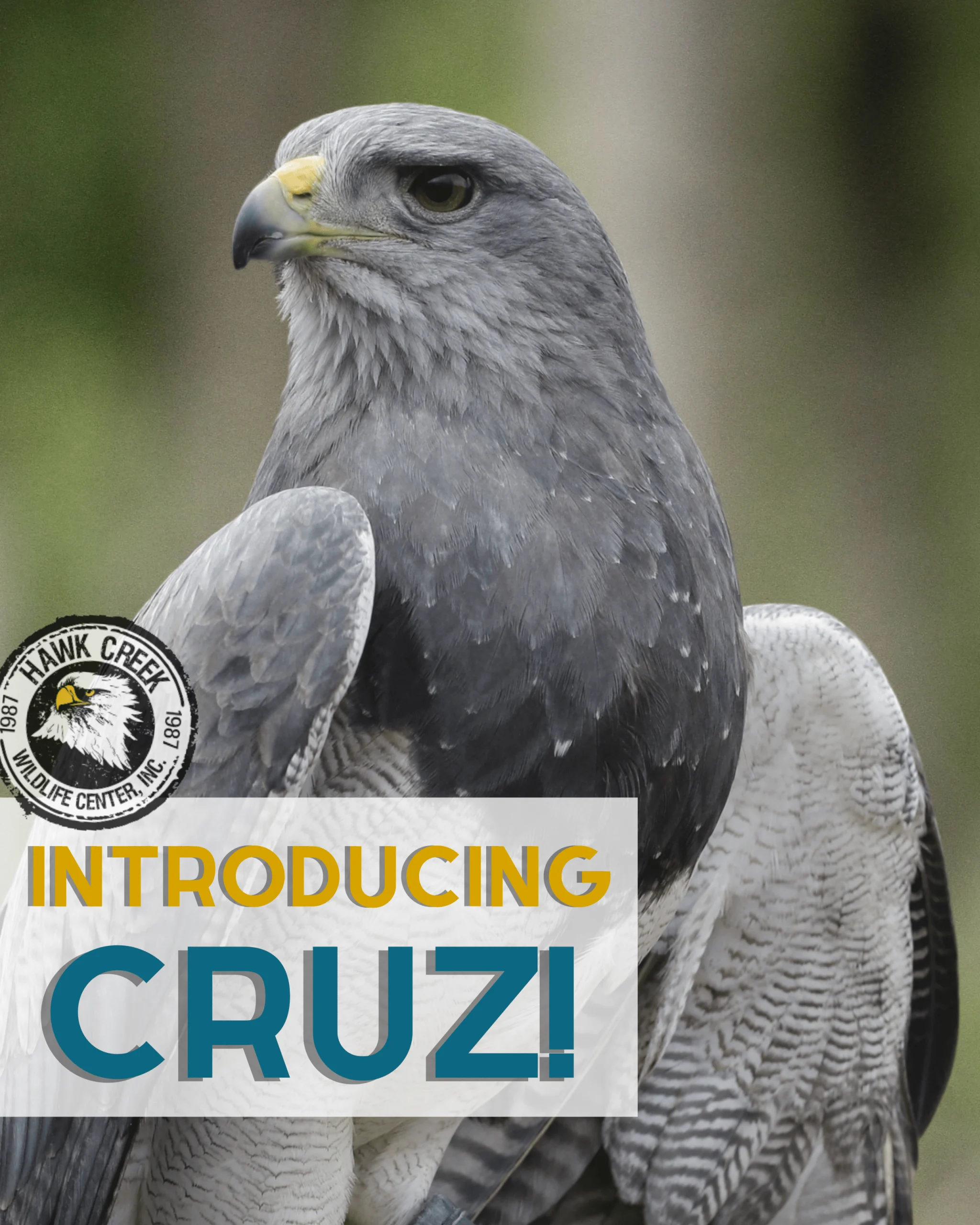
Hawk Creek is thrilled to announce the arrival of a magnificent new avian resident, a species renowned for its diverse nomenclature and captivating presence in the skies of South America. While known by various appellations including the Black-chested Buzzard-eagle, Chilean Blue Eagle, Patagonian Eagle, and Gray Buzzard Eagle, this impressive raptor will be affectionately known at Hawk Creek as Cruz. This introduction marks a significant moment for the educational and conservation initiatives at Hawk Creek, offering the local community an unparalleled opportunity to connect with a species rarely observed in North America and underscoring the vital importance of international collaboration in wildlife preservation.
A Glimpse into the Life of Cruz and His Species
Cruz, the Black-chested Buzzard-eagle (Geranoaetus melanoleucus), is a formidable bird of prey native to the elevated, open terrains of South America. These magnificent raptors are characterized by their striking appearance and their masterful aerial prowess. Typically, they spend a substantial portion of their day soaring effortlessly through the thermals, meticulously scanning the landscapes below for sustenance. Their diet primarily consists of small to medium-sized mammals, such as degus, and importantly, invasive European hares, playing a crucial role in the ecological balance of their native habitats. The introduction of Cruz to Hawk Creek serves as a powerful educational tool, shedding light on the unique adaptations and ecological significance of this often-understudied species.
The Black-chested Buzzard-eagle is one of the largest birds of prey in South America, with adults typically measuring between 65 and 85 centimeters (26 to 33 inches) in length and possessing a wingspan that can range from 1.4 to 1.9 meters (4.6 to 6.2 feet). Their plumage is predominantly dark, with a distinctive black chest that gives them one of their common names. Males and females exhibit slight sexual dimorphism, with females generally being larger than males. Their keen eyesight, estimated to be four to eight times stronger than that of humans, allows them to spot prey from considerable altitudes. Their powerful talons are perfectly adapted for grasping and subduing their quarry.
A Partnership Forged in Conservation
This remarkable opportunity to host Cruz at Hawk Creek is a direct result of a strategic and impactful partnership with leading eagle conservationists at Sia in Oklahoma. Sia, an organization dedicated to the preservation and understanding of raptor species, has been instrumental in facilitating the exchange of avian ambassadors and the advancement of global eagle conservation efforts. This collaboration extends beyond the mere exhibition of species; it signifies a shared commitment to educating the public about the challenges facing these majestic birds and the tangible steps being taken to address them.
Hawk Creek’s affiliation with Sia allows them to not only introduce the community to species like Cruz but also to showcase other rare raptors that are seldom seen in the United States. Previously, through this partnership, Hawk Creek has introduced Jara, a Short-toed Snake Eagle (Circaetus gallicus), and Onyx, a Verreaux’s Eagle (Aquila verreauxii). The Short-toed Snake Eagle, found across Southern Europe, Africa, and Asia, is renowned for its specialized diet of reptiles, particularly snakes. Verreaux’s Eagle, on the other hand, is an iconic African raptor, famous for its association with the dramatic cliff faces of its mountainous habitat and its primary prey of rock hyraxes. The presence of these diverse species at Hawk Creek underscores the organization’s dedication to providing a comprehensive and globally representative educational experience.
Wild Earth Event: A Deeper Dive into Eagle Conservation
To further illuminate the critical work being done in eagle conservation, Hawk Creek is hosting a special "Wild Earth" event on May 13th. This event will feature a prominent figure in the field of global eagle conservation, Waha Thuweeka, also known by his traditional Comanche name, William “Two-Raven” Voelker. Mr. Voelker is a key representative of Sia, the Comanche Ethno-Ornithological Initiative. His participation in the Wild Earth event is highly anticipated, as he will be sharing invaluable insights into the multifaceted aspects of eagle conservation. Attendees will have the chance to learn about the scientific research, habitat protection strategies, and community engagement efforts that are essential for safeguarding eagle populations worldwide.
The Comanche Ethno-Ornithological Initiative, of which Mr. Voelker is a part, represents a crucial intersection of traditional ecological knowledge and modern conservation science. This initiative seeks to honor and integrate the deep understanding of birds and their environments held by indigenous communities, particularly the Comanche people, with contemporary scientific methodologies. Such a holistic approach is increasingly recognized as vital for effective and culturally sensitive conservation outcomes. By bringing together such expertise, Hawk Creek aims to foster a deeper appreciation for the interconnectedness of human cultures and the natural world, particularly concerning avian species.
Background and Chronology of the Partnership and Introduction
The genesis of this significant introduction can be traced back to ongoing dialogues and collaborative planning between Hawk Creek and Sia. For months, discussions have been underway to identify a suitable avian ambassador that would not only captivate the public but also serve the educational mission of both organizations. The selection of the Black-chested Buzzard-eagle was a deliberate choice, given its unique geographic origin and its compelling ecological role.
Timeline of Key Developments (Inferred):
- Late 2023/Early 2024: Initial discussions and exploratory meetings between representatives of Hawk Creek and Sia regarding potential collaborative projects and species introductions.
- Mid-2024: Formalization of the partnership agreement, outlining mutual goals for conservation, education, and species exchange. Identification of the Black-chested Buzzard-eagle as a prime candidate for introduction.
- Late 2024/Early 2025: Detailed planning for the acquisition and transport of the eagle, including necessary veterinary assessments, acclimatization protocols, and logistical arrangements. This phase would also involve the selection of the name "Cruz."
- Spring 2025: Successful arrival of Cruz at Hawk Creek. Initial acclimatization period under the care of Hawk Creek’s avian specialists.
- April 2025: Announcement of Cruz‘s arrival and the upcoming Wild Earth event featuring Waha Thuweeka (William “Two-Raven” Voelker).
- May 13, 2025: The Wild Earth event, where Cruz will be formally introduced to the public, and Mr. Voelker will deliver his presentation on eagle conservation.
This phased approach ensures the well-being of the animal and the success of the educational initiative. The meticulous planning involved in bringing a species from a different continent highlights the dedication and expertise of all parties involved.
Supporting Data and Broader Conservation Context
The introduction of Cruz and the ongoing partnership with Sia are more than just local events; they contribute to a global narrative of conservation. Many eagle species worldwide face significant threats, including habitat loss and degradation, illegal hunting and poaching, pollution, and climate change. For instance, the International Union for Conservation of Nature (IUCN) Red List categorizes various eagle species as vulnerable, endangered, or critically endangered. While the Black-chested Buzzard-eagle is currently listed as "Least Concern" by the IUCN, its populations are subject to local pressures, and understanding its ecological role is vital for its long-term survival.
Invasive species, such as the European hare that Cruz preys upon in its native range, present a complex ecological challenge. While they can be a food source, their unchecked proliferation can disrupt native ecosystems and negatively impact indigenous flora and fauna. Birds of prey like Cruz play a crucial role in regulating the populations of such invasive species, thus contributing to the maintenance of ecological balance.
The collaborative efforts between institutions like Hawk Creek and Sia are essential for addressing these global conservation challenges. By sharing expertise, resources, and avian ambassadors, these organizations can:
- Increase Public Awareness: Educating the public about the diversity and importance of eagle species fosters a sense of responsibility and encourages support for conservation initiatives.
- Facilitate Research: The presence of these birds in controlled environments allows for valuable research into their behavior, physiology, and dietary needs, which can inform conservation strategies in their native habitats.
- Support Habitat Preservation: Conservation programs often involve efforts to protect and restore the natural habitats of these species, ensuring their long-term survival.
- Promote International Cooperation: The exchange of species and knowledge across borders strengthens global conservation networks and fosters a united front against common threats.
Official Responses and Community Impact
The announcement of Cruz‘s arrival and the upcoming Wild Earth event has generated considerable excitement within the Hawk Creek community and among wildlife enthusiasts. Representatives from Hawk Creek have expressed their profound gratitude for the partnership with Sia. "We are incredibly honored to welcome Cruz to Hawk Creek," stated a spokesperson for the organization. "This opportunity allows us to showcase a truly magnificent raptor and to deepen our community’s understanding of the critical work being done in eagle conservation across the globe. Our partnership with Sia is invaluable, and we are eager for everyone to experience the educational and inspirational power of these incredible birds."
While direct statements from Sia are not included in the initial content, it can be inferred that their leadership views this collaboration as a vital component of their mission. Organizations like Sia are driven by a commitment to scientific rigor, ethical animal care, and impactful public education. The opportunity to engage a broader audience through Hawk Creek’s platform would undoubtedly be seen as a significant step in advancing their conservation goals.
The impact of this initiative on the local community is expected to be substantial. Beyond the immediate educational benefits of seeing Cruz and learning about his species, the Wild Earth event with Waha Thuweeka promises to inspire a new generation of conservationists. By connecting people with wildlife, Hawk Creek aims to cultivate a greater appreciation for the natural world and a commitment to its preservation. The presence of species rarely seen in the U.S. provides a unique educational advantage, offering tangible examples of the planet’s rich biodiversity and the urgent need to protect it.
Broader Impact and Future Implications
The introduction of Cruz and the ongoing partnership between Hawk Creek and Sia serve as a compelling model for how educational institutions and conservation organizations can effectively collaborate. In an era where environmental challenges are increasingly global in scope, such cross-border initiatives are not just beneficial but essential. The success of this partnership could pave the way for future exchanges of species and expertise, further enriching the educational offerings of Hawk Creek and amplifying the conservation messages of Sia.
The long-term implications of this initiative extend beyond the immediate educational impact. By fostering a deeper understanding and appreciation for species like the Black-chested Buzzard-eagle, these organizations are contributing to a broader cultural shift towards environmental stewardship. When individuals connect with nature on a personal level, they are more likely to advocate for conservation policies, support sustainable practices, and make informed choices that benefit the planet. The story of Cruz is not just about a single bird; it is a narrative of interconnectedness, of the vital role each species plays in the grand tapestry of life, and of the collective responsibility we all share in its preservation. The ongoing work facilitated by this partnership will undoubtedly contribute to the long-term survival of eagle species and their habitats worldwide.
