
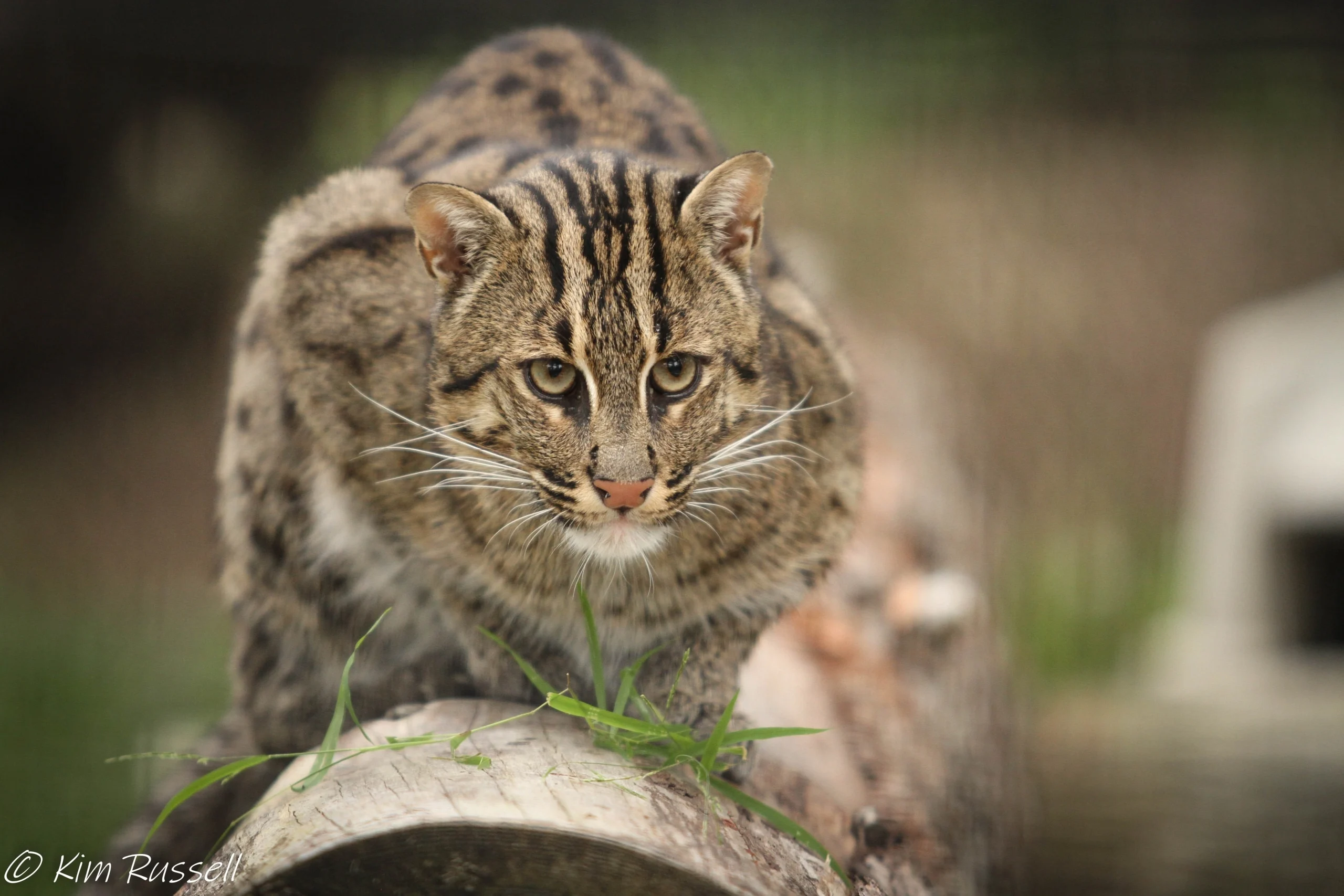
March 3rd marks the annual observance of World Wildlife Day, a global event dedicated to celebrating and raising awareness about the world’s diverse fauna and flora. This year, under the compelling theme of "Partnerships for Wildlife Conservation," the focus sharpens on the urgent necessity for collaborative efforts to safeguard species facing existential threats. Among the many vulnerable creatures highlighted, the enigmatic fishing cat (Prionailurus viverrinus) stands out, not only for its precarious conservation status but also for the challenges in understanding and protecting its secretive existence.
The Ambassador of Conservation: River’s Vital Role
At the heart of this year’s World Wildlife Day message is River, a captivating six-year-old fishing cat residing at the Hawk Creek Wildlife Center. River is far more than a resident; she serves as a crucial ambassador animal, tasked with the profound responsibility of educating and inspiring thousands of individuals about fishing cats and the myriad challenges they confront in their natural habitats. The fishing cat, a species often overlooked by the general public, is currently listed as "Vulnerable" on the International Union for Conservation of Nature (IUCN) Red List, a designation that signifies a high risk of extinction in the wild. Their populations are experiencing a steady decline, a trend exacerbated by a lack of widespread public awareness and dedicated conservation initiatives.
River’s presence at Hawk Creek provides a tangible connection for people to a species they might otherwise never encounter. Through her interactions and the educational programs offered by the center, River embodies the silent plight of her wild kin. By engaging with River, visitors and supporters are invited to learn about the unique adaptations of fishing cats, their specialized wetland habitats, and the human-induced pressures that threaten their survival.
The Power of Donation: A Direct Link to Conservation
In alignment with the spirit of World Wildlife Day and the theme of partnership, donating to organizations like Hawk Creek Wildlife Center on March 3rd offers a direct and impactful way to contribute to fishing cat conservation efforts. These contributions are not merely symbolic; they translate into tangible support for the research, rehabilitation, and habitat protection that are essential for the species’ survival. For a vulnerable species like the fishing cat, where every individual contributes significantly to the genetic diversity and overall health of the population, such support is invaluable.
Bridging the Knowledge Gap: Scientific Collaboration in Action
The significance of ambassador animals like River extends beyond public engagement; they are instrumental in advancing scientific understanding. A testament to this was the recent visit of the founder of the Fishing Cat Conservancy to Hawk Creek to observe River. Fishing cats are notoriously elusive, making direct field research exceptionally difficult and time-consuming. Their nocturnal habits, preference for dense wetland environments, and innate wariness contribute to their status as one of the least understood wild cat species.
The opportunity to study River in a controlled yet naturalistic setting allowed the founder to gain critical insights into her behavior, particularly her remarkable fishing techniques. Observing how she utilizes her paws to hunt aquatic prey provides invaluable data that can inform conservation strategies for wild fishing cats. This direct observation of an ambassador animal’s movements and behaviors, even in captivity, offers a window into the ecological needs and survival strategies of the species in their natural environments. Such research is foundational for developing effective conservation programs, including the establishment of protected areas and the implementation of community-based initiatives.
The Fishing Cat Conservancy: A Multifaceted Approach
The Fishing Cat Conservancy, an organization dedicated to the preservation of this unique species, is actively engaged in a multi-pronged approach to conservation. Their initiatives include the establishment of vital nature preserves, areas specifically designated to protect and restore fishing cat habitats. Recognizing that conservation cannot exist in isolation, the Conservancy also actively forms partnerships with private landowners. By collaborating with those who own land within or adjacent to critical fishing cat ecosystems, they aim to promote land management practices that are conducive to wildlife survival, fostering a shared responsibility for conservation.
Furthermore, a significant aspect of their work involves inspiring change and fostering a broader understanding of the importance of wetland ecosystems. Their efforts to educate the public, engage local communities, and advocate for policy changes are crucial in shifting perceptions and garnering the support necessary for long-term species protection. The Conservancy’s work underscores the core message of World Wildlife Day: that collective action and strategic partnerships are indispensable for achieving meaningful conservation outcomes. More information about their vital work can be found at fishcat.org.
The Global Context of World Wildlife Day and Partnership
World Wildlife Day was established by a United Nations General Assembly resolution in 2013 to celebrate and raise awareness of the world’s wild animals and plants and the critical importance of conservation efforts. The date, March 3rd, was chosen to commemorate the signing of the Convention on International Trade in Endangered Species of Wild Fauna and Flora (CITES) in 1973, a landmark international agreement aimed at ensuring that international trade in specimens of wild animals and plants does not threaten their survival.
The theme "Partnerships for Wildlife Conservation" for World Wildlife Day 2024 is particularly pertinent given the escalating biodiversity crisis. The UN Environment Programme (UNEP), which supports the CITES Secretariat, highlights that over 8,200 species of wild animals and plants are now threatened with extinction, and close to 30,000 species are known to be endangered. These figures underscore the immense scale of the challenge and the inadequacy of isolated efforts.
The Interconnectedness of Ecosystems and the Role of Partnerships
The fishing cat’s vulnerability is intrinsically linked to the health of its wetland habitats, which are themselves under immense pressure from human activities. Wetlands, often referred to as "nature’s kidneys," provide essential ecosystem services, including water purification, flood control, and carbon sequestration. They are also biodiversity hotspots, supporting a vast array of plant and animal life. The decline of fishing cat populations is often a symptom of broader wetland degradation, driven by factors such as agricultural expansion, urbanization, pollution, and unsustainable water management.
This interconnectedness necessitates a partnership-driven approach. Conservation efforts for fishing cats cannot solely focus on the species itself; they must encompass the entire ecosystem. This involves working with agricultural communities to promote sustainable farming practices that minimize pollution and habitat destruction, collaborating with urban planners to ensure responsible development that accounts for wildlife corridors and wetland preservation, and engaging with water resource managers to implement policies that prioritize ecological flows.
Data-Driven Conservation: Understanding Population Trends and Threats
To effectively implement conservation strategies, robust data is essential. Organizations like the Fishing Cat Conservancy and research institutions rely on a variety of methods to gather information on fishing cat populations, distribution, and threats. These include camera trapping, scat analysis, and direct observation. While precise global population figures for fishing cats are difficult to ascertain due to their elusive nature, regional assessments paint a concerning picture. For instance, studies in South Asia have indicated significant habitat loss and fragmentation, leading to localized population declines.
The IUCN Red List assessments provide a standardized framework for evaluating the conservation status of species, utilizing criteria based on population size, rate of decline, geographic range, and degree of fragmentation. The "Vulnerable" status of the fishing cat reflects a consensus among experts that the species faces a high risk of extinction in the wild. This status serves as a critical signal for governments, conservation organizations, and the public to prioritize action.
Chronology of Conservation Efforts and Challenges
The recognition of the fishing cat’s endangered status has evolved over time. Initial conservation efforts were often localized and focused on immediate threats. However, over the past few decades, there has been a growing understanding of the need for coordinated, landscape-level conservation.
- Mid-20th Century: Fishing cats were more widely distributed, and awareness of their conservation needs was nascent.
- Late 20th Century – Early 21st Century: Scientific research began to highlight the declining populations and habitat loss, leading to their inclusion in national conservation lists and eventually the IUCN Red List.
- Early 2000s onwards: The establishment of dedicated conservation organizations like the Fishing Cat Conservancy marked a more concerted effort to address the species’ plight through targeted programs and advocacy.
- Present Day: The emphasis on partnerships, as highlighted by World Wildlife Day’s theme, signifies a maturing understanding that effective conservation requires collaboration across sectors and borders.
Despite these efforts, challenges persist. Funding for conservation projects can be inconsistent, and the complex socio-economic factors driving habitat destruction often require long-term, multi-faceted solutions. Furthermore, the lack of widespread public awareness remains a significant hurdle, making it difficult to mobilize the broad-based support necessary for sustained conservation action.
Official Responses and International Cooperation
International agreements like CITES play a crucial role in regulating the trade of endangered species, including fishing cats. By controlling international trade, CITES aims to prevent the overexploitation of wild populations. National governments also have a responsibility to enact and enforce legislation that protects endangered species and their habitats.
The recognition of World Wildlife Day by the United Nations provides a global platform for governments and organizations to recommit to conservation goals. Statements from UN officials and participating nations often emphasize the shared responsibility for protecting biodiversity and the importance of international cooperation in addressing transboundary conservation challenges. While specific official responses directly to the fishing cat’s situation on World Wildlife Day might not be individually highlighted, the overall message of the day encourages such focused attention.
Broader Impact and Implications: Beyond the Fishing Cat
The conservation of the fishing cat has implications that extend far beyond the species itself. As an indicator species, its health reflects the overall well-being of its wetland ecosystem. When fishing cat populations decline, it signals that the wetlands they inhabit are under stress, which in turn affects the countless other species that rely on these environments for survival.
Furthermore, the partnerships forged for fishing cat conservation can serve as models for protecting other threatened species and their habitats. The collaborative approach advocated by World Wildlife Day’s theme emphasizes the need for:
- Cross-Sectoral Collaboration: Engaging governments, NGOs, private businesses, local communities, and research institutions.
- Integrated Landscape Management: Recognizing that species conservation is inseparable from habitat conservation and sustainable land-use planning.
- Community Engagement and Empowerment: Ensuring that local communities are involved in and benefit from conservation efforts, fostering a sense of ownership and stewardship.
- Knowledge Sharing and Capacity Building: Facilitating the exchange of information and best practices among conservation practitioners globally.
The success of conservation efforts for the fishing cat, and indeed for all endangered species, hinges on our collective ability to move beyond isolated initiatives and embrace the power of partnerships. As River the fishing cat continues her role as an ambassador, she embodies the hope that through increased awareness, scientific understanding, and collaborative action, a future where these magnificent creatures thrive in the wild remains achievable. The call to action on World Wildlife Day is clear: to strengthen these vital partnerships and invest in a sustainable future for wildlife.
