
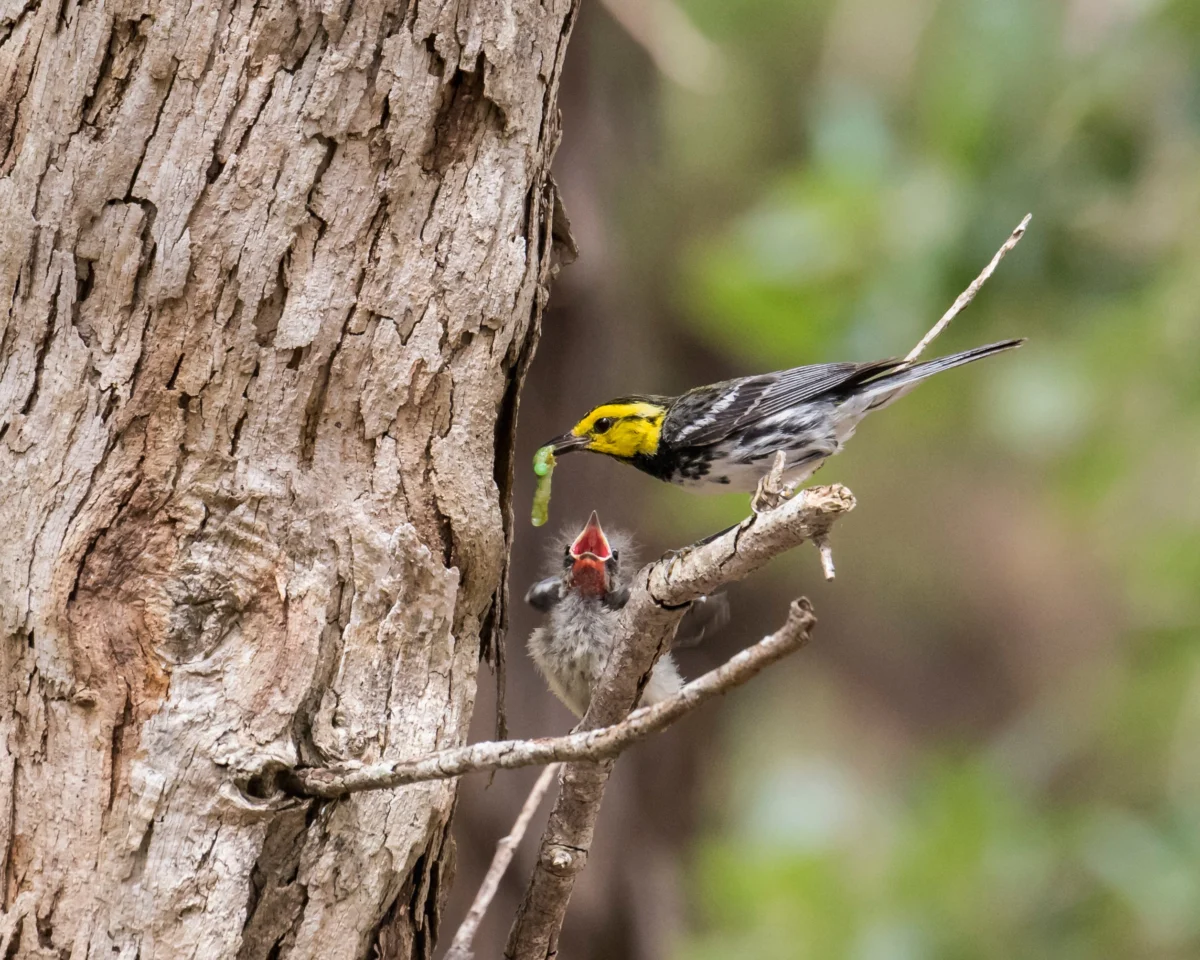
Few species are as intrinsically linked to the identity and landscape of the Lone Star State as the Golden-cheeked Warbler (Setophaga chrysoparia), a bird whose entire breeding range is confined exclusively to the woodlands of Central Texas. This unique distinction, often encapsulated by the phrase "Texas born and raised," underscores a deep ecological heritage that defines the warbler’s existence. However, this avian icon, federally listed as endangered, faces escalating threats, particularly during the crucial spring migration period when millions of birds traverse Texas skies. As the state serves as an indispensable migratory corridor for one out of every three to four migratory birds in North America, conservation efforts during this peak season are paramount, emphasizing the critical role Texans play in safeguarding these delicate populations.
The Golden-cheeked Warbler: An Emblem of Texas
The Golden-cheeked Warbler is not merely a transient visitor but a true native, relying entirely on the specific ecological conditions found within the Texas Hill Country, primarily the Edwards Plateau. Each spring, typically beginning in early March, these small, vibrant songbirds undertake an arduous migration north from their wintering grounds in the tropical forests of Central America, including Guatemala, Honduras, and Nicaragua. Their destination is singularly the mixed Ashe juniper (Juniperus ashei) and oak woodlands of Central Texas, the only place on Earth where they nest and raise their young. This annual pilgrimage is a testament to an ancient biological imperative, rooted deeply in the unique geological and botanical characteristics of the region.
Adult male Golden-cheeked Warblers are strikingly marked, boasting a bright lemon-yellow face framed by a bold black eyeline, a black throat, and black streaks against a white belly. Females and immature birds exhibit a similar but often fainter pattern, with less extensive black markings. Their buzzy, distinctive song, often described as "bzzzz-wee-tsee-tsee," is a harbinger of spring in the Hill Country, signaling the establishment of territories and the commencement of the breeding season.
The warbler’s life cycle in Texas is meticulously adapted to its specific habitat. Upon arrival, pairs quickly establish territories and begin nesting. They are highly specialized foragers, actively picking insects and spiders directly from leaves and branches, capturing prey in midair with agile aerial sallies, and hovering among foliage to glean sustenance. Critically, the warbler relies heavily on mature Ashe juniper trees, which provide not only structural support but also a unique nesting material: long, fibrous strips of flaky bark that the birds meticulously peel and weave into their cup-shaped nests. This dependency on mature juniper-oak woodlands makes the species particularly vulnerable to habitat disturbance and fragmentation.
Endangered Status and Persistent Threats
The Golden-cheeked Warbler was officially listed as an endangered species by the U.S. Fish and Wildlife Service (USFWS) in 1990. This designation reflected a significant and ongoing decline in its population, primarily driven by habitat loss and fragmentation. The rapid urbanization and agricultural expansion across Central Texas, particularly within the burgeoning Interstate 35 corridor, have led to widespread clearing of the specific juniper-oak woodlands essential for the warbler’s survival.
Habitat fragmentation, where large contiguous tracts of suitable forest are broken into smaller, isolated patches, poses an additional threat. Smaller patches may not support viable warbler populations, increase edge effects (e.g., increased predation by generalist predators like raccoons, opossums, and domestic cats, and nest parasitism by brown-headed cowbirds), and reduce genetic exchange between populations. Climate change also presents an emerging challenge, with potential shifts in rainfall patterns, increased frequency of droughts, and changes in insect prey availability threatening the delicate balance of the warbler’s ecosystem. A USFWS biologist, speaking on the record, noted, "The Golden-cheeked Warbler faces persistent threats, primarily habitat loss and fragmentation. Our ongoing recovery efforts rely heavily on collaborative partnerships and informed land management practices across the species’ range."
Texas: A Critical Junction in Avian Migration
Beyond the Golden-cheeked Warbler, Texas holds an unparalleled strategic position in the continental migratory flyway system. Situated at the convergence of the Central and Mississippi Flyways, and serving as a critical landfall along the Gulf Coast for birds crossing the Gulf of Mexico, the state provides essential stopover and refueling sites for billions of birds annually. An estimated one in every three to four migratory birds in North America passes through Texas during their biannual journeys.
The spring migration period, officially designated from March 1 to June 15, is a spectacular natural phenomenon. Peak migration, when the highest numbers and diversity of species are moving through the state, typically occurs from April 22 to May 12. During these weeks, Texas’s diverse landscapes – from the pine forests of East Texas to the coastal prairies, deserts of the Trans-Pecos, and the iconic Hill Country – become vital waystations for a myriad of species, including various warblers, vireos, thrushes, tanagers, and raptors. These birds depend on undisturbed natural areas to rest, forage, and regain energy before continuing their often thousands-of-miles-long journeys to breeding grounds across the continent.
Navigational Hazards: Light Pollution and Habitat Loss
Most songbirds, including the Golden-cheeked Warbler, undertake their migrations under the cover of night. This nocturnal strategy offers several advantages: cooler temperatures, calmer air currents, and reduced predation risk. These remarkable navigators orient themselves using a sophisticated internal compass system, relying on cues such as the Earth’s magnetic fields, the position of stars, and even polarized light patterns at dusk and dawn.
However, the rapid expansion of human infrastructure and the proliferation of artificial outdoor lighting pose significant threats to these nocturnal travelers. Light pollution, emanating from urban centers, industrial complexes, and even residential areas, can disorient migrating birds. Instead of following natural navigational cues, birds become attracted to and confused by artificial lights, often circling brightly lit buildings and towers. This attraction leads to severe consequences:
- Exhaustion: Prolonged circling around lights depletes critical energy reserves that birds need for their long journeys.
- Collision Risk: Disoriented birds are significantly more susceptible to colliding with buildings, windows, communication towers, and other illuminated structures. Scientific studies estimate that hundreds of millions, potentially up to a billion, birds die annually in North America due to collisions with buildings and windows.
- Predation: Birds exhausted by circling or stunned by collisions become easy prey for predators.
Beyond light pollution, the ongoing loss and degradation of stopover habitats further compound the challenges. Development along coastal areas and inland migratory corridors reduces the availability of crucial feeding and resting sites, forcing birds to expend more energy searching for suitable locations and increasing their vulnerability.
Conservation in Action: Parks, Organizations, and Policy
Recognizing the immense ecological value of Texas and the pressing threats to its avian inhabitants, various governmental agencies, non-profit organizations, and local communities are actively engaged in conservation efforts.
Palo Pinto State Park: A significant development for conservation and public access occurred with the opening of Palo Pinto State Park in Strawn, Texas, in April 2024. Located at the northern edge of the Golden-cheeked Warbler’s breeding range, this new state park, managed by the Texas Parks and Wildlife Department (TPWD), encompasses over 4,000 acres of rugged juniper-oak woodlands, providing crucial habitat for the endangered warbler. The author’s observation of male warblers singing in late March along the rocky limestone trails of Palo Pinto Creek underscores the park’s immediate value as a sanctuary. A TPWD spokesperson affirmed, "Palo Pinto State Park offers a vital new sanctuary and viewing opportunity for the endangered Golden-cheeked Warbler, reinforcing Texas’s commitment to preserving its natural heritage and providing public access to these incredible ecosystems." The park not only protects habitat but also offers controlled public access, allowing visitors to experience and connect with this unique species, fostering a deeper understanding of its conservation needs.
Dogwood Canyon Audubon Center: Located in Cedar Hill, near Dallas, the Dogwood Canyon Audubon Center is another crucial site for engaging the public with the Golden-cheeked Warbler and its habitat. The center, part of the extensive Audubon Texas network, offers guided Golden-cheeked Warbler walks every Saturday in April. These educational programs provide invaluable opportunities for North Texas locals to learn about the species, its habitat requirements, and the broader importance of migratory bird conservation. A representative from Audubon Texas emphasized, "Every Texan has a role to play in ensuring safe passage for these incredible migratory birds. Simple actions like turning off lights at night can make a monumental difference, and our guided walks at Dogwood Canyon help connect people directly to the wildlife they can help protect."
Governmental and Non-profit Roles: The USFWS continues to lead recovery efforts for the Golden-cheeked Warbler, developing and implementing recovery plans that include habitat protection, research, and land management guidelines. TPWD plays a vital role in managing state lands for wildlife, acquiring new conservation easements, and educating the public. Organizations like Audubon Texas, The Nature Conservancy, and various local land trusts work tirelessly to acquire and manage critical habitats, advocate for bird-friendly policies, and raise public awareness.
Empowering Texans: Individual Contributions to Bird Safety
While large-scale conservation projects are essential, individual actions by Texans collectively contribute significantly to the safety and survival of migratory birds. During the peak migration period, from March 1 to June 15, making bird-friendly choices is more critical than ever.
- Turn Off Unnecessary Lights at Night: This is perhaps the simplest yet most impactful action. Participating in "Lights Out Texas" initiatives, which encourage residents and businesses to dim or turn off non-essential outdoor and indoor lighting from dusk to dawn during migration seasons, can drastically reduce bird disorientation and collisions. Even turning off a porch light or closing blinds can make a difference.
- Use Bird-Safe Window Treatments: Birds often perceive reflective glass as open sky or continuous habitat, leading to fatal collisions. Solutions include applying UV-reflective decals (visible to birds but not humans), installing screens or netting on the outside of windows, or using patterned films that break up reflections.
- Plant Native Plants: Creating bird-friendly yards with native plants provides essential food sources (insects, berries, nectar) and shelter. Native plants support a healthier insect population, which is a primary food source for many migratory birds, including warblers. They also require less water and reduce the need for harmful pesticides.
- Keep Cats Indoors: Domestic cats are a significant source of avian mortality, particularly for ground-nesting and fledgling birds. Keeping cats indoors, especially during nesting and migration seasons, saves countless bird lives.
- Reduce Pesticide Use: Pesticides not only directly harm birds but also deplete their food sources by killing insects. Opting for organic gardening practices benefits both birds and the broader ecosystem.
Broader Implications: Ecosystem Health and Texas Heritage
The fate of the Golden-cheeked Warbler serves as a barometer for the health of the entire Texas Hill Country ecosystem. Its decline signals broader environmental issues, including habitat loss, fragmentation, and the impacts of climate change, which affect countless other species. Protecting the warbler means protecting the integrity of the unique juniper-oak woodlands that support a rich diversity of life.
Furthermore, the concept of "Texas born and raised" extends beyond human lineage to encompass the natural heritage woven into the very fabric of the state. For many Texans, the presence of the Golden-cheeked Warbler and the annual spectacle of bird migration are integral to their connection with the land. Losing these species would represent an irreplaceable loss not just to biodiversity, but to the cultural and natural identity of Texas.
The ongoing challenges faced by the Golden-cheeked Warbler and other migratory birds underscore the urgent need for a balanced approach to development and conservation. As Texas continues to experience rapid growth, thoughtful land-use planning, robust habitat protection, and widespread public engagement in bird-friendly practices are indispensable. By taking these concerted actions, Texans can ensure that the phrase "Texas born and raised" continues to signify a vibrant, enduring legacy, not just for its people, but for the magnificent avian populations whose heritage is deeply intertwined with the landscapes of the Lone Star State.
