
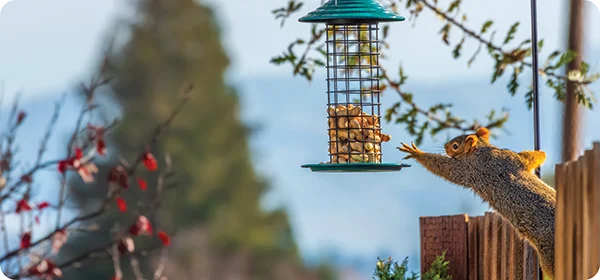
The allure of a well-stocked bird feeder can be a powerful draw, not only for avian enthusiasts but also for a variety of backyard wildlife. While the presence of squirrels, raccoons, and certain bird species is a natural part of the ecosystem, their enthusiastic patronage of feeders can often lead to frustration for homeowners. This article delves into practical and effective strategies for managing these interactions, ensuring that bird feeders remain a source of enjoyment for desired visitors without becoming an unchecked buffet for unwanted guests.
Understanding the Challenge: The Natural Drive for Sustenance
At its core, the issue stems from a fundamental biological imperative: the need for food. For many wild creatures, particularly during certain seasons, finding reliable food sources is a constant endeavor. Backyard bird feeders, often brimming with nutrient-rich seeds and suet, represent an easily accessible and abundant food supply. This is not an act of malice by the animals, but rather a successful exploitation of an available resource.
Squirrels, for instance, are renowned for their agility, intelligence, and persistent nature. Their ability to navigate complex environments and their strong drive to forage make them frequent visitors to bird feeders. They can consume significant quantities of seed, often depleting feeders rapidly, and their weight and attempts to access food can also lead to damage to feeder mechanisms and structures.
Similarly, larger bird species, sometimes referred to as "nuisance birds" by some observers, can dominate feeders, consuming food at a rapid pace and potentially deterring smaller, more desirable bird species. This imbalance can disrupt the intended purpose of a bird feeder – to attract and support a diverse range of avian life.
Strategic Defense: Baffling and Exclusion Tactics for Squirrels
The most common and often most frustrating wildlife interaction at feeders involves squirrels. Fortunately, a range of proven methods exist to deter these agile mammals without causing them harm. The key is to create physical barriers that they cannot overcome.
Pole-Mounted Feeders and Stovepipe Baffles
For feeders mounted on poles, the installation of a "stovepipe baffle" is a highly effective solution. These smooth metal cylinders are designed to be placed on the pole below the feeder. Their smooth surface and significant diameter make it virtually impossible for squirrels to grip and climb past them.
Key Considerations for Stovepipe Baffle Effectiveness:
- Height: The baffle should be positioned at least five feet above the ground. This height provides a substantial obstacle, even for a determined jumper.
- Distance from Jumping-Off Points: Crucially, the pole supporting the feeder and baffle must be situated at least 10 feet away from any potential jumping-off points. This includes trees, fences, bushes, or other structures. Squirrels are capable of leaping considerable distances, and proximity to such launchpads can render even a well-placed baffle ineffective. By maintaining this buffer zone, the feeder becomes inaccessible to squirrels attempting to jump directly onto it.
- Pole Diameter: While not explicitly stated in the original source, it’s worth noting that baffles are most effective when the pole diameter is too small for a squirrel to get around the baffle.
When these conditions are met, a pole-mounted feeder effectively becomes a "squirrel-proof" bird feeder, allowing smaller birds to feed undisturbed.
Hanging Feeders and Domed Baffles
Feeders hung from trees or shepherd’s hooks present a different set of challenges. In these scenarios, squirrels may attempt to climb down the hanging wire or chain. For such setups, a domed squirrel baffle, placed directly above the feeder, is the recommended solution.
Mechanism of Domed Baffles:
The dome acts as a protective umbrella. When a squirrel attempts to descend the hanging mechanism, it encounters the smooth, curved surface of the dome. This prevents them from reaching the feeder itself. Similar to stovepipe baffles, proper placement and ensuring the dome is large enough to cover the feeder are essential for optimal performance.
Exclusion Cages: A Multi-Purpose Barrier
Another innovative approach to deterring both squirrels and larger "nuisance" birds is the use of exclusion cages. These are essentially wire mesh enclosures that can be retrofitted around existing feeders.

Benefits of Exclusion Cages:
- Species-Specific Access: Cages come in various mesh sizes. Smaller mesh sizes allow small birds like chickadees and finches to pass through and access the food, while preventing larger birds and squirrels from entering.
- Versatility: These cages can be adapted to protect a wide range of feeder types, from tube feeders to hopper feeders.
- Deterrence of Larger Birds: Beyond squirrels, exclusion cages are effective against larger bird species that might otherwise dominate feeders, such as grackles or jays.
The introduction of exclusion cages represents a more direct physical barrier, offering a robust solution for persistent intruders.
Managing "Nuisance" Birds: Food Choices and Feeder Design
While squirrels present a physical challenge, managing the presence of larger bird species often involves a more nuanced approach centered on food selection and feeder design. The term "nuisance bird" is subjective, but in the context of bird feeding, it typically refers to species that congregate in such numbers that they deplete food rapidly and prevent smaller, often more sought-after birds from feeding.
The Impact of Food Choices
The type of birdseed offered plays a significant role in attracting or deterring certain species. Some common attractants for a broad range of birds can inadvertently favor those considered "nuisances."
Strategies for Selective Feeding:
- Avoidance of Cracked Corn and Millet: These grains are highly palatable to many larger bird species and can lead to rapid depletion of feeders. By limiting or eliminating these ingredients, feeders become less attractive to these groups.
- Embracing Safflower Seed: Safflower seed is a valuable alternative that offers a selective advantage. Many common "nuisance" birds, such as blackbirds and grackles, tend to avoid safflower. However, it is a preferred food for many desirable songbirds, including cardinals, chickadees, and titmice.
- Pure Suet Cakes: While suet blends can be appealing, they often contain ingredients that attract starlings, a species known for its ability to quickly consume suet cakes. Offering pure suet cakes, without added fillers or corn, is often ignored by starlings but remains highly attractive to woodpeckers, nuthatches, and other cavity-nesting birds that appreciate this high-energy food.
By carefully curating the food offerings, homeowners can subtly shift the appeal of their feeders, favoring the birds they wish to attract.
Feeder Design for Selective Access
Beyond food, the design of the feeders themselves can be instrumental in managing bird populations at the feeding stations. Modern feeder designs incorporate features that cater to smaller birds while posing challenges for larger ones.
Feeder Features for Selectivity:
- Weight-Activated Feeders: These feeders are engineered with a mechanism that closes off feeding ports when a certain weight is applied. They can be calibrated to close when heavier birds or squirrels land on them, while remaining open for lighter songbirds. This technology offers an automated solution to selective feeding.
- Feeders with Cages: As mentioned previously, feeders equipped with integrated exclusion cages provide a physical barrier that allows small birds to access the food while excluding larger ones.
- Perch Design: The length and presence of perches can also influence accessibility. Feeders with short perches, or even no perches at all, can make it difficult for larger birds to comfortably perch and feed, while smaller birds can often manage with minimal perching space.
The evolution of feeder technology has provided innovative solutions that allow for greater control over which visitors benefit from a backyard feeding station.
Expert Guidance and Continuous Learning
Navigating the complexities of backyard wildlife management can be a learning process. For those seeking personalized advice and the latest product recommendations, consulting with Certified Bird Feeding Specialists® at Wild Birds Unlimited stores is a valuable resource. These experts can provide tailored solutions based on local wildlife and individual garden setups.
Furthermore, educational resources such as podcasts offer ongoing insights into nature-centered living. Episode 76 of the "Nature Centered Podcast," titled "Critter Solutions," provides additional tips and strategies for homeowners aiming to create a harmonious backyard environment.
The Broader Ecological Context and Implications
The efforts to manage wildlife at bird feeders, while seemingly focused on personal enjoyment, also touch upon broader ecological principles. By understanding and accommodating the needs of wildlife, while also implementing strategies to maintain balance, homeowners can contribute to a more positive human-wildlife coexistence.

The shift towards using specific seeds like safflower, or employing feeders that cater to smaller species, encourages a more diverse avian community. It recognizes that while all birds and animals are part of the ecosystem, different species have different needs and occupy different niches.
The development and adoption of squirrel-proof feeders and baffles highlight human ingenuity in adapting to natural challenges. These solutions, when implemented effectively, reduce conflict and allow for the enjoyment of bird feeding without the frustration of constant resource depletion. They underscore the idea that coexistence is not about exclusion, but about intelligent design and thoughtful management.
Ultimately, the goal is to foster an environment where the natural world can be appreciated and observed without causing undue stress to either the homeowner or the wildlife. By adopting a proactive and informed approach, individuals can transform potential challenges into opportunities for deeper engagement with nature, ensuring that bird feeders remain a vibrant and welcoming focal point in their backyards for all the right visitors.
