
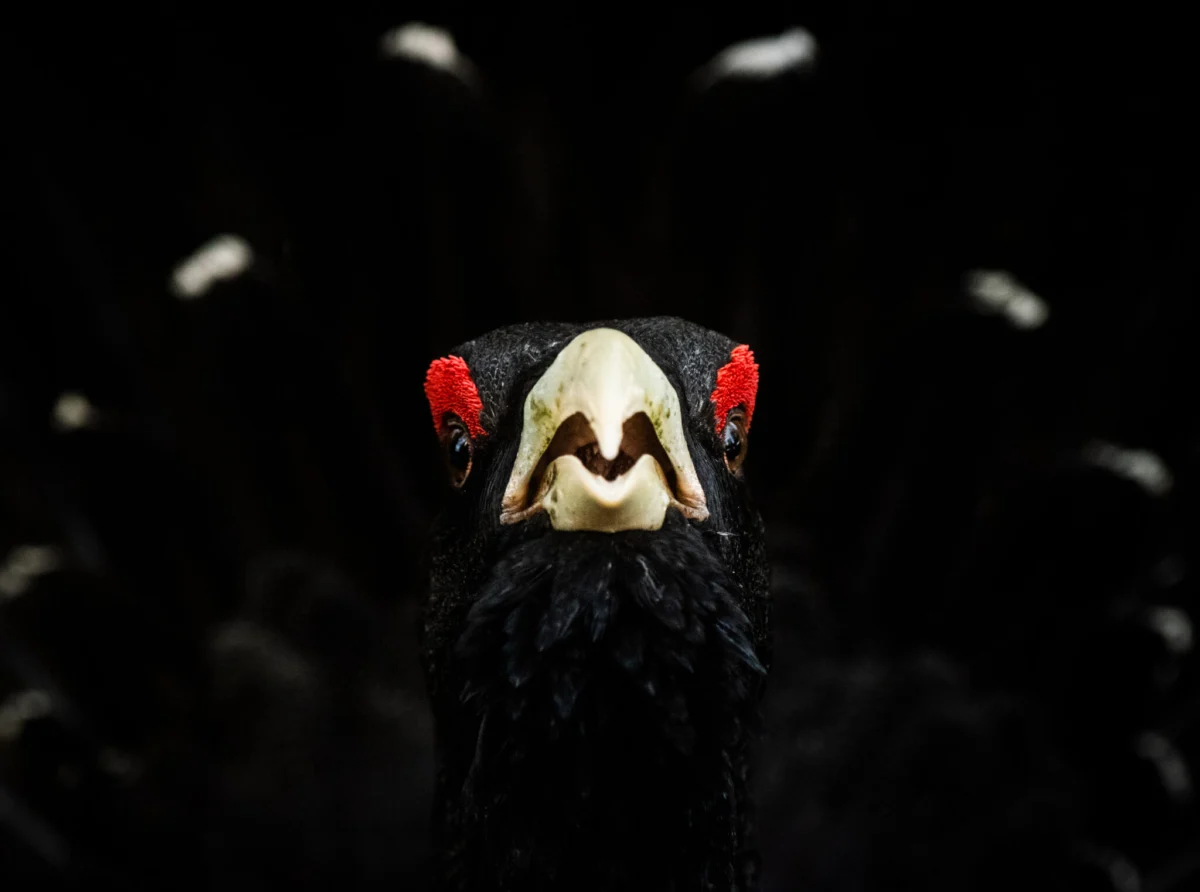
In the dynamic realm of nature photography, a compelling approach has emerged, focused on transcending mere documentation to convey profound impressions and emotions experienced in the natural world. This methodology champions the deliberate exploration of photographic extremes, encompassing ultra-wide and super-telephoto perspectives, stark blackout and luminous whiteout exposures, extended shutter speeds, and compositions that challenge conventional norms. By venturing to these technical and artistic peripheries, practitioners argue that distracting elements recede, crucial subjects are dramatically enhanced, and the narrative potency within each image intensifies.

The Quest for Order Amidst Nature’s Chaos
Photography, at its philosophical core, is an endeavor to distill order from an often-overwhelming world. Nature frequently presents itself as an unconstrained and intricate tapestry of elements – dense forests teeming with trees, vast herds of animals in motion, or the myriad individual feathers comprising a bird’s plumage. For the nature photographer, the formidable task lies in discerning the latent structures, patterns, and intrinsic beauty within this apparent chaos and translating them into a coherent visual form. This is far from a simplistic undertaking; achieving it with mastery demands a sophisticated understanding of both subject and medium. The pursuit of presenting nature’s inherent complexity in a visually engaging and emotionally resonant manner has led many to gravitate towards the extreme ends of photographic techniques. This deliberate choice allows for a more potent narrative within the image, one that effectively communicates the photographer’s personal emotions and experiences to the viewer, forging a deeper connection.

Atmosphere as the Core Narrative: The Power of Exposure Extremes
The human experience of nature is a multisensory tapestry, where sights, sounds, smells, and textures interweave to form a holistic impression. For still photographers, recreating this rich, immersive experience presents an inherent challenge, as their primary tool is vision. It is a common lament among nature photographers that their meticulously captured images, despite technical prowess, often fall short of evoking the intense emotions felt during an encounter in the field. The absence of the full spectrum of sensory input can leave images feeling somewhat subdued compared to the vivid memory.

To bridge this experiential gap and immortalize specific atmospheres and emotions, many photographers strategically manipulate exposure to its extreme limits. This involves crafting dark, moody images through heavy underexposure—a technique often referred to as "blackout"—or producing bright, ethereal images via significant overexposure, known as "whiteout." These techniques are not merely technical adjustments; they are potent artistic choices designed to amplify and underscore the felt experience.
The evolution of digital photography has significantly empowered photographers in this regard. While film photography demanded precise exposure control due to a narrower dynamic range, modern mirrorless and DSLR cameras boast impressive dynamic range capabilities, allowing for greater latitude in post-processing to recover details from heavily underexposed or overexposed areas. This technological advancement has democratized the exploration of exposure extremes, making these expressive techniques more accessible to a wider cohort of photographers. Historically, photographers like Michael Kenna utilized long exposures and minimalist compositions to create moody, often monochromatic landscapes, demonstrating the expressive power of controlling light and shadow to convey atmosphere rather than strict reality.

The chosen brightness of an exposure profoundly impacts the emotional expression of an image. Dark scenes inherently possess a dramatic quality, and a blackout exposure can accentuate mystery, solemnity, or a sense of foreboding, drawing the viewer into an intimate, often intense, mood. Conversely, brightly exposed images often evoke feelings of purity, elegance, and serenity. The whiteout technique, therefore, becomes an ideal vehicle for highlighting these qualities, whether they reside in the species itself—such as a white bird against a snowy backdrop—or in the surrounding environment. In this context, exposure transcends its technical definition to become a fundamental language for emotion. By consciously determining the light or dark rendition of a scene, the photographer actively guides the viewer towards the specific emotions and atmospheric conditions that defined their original experience in the field, transforming a static image into a dynamic emotional encounter.
Redefining Perspective: The Impact of Focal Length Extremes

Just as exposure sculpts atmosphere, perspective fundamentally shapes our relationship with the photographic subject. Within a photographer’s technical arsenal, focal length stands out as a paramount tool for altering the apparent size and context of a subject relative to its habitat. Each extreme of the focal length spectrum—from ultra-wide-angle to super-telephoto—tells a distinctly different story. The further one deviates from standard focal lengths, the more pronounced and impactful the resulting effect becomes, a powerful mechanism for reinforcing the intended narrative of an image.
Recent technological advancements have dramatically expanded the possibilities for photographers, particularly concerning extra-long focal lengths. The advent of mirrorless camera technology has heralded an era where telephoto lenses are not only superior in performance but also increasingly more affordable and accessible. Crucially, even mid-range telezoom lenses can now be effectively paired with teleconverters while maintaining robust autofocus capabilities and commendable image quality. This significant leap has, for many, unlocked an entirely new dimension of perspectives, allowing for unprecedented intimacy and detail capture from a distance.

The artistic implications are profound. Ultra-wide lenses, typically ranging from 14mm to 24mm, allow photographers to capture sweeping landscapes, emphasizing the grandeur and scale of nature, placing the subject within its expansive environment. They create a sense of immersion, drawing the viewer directly into the scene. Conversely, super-telephoto lenses, extending from 400mm to well over 1000mm, compress perspective, isolate subjects from cluttered backgrounds, and reveal intricate details that would otherwise be imperceptible. This creates a sense of intimacy and often emphasizes the subject’s vulnerability or majesty.
A notable application of this dual approach can be seen in documenting wildlife. Consider the seabird island of Hornøya in Norway, an iconic location above the Arctic Circle where a robust population of European shags breeds. As the birds return for their breeding season, the island remains blanketed in snow, presenting harsh yet beautifully lit conditions. Photographers engaging with this environment can leverage focal lengths ranging from a wide 24mm to an extreme 1200mm to construct a comprehensive visual narrative. Wide-angle shots can establish the environmental context, showcasing the shags against the dramatic, snow-laden landscape, battling blizzards and establishing territories. Meanwhile, super-telephoto lenses allow for incredibly detailed close-ups, capturing the intricate textures of their plumage, the intensity of their mating displays, or the subtle expressions in their eyes. This combination paints a rich, multifaceted picture, offering both an overarching environmental perspective and an intimate portrayal of individual behaviors, a testament to the power of diverse focal lengths in storytelling. This strategic use of focal length extremes within a portfolio allows for a more complete and nuanced portrayal of the subject and its ecosystem.

The Dynamic Canvas: Embracing Movement with Shutter Speed
At its very essence, photography is about freezing or extending moments in time, preserving movements that narrate a story. The allure of working with shutter speeds that create images our own eyes are incapable of perceiving holds a particular fascination for many artists.

Long exposures, especially when combined with Intentional Camera Movement (ICM), unlock a veritable new world of photographic possibilities. This technique moves beyond merely capturing the existing landscape, colors, and shapes surrounding a subject; it allows the photographer to literally "paint" the image with the structural elements of the entire scene, all within a single exposure. Each ICM image is inherently unique and irreplicable due to the specific camera movement employed during the long exposure. This inherent uniqueness gives ICM a strong artistic appeal, transforming the camera into a brush and the scene into a canvas. However, this experimental nature also means a high percentage of "failed" images, demanding considerable patience and a dedicated learning curve to master. It is a technique that rewards persistent experimentation.
The ongoing advancements in camera technology, particularly mirrorless systems, have further broadened the spectrum of usable shutter speeds. In the era of Digital Single-Lens Reflex (DSLR) cameras, the practical limit for fast shutter speeds was typically 1/8000 second. This often presented challenges in extremely bright scenes, where highlights could easily be "blown out" even at the lowest ISO settings. Modern mirrorless cameras, however, can achieve shutter speeds reaching several ten-thousandths of a second (e.g., 1/32,000s or even 1/64,000s with electronic shutters). This capability proves invaluable in intensely bright conditions, such as directly photographing the sun at midday. While the human eye struggles to perceive detail in such extreme brightness, the camera can capture an intriguing image, revealing previously unseen nuances in the sun’s corona or the intricate textures of backlit clouds. This ability to capture phenomena beyond human visual perception adds another layer to the narrative power of extreme shutter speeds, showcasing the camera not just as a recording device, but as an instrument of expanded vision.

Beyond Convention: The Art of Unorthodox Composition
Composition in photography is traditionally governed by a set of established rules—the rule of thirds, the golden ratio, leading lines, and so forth—and for very good reason. Adhering to principles like the golden ratio often results in images that are inherently balanced, aesthetically pleasing, and harmonious, guiding the viewer’s eye effectively through the frame. These guidelines provide a strong foundation for creating visually successful photographs. However, no rule in art is absolute. A rigid adherence to compositional tenets, while ensuring technical correctness, can inadvertently stifle creativity and lead to predictable, even formulaic, imagery.

The essence of composition is balance. A classic example dictates leaving "looking room" or "breathing room" in the direction a subject is facing, creating a sense of anticipation or movement. Yet, consistently following such a rule might mean overlooking opportunities for more compelling and unique images. In such instances, another element within the frame, perhaps a strong diagonal, a contrasting color, or an unusual placement, might effectively re-establish balance, even if the primary subject is deliberately positioned off-center or cropped unusually. For many innovative photographers, composition has evolved beyond a strict checklist of rules to a more intuitive understanding of how all elements within the frame dynamically interact with one another. In certain contexts, an unconventional composition—one that intentionally deviates from accepted norms—can imbue an image with far greater power, drama, or emotional impact. It can challenge the viewer’s perception, creating tension or drawing attention to aspects that a traditional composition might minimize. Developing an astute eye for these subtle interactions between elements in a scene, and understanding how they contribute to or disrupt overall balance, is widely considered one of the most critical skills for elevating one’s photography from competent to truly exceptional. This involves a continuous process of observation, experimentation, and self-critique.
The Imperative of Play: Fostering Creative Exploration

A prevalent norm in photography, particularly within documentary or journalistic styles, emphasizes capturing images with clear intention. Every photographic decision—from lens choice and composition to exposure and shutter speed—is typically made with a specific purpose, a pre-visualized outcome in mind. In many scenarios, this systematic approach is indeed beneficial, leading to consistent results, technically sound exposures, and predictable outcomes. It serves as a valuable framework for imposing order upon the inherent chaos of the natural world. However, this very systematicity, while efficient, can inadvertently constrain creative exploration and discourage the kind of playful experimentation that often yields truly groundbreaking work.
The counterpoint to this intentional approach is the pursuit of creativity purely for creativity’s sake, unburdened by a specific purpose or predefined vision. This uninhibited playfulness is, in the opinion of many artistic practitioners, equally vital. Not every powerful photograph can be entirely pre-visualized; the human eye and mind are inherently limited in their ability to predict the myriad coincidences and random occurrences that unfold in nature—the fleeting reflections on water, the unpredictable movements of light, or the accidental juxtaposition of elements. Yet, it is precisely these unplanned, serendipitous moments that often contribute the "missing piece of magic" to an image, transforming it from good to extraordinary.

For an experimental nature photographer, the field becomes a laboratory for exploration. Perhaps a photograph of a static subject could be dramatically improved by introducing a subtle camera movement, blurring the background into an impressionistic wash. Or why not deliberately underexpose a scene when conventional wisdom would dictate overexposure, seeking a darker, more enigmatic interpretation? This approach, by its very nature, generates a significant number of "failed" shots—images that do not meet an immediate aesthetic standard or convey a clear message. However, among these discards, genuine gold can emerge. Sometimes, this gold manifests as a spectacular, singular image that transcends expectations. More frequently, it takes the form of a crucial discovery: an unexpected effect, a novel technique, or a fresh perspective that can then be consciously developed and integrated into the photographer’s evolving artistic practice. This iterative process of trial and error, driven by insatiable curiosity, is the engine of artistic growth and innovation.
Final Remarks and Broader Implications

When observing the work of influential photographers, a common thread that captivates and inspires is the presence of images that provoke questions about their creation—how were they made? These are often the images born from photographers who possess the courage to disregard established rules, to innovate with techniques that others might not have considered, and to deeply explore the intricate interactions between the natural world and the capabilities of their cameras. Whether through the ethereal blur of long shutter speeds, the isolating power of extreme focal lengths, or the arresting impact of unconventional compositions, the wellspring for capturing truly unique and creatively compelling images lies in a potent combination of playfulness, relentless experimentation, and an unwavering interest in the natural world itself.
In a photographic landscape increasingly saturated with technically perfect yet often homogenous imagery, the ability to inject personal emotion and innovative vision becomes paramount. The implications of this approach extend beyond individual artistic expression; it influences the broader dialogue within nature photography, pushing boundaries and inspiring others to look beyond the obvious. It suggests that while technical mastery is foundational, it is ultimately curiosity—the desire to see differently, to experiment fearlessly, and to continuously learn from both successes and failures—that stands as the greatest creative tool for nature photographers, ensuring the art form remains vibrant, evolving, and deeply connected to the profound experiences it seeks to convey.
