

Woodpeckers, often seen as familiar and entertaining visitors to backyard feeders, possess a remarkable suite of adaptations that enable them to thrive in an environment that would be punishing, if not lethal, to most other avian species. Their ability to excavate tree cavities at high speeds, endure significant impact forces, and maintain their specialized tools for foraging highlights an extraordinary evolutionary journey. This resilience and specialized physiology make them a subject of considerable scientific interest and a source of constant wonder for nature enthusiasts.
The Pounding Resilience of Woodpeckers: A Biological Marvel
The primary activity that defines the woodpecker’s existence – excavating wood – involves subjecting their bodies to extreme forces. When a woodpecker excavates a cavity, its head can impact a tree’s surface at speeds reaching up to 13 miles per hour. This translates to an approximate force of 10 Gs. For context, the human brain is significantly more vulnerable to concussions, being three times more likely to suffer such an injury at these speeds than a woodpecker. The sheer intensity of this repetitive hammering is astonishing, prompting a closer examination of the biological mechanisms that allow these birds to not only survive but flourish under such conditions.
Anatomical Adaptations: Built for Impact
Scientists have identified a series of remarkable adaptations that contribute to a woodpecker’s ability to withstand repeated, high-velocity impacts. A cornerstone of this resilience is their unique skull structure. Unlike the skulls of many other birds, a woodpecker’s skull is composed of lightweight, spongy bone that is aerated. This internal structure is not merely fragile; it is reinforced by an intricate meshwork of bony support struts, lending it exceptional strength.
Furthermore, a crucial aspect of their cranial anatomy is the disproportionately small size of the brain relative to the skull. This anatomical arrangement significantly reduces the space within the skull, minimizing the potential for the brain to rattle and sustain damage during the intense percussive forces encountered during excavation. This compact arrangement acts as a natural shock absorber, protecting the delicate neural tissues.
The Self-Sharpening Chisel: A Bill of Resilience
The question of how a woodpecker’s bill, essentially a natural chisel, withstands the constant abrasion and impact without wearing down to a useless nub is another testament to their evolutionary prowess. While wear does occur, specialized cells located at the tip of the bill are perpetually engaged in replacing the lost material. This continuous regeneration ensures that the bill remains strong, resilient, and, remarkably, self-sharpening with every powerful strike against wood. This dynamic process allows them to maintain the efficacy of their primary foraging and nesting tool throughout their lives.
Protective Measures: Nature’s Goggles and Dust Masks
Beyond cranial and bill adaptations, woodpeckers have evolved ingenious solutions for protecting their sensory organs during their arduous work. The excavation process generates a considerable amount of flying debris, posing a risk to their eyes and respiratory systems. To combat this, woodpeckers have developed a natural "dust mask" in the form of stiff feather tufts that grow over their nostrils, effectively preventing small wood particles from entering their airways.
Similarly, they possess a specialized "safety goggle" system. This consists of a nictitating membrane, often referred to as a third eyelid. This transparent membrane sweeps across the eye during excavation, acting as a protective shield against flying debris, while still allowing the bird to maintain some visual awareness of its surroundings. These integrated protective systems are vital for their survival and continued ability to forage and nest.

A Rich Tapestry of Woodpecker Species
North America is home to a diverse array of woodpecker species, each with unique characteristics and ecological roles. Among the most commonly observed are:
- Downy Woodpecker (Picoides pubescens): The smallest woodpecker in North America, often seen in suburban backyards and woodlands. They are frequently attracted to suet feeders and can be distinguished by their small size, black and white plumage, and short bill.
- Hairy Woodpecker (Picoides villosus): Similar in appearance to the Downy Woodpecker but significantly larger, with a longer, more robust bill. They inhabit mature forests and are less common at feeders than their smaller counterparts.
- Northern Flicker (Colaptes auratus): A ground-foraging woodpecker, the Northern Flicker is notable for its varied plumage, often featuring brown, black, and white markings, with distinct red or yellow shafts on its wing and tail feathers depending on the subspecies. They are a common sight in open woodlands, parks, and suburban areas, often seen searching for ants and beetles on the ground.
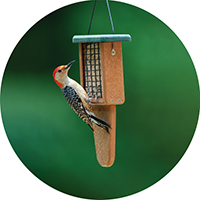
- Red-bellied Woodpecker (Melanerpes carolinus): Found primarily in the eastern United States, this species is characterized by its striking red cap and nape, black and white barred back, and a subtle reddish wash on its belly, which gives it its name. They are adaptable and can be found in woodlands, orchards, and suburban gardens.
- Pileated Woodpecker (Dryocopus pileatus): The largest woodpecker in North America, the Pileated Woodpecker is an impressive bird with a distinctive black body, white stripes on its face and neck, and a prominent red crest. Their large, rectangular excavation holes are often a tell-tale sign of their presence in mature forests.
Each of these species, and many others, contributes to the ecological health of their habitats by controlling insect populations, aiding in the decomposition of dead trees, and creating nesting cavities used by other cavity-nesting species.
Attracting Woodpeckers to Your Backyard
For those seeking to observe these fascinating birds up close, providing appropriate food sources can significantly enhance their presence in backyard environments. Wild Birds Unlimited (WBU) offers a range of specialized food products designed to attract a variety of woodpecker species. These include:
- WBU Suet: High-energy suet cakes are a perennial favorite for woodpeckers, providing essential fats and proteins, especially during colder months.
- No-Melt Dough: These specialized doughs are formulated to remain intact and palatable even in warmer temperatures, offering a consistent food source.
- Bark Butter Products: Developed by Wild Birds Unlimited, Bark Butter is a high-energy spread made from suet, corn, and peanut butter, which many woodpeckers find irresistible.
- Shelled Peanuts: Peanuts are a rich source of protein and fat, making them an excellent attractant for many woodpecker species.
- TreeNutty® Plus Blend: This seed mix is specifically formulated with nuts and seeds that appeal to a wide range of backyard birds, including woodpeckers.
- Woodpecker Cylinder: These specialized seed cylinders are designed with ingredients and textures that cater directly to the feeding preferences of woodpeckers.
By offering these diverse food options, backyard observers can create a welcoming habitat that encourages woodpeckers to visit regularly, providing opportunities for close-up viewing and appreciation of their remarkable adaptations.

Broader Ecological Implications
The resilience and specialized adaptations of woodpeckers are not merely curiosities; they underscore their vital role in forest ecosystems. As natural excavators, they create essential habitat for a multitude of other species. The abandoned cavities they leave behind become nesting sites for secondary cavity nesters, such as chickadees, wrens, bluebirds, and even mammals like flying squirrels and screech owls. This "ecosystem engineering" function highlights the cascading benefits woodpeckers provide.
Their foraging habits also contribute to forest health. By consuming vast quantities of wood-boring insects and other invertebrates, woodpeckers act as natural pest controllers, helping to regulate insect populations that could otherwise damage trees. This symbiotic relationship between woodpeckers and their environment is a testament to the intricate balance of nature.
Scientific Inquiry and Conservation
The study of woodpecker physiology continues to inform scientific understanding of biomechanics, material science, and evolutionary biology. Researchers are inspired by their ability to withstand extreme forces, leading to potential applications in areas such as helmet design and impact-resistant materials.
From a conservation perspective, understanding the habitat requirements and food preferences of woodpeckers is crucial. Maintaining healthy forests, particularly those with a good proportion of older trees that provide ample foraging and nesting opportunities, is essential for supporting viable woodpecker populations. Bird-friendly practices in urban and suburban landscapes, such as providing diverse food sources and preserving mature trees, can also play a significant role in their conservation.

The ongoing research into these magnificent birds, coupled with practical efforts to support their populations through habitat preservation and supplementary feeding, ensures that their "wonderful" and "wondrous" presence will continue to enrich our natural world for generations to come. Their ability to endure a life of "hard labor" with such remarkable adaptations serves as a profound reminder of the ingenuity and resilience found within the avian kingdom.
