
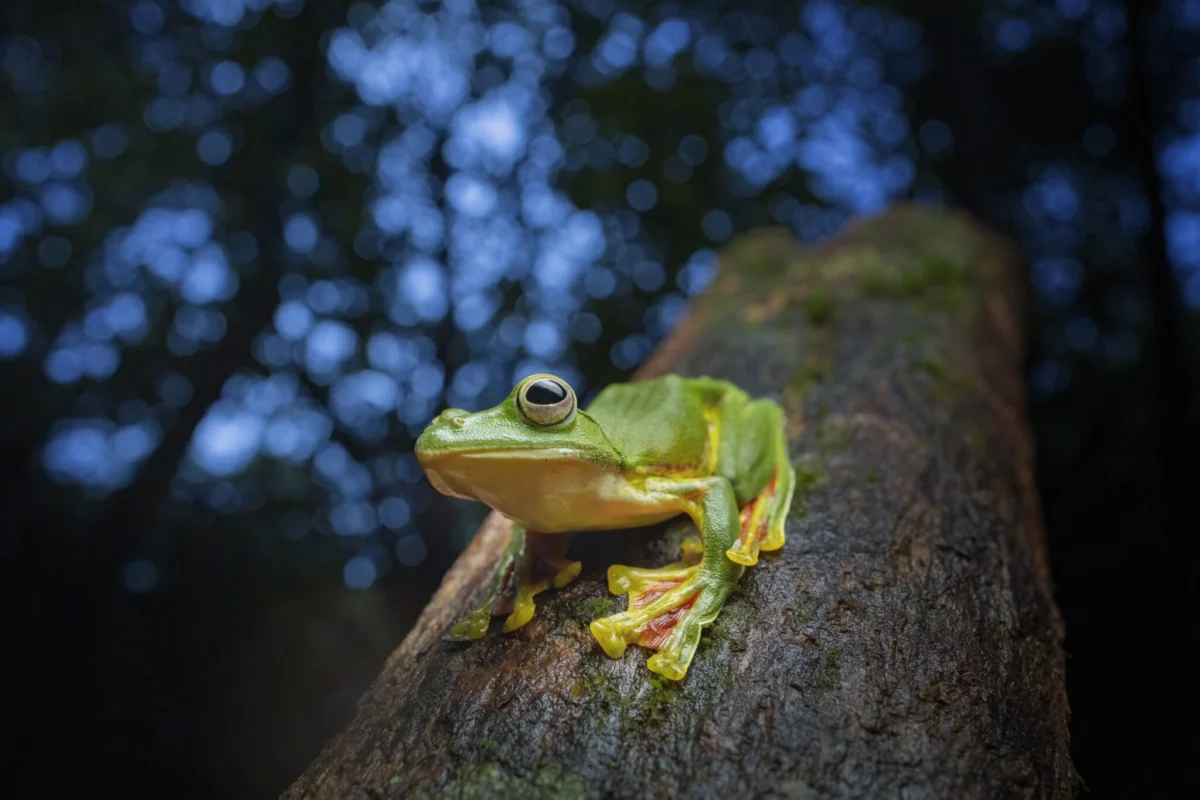
The intricate world of small subjects, often overlooked, holds boundless opportunities for profound visual narratives. By employing a wide-angle lens to frame diminutive subjects within their expansive natural habitats, photographers can craft deeply immersive and evocative images. This photographic technique transcends traditional close-up shots, transporting the viewer directly into the subject’s world and fostering an intimate connection. Beyond merely revealing fine details, this perspective contextualizes the organism, illustrating the delicate equilibrium between life and its ecosystem. The resulting images are not just visually striking; they serve as compelling invitations, urging audiences to explore the world from an unfamiliar, ground-level vantage point. This blend of intimacy and environmental context is rapidly gaining recognition among nature photographers and conservationists alike for its unique storytelling potential.
The Art of Immersion: Storytelling Through Wide-Angle Macro
The power of wide-angle macro photography lies in its ability to tell a more complete story. Traditional macro photography often isolates a subject, presenting it with exquisite detail against a blurred or non-descript background. While artistically valid, this approach can sometimes detach the subject from its ecological reality. Wide-angle macro, conversely, integrates the subject into its surroundings, allowing the viewer to grasp the scale of its existence within a broader landscape. Imagine a tiny frog perched on a mossy branch, not just as a specimen, but as an integral part of a vibrant rainforest canopy, its camouflage a testament to its evolutionary journey. This contextualization is crucial for ecological understanding and can significantly enhance public appreciation for biodiversity.
This method transforms a mere portrait into an environmental narrative. It encourages viewers to consider questions like: "Where does this creature live?", "What are its immediate surroundings?", and "How does it interact with its habitat?". By answering these questions visually, wide-angle macro photography elevates an image from a simple aesthetic piece to a powerful educational and conservation tool. Leading nature photographers increasingly advocate for this style, recognizing its capacity to foster empathy and drive greater engagement with environmental issues. A recent survey by the International League of Conservation Photographers highlighted that images showcasing species within their habitats have a measurably higher impact on conservation awareness campaigns compared to isolated subject shots.

Technical Foundations: Demystifying Wide-Angle Macro
From a technical standpoint, wide-angle macro photography involves utilizing a wide-angle lens at extremely close focusing distances to achieve magnified reproductions of subjects while retaining a significant portion of the background. This differs fundamentally from traditional macro photography, which typically relies on specialized macro lenses designed for 1:1 (life-size) or greater magnification, often resulting in a very narrow depth of field and heavily blurred backgrounds. While many wide-angle lenses do not achieve the strict 1:1 reproduction ratio considered "true macro," the term "wide-angle macro photography" has become widely accepted within the photographic community to describe this distinct style of imagery. For clarity and simplicity, this guide will adhere to this widely understood nomenclature.
The evolution of photographic technology has played a pivotal role in the accessibility and refinement of wide-angle macro. Early macro photography was largely a scientific pursuit, requiring specialized bellows, extension tubes, and reversal rings. The advent of dedicated macro lenses in the mid-20th century simplified the process, but the focus remained on extreme magnification. It was only with advancements in lens design, particularly the development of wide-angle lenses with remarkably short minimum focusing distances (MFDs) in the late 20th and early 21st centuries, that wide-angle macro became a distinct and practical artistic discipline. Companies like Laowa have pioneered lenses specifically designed to achieve this effect, offering extreme wide angles with close-focusing capabilities, thereby bridging the gap between landscape and macro aesthetics. This technological progression has allowed photographers to capture never-before-seen perspectives of the natural world.
Essential Gear for the Wide-Angle Macro Photographer
Equipping oneself for wide-angle macro photography requires a thoughtful selection of tools, each playing a critical role in achieving the desired immersive effect.
Camera Body: The Foundation of Your Vision
The adage, "the best camera is the one you already own," holds true. You can initiate your wide-angle macro journey with any DSLR or mirrorless camera, regardless of brand or model. However, modern mirrorless systems offer distinct advantages that significantly ease the challenges inherent in macro photography. Features such as advanced autofocus systems, animal eye detection, and sophisticated focus tracking can be invaluable when dealing with small, often fast-moving subjects. High-resolution electronic viewfinders (EVFs) and tilt/swivel screens enhance composition flexibility, allowing photographers to shoot from unconventional low angles without contorting themselves.

Furthermore, cameras with excellent dynamic range are crucial for handling the often-contrasting light conditions found in natural habitats. Robust weather sealing ensures equipment protection in humid rainforests or damp environments. A high burst rate is beneficial for capturing fleeting moments of wildlife activity. While these advanced features simplify the process and improve outcomes, a beginner with a less advanced setup should not be deterred; strong images can still be created through careful technique and patience. The core principle remains the photographer’s vision, not solely the gear’s specifications.
Lens: The Gateway to the Microcosm
This is arguably the most critical piece of equipment. A wide-angle lens with an exceptionally low minimum focusing distance (MFD) is paramount for creating impactful wide-angle macro images. Standard wide-angle lenses, typically used for sweeping landscapes, often have MFDs that are too long, preventing the photographer from getting close enough to the subject to achieve significant magnification while still showing the environment.
Fortunately, several top-tier brands and innovative third-party manufacturers now offer lenses specifically designed for this niche. These include specialized wide-angle macro lenses that may even achieve true macro capabilities (1:1 reproduction) at their closest focusing distance. Examples include the Laowa 15mm f/4 Wide-Angle Macro lens or certain wide-angle prime lenses from other manufacturers combined with close-up filters or extension tubes (though with caveats regarding image quality and light loss). A short MFD enables the photographer to fill a substantial portion of the frame with the subject while simultaneously encompassing its immediate habitat. Without this capability, the subject risks appearing insignificantly small and getting lost within the expansive background, defeating the purpose of the technique. Optimal focal lengths for this genre often fall within the 15mm to 35mm range on a full-frame sensor, providing a broad field of view while allowing for close focus.
Flash: Illuminating the Narrative
While wide-angle macro photography is frequently undertaken during daylight hours or early evening, an external flash unit is an indispensable addition to the kit. The necessity arises from the photographic dilemma of balancing depth of field with exposure. To ensure both the subject and its environment are rendered sharply, photographers often need to use narrow apertures (e.g., f/11 to f/22). This significantly reduces the amount of light reaching the sensor, potentially leading to underexposed images or requiring unacceptably high ISOs. A flash provides the necessary burst of light to compensate for this loss, allowing for proper exposure at smaller apertures and lower ISOs, thus maintaining image quality.

When selecting a flash, prioritize models that offer both ETTL (Through The Lens) and manual modes for maximum control and flexibility. ETTL simplifies exposure in dynamic situations, while manual mode provides precise control for complex lighting setups. A fast recycle time is essential for capturing sequential shots, especially of active subjects. A high guide number (typically above 60 for powerful units) indicates the flash’s output strength. High-speed sync (HSS) capability is beneficial for using flash at faster shutter speeds to overpower ambient light, particularly in bright conditions. Finally, remote operation functionality (wireless triggers) is crucial for off-camera flash setups, allowing for more creative and directional lighting.
Diffuser: Softening the Edges of Light
To mitigate harsh highlights and create soft, flattering illumination on your subject—especially when dealing with wet, reflective, or glistening surfaces common in rainforest environments—a diffuser is absolutely essential. The principle is simple: a larger light source relative to the subject creates softer light. While standard diffusers are readily available for traditional macro lenses (typically designed for 90-100mm lenses), they often prove cumbersome or ineffective with wide-angle setups. The larger front section of such diffusers can droop without adequate support, or its edges may intrude into the wide field of view.
To overcome these challenges, photographers often employ creative solutions. Smaller diffusers, such as dome diffusers or mini softboxes, are more manageable with wide-angle lenses, though they may offer less diffusion than larger units. Many photographers opt for custom-built or adapted diffusers, often involving flexible materials and support structures that conform to the wide-angle lens’s unique perspective without appearing in the frame.
Hacks include elevating a regular, larger diffuser by mounting the flash and diffuser on a trigger-mounted bracket, or utilizing disc-style diffusers that provide overhead lighting. The most advanced technique involves an off-camera flash setup with a dedicated diffuser, offering unparalleled control over light direction and quality, albeit demanding more coordination, especially when shooting solo in the field. The trade-off between diffuser size (for optimal diffusion) and maneuverability/visibility in the frame is a constant consideration for wide-angle macro photographers.
Protective Clothing and Field Gear: Prepared for the Elements
Successful wide-angle macro photography often takes place in challenging environments. Therefore, appropriate protective clothing and field gear are as crucial as the camera equipment itself. This includes robust rain gear to safeguard both yourself and your valuable equipment from sudden downpours, which are common in many biodiverse regions. Proper waterproof footwear with good grip is essential for navigating slippery terrain, muddy paths, and shallow streams. Leech guards offer vital protection against leeches and other biting insects, allowing you to focus on your photography rather than discomfort. Furthermore, insect repellents, especially those effective against mosquitoes, are non-negotiable in environments prone to insect-borne diseases. Being well-prepared physically allows for greater concentration and patience, which are key to capturing exceptional wide-angle macro shots.

Mastering Light and Time: Day vs. Night Strategies
The choice of when to shoot significantly impacts the photographic strategy in wide-angle macro, especially given the genre’s emphasis on environmental context.
Shooting During the Day: Embracing the Habitat’s Full Palette
The fundamental objective of wide-angle macro photography—to showcase the subject within its habitat—is most naturally achieved during daylight hours when the environment is fully illuminated. This allows for the vibrant colors, textures, and depth of the surroundings to be captured, providing rich context.
However, a significant challenge arises when photographing nocturnal creatures, such as many reptiles and amphibians, which are often the most photogenic subjects for this genre. These species typically become active and "come alive" in the rainforest at night, making it difficult to capture them with their environment fully visible under natural light. Traditional flash photography at night often results in images where the subject is well-lit, but the background fades into a dark, featureless void, effectively losing the contextual detail that defines wide-angle macro.
Overcoming this requires meticulous planning and ethical considerations. Since we cannot alter nature’s rhythms, extensive research into the location, the specific species present, and their diurnal behaviors (if any) is paramount. Some nocturnal species might be found resting in exposed positions during the day, offering a rare window of opportunity. The assistance of a knowledgeable local naturalist or guide can prove invaluable, providing insights into animal behavior and potential sightings. Critically, ethical guidelines must be strictly adhered to. The practice of capturing animals for photography, even with the intention of releasing them, is strongly discouraged and widely condemned by conservation organizations. The guiding principle must always be to photograph subjects in situ, undisturbed, and in their natural state. Any intervention compromises the authenticity and ethical integrity of the image.

Shooting During the Night: Illuminating the Shadows
Photographing nocturnal subjects at night presents a unique set of challenges for wide-angle macro. Without careful and deliberate lighting, the outcome will likely resemble a conventional macro photograph: a subject sharply lit against a dark or black background, devoid of environmental context. This fails to meet the core tenet of wide-angle macro.
However, advanced lighting techniques can transform nighttime wide-angle macro. The key is to illuminate not just the subject, but also a significant portion of its background. This can be achieved through the strategic use of multiple flashes. One common approach involves a master trigger mounted on the camera, wirelessly firing multiple slave flashes positioned discreetly around the scene. One flash might serve as the main light for the subject, while others provide fill light for the background, revealing the texture of leaves, branches, or the forest floor. Alternatively, constant LED lights can be deployed to gently illuminate backgrounds at night, allowing for a more continuous assessment of the lighting effect. The precise placement and power settings of these lights are critical to achieving a balanced exposure that highlights both the subject’s detail and its nocturnal world. This technique requires practice and patience but yields stunning results, providing a rare glimpse into the hidden lives of nocturnal creatures within their natural settings.
Framing and Composition: Crafting the Environmental Narrative
The primary objective of using a wide-angle lens in macro photography is to articulate the subject’s environment, thereby enriching the narrative. While standard rules of composition apply universally, specific attention must be paid to how the subject, foreground, and background interact to form a cohesive story.
One crucial aspect is balancing these elements. The subject should remain the focal point, but the surrounding habitat should not overpower it; instead, it should provide context and depth. Incorporating multiple layers or depth elements—such as a blurred foreground leading to a sharp subject, which then transitions into a slightly softer background—can add significant visual interest and a sense of immersion.

Experimentation with angles is also vital. Shooting from an extremely low vantage point, for instance, can include elements like the forest canopy or dramatic sky, imparting a sense of grandeur and placing the tiny subject within a vast world. Conversely, a slightly elevated angle might reveal the intricate patterns of the forest floor or the subject’s immediate substrate. These varied perspectives can inject drama and creativity into the composition.
Furthermore, actively seeking out leading lines—such as a gracefully curved blade of grass, a winding vine, or a textured branch—can guide the viewer’s eye directly to your subject, enhancing visual flow. Natural elements like fallen leaves, intricate twigs, or vibrant flowers can be strategically used to frame the subject, drawing attention to it while seamlessly integrating it into its surroundings. The goal is to create a composition that is both aesthetically pleasing and ecologically informative, inviting a deeper engagement with the image’s narrative.
Navigating the Field: Common Challenges and Tips to Overcome
Wide-angle macro photography, while rewarding, presents a unique set of technical and practical challenges that photographers must master.
Distortion: The Wide-Angle Effect
Wide-angle lenses inherently exaggerate perspective, which can make foreground subjects appear disproportionately large compared to the background, and can introduce barrel distortion (straight lines appearing curved). While this effect can be creatively exploited to emphasize the subject’s presence, it can also appear unnatural if not carefully composed. Tip: Be mindful of the subject’s proximity to the lens edges; placing the subject closer to the center often minimizes distortion. Post-processing software offers tools to correct lens distortion, but careful in-camera composition is always the first line of defense.

Depth of Field: The Shallow Conundrum
At macro focusing distances, the depth of field becomes incredibly shallow, even with a wide-angle lens. Balancing sharpness across both the small subject and a sufficiently contextual background is notoriously difficult. Tip: Use the narrowest aperture possible (e.g., f/16, f/22, or even smaller) to maximize depth of field. However, be aware that excessively narrow apertures can lead to diffraction, which reduces overall image sharpness. Finding the "sweet spot" aperture for your lens is crucial. In some cases, focus stacking (combining multiple images focused at different points) in post-processing might be necessary to achieve extended depth of field, though this is challenging with moving subjects. Specialized macro focusing rails can aid in precise focus adjustments for stacking.
Lens Flare and Corner Softness: Optical Compromises
Wide-angle optics, especially when pushed to their limits with extreme close focusing or combined with certain extension tubes or adapters, can suffer from reduced sharpness at the edges and increased susceptibility to lens flare. Tip: It’s generally best to avoid extension tubes or adapters unless specifically designed for wide-angle macro, as they can exacerbate these issues. Using a lens hood and carefully positioning yourself relative to light sources can help mitigate flare. Many modern wide-angle macro lenses are designed to minimize these optical aberrations, making them a preferred choice.
Blocking Light: The Photographer’s Shadow
Due to the extremely close working distances, the lens barrel, your camera body, or even your own body can cast unwanted shadows on your subject. Tip: This is where a carefully chosen and positioned diffuser becomes paramount. Off-camera flash setups, often triggered wirelessly, allow for more flexible light placement, preventing your gear from blocking the light path. Experiment with different flash and diffuser positions to achieve even illumination.
Balancing Lighting: Ambient vs. Flash
Macro subjects typically require strong, direct lighting (often from flash), while the wide background needs natural, even exposure from ambient light. Balancing these two light sources in a single frame is a key challenge. Tip: This often necessitates using diffusers on your flash to soften the subject’s light and reduce harsh shadows. Fill lights or multi-flash setups (as discussed for night photography) can illuminate the background. Techniques like exposure blending, where separate exposures for the subject and background are combined in post-processing, can also be employed for static scenes.

Working Distance: The Intimacy Barrier
Wide-angle macro setups often demand incredibly short minimum focusing distances, sometimes just a few centimeters from the front element of the lens. This proximity makes it challenging to get into position without disturbing the subject or its delicate environment. Tip: Patience, stealth, and a deep understanding of animal behavior are essential. Approach subjects slowly and observe their reactions. Often, waiting for the subject to settle or move into a more accessible position is the best strategy. Beanbags or mini tripods can help stabilize the camera at ground level.
Size of the Gear: A Delicate Balance
While larger diffusers generally provide softer, more even light—an ideal for macro photography—in wide-angle macro, an oversized setup can become a hindrance. A bulky diffuser or flash bracket might easily disturb a sensitive subject as you attempt to get close, or it might accidentally appear in the wide frame. Tip: It’s a constant trade-off. Smaller, more compact diffusers, or custom-designed solutions that integrate seamlessly with the wide-angle lens, can be more effective in certain situations. The choice depends on the subject’s temperament, the available space, and the desired level of diffusion. Portability and discretion often trump absolute diffusion quality in the field.
Stability: The Magnified Shake
Shooting at such close distances with a wide-angle lens often demands extremely precise focus and rock-steady positioning. Any slight movement from the photographer or the subject is magnified significantly in the final image. Tip: Whenever possible, use a sturdy tripod or monopod. If handheld, brace yourself against a stable surface, use a high shutter speed, and practice good breathing techniques. Remote shutter releases or self-timer modes can eliminate camera shake caused by pressing the shutter button. Modern cameras with in-body image stabilization (IBIS) can also provide a valuable advantage.
The Broader Impact: Conservation, Education, and the Future of Nature Photography
Wide-angle macro photography sits at the unique intersection of intimacy and grand storytelling. It allows us to reveal not only the exquisite fine details of tiny subjects but also the rich, complex environments they inhabit. While the technique comes with its share of challenges—from navigating lighting constraints and extremely short working distances to mastering complex compositional dynamics—the judicious combination of appropriate equipment, creative diffuser use, and thoughtful fieldcraft can transform these obstacles into unparalleled opportunities.

By mastering the delicate balance between subject and surroundings, photographers can create images that feel both deeply personal and expansive. These photographs go beyond mere documentation; they capture not only what a creature looks like but, crucially, where it belongs. This holistic approach makes wide-angle macro photography a powerful tool for scientific research, allowing ecologists to visualize species interactions within their microhabitats. It also serves as an invaluable educational resource, bringing the hidden wonders of the natural world into classrooms and public discourse, fostering a deeper understanding and appreciation for biodiversity.
The implications for conservation are profound. By presenting species as integral components of their ecosystems, wide-angle macro images highlight the interconnectedness of nature and the potential ramifications of habitat loss or environmental degradation. A striking image of a rare insect within its vanishing forest home can galvanize public support and inform policy in ways that traditional isolated shots might not. In essence, wide-angle macro is more than a technical photographic pursuit; it is a vital method for connecting the smallest wonders of nature with the larger world they thrive in, inspiring both awe and a sense of responsibility for their preservation. As photographic technology continues to evolve, this genre is poised to play an even more significant role in documenting, understanding, and conserving the intricate tapestry of life on Earth.
