
A veteran editor, navigating the abrupt reality of a layoff after seven years of dedicated service, found an unexpected anchor in the consistent presence of local wildlife amidst the unsettling currents of an AI-obsessed job market. Her experience highlights a growing tension between technological advancement and human well-being, underscoring the profound solace that the natural world can offer in times of profound professional uncertainty.
The Abrupt End of a Seven-Year Tenure
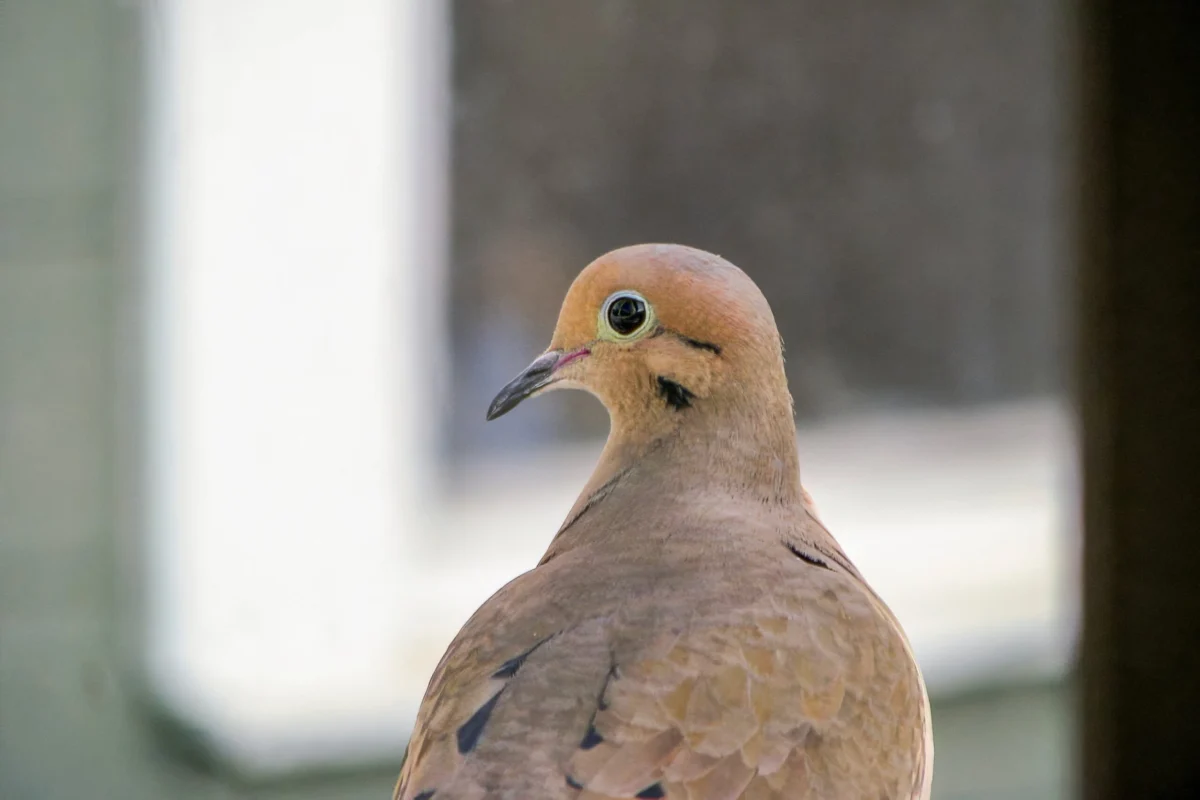
The termination was swift and devoid of preamble. "My boss didn’t even say hello. He just said my name and read from a script. And that was it," recounted the 54-year-old editor, describing the 60-second interaction that dissolved seven years of pride and care invested in her role. This sudden severance, common in the increasingly volatile media and content industries, left her grappling with a sense of profound emptiness. The psychological impact was immediate; a desire to "vacuum the suddenly useless information" from her brain underscored the visceral shock of professional obsolescence. In the immediate aftermath, as she closed her laptop, her gaze fell upon a Mourning Dove outside her window, its eyes ringed in "baby blue like a ‘70s disco queen." This solitary bird, later affectionately named "Disco Queen," became an initial point of connection, a silent witness to her sudden professional void.
The editor’s layoff is not an isolated incident but rather indicative of broader trends in the media and tech sectors. According to a report by Challenger, Gray & Christmas, Inc., the media industry experienced a significant surge in job cuts in 2023, largely attributed to economic pressures, restructuring, and the increasing integration of artificial intelligence. Many veteran employees, often perceived as having higher salaries or less adaptable skill sets in a rapidly evolving digital landscape, have been disproportionately affected. This demographic, often too young for retirement but feeling too old to compete effectively in new paradigms, faces unique challenges in re-entering the workforce.
Navigating the AI-Driven Job Market
Each subsequent jobless day amplified the initial jarring sensation, plunging the editor into a "black hole of unstructured days" marked by loneliness and drift. Her routine quickly morphed into a new, anxious form of labor: making coffee, sitting before her laptop, endlessly refreshing job listings, and hoping for new direct messages. To combat the pervasive feeling of unproductivity, she meticulously maintained a spreadsheet, logging every resume sent out—a tangible tracker to validate her efforts in the face of an invisible, unyielding job market.
The challenge was compounded by the pervasive influence of artificial intelligence. At 54, the editor found herself in a precarious position, grappling with the perception of being "too old to compete for the few job openings in a new, AI-driven job market." The integration of AI tools is rapidly reshaping industries, particularly those reliant on content creation and editorial processes. A 2023 report by Goldman Sachs estimated that generative AI could expose the equivalent of 300 million full-time jobs to automation, with administrative and legal professions, alongside content creation, being among the most susceptible.
Determined not to be left behind, the editor actively engaged with AI tools, attempting to automate familiar editorial steps such as brainstorming, outlining, and summarization. Her experiments yielded mixed results. While acknowledging the speed and efficiency gains, she observed a distinct lack of depth and originality. "The work was faster, yes, but blander," she noted, expressing a profound miss for "the friction of the process, the slow forming of an idea as it found its shape." This personal observation echoes a broader debate within creative industries about the inherent limitations of AI in replicating human creativity, intuition, and the nuanced "wandering, the not knowing, the sitting with something until it reveals itself" that often defines truly innovative work. The implication is that while AI can streamline tasks, it struggles with the inherent uncertainty and iterative discovery essential for profound creative output, requiring a human capacity to "stay in uncertainty a little longer."
Finding Solace in the Natural World
Amidst the relentless, often disheartening, job search and the abstract challenges of AI, the editor began to find unexpected reprieve. One particular morning, frustrated by an empty email inbox, she pushed back from her desk and observed a large crow on the power line overhead. Its "pitch-black and glossy" form, coupled with its loud, commanding "Caw! Caw! Caw!" directed towards her window, served as an immediate, visceral interruption. The crow’s insistent presence, though muffled by the window, conveyed a powerful message: "You are here." This moment marked a turning point, prompting an internal shift from anxious searching to a realization of her own immediate existence: "Maybe I don’t have to spend every moment anxiously searching. I am here, too." The observation concluded with a moment of quiet beauty: "the gleaming kiss of morning dew on his lower beak."
This initial encounter catalyzed a deeper engagement with her surroundings. A self-professed "avid birder for decades," the absence of professional distractions allowed her to perceive the familiar sparrows, finches, warblers, starlings, and titmice in her California backyard with renewed intensity and significance. Their daily rhythms—the first note of daybreak song, frantic sunset dashes—began to serve as markers of time, providing a much-needed structure to days that otherwise felt "nebulous." The "bawk" of a scrub-jay, the predictable arrival of a "daily gang of Bushtits," or the "orange comet of a flicker overhead" transformed into small, repeated encounters that anchored her experience.
Nature’s Rhythmic Anchor: A Chronology of Observation
Over the ensuing months, the natural world became a crucial counterpoint to the professional void. The editor’s observations transformed from casual interest into a vital source of grounding and chronological structure. The White-crowned Sparrow, consistently the "first one up" with its characteristic "bedhead," signaled the start of each day. The dramatic "tizzy" caused by a passing Cooper’s Hawk offered moments of heightened natural drama, while the distinct "trill of Cedar Waxwings" often announced their presence before they could be visually located. As sundown approached, the predictable "snack-finding frenzy" of the titmouse, diligently filling a "secret stash," provided a comforting routine.
These constant, ordinary, and enduring natural phenomena provided an essential "anchor" that transcended the often-hollow pursuit of productivity in the digital realm. The act of "watching and seeing" became its own form of meaningful participation. This sustained engagement with nature aligns with the principles of ecotherapy and the biophilia hypothesis, which posit that humans have an innate tendency to connect with nature and other living systems, and that such connections are fundamental to human health and well-being. Studies have shown that spending time in nature can reduce stress, improve mood, and enhance cognitive function—all critical benefits for individuals experiencing the psychological toll of unemployment.
As the job search extended into its eighth month, the editor’s focus gradually shifted from the digital screen to her outdoor environment. She spent "less and less time at my desk. More time in the yard. More time with myself." This deliberate slowing down allowed for deeper observation: the constant movement of clouds, the intricate overnight constellations spun by spiders, the methodical journey of a caterpillar from "leaf to stem to the trunk of the tree and away from here." The migratory patterns of Snow Geese, first flying south and then, months later, returning north "in their big Vs up in the sky," served as a powerful, seasonal chronology, contrasting sharply with the stagnant uncertainty of her professional life.
A particularly poignant moment occurred one afternoon when a "madly vibrating hummingbird" hovered eye-to-eye, holding her gaze in a brief, shared silence. This intimate encounter, prompting the thought "Just be, just be, just be," underscored a profound shift from anxious doing to mindful being. The natural world, with its inherent rhythms and simple, undeniable presence, offered a space for self-reflection and a renewed connection to her own inner voice, allowing her to "set my own pace within the universe." The continued presence of the Mourning Dove, now with a "boyfriend," and the "wild and restless repertoire" of the mockingbird further emphasized the ongoing, resilient march of life, independent of human professional tribulations.
Expert Perspectives on Job Loss and Resilience
The veteran editor’s narrative offers a compelling case study that resonates with insights from mental health professionals and economists. Psychologists frequently emphasize the significant mental health challenges associated with job loss, including heightened anxiety, depression, and a loss of identity. Dr. Sarah Miller, a clinical psychologist specializing in occupational stress, notes, "Unemployment can strip individuals of their routine, social connections, and sense of purpose. Engaging in structured, meaningful non-work activities, especially those that foster mindfulness and connection to something larger than oneself, like nature observation, is incredibly beneficial for psychological resilience." The editor’s gradual shift from obsessive job searching to mindful birdwatching exemplifies this coping mechanism, providing structure and a sense of belonging.
Economists and labor market analysts also acknowledge the unique pressures faced by experienced professionals in an AI-driven economy. Dr. David Chen, an expert in labor market dynamics, explains, "Older workers often face a double challenge: overcoming perceived ageism and demonstrating proficiency in rapidly evolving digital and AI-powered tools. The emphasis shifts from accumulated experience to adaptability and continuous learning, which can be daunting without adequate support or resources." The editor’s attempts to "tinker with AI tools" reflect this pressure to adapt, while her critique of their "hollowness" highlights the ongoing debate about the irreplaceable value of human judgment and creativity.
The Broader Implications: Redefining Productivity and Well-being
The editor’s journey is more than a personal anecdote; it serves as a microcosm of broader societal implications arising from the intersection of technological advancement, economic volatility, and the enduring human need for meaning and well-being. It raises critical questions about what constitutes "productivity" in an era where machines can generate content at scale, often at the expense of nuance and depth. The editor’s observation that "some parts of writing—the wandering, the not knowing, the sitting with something until it reveals itself—don’t translate" to AI underscores the qualitative gap that human creativity fills.
Furthermore, the story underscores the vital role of nature in fostering mental resilience and providing a sense of groundedness amidst disruption. As societies become increasingly urbanized and digitally connected, the importance of reconnecting with the natural world for psychological health is gaining wider recognition. The "steady presence" of the birds offered a tangible, unchanging reality in stark contrast to the volatile and uncertain professional landscape.
In conclusion, the veteran editor’s eight-month journey through unemployment and an AI-saturated job market offers a powerful testament to human adaptability and the therapeutic power of nature. While the uncertainty of her job search persists, her renewed connection with the rhythmic, seasonal, and ongoing march of life outside her window has provided an invaluable anchor. Her experience suggests that in an age increasingly defined by artificial intelligence and rapid technological change, the most profound forms of solace and self-discovery may still be found in the enduring, organic intelligence of the natural world, fostering a crucial sense of presence and pace within the broader universe.
