
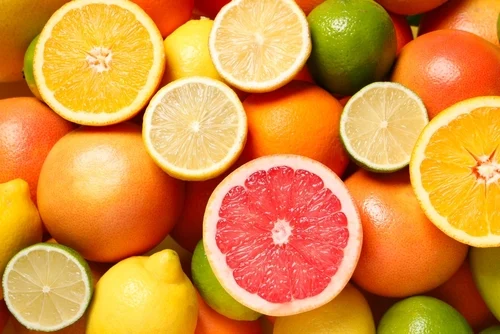
The rising popularity of backyard poultry farming has led to a critical re-examination of avian dietary standards, particularly regarding the common practice of supplemental feeding with kitchen scraps. While chickens are frequently celebrated for their omnivorous ability to process household food waste, recent veterinary research and expert testimony from poultry specialists, such as Lisa Steele of Fresh Eggs Daily, highlight a significant caveat: the consumption of citrus fruits. Although not strictly toxic in the same manner as nightshades or avocados, the inclusion of oranges, lemons, and grapefruits in a hen’s diet presents complex physiological challenges, primarily concerning calcium metabolism and skeletal integrity.
The Physiological Mechanism of Calcium Interference
The primary concern regarding citrus consumption in poultry revolves around the interference with calcium absorption. Calcium is the most critical mineral for a laying hen, as it is the primary component of the eggshell. A standard eggshell consists of approximately 95% calcium carbonate. To produce a single egg, a hen must mobilize significant amounts of calcium through her bloodstream to the shell gland, also known as the uterus.
When a chicken ingests high levels of citric acid and Vitamin C found in citrus fruits, it can disrupt the delicate pH balance required for optimal calcium uptake in the intestines. Scientific observation suggests that excessive citric acid can bind with calcium to form calcium citrate, which, while sometimes used as a human supplement, may not be processed with the same efficiency by the avian digestive tract when introduced in raw fruit form. This interference leads to a systemic deficiency.

If a laying hen does not receive or cannot absorb adequate calcium from her diet, her body enters a state of metabolic crisis. To fulfill the biological imperative of egg production, the hen will begin to leach calcium from her own skeletal structure—specifically from the medullary bone. This internal "borrowing" of minerals leads to a condition known as cage layer fatigue or avian osteoporosis, rendering the bird’s bones brittle and prone to fractures. Furthermore, the external evidence of this deficiency manifests as thin-shelled or "rubber" eggs, which are soft to the touch and lack the protective barrier necessary to prevent bacterial ingress.
Avian Autonomy in Vitamin C Synthesis
A common misconception among novice poultry keepers is that chickens require supplemental Vitamin C from citrus fruits to maintain their immune systems, much like humans do. However, avian physiology differs fundamentally from human biology in this regard. While humans lack the enzyme L-gulonolactone oxidase—which is necessary to synthesize ascorbic acid (Vitamin C)—chickens are biologically equipped to produce their own Vitamin C within their kidneys and liver.
Because chickens are endogenous producers of Vitamin C, the addition of citrus to their diet offers no nutritional advantage. In fact, an overabundance of Vitamin C can exacerbate the aforementioned calcium absorption issues. This biological independence is reflected in the nutritional composition of the egg itself. In a notable biological quirk, an egg contains nearly every nutrient required to sustain life and facilitate the development of a chick, with the singular exception of Vitamin C. This omission occurs because the developing embryo, like the adult bird, is capable of synthesizing the vitamin as needed. Consequently, feeding citrus to poultry is often viewed by agricultural experts as a redundant practice that carries more risk than reward.
Behavioral Observations and Evolutionary Aversion
Data from flock management studies indicate that chickens possess a natural, evolutionary aversion to citrus fruits. Unlike sweet fruits or protein-rich kitchen scraps, citrus peels and pulps are frequently left untouched when offered to a flock. This behavior is attributed to the chicken’s sensory receptors. While chickens have a limited number of taste buds compared to mammals—approximately 250 to 350 compared to a human’s 9,000—they are highly sensitive to bitter and acidic profiles.

The thick rinds of oranges and grapefruits contain essential oils, such as limonene, which can be irritating to the sensitive mucosal linings of a bird’s beak and crop. In a diverse feeding environment, such as a "fruit salad" or a mixed scrap bucket, most hens will selectively forage around citrus items. This natural discernment serves as a biological safeguard, though it is not foolproof. In instances where food is scarce or when citrus is finely chopped and masked by other palatable treats, accidental over-ingestion can occur, leading to the clinical symptoms of calcium depletion.
Chronology of Dietary Standards in Poultry Science
The understanding of citrus in poultry diets has evolved over the last century alongside the professionalization of avian nutrition.
- Early 20th Century: Poultry diets were largely unstandardized, consisting of farm foraging and grain leftovers. Little was known about specific mineral interference.
- 1940s–1960s: The rise of commercial egg production led to the first rigorous studies on calcium-to-phosphorus ratios. Researchers began to note that certain acidic additives could affect shell thickness.
- 1980s–1990s: The identification of the medullary bone as a calcium reservoir provided a clearer picture of how dietary deficiencies lead to skeletal degradation.
- 2000s–Present: The backyard chicken movement prompted experts like Lisa Steele to translate commercial poultry science into accessible advice for hobbyists. The consensus shifted toward a "precautionary principle" regarding citrus: while a small amount is not a death sentence, the lack of benefit makes it an unnecessary risk.
Expert Analysis and Industry Responses
Agricultural extension offices and avian veterinarians generally support the exclusion of citrus from regular poultry diets. Dr. Brigid McCrea, a poultry specialist, has frequently noted that while the occasional orange slice is unlikely to cause acute toxicity, the long-term implications for flock longevity are significant. The consensus among the American Pastured Poultry Producers Association (APPPA) and similar organizations emphasizes the importance of a balanced, high-quality layer feed as the primary source of nutrition, with treats comprising no more than 10% of the total intake.
Industry experts also point to the "indirect" risks of citrus. Citrus fruits are high in sugar and moisture, which, if left to rot in a coop environment, can attract pests or lead to the growth of molds such as Aspergillus. These molds can cause respiratory distress or brooder pneumonia in birds, further complicating the health profile of the flock.

Broader Impact on Sustainable Farming and Waste Management
The recommendation to divert citrus from the coop to the compost pile has broader implications for sustainable farm management. Chickens are often viewed as "living composters," but the biological limitations of the bird mean they are not a universal solution for food waste. By recognizing that citrus belongs in the compost bin rather than the feeder, poultry keepers can optimize both their egg production and their soil health.
Citrus rinds, while slow to decompose, are rich in nitrogen, phosphorus, and potassium. When processed through a traditional composting system, the acidity is neutralized by the microbial activity and the balancing effect of "brown" carbon-rich materials. This creates a nutrient-dense fertilizer for gardens, which can then grow vegetables that are safe and beneficial for chickens to consume, such as kale, Swiss chard, or pumpkins. This creates a closed-loop system that respects the physiological needs of the animal while maintaining the ecological goals of the farm.
Summary of Implications for Flock Management
For the modern poultry keeper, the data suggests a clear hierarchy of dietary safety. While the occasional consumption of a citrus scrap is not an immediate cause for alarm, the systematic inclusion of these fruits in a diet can lead to:
- Decreased Egg Quality: Resulting in economic loss for small-scale producers and potential health risks for the hen due to egg binding (where a soft-shelled egg becomes stuck in the oviduct).
- Skeletal Fragility: Reducing the productive lifespan of the bird and increasing the likelihood of injury.
- Metabolic Inefficiency: Forcing the bird’s body to work harder to maintain homeostasis and produce its own Vitamin C while battling the effects of excess acidity.
In conclusion, the professional journalistic and scientific consensus aligns with the advice of veteran keepers: the health of a backyard flock is best maintained by adhering to a diet that supports their natural biological processes. By excluding citrus and focusing on calcium-rich supplements like crushed oyster shells and high-quality greens, keepers can ensure the structural integrity of both the eggs and the birds that produce them. The "fun fact" that an egg contains everything but Vitamin C serves as a perfect biological mnemonic for why citrus remains an unnecessary, and potentially detrimental, addition to the coop.
