
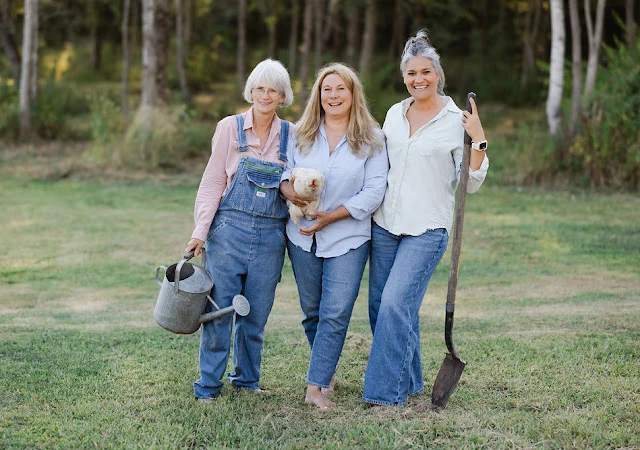
The landscape of American backyard agriculture has undergone a significant transformation over the last decade, marked by a burgeoning interest in self-sufficiency and integrated food systems. At the forefront of this movement is Lisa Steele, a fifth-generation chicken-keeping expert and founder of the Fresh Eggs Daily brand. Steele has officially announced the upcoming release of the 10th Anniversary Edition of her seminal work, Gardening with Chickens, scheduled for publication on March 17. This revised edition arrives at a critical juncture for the homesteading community, offering updated insights derived from Steele’s personal transition from the temperate climate of Virginia to the rigorous environmental demands of rural Maine.

Originally published in 2015, Gardening with Chickens was written during a period of transition for Steele. Since that time, the author’s practical experience has expanded to include the management of a diverse flock comprising chickens, ducks, and geese, as well as the mastery of horticultural techniques suited for extreme northern latitudes. The anniversary edition represents more than a simple reprint; it is a comprehensive overhaul of the original text, incorporating a decade of new data, refined techniques, and professional certifications that reflect the evolving standards of the backyard poultry industry.
A Chronology of Agricultural Adaptation
The evolution of Steele’s expertise is inextricably linked to her relocation from USDA Plant Hardiness Zone 8b in Virginia to Zone 5a in Maine. In the horticultural world, this shift represents a dramatic narrowing of the growing season and an intensification of winter management protocols. While Zone 8b experiences mild winters with average annual extreme minimum temperatures between 15 and 20 degrees Fahrenheit, Zone 5a can see temperatures plummet to -20 degrees Fahrenheit.

This geographical shift necessitated a complete re-evaluation of the symbiotic relationship between poultry and the garden. In Virginia, the primary challenges often involved heat management and extended pest cycles. In Maine, the focus shifted toward cold-weather livestock protection, the preservation of soil health through frozen months, and the strategic use of short-season crop varieties. Steele’s journey over the last ten years included enrolling in the Master Gardener course offered by the University of Maine Cooperative Extension Service. This academic grounding provided a scientific framework for her practical observations, allowing her to bridge the gap between traditional "old-timer" methods and modern horticultural science.
The timeline of this update was accelerated by market forces. As the original 2015 edition approached the end of its print run, Steele and her publishing partners at Homestead Living recognized an opportunity to modernize the content for a new generation of "pandemic-era" homesteaders—a demographic that grew exponentially between 2020 and 2023.

Integrating Poultry and Horticulture: The Synergistic Model
At the core of Gardening with Chickens is the concept of a closed-loop ecosystem where livestock and plant life support one another. The revised edition delves deeper into the mechanics of this relationship, providing data-driven advice on how to utilize poultry as "garden employees."
One of the primary benefits highlighted in the updated text is the management of soil fertility. Chicken manure is high in nitrogen, phosphorus, and potassium, but its raw application can burn delicate plant roots. Steele’s updated work provides refined composting protocols that account for different climatic conditions, ensuring that the waste from the coop becomes a high-value asset for the vegetable patch.

Furthermore, the role of poultry in integrated pest management (IPM) has been expanded. The 10th Anniversary Edition includes new observations on using geese and ducks alongside chickens. While chickens are effective at scratching the soil for grubs and larvae, ducks are noted for their efficiency in slug and snail control, often with less collateral damage to foliage. Geese, which Steele added to her flock during her time in Maine, serve as effective grazers and can contribute to weed management in specific orchard or vineyard settings.
Navigating Climatic Extremes
The most substantial addition to the new edition is the focus on gardening and poultry care in cold climates. For many modern homesteaders, the dream of self-sufficiency is often challenged by the reality of long winters. Steele’s experience in a "below-zero" environment provided the impetus for new chapters on infrastructure and plant selection.

The author emphasizes the construction of raised beds and fenced-in garden areas that can withstand heavy snow loads and protect crops from both the elements and curious livestock. The updated text also explores the cultivation of specific crops that thrived in the Maine environment, including corn, pumpkins, tomatoes, carrots, cucumbers, and eggplant. A particular focus is placed on garlic, a crop that requires a period of vernalization (cold treatment) to thrive, making it an ideal staple for northern gardeners.
Landscaping for the chicken run is another area of significant expansion. The new edition provides a list of poultry-safe plantings that can provide shade, erosion control, and supplemental forage, even in regions where the ground remains frozen for several months of the year.

Professional Validation and Market Trends
The release of the 10th Anniversary Edition is supported by the University of Maine Cooperative Extension’s Master Gardener principles. This connection is vital, as it elevates the book from a hobbyist guide to a vetted resource for sustainable land management. Cooperative Extension services across the United States have reported a record number of inquiries regarding backyard poultry since 2020, suggesting a sustained market demand for the information Steele provides.
Industry analysts note that the "homesteading" genre in publishing has shifted from niche interest to mainstream commercial success. This is driven by rising food costs, concerns over supply chain stability, and a cultural pivot toward organic and locally sourced nutrition. Homestead Living’s decision to re-issue the book with all-new professional photography and a "fine-toothed comb" approach to editing reflects the high production standards now expected in this category.

The inclusion of new photography is not merely aesthetic. According to the author, the visual elements were reshot over a three-day period to accurately represent the current state of her Maine farmstead. These images serve as a visual case study, illustrating the practical application of the book’s theories in a real-world, high-latitude setting.
Implications for the Future of Small-Scale Agriculture
The update to Gardening with Chickens signifies a broader trend in the decentralization of food production. As more individuals move away from urban centers or seek to maximize the utility of suburban lots, the need for integrated livestock and gardening knowledge becomes paramount. Steele’s work argues that chickens are not just egg producers, but essential components of a healthy garden ecosystem.

The 10th Anniversary Edition also addresses the social aspect of homesteading. By involving friends and fellow experts in the reshooting and revision process, Steele highlights the importance of community and knowledge-sharing in the agricultural sector. This collaborative approach is a hallmark of the modern homesteading movement, which relies heavily on digital platforms and peer-to-peer learning.
As the March 17 release date approaches, the book is expected to serve as a foundational text for both novice and experienced poultry keepers. It provides a bridge between two distinct worlds: the poultry fancier who wants to start a garden, and the gardener who wants to introduce livestock. By synthesizing a decade of lessons learned in two vastly different climates, Steele has produced a guide that is both geographically versatile and scientifically grounded.

In summary, the 10th Anniversary Edition of Gardening with Chickens is a reflection of the maturation of the backyard poultry movement. It moves beyond the "how-to" of basic care and into the "why-to" of ecological integration. For the millions of households that have adopted chickens in the last decade, Steele’s updated insights offer a roadmap for moving from simple pet ownership to true agricultural sustainability, regardless of whether they reside in the heat of the South or the deep frost of the North.
