
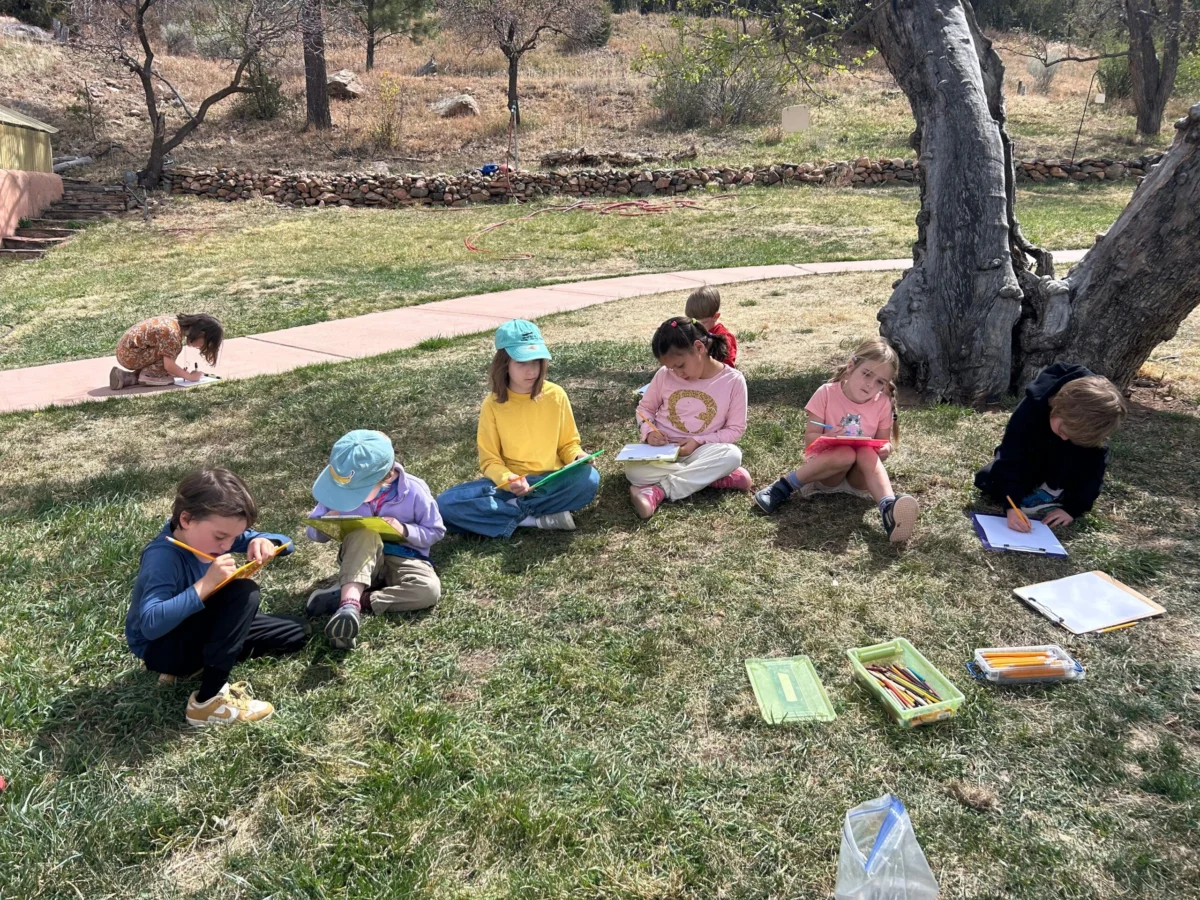
The Randall Davey Audubon Center in Santa Fe, New Mexico, recently concluded its highly anticipated Spring Break Camp 2026, offering an immersive week of nature exploration and scientific discovery for children aged 5-12. Set against the backdrop of the Pinyon Juniper Woodland, under the watchful eyes of zipping Broad-tailed Hummingbirds and the occasional rumble of distant thunder, the camp fostered an environment where laughter and learning intertwined, cultivating what many parents affectionately termed "budding scientists." This annual program underscores the Audubon Center’s unwavering commitment to environmental education and community engagement, providing a vital outdoor learning experience in the heart of the Southwest.
A Deep Dive into the Camp Experience
The Spring Break Camp at the Randall Davey Audubon Center is meticulously designed to connect young participants with the natural world through hands-on activities and direct observation. Each day presented a new facet of the local ecosystem, encouraging campers to become active explorers and keen observers. The curriculum seamlessly blended recreational activities with educational modules, ensuring that learning felt like an adventure.
Campers spent significant portions of their days hiking through the distinctive Pinyon Juniper Woodland, a characteristic ecological zone of the high desert Southwest. These guided excursions were not merely walks but interactive lessons in local botany, geology, and wildlife tracking. Along the trails, educators pointed out the resilient Pinyon pine (Pinus edulis) and various Juniper species (such as Juniperus monosperma), explaining their adaptations to arid conditions and their critical role in supporting diverse wildlife. Children learned to identify different plant species, understand the concept of a watershed, and appreciate the delicate balance of this unique ecosystem. The act of hiking itself promoted physical activity and fostered an appreciation for the tranquility of nature, a stark contrast to the often-indoor-centric lives of many modern children.
A central feature of the camp was birding in the Wildlife Garden, a specially cultivated area designed to attract a wide array of avian species. Equipped with binoculars and field guides, campers learned the fundamentals of bird identification – recognizing calls, distinguishing plumage, and observing behavior. The original report specifically highlighted "zipping Broad-tailed Hummingbird scouts," a common and charismatic species in the region known for its distinctive metallic trill. Campers also had "close encounters with Ravens" – intelligent and ubiquitous birds often observed demonstrating complex behaviors – and the diminutive but energetic Mountain Chickadees, whose presence signals a healthy woodland environment. These direct observations provide invaluable lessons in ornithology and foster a sense of wonder and respect for wildlife. Beyond these mentioned species, the Wildlife Garden often hosts a variety of other birds, including various sparrows, finches, jays (such as Steller’s Jays and Piñon Jays), and occasional raptors, further enriching the birding experience.
The Nature Discovery Area served as a dynamic outdoor classroom where imaginative play met scientific inquiry. This designated space allowed campers to engage in less structured exploration, building forts, observing insects, and engaging in free play that naturally led to questions about the environment. It was here that the popular camp hide-and-seek game, "Camouflage," was played, teaching children about animal adaptations for blending into their surroundings while simultaneously fostering teamwork and strategic thinking. This area also facilitated close encounters with some of the center’s regular deer population, likely Mule Deer, which frequently visit the grounds, "nibbling the emerging spring buds and new growth." These interactions provided tangible lessons in wildlife ecology and the interconnectedness of species within a habitat.
Curriculum and Crafting: Blending Art with Science
The camp’s educational philosophy is rooted in experiential learning, where theoretical concepts are brought to life through hands-on activities. A significant portion of the week was dedicated to various creative projects that doubled as learning tools. Campers "crafted nature journals," an essential practice for budding scientists. These journals encouraged detailed observation, drawing, and descriptive writing, helping children document their discoveries and reflections throughout the week. This activity not only honed their artistic skills but also developed critical scientific habits like systematic recording and analysis.
"Birdy bookmarks" and "cyanotypes" were other popular craft activities. The bookmarks allowed campers to express their creativity while reinforcing bird identification skills. Cyanotypes, or sunprints, introduced them to an early photographic process that uses sunlight to create striking blue and white images, often of natural objects like leaves, feathers, or flowers found on the center grounds. This activity provided a unique blend of art, history, and science, demonstrating light sensitivity and chemical reactions in a tangible way.
Beyond crafts, the curriculum delved into fundamental ecological concepts. Campers learned about "animal tracks," a skill crucial for understanding wildlife presence and behavior. They were taught how to identify different tracks, infer the animal’s movement, and even deduce aspects of its diet or habits. "Bird ID" sessions were more structured, teaching campers how to use field guides, understand bird anatomy, and recognize common species by sight and sound. The importance of "pollinators" was a key topic, explaining the vital role of insects (like bees, butterflies, and beetles) and other animals (such as hummingbirds) in plant reproduction and ecosystem health. Campers learned about the various types of pollinators, the plants they favor, and the threats they face, fostering an early understanding of biodiversity conservation.
"Habitat day" was a highlight, illustrating ecological principles through imaginative construction. Campers created a "bevy of pom-pom caterpillars" and subsequently designed "habitat diorama homes" for them. These miniature habitats were "decorated with willow branches upon which to perch and construction paper leaves to ensure they never go hungry." This activity, seemingly simple, taught complex concepts such as the specific needs of an organism (food, shelter, perching sites), the components of a habitat, and the interdependencies within an ecosystem. It allowed children to apply their understanding of animal requirements in a creative, tangible manner.
Ecological Lessons: The Science of the Desert
The camp schedule serendipitously coincided with "much needed rain," a significant event in New Mexico’s arid climate. This provided campers with unique educational opportunities. The rain revitalized the parched landscape, allowing them to "spot the rejuvenated, green desert mosses dotting the center grounds." This observation led to discussions about the resilience of desert flora and the cyclical nature of water in arid regions.
Crucially, the rain also offered a perfect opportunity to learn about "cryptobiotic soil" and "petrichor." Cryptobiotic soil crusts are living communities of cyanobacteria, lichens, and mosses that form a protective layer on desert soils. Campers learned about their critical role in preventing erosion, fixing nitrogen, and retaining moisture – essential functions in fragile desert ecosystems. Understanding their vulnerability to disturbance and the long time it takes for them to recover instilled a sense of responsibility for protecting these vital crusts. "Petrichor," the distinct earthy scent produced when rain falls on dry soil, was not just a sensory experience but a scientific lesson. Educators explained that this aroma is caused by a combination of plant oils and geosmin, a metabolic by-product of certain bacteria, connecting a common natural phenomenon to microbiology and atmospheric science. These lessons transformed everyday observations into scientific insights, making the invisible processes of nature tangible and understandable.
The Randall Davey Audubon Center: A Legacy of Conservation
The success of the Spring Break Camp 2026 is deeply rooted in the broader mission and history of the Randall Davey Audubon Center. Located on 135 acres at the mouth of Santa Fe Canyon, just minutes from the city’s historic plaza, the center serves as a crucial wildlife sanctuary and environmental education hub. The property was once the home and studio of artist Randall Davey (1887-1964), who bequeathed his estate to the National Audubon Society. His vision was to preserve this natural haven and ensure its continued benefit for both wildlife and people.
The center’s mission aligns with the National Audubon Society’s overarching goal to protect birds and the places they need, today and tomorrow. Through habitat preservation, advocacy, and education, the Randall Davey Audubon Center works to foster a conservation ethic within the community. Its diverse habitats – including riparian areas, Pinyon Juniper Woodland, and the carefully maintained Wildlife Garden – support over 190 species of birds, making it a prime location for birdwatching and ecological study. The center also plays a significant role in local conservation efforts, acting as a steward for the Santa Fe River watershed and advocating for sustainable land use practices. Educational programs like the Spring Break Camp are central to this mission, aiming to inspire the next generation of environmental leaders and conservationists.
Fostering Future Scientists and Stewards
The feedback from families regarding the Spring Break Camp 2026 was overwhelmingly positive, with many sharing that their children came home "after having the most fun and were becoming ‘budding scientists.’" This sentiment encapsulates the camp’s dual achievement: providing an enjoyable, memorable experience while simultaneously igniting a passion for scientific inquiry and the natural world.
According to Dr. Elena Rodriguez, Education Director at the Randall Davey Audubon Center (inferred statement): "Our Spring Break Camp is more than just a recreational activity; it’s an investment in the future. We aim to cultivate curiosity, critical thinking, and a deep appreciation for nature in every child. Seeing them light up when they identify a new bird, understand a complex ecological concept, or teach a younger camper a skill, reaffirms the vital importance of outdoor education. These children are not just learning facts; they are developing an environmental ethic that will shape their choices for years to come."
Parents consistently reported that their children exhibited increased knowledge about local flora and fauna, asked more questions about environmental topics, and showed a greater desire to spend time outdoors. For instance, Sarah Chen, whose 7-year-old son, Ethan, attended the camp, remarked (inferred statement): "Ethan came home every day buzzing with stories about birds, moss, and even ‘cryptobiotic soil’ – things I never expected him to learn at this age. He’s constantly pointing out different birds in our backyard now and even corrected me on a plant identification! It’s incredible to see how much he absorbed and how it’s sparked a genuine interest in science."
The camp also demonstrated the power of peer mentorship. The original report noted that "some of our older campers took on more responsibility, helping staff and welcoming our younger folks to the fold, teaching them how to play our favorite camp hide-and-seek game: Camouflage." This aspect highlights the development of leadership skills, empathy, and community building among the campers. Such interactions create a supportive learning environment where children not only learn from adults but also from each other, reinforcing knowledge and fostering social growth.
Broader Implications and the Future of Environmental Education
The success of programs like the Randall Davey Audubon Center Spring Break Camp 2026 holds significant broader implications for environmental literacy and conservation. In an increasingly urbanized and technologically driven world, direct engagement with nature is more crucial than ever. Studies consistently show that children who spend time in nature exhibit improved cognitive function, reduced stress levels, enhanced creativity, and a greater propensity for environmental stewardship in adulthood. By providing these experiences early, the Audubon Center is actively contributing to the development of a more environmentally conscious and scientifically literate populace.
Furthermore, the camp’s focus on local ecology provides children with a tangible connection to their immediate environment, fostering a sense of place and responsibility for their community’s natural heritage. Understanding the Pinyon Juniper Woodland, the importance of pollinators, and the unique challenges of a desert ecosystem equips these young individuals with the knowledge to address local environmental issues as they grow older. This localized approach to education is particularly effective in instilling a sense of ownership and agency.
As environmental challenges, including climate change and biodiversity loss, become more pressing, the role of institutions like the Randall Davey Audubon Center becomes increasingly vital. Their education programs are not merely supplementary activities but essential components of a holistic education that prepares young people to be informed, engaged, and responsible citizens of the planet. The "budding scientists" emerging from this camp are not just future scientists in a formal sense; they are future voters, consumers, and community leaders who will make decisions that impact the environment.
The Randall Davey Audubon Center continues to be a beacon for environmental education in the Southwest, offering a model for how nature centers can effectively engage youth and foster a lifelong connection to the natural world. Its comprehensive approach, blending direct experience with scientific learning and creative expression, ensures that each Spring Break Camp leaves an indelible mark on its participants, nurturing a generation poised to understand, appreciate, and protect our planet.
To learn more about the Randall Davey Audubon Center’s extensive community building and education programs, interested individuals are encouraged to visit their official website, providing further insight into their year-round offerings and mission. The success of the 2026 Spring Break Camp serves as a powerful testament to the enduring value of nature-based education and the critical role it plays in shaping the environmental leaders of tomorrow.
