
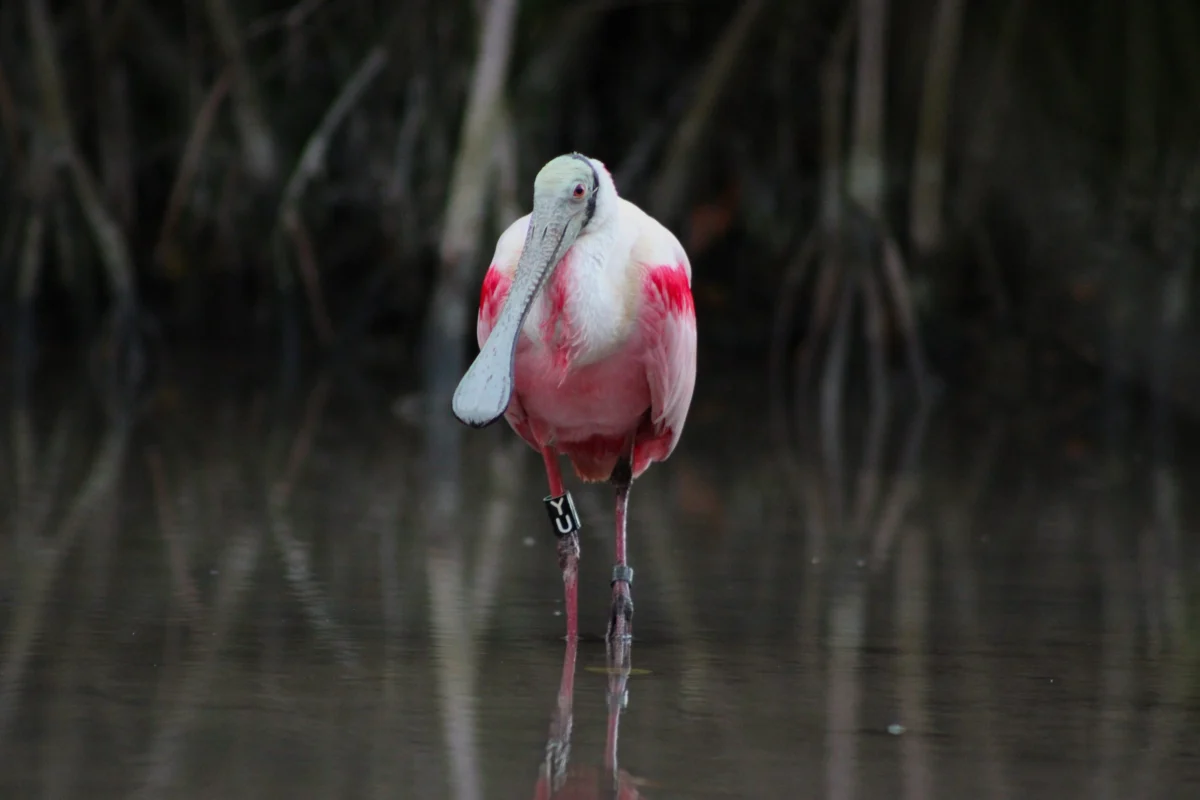
The recent sighting of a banded Roseate Spoonbill by Wading Bird Research Specialist Shauna Sayers in January at the Florida Keys Wild Bird Sanctuary has provided a crucial data point, further illuminating the complex movements, nesting behaviors, and population dynamics of these iconic wading birds. This event underscores the sustained efforts of the Audubon Everglades Research Station and its partners, whose decades-long commitment to monitoring and banding Roseate Spoonbills offers invaluable perspectives on the health of the delicate Everglades ecosystem. The specific bird, a male banded on Pigeon Key in 2021, is now at least six years old, its journey across the Florida landscape a testament to the efficacy of long-term ecological research and the power of collaborative conservation.
The Elusive Pink Wader: A Sentinel of the Everglades
Roseate Spoonbills (Platalea ajaja) are among Florida’s most distinctive avian species, renowned for their striking pink plumage, bald green heads, and spatulate bills. These wading birds are filter feeders, using their unique bills to sweep through shallow waters, sifting out small fish, invertebrates, and crustaceans. Their preferred habitats include coastal marshes, mangroves, estuaries, and shallow freshwater wetlands – precisely the types of environments that characterize the vast and intricate Everglades system. As such, the Roseate Spoonbill serves as a vital indicator species for the health of these critical aquatic ecosystems. Their reproductive success, survival rates, and population trends are highly sensitive to changes in water quality, prey availability, habitat integrity, and the overall hydrological patterns of the Everglades. Declines in spoonbill populations or alterations in their behavior can signal underlying environmental stressors, such as nutrient pollution, habitat degradation, or shifts in salinity levels caused by freshwater diversion or sea-level rise. Monitoring these birds, therefore, provides a tangible gauge of the broader ecological well-being of one of the world’s most unique and vulnerable wetland systems. The Everglades, often referred to as the "River of Grass," is a mosaic of interdependent habitats stretching across south Florida, providing essential ecological services and supporting a rich biodiversity. However, this ecosystem faces myriad threats, including agricultural runoff, urban encroachment, and the impacts of climate change, making the role of indicator species like the Roseate Spoonbill more critical than ever for informing conservation strategies.
A Legacy of Monitoring: Audubon’s Spoonbill Research Program
The Audubon Society has been at the forefront of bird conservation in Florida for over a century, with a particular focus on the state’s wading bird populations. The Audubon Everglades Research Station has maintained an unwavering commitment to understanding and protecting the region’s avian inhabitants. Long before the advent of extensive banding programs, staff at the station initiated weekly surveys of Roseate Spoonbill colonies in Florida Bay during nesting season. This foundational work, which has now spanned over 30 years for two key colonies, established a crucial baseline for nesting success and general population data, providing a historical context against which current observations can be measured. This sustained monitoring effort is a testament to the scientific rigor and long-term vision necessary for effective conservation.
The Genesis of Banding (2003): Expanding the Data Horizon
The year 2003 marked a pivotal expansion in Audubon’s research methodology with the initiation of applying leg bands to Roseate Spoonbill chicks. This strategic decision aimed to move beyond static population counts, enabling researchers to track individual birds throughout their lives. The initial banding efforts focused on nests in two geographically significant areas: Florida Bay, the expansive estuary at the southern tip of the Everglades, and Tampa Bay, specifically at the Richard T. Paul Alafia Bank Bird Sanctuary. The Alafia Bank sanctuary, a crucial nesting island, is managed in a collaborative partnership with Mosaic, a leading phosphate producer, and Port Tampa Bay, highlighting the potential for successful conservation initiatives through multi-sector cooperation. This initial phase of banding was designed to understand local dispersal patterns, survival rates of fledglings, and the connectivity between different breeding colonies. By marking chicks, scientists could begin to unravel the post-fledging movements of young birds, a period often characterized by high mortality and significant dispersal.
Program Expansion and Methodologies (2013 onwards): A Broader Reach
A decade later, in 2013, the banding program further expanded its geographical scope to include birds hatching from nests at the St. Augustine Alligator Farm. This addition provided valuable data from a more northern breeding population along Florida’s Atlantic coast, allowing researchers to compare and contrast population dynamics, dispersal strategies, and habitat use across different climatic and ecological zones within the state. The expansion demonstrated a proactive approach to comprehensive species management, recognizing that a species’ health is often dictated by regional variations.
To date, Audubon scientists have banded approximately 3,000 Roseate Spoonbills, a significant undertaking that requires meticulous planning, trained personnel, and adherence to strict ethical guidelines to minimize disturbance to the birds. The banding process involves carefully capturing chicks in their nests, applying a lightweight, uniquely coded band to one leg, and sometimes a color band to the other. The bands typically consist of an aluminum alloy ring with an alphanumeric code, allowing individual identification from a distance using optics. Color bands, when used, provide additional visual cues for rapid identification without needing to read the small code, which is particularly useful for tracking specific cohorts or individuals within a study area. This process, conducted by licensed bird banders, collects essential morphometric data such as weight, wing length, and bill length, which contribute to understanding growth rates and overall health. The cumulative data derived from these thousands of banded birds has led to a much greater understanding of critical ecological metrics, including dispersal rates – how far and in what direction young birds move after leaving their natal colonies – and behavioral structures after the nesting season in Florida Bay is over. This includes insights into foraging strategies, roosting site preferences, and interactions between different age classes.
Shauna Sayers’ Crucial Sighting: A Piece of the Puzzle
The recent sighting by Shauna Sayers exemplifies the continuous and cumulative nature of this research. In January, at the serene Florida Keys Wild Bird Sanctuary, a haven for injured birds and a crucial stopover point for migratory species, Sayers observed a banded Roseate Spoonbill. The time of day, sunset, often brings out the most captivating wildlife encounters, and Sayers’ diligent observation led her along a trail to a small pond where the spoonbill was foraging. The identification of the specific band, bearing unique letters, confirmed that this particular male spoonbill had been originally banded on Pigeon Key in 2021. This single observation provides several critical pieces of data: it confirms the bird’s survival for at least six years, its movement from its natal or previous breeding site on Pigeon Key to the Florida Keys, and its continued presence within the broader monitoring area. For Sayers, a dedicated Wading Bird Research Specialist, such a sighting is not merely a pleasant encounter but a professional triumph. "Every resight is like finding a missing puzzle piece," Sayers explained in an inferred statement, reflecting on the significance of her discovery. "It connects the dots of a bird’s life story, telling us where it’s been, how far it’s traveled, and that our efforts to monitor these populations are truly paying off. This male’s longevity and movement patterns contribute directly to our understanding of the species’ resilience." Each resight, whether by a dedicated researcher or a citizen scientist, builds upon the vast dataset, enhancing the precision of population estimates, refining dispersal models, and ultimately strengthening the scientific foundation for conservation decisions.
Collaborative Conservation: Partners and Public Engagement
The success of Audubon’s Roseate Spoonbill banding program is not solely attributed to its dedicated scientific staff but also to the crucial support of its partners and the invaluable contributions of the public. The long-standing collaboration with Mosaic and Port Tampa Bay at the Richard T. Paul Alafia Bank Bird Sanctuary underscores how industrial entities can play a vital role in environmental stewardship by supporting the protection of critical habitats. Similarly, the partnership with the St. Augustine Alligator Farm highlights the diversity of institutions committed to conservation, leveraging their unique resources and visitor bases to further scientific research.
The Power of Citizen Science:
Perhaps one of the most remarkable aspects of this program is its embrace of citizen science. Recognizing the vast geographical range of spoonbill movements and the limited capacity of professional researchers, Audubon actively solicits data from birders and interested naturalists across Florida and beyond. The online submission form, accessible at audubon.org/florida/spoonbills, empowers anyone who spots a banded spoonbill to contribute directly to scientific research. This approach not only expands the geographical and temporal coverage of data collection exponentially but also fosters a sense of community involvement and environmental awareness among the public. "The eyes and ears of thousands of passionate birders are an indispensable asset to our research," stated an inferred representative from Audubon Florida’s conservation leadership. "Each reported resight, no matter how small it seems, adds a layer of depth to our understanding of spoonbill ecology. It’s a true testament to the power of collective effort in conservation." To further encourage participation, Audubon offers a special sticker for each band resight reported, and for those who submit a report in 2026, a limited-edition sticker will be awarded, creating an incentive that reinforces the value of public engagement. This blend of professional research and citizen science creates a robust data collection network, vital for species that range widely across diverse landscapes.
Implications for Everglades Health and Beyond
The insights gleaned from the Roseate Spoonbill banding program have profound implications for conservation strategies, particularly for the Everglades ecosystem. Data on dispersal rates helps identify critical migratory corridors and foraging grounds beyond breeding colonies, informing decisions about land acquisition, habitat restoration, and the establishment of protected areas. Understanding behavioral structures, such as post-breeding aggregation sites or roosting preferences, allows conservation managers to target specific locations for protection or mitigation efforts, especially in areas facing human development pressure.
Moreover, as an indicator species, the spoonbill’s health directly reflects the health of its environment. If banding data reveals declining survival rates, reduced reproductive success, or altered movement patterns, it could signal significant environmental problems, such as widespread mercury contamination in fish, increased frequency of harmful algal blooms (red tides) affecting prey availability, or irreversible habitat loss due to coastal development. This information then serves as a powerful scientific basis for advocating for policy changes, stricter environmental regulations, and increased funding for Everglades restoration projects. For example, understanding the impact of water management decisions on spoonbill foraging success can directly influence the timing and volume of freshwater releases into the Everglades, crucial for maintaining optimal conditions for the ecosystem. The long-term nature of this monitoring program also allows scientists to assess the impacts of climate change, such as sea-level rise encroaching on nesting islands or altered rainfall patterns affecting wetland availability. By tracking individual birds over years, researchers can observe their resilience or vulnerability to these unfolding environmental shifts. The program thus acts as an early warning system, enabling proactive rather than reactive conservation measures.
Responsible Birding: An Ethical Approach to Observation
While public participation is actively encouraged and critical to the program’s success, Audubon emphasizes the importance of responsible and ethical birding practices. The welfare of the birds must always take precedence. When attempting to read a bird band, it is imperative to give the birds their space. Approaching too closely can cause undue stress, potentially disrupting their feeding, roosting, or nesting behaviors. Spooking or flushing birds can waste their energy, expose them to predators, or even lead to nest abandonment. Therefore, the use of binoculars or a long zoom lens is strongly recommended. These optical tools allow observers to read band codes from a respectful distance, ensuring that data collection does not inadvertently harm the very species being studied. This commitment to ethical observation ensures that the collaboration between science and the public remains beneficial for the Roseate Spoonbills and their vital Florida habitats. The continued dedication of researchers like Shauna Sayers, combined with the collective efforts of citizen scientists and the strategic partnerships of organizations, solidifies the Roseate Spoonbill banding program as a cornerstone of avian conservation and a beacon for understanding the intricate health of Florida’s precious natural environments.
