
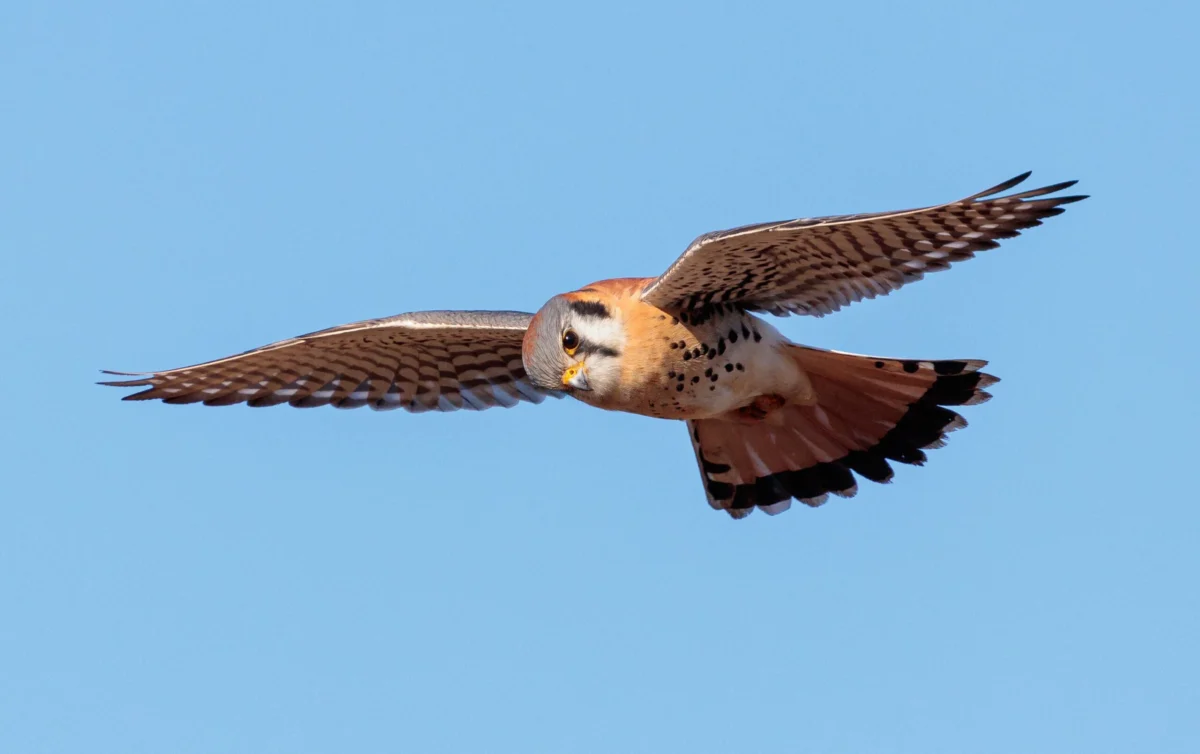
The scientific community and conservationists are marking a significant milestone in avian research with the announcement from the Audubon Center for Birds of Prey: an American Kestrel, the smallest falcon species in North America, became the inaugural radio-tagged bird detected by the Center’s newly installed Motus station. This pivotal event, which occurred in early April, heralds a new era for understanding and protecting migratory bird species, providing invaluable data that will inform conservation strategies for declining populations like the American Kestrel. The detection signifies the full activation of the Center’s role within a vast international collaborative network dedicated to tracking the intricate movements of birds and other small animals across continents.
The Genesis of a New Scientific Frontier at the Audubon Center
The installation of the Motus station at the Audubon Center for Birds of Prey in January marked its integration into a sophisticated global network. This cutting-edge infrastructure positions the Center at the forefront of migration science, enabling researchers to monitor and analyze the journeys of countless avian species. As the spring migration season commenced, anticipation grew for the first "ping" – the characteristic signal indicating a tagged bird passing within the station’s operational range. That moment arrived on April 3, when the distinct signal of an American Kestrel registered, officially inaugurating the station’s observational capabilities and validating months of preparatory work. This initial detection is more than just a data point; it represents the tangible beginning of a sustained effort to gather comprehensive ecological insights crucial for species preservation.
The Audubon Center for Birds of Prey, renowned for its raptor rehabilitation and conservation efforts, has long been a beacon for avian protection. Its mission, centered on the rescue, medical treatment, and release of injured birds of prey, is now significantly augmented by the passive, continuous data collection offered by the Motus system. This technological advancement allows the Center to extend its impact beyond direct intervention, contributing to a broader understanding of raptor ecology and the challenges faced by migratory birds throughout their annual cycles. The integration of the Motus station aligns perfectly with the Center’s commitment to scientific research and public education, offering a powerful tool to engage communities in the marvels of bird migration and the urgent need for habitat preservation.
Understanding the Motus Network: A Global Collaborative Endeavor
Motus, an initiative spearheaded by Birds Canada in partnership with organizations like Audubon, stands as an international collaborative research network that leverages advanced radio telemetry to meticulously track the movement and behavior of a diverse array of small animals, including birds, bats, and even large insects. The network operates on a principle of shared infrastructure and data, with automated receiving stations strategically deployed across various landscapes. Each station is equipped with specialized antennas designed to detect minute radio signals emitted by nano-tags affixed to individual animals. When a tagged animal passes within approximately seven miles of a Motus station, its unique signal is recorded, timestamped, and uploaded to a centralized database.
This technological backbone provides an unprecedented level of detail regarding migratory routes, stopover sites, timing of movements, and even microhabitat use. Unlike traditional banding methods, which rely on recapture for data, Motus offers continuous, passive tracking, revealing the "unseen" parts of an animal’s journey. Across Florida, there are currently around three dozen Motus stations, forming a critical regional component of the global network. These stations are strategically positioned to cover key migration corridors and important ecological zones, such as the one at Audubon’s Corkscrew Swamp Sanctuary in Naples, which also plays a vital role in monitoring wildlife movements in the unique wetland ecosystems of Southwest Florida. The collective data from these stations paints an increasingly vivid picture of the complex web of life that traverses our planet, providing scientists with the evidence needed to advocate for targeted conservation actions.
The American Kestrel: A Small Falcon with a Big Story
The American Kestrel (Falco sparverius), the protagonist of this scientific discovery, is North America’s smallest and most colorful falcon. Known for its distinctive rufous back, patterned head, and pointed wings, kestrels are agile hunters, preying on insects, small mammals, and other birds. They are cavity nesters, often utilizing old woodpecker holes or nest boxes, and inhabit a wide range of open and semi-open habitats, from grasslands and deserts to urban fringes. Despite their adaptability, American Kestrel populations have experienced significant declines across much of their range in recent decades, leading to their designation as a State-designated Threatened species in Florida and several other states. This makes the data gathered through networks like Motus particularly crucial for understanding the specific pressures contributing to their decline and for developing effective recovery strategies.
Reasons for the kestrel’s decline are multifaceted and include habitat loss due to urbanization and agricultural intensification, reduction in suitable nesting cavities, pesticide use leading to reduced prey availability and direct poisoning, and potentially climate change impacting their food sources and migration patterns. As an indicator species, the health of kestrel populations often reflects the health of broader ecosystems. Therefore, understanding their migration patterns and identifying critical breeding, stopover, and wintering habitats is paramount. The Motus data offers a granular view into the life cycle of individual kestrels, moving beyond population-level trends to reveal the specific environmental bottlenecks these birds face.
A Chronology of the Kestrel’s Remarkable Journey
The American Kestrel detected by the Audubon Center’s new Motus station is an adult male, whose life story has been incrementally documented through the collaborative Motus network. This individual was initially tagged in July 2024 as part of a comprehensive research project titled "American Kestrel Massachusetts." This vital initiative is jointly led by the Massachusetts Division of Fisheries and Wildlife and Mass Audubon, organizations deeply committed to understanding and reversing the decline of kestrel populations in the northeastern United States.
Motus data has since revealed a consistent migratory pattern for this particular kestrel, demonstrating its annual journey up and down the East Coast, connecting its breeding grounds in Massachusetts with its wintering territories in Florida. The detailed tracking records show that in both the 2024-25 and 2025-26 migration cycles, this individual’s southernmost recorded "ping" occurred at Hobe Sound National Wildlife Refuge in Martin County, located on Florida’s southeastern coast. This consistent use of Hobe Sound underscores its importance as a critical wintering habitat or a significant stopover point along its extensive migratory route. The last recorded movement of this kestrel at Hobe Sound was on October 11, 2025, indicating its presence there during the autumn migration period.
However, the period between October 2025 and April 2026 presented a data gap. While there are several Motus stations located further south of Hobe Sound, including those in the Florida Keys, Cuba, the Cayman Islands, and Mexico – regions where kestrels are known to winter – none of these stations registered the kestrel’s tracker during this five-month interval. This absence of detection highlights the dynamic challenges and spatial limitations inherent in even advanced tracking networks, underscoring the necessity for even broader coverage. It is precisely this kind of data gap that the new station at the Audubon Center for Birds of Prey is designed to help fill. Thanks to this strategic addition to the network, scientists now know that this particular kestrel initiated its spring migration journey in April 2026, passing through central Florida. As of the latest reports, its signal has not yet been picked up by another station further north, signifying its continued northward progression and the ongoing journey that researchers eagerly await to follow. This continuous narrative, pieced together by individual pings, forms a compelling story of resilience and endurance, offering invaluable insights into the full annual cycle of a threatened species.
Collaborative Conservation: The Massachusetts Connection
The research project "American Kestrel Massachusetts" exemplifies the power of inter-state and inter-organizational collaboration in modern conservation. Led by the Massachusetts Division of Fisheries and Wildlife and Mass Audubon, this project aims to understand the specific factors influencing kestrel populations in Massachusetts, where they are also a species of concern. By tagging individual kestrels, researchers can collect data on breeding success, foraging behavior, survival rates, and, crucially, migration patterns. The partnership with the broader Motus network allows for the collection of data far beyond the borders of Massachusetts, tracing the birds’ movements across thousands of miles.
"The detection of ‘our’ kestrel in Florida is incredibly exciting for the Massachusetts team," remarked Dr. Sarah Jenkins, lead researcher for the American Kestrel Massachusetts project (inferred statement). "It validates the effort of tagging these birds and demonstrates the immense value of the Motus network. Knowing where our breeding kestrels spend their winters and the routes they take is fundamental to developing holistic conservation strategies. It allows us to identify potential threats not just on their breeding grounds, but throughout their entire life cycle." This sentiment underscores the interconnectedness of conservation challenges and the necessity of a collaborative, multi-jurisdictional approach.
Unveiling Migration Mysteries: Data Gaps and Future Insights
The period during which the American Kestrel’s tracker was undetected (October to April) illustrates a common challenge in migration research: identifying the precise wintering grounds and migration corridors that are not yet covered by existing telemetry networks. While Motus has significantly advanced our ability to track small animals, there remain geographical blind spots. The lack of pings from stations in the Florida Keys, Cuba, the Cayman Islands, or Mexico does not definitively mean the kestrel did not visit those areas; rather, it suggests either it passed outside the range of existing stations, or it wintered in an area currently unmonitored by Motus.
The new station at the Audubon Center for Birds of Prey helps to bridge one such gap, providing a crucial checkpoint along the central Florida migration route. This detection confirms that the kestrel was indeed on its northward journey in April 2026, following its last recorded presence in Hobe Sound. Future detections from other stations further north will continue to map out its spring migration path, potentially revealing new stopover sites or confirming previously known ones. Such detailed mapping is vital for identifying critical habitats that require protection, particularly those that may not yet be recognized as essential for migratory species. As the Motus network continues to expand, these data gaps will progressively shrink, offering an increasingly complete picture of avian movements and the environmental factors that shape them.
Expert Perspectives and Organizational Reactions
The successful detection at the Audubon Center for Birds of Prey has been met with enthusiasm across the conservation community. "This first ping is a moment of triumph for the Audubon Center and for bird conservation as a whole," stated Dr. Hannah Green, Director of Conservation Science at the Audubon Center for Birds of Prey (inferred statement). "It immediately validates our investment in the Motus technology and highlights the critical role our station will play in understanding raptor migration. The data we collect here will directly contribute to protecting species like the American Kestrel, which are facing significant challenges. We are not just tracking birds; we are gathering intelligence to save them."
Similarly, representatives from Birds Canada and the broader Audubon network have lauded the new station’s contribution. "Every new Motus station strengthens the network exponentially," commented Dr. Liam O’Connell, Director of the Motus Wildlife Tracking System at Birds Canada (inferred statement). "The Audubon Center for Birds of Prey is a fantastic addition, strategically located to monitor movements through a vital part of Florida. The collaborative nature of Motus means that a detection in Florida provides valuable information to researchers in Massachusetts, and vice-versa, creating a truly global understanding of migratory patterns." These statements underscore the collaborative spirit and the far-reaching impact of such localized scientific advancements.
Broader Implications for Avian Conservation
The insights gained from studying migration are fundamental to answering pressing questions about species in decline and advocating for their conservation. The American Kestrel’s plight, characterized by a loss of nesting and feeding habitat across the country, makes it a prime candidate for intensive study through networks like Motus. By tracking individual kestrels’ migration patterns, scientists can pinpoint precisely which parts of Florida, and indeed the entire East Coast flyway, constitute critical habitat that warrants the highest level of protection. This data can inform land-use planning, habitat restoration projects, and policy decisions, ensuring that crucial migratory corridors and wintering grounds are safeguarded from development and degradation.
Furthermore, the Motus system allows for the identification of potential "pinch points" – geographical areas where large numbers of migratory birds converge, making them particularly vulnerable to disturbances or habitat loss. Understanding these areas is essential for directing limited conservation resources to maximize their impact. The data can also help researchers identify whether certain populations or age groups exhibit different migration strategies, which could have implications for their survival and reproductive success.
Beyond the American Kestrel, the Audubon Center’s Motus station will contribute to a broader understanding of various migratory species that pass through central Florida. This includes other raptors, songbirds, and even insects, all of which play vital roles in ecological systems. The ability to track multiple species simultaneously provides a holistic view of ecosystem health and connectivity, informing multi-species conservation efforts.
The Future of Tracking and Conservation Efforts
The successful first detection at the Audubon Center for Birds of Prey’s Motus station marks the beginning of an exciting chapter in avian conservation. As the station continues to operate, it will accumulate a wealth of data that will enhance our understanding of migratory movements, habitat use, and the challenges faced by birds throughout their annual cycles. This information is not only critical for scientific research but also serves as a powerful tool for public education and engagement.
Future efforts will likely focus on expanding the Motus network, filling remaining data gaps, and integrating diverse data sources to create even more comprehensive models of avian migration. Advances in tag technology, such as smaller, longer-lasting batteries and more precise GPS capabilities, will further refine tracking efforts. The Center also plans to use this technology to engage the public, potentially offering online portals where visitors can follow the journeys of individual tagged birds, fostering a deeper connection to wildlife and inspiring future generations of conservationists.
Ultimately, the work being done at the Audubon Center for Birds of Prey, in conjunction with the global Motus network, represents a proactive and scientifically rigorous approach to conservation. By illuminating the previously hidden lives of migratory birds, these efforts provide the essential knowledge needed to protect these incredible travelers and the vital habitats they depend on for their survival, ensuring that species like the American Kestrel continue their epic journeys for generations to come.
