
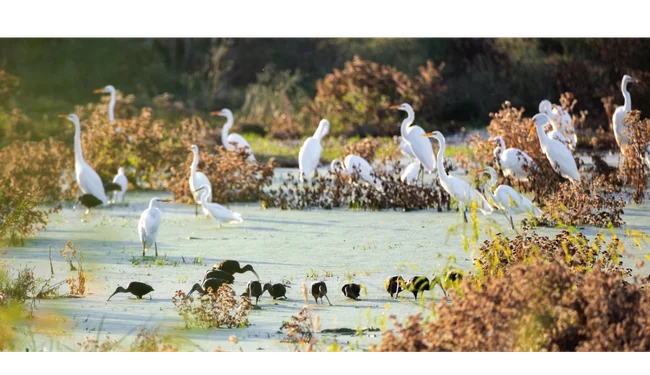
San Antonio, Texas – In a pivotal moment for regional climate adaptation, leaders from across the South Central United States recently converged in San Antonio for the South Central Climate Resilience Forum. This gathering underscored a pressing shared reality: climate change is actively reshaping the landscapes and communities of Arkansas, Kansas, Louisiana, Oklahoma, and Texas. Experts from nonprofit organizations, government agencies, community groups, the private sector, and academia convened to exchange vital lessons and forge the partnerships essential for building a resilient future. Amidst discussions centered on the iconic River Walk, a beacon of collaborative environmental stewardship emerged: the enduring partnership between the San Antonio Water System (SAWS) and the National Audubon Society at Mitchell Lake Audubon Center. This 1,200-acre sanctuary on San Antonio’s South Side stands as a testament to how integrated water management, robust conservation efforts, and deep community engagement are forging a new chapter in climate resilience, supporting both migratory birds and human well-being.
Contextualizing Regional Climate Challenges
The South Central Climate Resilience Forum served as a critical platform for addressing the intensifying impacts of climate change across a diverse and vulnerable region. States like Texas are increasingly experiencing more frequent and severe extreme weather events, including prolonged droughts, intense heatwaves, and devastating floods. Data from the National Oceanic and Atmospheric Administration (NOAA) indicates a consistent upward trend in average temperatures across the South Central U.S. over the past few decades, alongside shifts in precipitation patterns that contribute to both water scarcity and increased flood risk. These climatic changes place immense pressure on natural ecosystems, agricultural sectors, and urban infrastructure. Water resources, in particular, are under unprecedented strain, necessitating innovative and collaborative approaches to management and conservation. The forum’s agenda focused on actionable strategies, from nature-based solutions and infrastructure upgrades to policy adjustments and community-led initiatives, all aimed at enhancing the region’s adaptive capacity. San Antonio, a fast-growing metropolitan area situated in a semi-arid region and grappling with its own water challenges, provided a fitting backdrop for these crucial discussions, highlighting the urgency and innovation required to safeguard natural resources and human communities.
Mitchell Lake: A Deep Tapestry of History and Transformation
The Mitchell Lake Audubon Center, a verdant oasis amidst San Antonio’s rapid urban expansion, possesses a rich and layered history that profoundly informs its current role as a model for environmental stewardship. Long before European colonization, the natural lake system, one of the few in Texas, served as a vital source of sustenance and a gathering place for Indigenous peoples, their lives intrinsically linked to its waters and the wildlife it supported. Archaeological findings suggest millennia of human connection to this unique landscape.
However, the 20th century brought a dramatic shift. From the early 1900s through the late 1980s, Mitchell Lake was repurposed as a wastewater treatment facility for the burgeoning City of San Antonio. This period saw the landscape transformed, yet even during its industrial phase, the nutrient-rich waters continued to attract a diverse array of birdlife, inadvertently laying the groundwork for its future as a bird sanctuary. By the late 1980s, a growing chorus of community leaders, environmental advocates, and dedicated volunteers recognized the lake’s ecological potential and began championing its transformation. Their vision was ambitious: to convert the former wastewater site into an internationally recognized bird sanctuary and a valuable community resource.
This vision began to materialize in 2004 when a landmark public-private partnership was formalized between SAWS and the National Audubon Society. The Mitchell Lake Audubon Center officially opened its doors to the public, marking the culmination of decades of advocacy and the dawn of a new era for the site. Today, Mitchell Lake is a critical stopover along the Central Flyway, a major migratory route spanning the Americas. It provides essential habitat for over 340 bird species, including some of the most important shorebird and waterbird populations in South Texas, offering a crucial refueling and resting point for millions of birds during their arduous spring and fall migrations. Its transformation from an industrial site to a thriving ecological hub underscores the power of persistent advocacy and strategic collaboration.
Facing the Winds of Change: Drought and Habitat Imperilment
Over the past five years, the Mitchell Lake Audubon Center has become a vivid microcosm of the broader climatic challenges confronting the South Central U.S. The region has endured a prolonged, multi-year drought, a phenomenon exacerbated by rising global temperatures. These arid conditions, coupled with the natural aging of existing water infrastructure, have led to a significant reduction in critical shallow-water habitat. More than 100 acres of these vital wetlands, which migratory birds depend upon for foraging and resting, have diminished. This decline underscores a dual urgency: the immediate threat posed by a changing climate and the imperative for a more adaptive and resilient approach to water management and habitat restoration.
Scientific data consistently points to an increase in the frequency and intensity of drought events across Texas. According to the Texas Water Development Board, the state experiences cycles of drought and flood, but recent droughts have been particularly severe and prolonged, placing immense pressure on both natural and engineered water systems. For Mitchell Lake, the direct consequence has been a reduction in water availability for its shallow basins and polders, essential features that mimic natural wetlands and provide critical foraging grounds for shorebirds with specialized bills adapted to probing shallow mudflats. The loss of these habitats not only threatens local biodiversity but also impacts the broader health of the Central Flyway, weakening a crucial link in the migratory chain for species already facing significant population declines across North America, as reported by Audubon’s own bird population studies.
A New Paradigm for Water Management: The Mitchell Lake Initiative
In response to these escalating challenges, Audubon and SAWS are now embarking on an ambitious new phase of their partnership, grounded in a shared commitment to habitat protection, public access to nature, and conservation driven by community needs. At the core of this initiative is a transformative goal: to significantly increase the amount of water actively pumped from Mitchell Lake into the Center’s wetland basins and polders. The current annual delivery of 125 acre-feet is slated to increase more than fourfold, reaching over 500 acre-feet annually.
To contextualize these figures, an acre-foot represents approximately 325,851 gallons, or the amount of water needed to cover a football-field-sized area with one foot of water. This planned increase translates from approximately 40 million gallons per year to more than 160 million gallons of freshwater annually. The strategic allocation of this increased water volume is designed to maintain a consistent depth of 4-6 inches of shallow-water habitat in the basins during crucial periods for shorebirds and waterfowl. While seemingly modest, this depth is precisely what many migratory species require for foraging. In the intense heat of South Texas, maintaining even a few inches of water demands reliable flows to counteract rapid evaporation. These substantial volumes are critical for sustaining wetland habitat during dry periods, particularly when rainfall is scarce and migratory birds are most reliant on these resources.
Harnessing the Power of Nutrient-Rich Water for Ecosystem Health
A key aspect of this innovative approach lies in the specific quality of water being utilized. The water earmarked for Mitchell Lake’s wetlands is high in nutrients, making it unsuitable for direct residential, industrial, or agricultural consumption under conventional standards. However, for wetland ecosystems, birds, and aquatic life, this nutrient profile is not a hindrance but a profound advantage. When managed thoughtfully within a wetland context, nutrient-rich water becomes a powerful catalyst for ecological health.
Wetlands are naturally adept at processing and cycling nutrients. The influx of nutrient-rich water supports robust food webs, fostering the growth of phytoplankton, zooplankton, aquatic insects, and other invertebrates that form the dietary backbone for shorebirds, waterbirds, and various other wetland-dependent species. These ecosystems are uniquely adapted to thrive on such inputs. Furthermore, healthy wetlands provide invaluable ecosystem services. They act as natural filters, improving water quality over time by capturing sediments, breaking down pollutants, and transforming excess nutrients through complex biological processes performed by plants and microorganisms. This natural purification capacity means that while the water may not meet potable human-use standards, it is perfectly suited, and indeed beneficial, for sustaining the intricate balance of a thriving wetland environment. This strategy exemplifies a circular economy approach to water management, repurposing a resource that would otherwise be considered waste into a valuable ecological asset.
Modernizing Infrastructure for Adaptive Management
Achieving this ambitious water management goal necessitates significant infrastructure modernization. Audubon and SAWS are collaborating with partners to upgrade the systems responsible for delivering and distributing water across the expansive site. These upgrades are not merely about increasing volume but about enhancing efficiency, reliability, and the capacity for adaptive management. Modernizing pumps, pipelines, and water control structures will allow land managers to precisely regulate water levels, mimicking natural hydrological cycles and responding dynamically to changing environmental conditions, such as prolonged drought or heavy rainfall. This flexibility is paramount for creating optimal habitats at specific times of the year, ensuring that resources are available when migratory birds need them most.
These infrastructure enhancements represent an essential step towards the next phase of wetland restoration at Mitchell Lake Audubon Center. They will ensure that water can be managed more efficiently, reliably, and in ways that best support both long-term habitat health and overall climate resilience. Such investments are critical for safeguarding biodiversity, fostering robust ecosystems, and expanding opportunities for environmental education, community science initiatives, and meaningful connections between people and nature. The scale of this conservation action and the transformative change it promises are fundamentally dependent on the continued strength of the partnership that underpins it.
Statements from Key Stakeholders
Officials from the National Audubon Society have consistently underscored the critical importance of sites like Mitchell Lake. "The Mitchell Lake Audubon Center is more than just a bird sanctuary; it’s a living laboratory for climate resilience and a testament to the power of collaboration," stated a spokesperson for Audubon Texas. "In a time when bird populations across North America are facing unprecedented declines, especially those dependent on wetlands, this initiative provides a vital lifeline. Our partnership with SAWS demonstrates how thoughtful water stewardship can create thriving habitats while also engaging communities in meaningful conservation."
Representatives from the San Antonio Water System echoed this sentiment, emphasizing their commitment to innovative resource management. "SAWS recognizes its broader responsibility to the ecological health of our region," commented a SAWS official. "The enhanced water delivery plan for Mitchell Lake is an exemplary model of how we can repurpose resources in a sustainable manner, benefiting wildlife and contributing to the overall environmental quality of San Antonio. This collaboration extends our mission beyond human water supply to encompass vital ecosystem services, illustrating our dedication to a holistic approach to water stewardship."
Environmental experts familiar with urban conservation challenges have also lauded the project. Dr. Elena Ramirez, a professor of environmental science at a regional university, noted, "Urban wetlands like Mitchell Lake are invaluable green infrastructure. They provide critical habitat, but also offer significant benefits to the surrounding human communities, from carbon sequestration and air quality improvement to opportunities for nature-based recreation. The strategic use of nutrient-rich water here is a forward-thinking solution that leverages natural processes for ecological gain, setting a precedent for other urban centers grappling with water scarcity and biodiversity loss."
Broader Implications: A Model for Urban Wetland Resilience
The work unfolding at Mitchell Lake Audubon Center transcends its local impact, offering a powerful model for urban wetland resilience that holds significant implications across North America. With bird populations declining at alarming rates, the Center’s strategic location along the Central Flyway positions it as a critical asset in continental conservation efforts. It demonstrates how carefully managed urban wetlands can simultaneously support a rich tapestry of biodiversity, strengthen local climate resilience, and enhance the quality of life for nearby communities.
Investing in water for both birds and people at Mitchell Lake creates a cascade of benefits: healthier habitats lead to more robust ecosystems, which in turn provide richer learning opportunities through educational programs and community science initiatives. This also unlocks the potential for expanded nature-based recreation and ecotourism, generating economic benefits for the city. The unique approach to repurposing nutrient-rich water sets a precedent for sustainable resource management, challenging conventional notions of water utility and highlighting the ecological value of water in its various forms.
The lessons learned from this partnership in San Antonio have the potential to inform water management strategies and urban planning in other rapidly developing metropolitan areas facing similar environmental pressures. It underscores the concept of "green infrastructure" – using natural systems to provide services traditionally delivered by built infrastructure – as a cost-effective and ecologically beneficial solution for climate adaptation. Mitchell Lake’s success story illustrates that urban development and ecological conservation are not mutually exclusive but can be harmonized through innovative partnerships and adaptive strategies.
The Path Forward: Sustained Collaboration and Adaptive Innovation
Preparing for the future necessitates a departure from past water resource management practices at Mitchell Lake Audubon Center. The next two decades will demand new approaches grounded in rigorous scientific understanding, continuous adaptation to changing conditions, robust community engagement, and unwavering collaboration. The same spirit of partnership and shared learning that galvanized community members in the 1980s to envision a new future for Mitchell Lake, and that brought resilience practitioners together in San Antonio this spring, is precisely what will propel this critical work forward.
This moment carries profound significance, as the decisions made and actions taken at Mitchell Lake will ripple far beyond San Antonio. They will strengthen a critical link in the Central Flyway, bolstering the resilience of migratory bird populations across the Americas. More broadly, this initiative serves as a powerful demonstration of how thoughtful, integrated water management, when coupled with dedicated conservation efforts and community partnership, can effectively support birds, foster resilient communities, and build a more sustainable future in the face of a changing climate. The Mitchell Lake Audubon Center stands as a beacon of hope and a blueprint for ecological restoration and climate adaptation in urban landscapes worldwide.
