
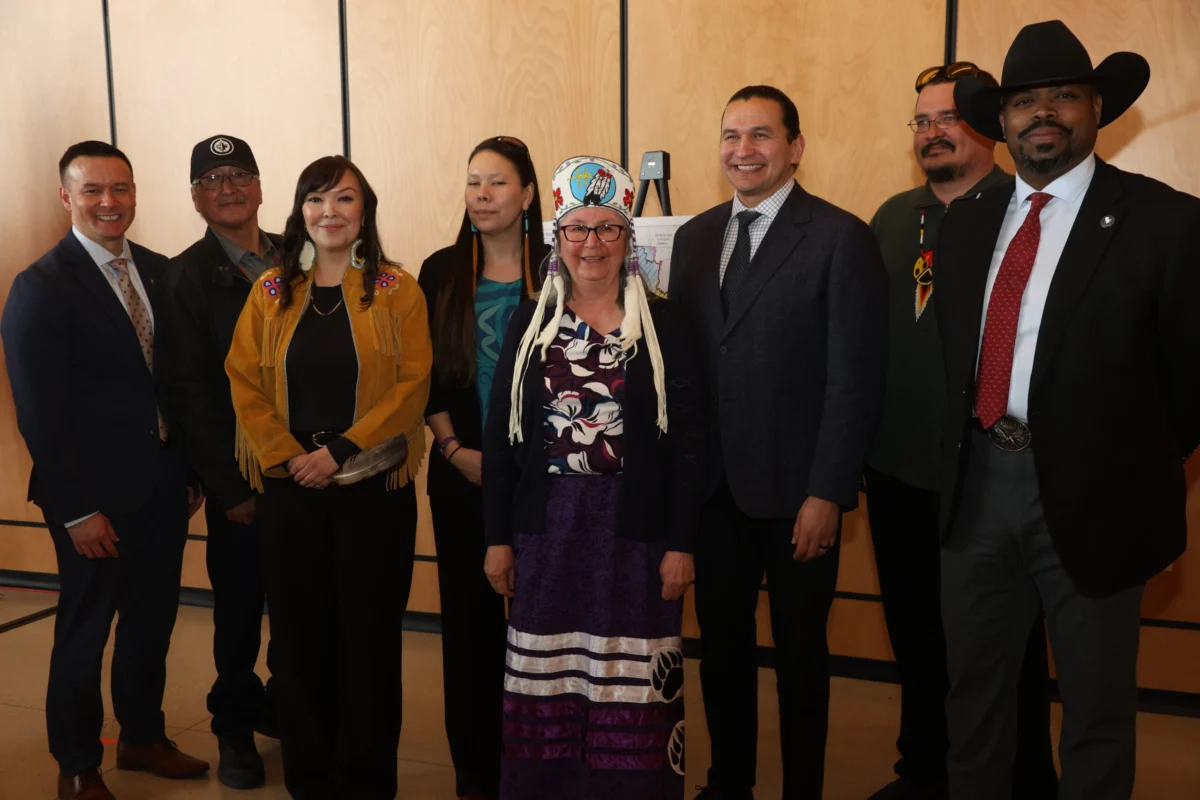
On April 17, 2026, a monumental step towards global conservation and Indigenous reconciliation was announced as the Seal River Watershed Alliance, the Manitoba government, and the Government of Canada jointly released a proposal to designate one of Earth’s largest remaining intact watersheds as an Indigenous Protected and Conserved Area (IPCA). This historic initiative seeks to permanently safeguard a vast 12-million-acre expanse of biodiversity-rich habitat in northern Manitoba, Canada, setting a new benchmark for collaborative conservation efforts. The National Audubon Society, a prominent advocate for bird conservation, immediately lauded the development, recognizing the pivotal role of the four First Nations leading this effort through the Seal River Watershed Alliance.
Understanding the Joint Proposal: A New Era of Conservation
The core of this groundbreaking agreement lies in its multi-layered protection strategy, envisioning the establishment of an Indigenous Protected and Conserved Area that will encompass both a provincial park and a national park. This innovative structure ensures a collaborative co-management framework involving the four First Nations – the Sayisi Dene First Nation, Northlands Denesuline First Nation, Barren Lands First Nation, and O-Pipon-Na-Piwin Cree Nation – alongside the Manitoba government and Parks Canada. This approach not only provides robust environmental safeguards but also affirms Indigenous rights and traditional stewardship, ensuring that the land remains accessible for cultural practices, sustainable livelihoods, and the enjoyment of all Canadians.
An Indigenous Protected and Conserved Area (IPCA) is a designation championed by Indigenous peoples that reflects their inherent rights and responsibilities to their lands, waters, and ice. IPCAs are areas where Indigenous governments have the primary role in protecting and conserving ecosystems through Indigenous laws, governance, and knowledge systems. They are typically established in collaboration with federal, provincial, or territorial governments, emphasizing a partnership approach that respects Indigenous self-determination while contributing to broader national and international conservation goals. The Seal River Watershed IPCA is poised to become a flagship example of this model, demonstrating how traditional ecological knowledge, combined with modern conservation science, can lead to effective and equitable outcomes.
The Heart of the Land: Ecological Riches of the Seal River Watershed
The Seal River Watershed, often described as one of the largest ecologically intact watersheds globally, is a testament to untamed wilderness. Its 12-million-acre footprint is roughly equivalent to the size of Switzerland or Nova Scotia, making it an area of immense ecological significance on a planetary scale. This vibrant landscape comprises an intricate mosaic of boreal forests, expansive wetlands, pristine lakes, and a network of streams and rivers that flow uninterrupted for over 200 miles before emptying into Hudson Bay.
The river itself, uniquely undammed throughout its entire length, is a rare marvel. This absence of human-made barriers allows anadromous species, most notably harbor seals, to travel far inland, giving the river its evocative name. The ecological integrity fostered by this free-flowing system supports an extraordinary level of biodiversity, including a remarkable 32 species currently designated as at-risk. Among these are iconic Arctic and sub-Arctic species such as the majestic polar bears, elusive wolverines, and the vocally expressive beluga whales that frequent the Hudson Bay estuary. Beyond these marquee species, the watershed provides crucial habitat for vast herds of barren-ground caribou, moose, wolves, Arctic foxes, and numerous furbearers.
However, the watershed’s most celebrated inhabitants are arguably its avian populations. Marshall Johnson, chief conservation officer at the National Audubon Society, emphasized this point, stating, “The Seal River Watershed is one of the largest ecologically intact watersheds in the world, sustaining extraordinary biodiversity and providing critical habitat for roughly 22 million birds.” This staggering number underscores its importance as a critical breeding ground and migratory stop-over location for hundreds of bird species. Millions of birds undertake epic journeys to and from the watershed each year, connecting it directly to ecosystems across the U.S. and throughout the entire Western Hemisphere. Species such as shorebirds (e.g., Semipalmated Sandpipers, Red-necked Phalaropes), waterfowl (e.g., Tundra Swans, Greater White-fronted Geese), raptors (e.g., Rough-legged Hawks, Peregrine Falcons), and a multitude of songbirds rely on the rich resources and undisturbed nature of the Seal River Watershed to fuel their migrations and raise their young. Its inclusion in major North American flyways makes its protection a continental imperative.
Furthermore, the region’s vast peatlands and permafrost areas act as significant carbon sinks, playing a vital role in global climate regulation. Protecting these ecosystems is not just about biodiversity; it’s also a critical strategy in the fight against climate change, ensuring the long-term sequestration of vast amounts of carbon and contributing to global climate resilience.
A Model for Conservation: Layers of Protection
The "common-sense approach" outlined in the proposal, as praised by Audubon, creates a robust framework through its three layers of protection. An IPCA at the highest level, an Indigenous-led designation, provides the overarching framework for management, governance, and cultural stewardship. Within this, the establishment of a provincial park by the Manitoba government ensures protection under provincial legislation, typically focusing on ecological integrity, recreation, and education. Concurrently, the creation of a national park, managed by Parks Canada, brings the highest level of federal protection, often with a focus on national significance, scientific research, and regulated visitor experiences.
This unique stacking of designations offers several advantages. It leverages the strengths of each level of government and Indigenous governance, creating a comprehensive and resilient protective umbrella. The co-management model ensures that decisions are made with the input and leadership of the First Nations, whose traditional knowledge and deep connection to the land are invaluable. This collaborative process is designed to balance conservation imperatives with the needs and aspirations of local communities, ensuring sustainable access and benefits. It also provides a diverse range of funding avenues and expertise, strengthening the long-term viability of the protected area.
Voices of Leadership and Support
The release of the joint proposal has garnered significant support from various stakeholders, reflecting a broad consensus on the importance of this initiative.
From Indigenous Leadership: Leaders of the Seal River Watershed Alliance have consistently articulated a vision rooted in intergenerational responsibility and cultural preservation. While specific quotes from this announcement are not provided in the source, it can be logically inferred that they would emphasize the deep spiritual and cultural connection their peoples have to the Seal River Watershed, dating back millennia. They would likely highlight the opportunity to exercise self-determination in land management, ensuring that traditional practices and knowledge continue to guide conservation efforts. This initiative represents not just environmental protection but also a pathway to renewed cultural vitality, economic development opportunities through sustainable tourism and research, and healing for their communities.
From Conservation Organizations: Marshall Johnson’s statement from the National Audubon Society encapsulates the enthusiasm from the broader conservation community: “We are proud to support this Indigenous-led effort and recognize this as a pivotal moment for Canadians to protect a globally significant landscape—one that will deliver lasting benefits for wildlife, communities, and the planet.” This sentiment is likely echoed by other major environmental groups, such as WWF-Canada and the Canadian Parks and Wilderness Society (CPAWS), who have long advocated for large-scale protection in Canada’s North. They would underscore the global significance of intact ecosystems, the critical role of Indigenous leadership in achieving conservation targets, and the model this project sets for future initiatives worldwide.
From Government: The participation of the Manitoba government and the Government of Canada signals a strong commitment from both levels of jurisdiction. The Manitoba government would likely highlight its dedication to provincial conservation goals, its collaborative spirit in working with First Nations, and the potential for eco-tourism and research to benefit northern communities. For the Government of Canada, this initiative aligns perfectly with its commitments to reconciliation with Indigenous peoples, its ambitious target of protecting 30% of its land and waters by 2030 (the "30×30" target), and its international climate change obligations. Ministers would likely praise the collaborative spirit and the innovative co-management model as a blueprint for future protected areas.
A Journey Towards Protection: Chronology and Next Steps
While the original text focuses on the announcement date, the journey to this joint proposal has been a multi-year effort built on dialogue, research, and community engagement.
- Early 2010s: The concept of protecting the Seal River Watershed gained momentum among the four First Nations, recognizing the increasing pressures on northern ecosystems and the importance of safeguarding their traditional territories. Initial discussions began within and among the communities to coalesce around a shared vision.
- Mid-2010s: The Seal River Watershed Alliance formally emerged, uniting the four First Nations in their advocacy for a large-scale Indigenous-led conservation initiative. This period involved extensive community consultations to gather input and build consensus on the scope and governance of a potential protected area.
- Late 2010s: The Alliance engaged with scientific experts to conduct ecological assessments, mapping biodiversity hotspots and documenting the region’s unique natural features. These studies provided critical data to support the conservation proposal. Simultaneously, preliminary discussions commenced with the provincial and federal governments, laying the groundwork for a partnership.
- Early 2020s: Formal negotiations intensified between the Seal River Watershed Alliance, the Manitoba government, and the Government of Canada. These discussions focused on establishing the governance structure, legal mechanisms for protection, and the co-management framework that forms the basis of the current proposal. This period also likely involved seeking funding commitments and outlining implementation strategies.
- April 17, 2026: The joint proposal is officially released, marking a significant milestone and transitioning the initiative into a public phase.
The release of this joint proposal is not the final step but a crucial pivot. The next phase will likely involve:
- Public Consultation: Extensive public engagement and consultation processes will be undertaken to gather feedback from all stakeholders, including local communities, industries, and the broader public.
- Formal Designation Process: Based on the proposal and public input, the provincial and federal governments will proceed with the necessary legislative and regulatory steps to formally establish the provincial park and national park components.
- Governance Structure Implementation: The Seal River Watershed Alliance, Manitoba, and Parks Canada will work to establish the operational details of the co-management board, including staffing, funding, and decision-making protocols.
- Long-term Planning: Development of detailed management plans, including monitoring programs, research initiatives, and sustainable tourism strategies, will be crucial for the long-term success of the IPCA.
Broader Implications: Reconciliation, Climate, and Global Conservation
The Seal River Watershed IPCA project carries profound implications far beyond its geographical boundaries.
Reconciliation and Indigenous Rights: This initiative stands as a powerful example of reconciliation in action, demonstrating how Indigenous knowledge and governance can be central to environmental protection. It moves beyond consultation to genuine partnership and co-management, recognizing Indigenous peoples as rightful stewards of their traditional territories. This model can serve as a blueprint for future conservation efforts across Canada and globally, fostering self-determination and strengthening Indigenous communities.
Meeting Conservation Targets: For Canada, this 12-million-acre designation represents a massive leap towards achieving its ambitious "30×30" target – protecting 30% of its land and waters by 2030. Such a large-scale, intact area significantly contributes to Canada’s international biodiversity commitments and positions the country as a leader in global conservation.
Climate Change Mitigation and Adaptation: The protection of the Seal River Watershed, with its vast peatlands and intact ecosystems, is a critical climate solution. These areas sequester immense amounts of carbon, preventing its release into the atmosphere. Moreover, intact ecosystems are more resilient to the impacts of climate change, providing natural buffers against extreme weather events and supporting biodiversity adaptation. This IPCA will contribute directly to global efforts to mitigate climate change and build ecological resilience.
Economic Opportunities: While primarily a conservation initiative, the IPCA is expected to generate sustainable economic opportunities for the First Nations communities. These could include jobs in park management, scientific research, cultural tourism, and guiding services, all developed in a manner consistent with conservation principles and Indigenous values.
In conclusion, the joint proposal to establish the Seal River Watershed Indigenous Protected and Conserved Area marks a pivotal moment in Canadian history and a significant contribution to global conservation. It is a testament to the power of collaboration, reconciliation, and a shared vision for a healthy planet, ensuring that this irreplaceable wilderness will thrive for generations to come.
