
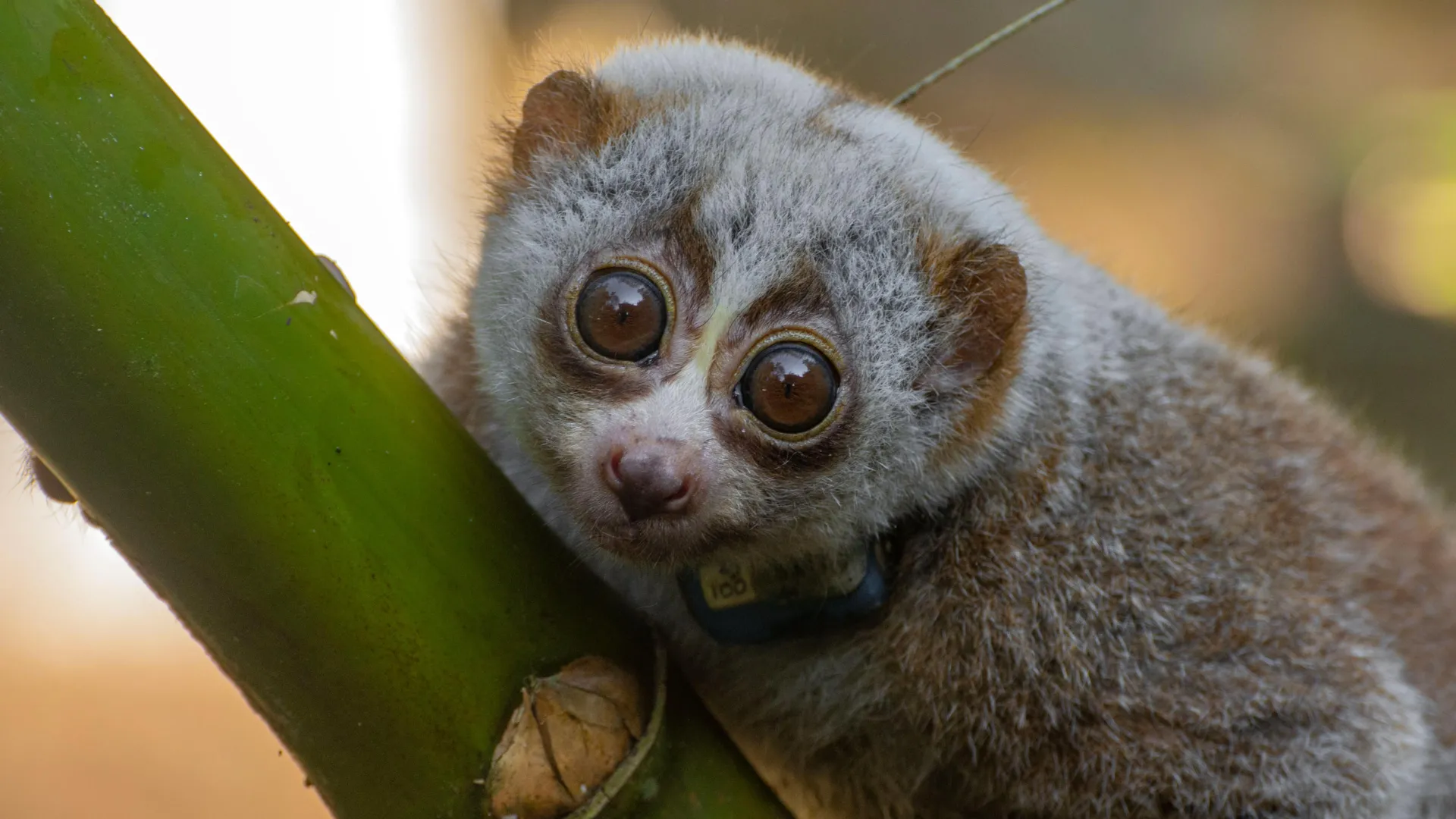
A groundbreaking new scientific study suggests that the well-intentioned act of returning rescued wildlife to their natural habitats does not invariably culminate in success. For certain species, animals released after periods in human care can confront severe perils, transforming the wild into what researchers chillingly describe as a "death trap." This critical re-evaluation of conservation practices highlights the complex challenges inherent in reintroduction programs, particularly for vulnerable species like the slow loris.
The compelling findings of this research have been published in the esteemed journal Global Ecology and Conservation. The collaborative investigation was spearheaded by the eminent primatologist Professor Anna Nekaris OBE of Anglia Ruskin University, working alongside dedicated collaborators from the conservation group Plumploris e.V. and the University of Western Australia. Their meticulous work focused on meticulously tracking the post-release destinies of Bengal slow lorises (Nycticebus bengalensis) in Bangladesh, revealing a sobering reality.
The Plight of the Slow Loris: A Species Under Siege
Slow lorises, renowned for their strikingly large, dark eyes and seemingly gentle countenances, possess features that have, tragically, rendered them highly coveted within the illicit wildlife trade. This unfortunate demand places them among the most heavily trafficked primates globally, driving countless individuals into brutal captivity. Their unique appearance, often described as "cute" or "cuddly," masks a complex and often misunderstood biology, making them particularly ill-suited for the pet trade.
All species of slow loris are afforded protection under various international and national conservation statutes. The International Union for Conservation of Nature (IUCN) Red List categorizes them across a spectrum from Critically Endangered to Vulnerable, reflecting their precarious existence. The Bengal slow loris (Nycticebus bengalensis), the specific focus of this study, is currently classified as Endangered. This critical conservation status frequently leads to their rescue from illegal trade operations, with subsequent release into wild populations often seen as a cornerstone of rehabilitation and population recovery efforts. However, the new research profoundly challenges the efficacy and wisdom of such blanket approaches.
The illegal wildlife trade is a multi-billion dollar industry, ranking as one of the largest transnational organized crimes alongside drug, arms, and human trafficking. Slow lorises are primarily trafficked for the exotic pet market, traditional medicine (despite no scientific basis for its efficacy), and as tourist photo props, where their teeth are often cruelly clipped to prevent venomous bites, leading to infection and suffering. These animals endure immense stress, poor nutrition, and disease during capture and transport, with many perishing before even reaching their intended buyers. Those that survive often arrive in appalling condition, prompting rescue interventions by dedicated conservationists and law enforcement agencies.
The Study: Methodology and Stark Findings in Bangladesh
Despite the laudable intentions behind these rescue and release initiatives, the recent research starkly demonstrates that such programs can, regrettably, culminate in tragic outcomes. To ascertain the fate of released slow lorises, the scientific team meticulously fitted nine Bengal slow lorises with sophisticated radio collars. These devices allowed researchers to continuously monitor their movements and activities following their release into a national park situated in northeastern Bangladesh. This particular park had historically been utilized for previous wildlife reintroductions, suggesting it was considered a suitable habitat. The study period encompassed several months, allowing for long-term observation of the animals’ adaptation and survival strategies.
The results gleaned from this intensive monitoring period were unequivocal and profoundly concerning. A mere two of the nine released animals managed to survive their reintroduction to the forest environment. The mortality rate was alarmingly swift for a significant portion of the cohort: three individuals perished within a mere 10 days of their release. An additional four succumbed within six months, bringing the total number of fatalities to seven out of nine. This represents an exceptionally high mortality rate, far exceeding expectations for successful reintroduction programs.
In an effort to understand the causes of death, researchers successfully recovered the carcasses of four of the seven deceased lorises. A grim pattern emerged from the necropsies: all recovered bodies displayed clear and undeniable evidence of having been killed by other slow lorises. This finding pointed directly to inter-specific conflict as the primary cause of death, challenging previous assumptions about post-release survival.
Unpacking the "Death Trap": Territorial Conflicts and Venomous Bites
The findings underscore a crucial, yet often overlooked, aspect of slow loris biology: their extreme territoriality. Slow lorises are solitary, nocturnal primates, fiercely defending their established home ranges against intruders. This behavior is compounded by another unique characteristic: they are the only known venomous primates in the world. Their venom is produced by a gland on their brachial arm, which they lick to mix with saliva, delivering a potent and painful bite through specialized comb-like teeth. This venom can cause anaphylactic shock in humans and severe tissue damage, even death, in other animals.
The recovered animals bore unmistakable bite wounds, predominantly located on the head, face, and digits—areas consistent with defensive and territorial combat. These injuries strongly indicated that the fatal encounters were a direct result of deadly territorial confrontations with resident slow loris populations already established within the release site. The newly introduced animals, likely disoriented and lacking established territories, were perceived as threats by the existing wild population, leading to aggressive and often fatal clashes.
Further insights from the study revealed a correlation between the duration of captivity and post-release survival. Animals that had endured longer periods in human care tended to survive for fewer days after their release. This suggests that prolonged captivity might diminish their natural survival instincts, territorial awareness, or ability to navigate complex social dynamics in the wild. Additionally, the released lorises exhibited heightened activity levels, moving across larger areas, and appeared more alert than their wild counterparts typically do. This could be interpreted as a frantic search for unoccupied territory or an elevated stress response to an unfamiliar and hostile environment.
Intriguingly, the two animals that defied the odds and survived were observed to have traveled across significantly larger areas compared to those that perished. This behavioral pattern strongly implies that their survival hinged on their capacity to traverse vast distances, effectively leaving densely populated, established territories and thereby avoiding direct, potentially fatal confrontations with resident slow lorises. Their extensive movements likely represented a desperate and ultimately successful search for suitable, unoccupied niches.
Broader Implications for Wildlife Releases: Beyond the Slow Loris
The findings of this study resonate far beyond the specific case of the Bengal slow loris, offering critical lessons for wildlife conservation efforts globally. While large and charismatic animals, such as big cats (tigers, lions, leopards) or rhinos, typically benefit from intensive post-release monitoring regimes—often involving satellite collars, dedicated tracking teams, and extensive veterinary support—many smaller species do not receive comparable attention. The sheer cost and logistical complexity of such intensive monitoring mean that for numerous smaller, less charismatic species, the actual outcomes of their releases frequently remain unknown. This knowledge gap creates a dangerous blind spot in conservation, where well-intentioned actions may inadvertently lead to unintended negative consequences.
The researchers emphatically stress that truly successful wildlife releases necessitate meticulous planning, underpinned by robust scientific understanding. This includes a comprehensive evaluation of the suitability of the proposed release site, considering factors such as existing population densities, resource availability, and potential threats. Equally crucial is a thorough assessment of the condition and readiness of each individual animal slated for release, taking into account their physical health, behavioral competency, and duration of captivity. Detailed habitat assessments, coupled with long-term, systematic monitoring of released individuals, are indispensable for gauging success and making necessary adjustments. Furthermore, the development and implementation of species-specific rehabilitation guidelines, tailored to the unique ecological and behavioral requirements of each animal, are paramount to significantly improve their chances of survival and successful reintegration into the wild.
Expert Perspectives and Calls for Reform
Professor Anna Nekaris OBE, the senior author of the study and Professor of Ecology, Conservation and Environment at Anglia Ruskin University in Cambridge, England, also heads the renowned Little Fireface Project, a leading slow loris conservation initiative. Professor Nekaris articulated the prevailing misconception: "It’s assumed that returning confiscated or rescued animals to the wild is always a positive conservation story. Our research shows that for highly territorial species like slow lorises, releasing them into areas that are already densely populated can be a death trap."
She continued, emphasizing the ethical dilemma and public pressure often driving these releases: "Many rescued endangered species are often released because the public expects it, but for animals such as the Bengal slow loris, this is not always the best course of action. Without fully understanding the animal’s behaviour, its time spent in captivity and the density of resident populations at the release site, reintroductions may do more harm than good." Her statement underscores the urgent need for a paradigm shift from emotionally driven releases to evidence-based conservation strategies.
Hassan Al-Razi, the lead author of the study and the team leader of Plumploris e.V. Bangladesh, provided critical context from the ground: "Rescue and release have become an increasingly common practice in Bangladesh. Many wild animals, including slow lorises, are rescued and subsequently released back into the wild." Al-Razi highlighted a systemic issue: "However, in many cases, these releases are conducted inappropriately. For forest-dwelling species, release sites are often selected based on logistical convenience rather than ecological suitability. As a result, certain forests have effectively become dumping grounds for rescued animals and are no longer appropriate release sites." This blunt assessment paints a picture of overwhelmed systems and a lack of resources and expertise, leading to a detrimental cycle for the animals involved.
Al-Razi concluded with a cautionary note about the broader applicability of their findings: "Although our research has focused on the Bengal slow loris and demonstrated the consequences of such practices, we believe similar patterns likely affect many other species." This implies that the problem is not isolated to slow lorises but may be a widespread, unacknowledged issue impacting numerous other territorial, captive-bred, or rehabilitated species across various ecosystems.
A Global Challenge: Rethinking Conservation Strategies
The revelations from this study call for a profound re-evaluation of current wildlife rescue and release protocols, particularly in regions where such activities are frequent but often lack scientific rigor. The implications are far-reaching, affecting policy-makers, conservation organizations, wildlife rehabilitation centers, and even the general public who support these efforts.
- Policy and Guidelines: There is an urgent need for national and international bodies to develop and enforce stricter, scientifically informed guidelines for wildlife releases. These guidelines must mandate comprehensive pre-release assessments, habitat suitability analyses, and post-release monitoring, moving beyond mere logistical convenience.
- Capacity Building: Many regions, particularly in developing countries, lack the resources, trained personnel, and infrastructure to conduct effective, evidence-based release programs. Investment in capacity building, including training for wildlife veterinarians, ecologists, and park rangers, is crucial.
- Public Education: The public plays a significant role in supporting wildlife rescue. Education campaigns can help manage expectations, explaining that release is not always the best outcome and that ethical euthanasia or long-term sanctuary care might sometimes be more humane alternatives than a high-risk release.
- Rethinking Rehabilitation: For highly territorial species, rehabilitation programs may need to incorporate extensive behavioral conditioning to prepare animals for the rigors of establishing a territory and avoiding conflict. This could include controlled exposure to wild environments or mock territorial encounters.
- Ethical Considerations: The study raises profound ethical questions about animal welfare. Is it more ethical to risk a high probability of a brutal death in the wild, or to provide safe, long-term sanctuary care for animals that may not be suitable for release? This dilemma requires careful, species-specific consideration.
In conclusion, while the impulse to return rescued animals to their natural homes is noble, this critical research on Bengal slow lorises serves as a stark reminder that good intentions alone are insufficient. Effective conservation demands rigorous science, meticulous planning, and a deep understanding of species-specific ecology and behavior. Only then can we ensure that our efforts truly contribute to the survival and welfare of endangered wildlife, rather than inadvertently leading them into a "death trap." The path forward requires a global commitment to evidence-based conservation, ensuring that every release is a genuine step towards recovery, not a gamble with an animal’s life.
