
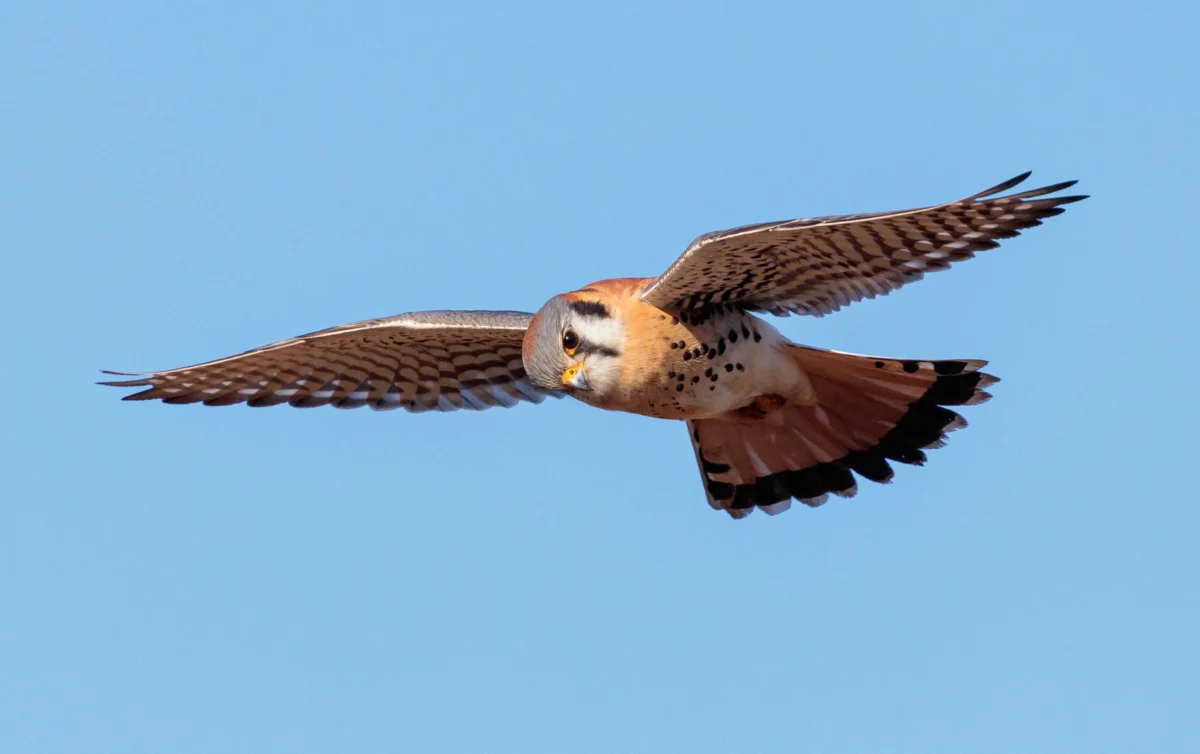
The Audubon Center for Birds of Prey in Maitland, Florida, officially joined a global network dedicated to tracking avian migration in early April 2026, recording its first radio-tagged visitor: an American Kestrel. This significant event occurred on April 3, when the station detected the distinctive “ping” of the small falcon, marking a new chapter in the Center’s commitment to avian conservation and research. The installation of the Motus station in January 2026 positioned the Audubon Center as a vital node in an international collaborative research network, providing unprecedented insights into the migratory patterns of birds and other small animals.
The Motus Network: A Global Eye on Migration
Motus, an initiative spearheaded by Birds Canada in partnership with organizations like Audubon, stands as a sophisticated international collaborative research network. Its core function revolves around the deployment of automated radio telemetry to monitor the movements and behaviors of various small animals, including birds, bats, and even large insects. The technology relies on miniature, lightweight radio transmitters, often weighing less than a gram, attached harmlessly to individual animals. These tags emit unique, low-power radio signals at regular intervals. A network of strategically placed receiver stations, equipped with specialized antennas, continuously scans the airwaves, automatically detecting and recording these signals whenever a tagged animal passes within their operational range, typically up to seven miles (approximately 11 kilometers) depending on terrain and tag power.
Established in 2014, the Motus network has rapidly expanded, boasting thousands of receiver stations across more than 30 countries, primarily concentrated in North and South America, as well as parts of Europe and the Caribbean. This expansive infrastructure allows researchers to track individual animals across vast geographical distances, from their breeding grounds to their wintering sites and along their complex migratory routes. The data collected by Motus stations is centralized in a publicly accessible database, facilitating broad scientific inquiry and fostering collaboration among researchers worldwide. This collective approach allows for a far more comprehensive understanding of migratory ecology than could be achieved by isolated research efforts, offering critical insights into population dynamics, habitat use, and the specific challenges faced by migratory species. Florida, a critical corridor for countless migratory birds, is home to approximately three dozen Motus stations, including one at Audubon’s Corkscrew Swamp Sanctuary in Naples, underscoring the state’s importance in global migratory pathways.
A Pioneering Ping: The American Kestrel’s Journey
The inaugural detection at the Audubon Center for Birds of Prey was made by an adult male American Kestrel (Falco sparverius), the smallest falcon species indigenous to North America. This particular individual carries a history of scientific observation, having been radio-tagged in July 2024. The tagging was part of a dedicated research project titled "American Kestrel Massachusetts," a collaborative endeavor led by the Massachusetts Division of Fisheries and Wildlife and Mass Audubon. This long-term study aims to unravel the intricacies of kestrel migration, understand their habitat requirements, and identify factors contributing to their documented population declines.
The detection of this specific kestrel at the Maitland station on April 3, 2026, was not merely a technological triumph but a significant data point within its individual life history. Prior Motus data had already revealed the kestrel’s consistent migratory pattern, traveling annually up and down the East Coast, traversing the considerable distance between its presumed breeding grounds in Massachusetts and its wintering territories in Florida. The ping at the Audubon Center now adds a precise waypoint to its 2026 spring migration journey, providing valuable, real-time information on its northward movement.
Unraveling a Migratory Enigma: The Kestrel’s Known Trajectory
Analysis of the comprehensive Motus dataset for this individual kestrel paints a detailed picture of its previous migratory behaviors. In both the 2024-25 and 2025-26 migration cycles, the kestrel’s southernmost recorded location consistently placed it at the Hobe Sound National Wildlife Refuge in Martin County, situated on Florida’s southeastern coast. Its last recorded movement at this specific refuge was noted on October 11, 2025, indicating its presence there as it settled into its wintering routine.
However, a intriguing gap in the data highlights one of the persistent mysteries in migratory bird research. Following its last detection at Hobe Sound in October 2025, the kestrel’s signal was not picked up by any other Motus station from October through April 2026. While there are several Motus stations located further south of Hobe Sound, including in the Florida Keys, Cuba, the Cayman Islands, and Mexico, none registered the kestrel’s tracker during this period. This absence of detection suggests that the bird either spent its winter in an area devoid of Motus coverage, or its movements remained entirely within the range of its last known station at Hobe Sound until it began its northward journey. The new station at the Audubon Center for Birds of Prey has now provided the crucial missing piece of information, confirming that the kestrel initiated its spring migration journey in April 2026, breaking its long silence and signaling its renewed movement. As of its detection at Maitland, the kestrel has not yet been picked up by another station further north, meaning its onward journey continues to be monitored with anticipation by researchers.
The Audubon Center’s New Role in Avian Conservation
The Audubon Center for Birds of Prey, renowned for its bird rehabilitation, education, and conservation efforts, has strategically enhanced its capabilities by integrating into the Motus network. The decision to install a Motus station aligns perfectly with the Center’s long-standing mission to protect Florida’s native birds of prey and their habitats. For decades, the Center has served as a critical resource, providing medical care to injured and orphaned raptors, conducting public outreach programs, and engaging in habitat restoration initiatives. The addition of the Motus station represents a significant leap forward in its scientific research capacity, allowing the Center to contribute directly to continental-scale migration studies.
"We are incredibly excited to be part of the Motus network," stated Dr. Sarah Jenkins, Director of Research at the Audubon Center for Birds of Prey. "This technology provides us with an unprecedented window into the lives of migratory birds, allowing us to track their journeys with a level of detail previously unimaginable. The detection of our first kestrel is not just a scientific milestone for our station, but a testament to the power of collaborative conservation." The station will serve as a permanent fixture, continuously listening for passing tagged animals, contributing invaluable data that will help scientists understand the timing, routes, and challenges faced by migratory species passing through Central Florida. This data will be instrumental in informing future conservation strategies and land management decisions within the region.
The Plight of the American Kestrel: A Call for Conservation
The American Kestrel, while charismatic and widespread, is a species facing significant conservation challenges across its range. Classified as a State-designated Threatened species in Florida and several other states, the kestrel has experienced documented population declines in recent decades. Studies by organizations like the North American Breeding Bird Survey indicate a continent-wide decline of approximately 50% in kestrel populations since the 1960s, making it one of the most rapidly declining raptor species.
Several factors are implicated in this worrying trend. Habitat loss and fragmentation are primary culprits, as agricultural expansion, urbanization, and suburban development encroach upon the open grasslands, pastures, and woodland edges that kestrels rely on for nesting, hunting, and wintering. Kestrels are cavity nesters, often utilizing old woodpecker holes or artificial nest boxes, and the loss of mature trees and suitable dead snags also limits nesting opportunities. Furthermore, widespread use of pesticides in agricultural landscapes can reduce their insect prey base and lead to secondary poisoning through the food chain, impacting their reproductive success and survival. Climate change also presents an emerging threat, potentially altering prey availability, shifting migratory timings, and impacting breeding success. Understanding the precise reasons for these declines and identifying critical habitats is paramount for effective conservation.
Leveraging Data for Targeted Protection
The data garnered from Motus stations, such as the one at the Audubon Center, is not merely academic; it forms the backbone of targeted conservation strategies. By tracking individual kestrels’ migration patterns, scientists can pinpoint exactly which parts of a state or region serve as critical habitat for these birds. This includes identifying crucial stopover sites where birds rest and refuel, key foraging grounds essential for survival, and the precise migratory corridors they utilize.
"Knowing where these birds spend their time, both during migration and in their wintering grounds, is absolutely fundamental to protecting them," explained Dr. Jenkins. "If we can identify a specific patch of habitat that is repeatedly used by multiple kestrels, we can then advocate for its protection, implement land management practices that enhance its value, or work with landowners to ensure its long-term viability. This data allows us to move beyond broad assumptions to highly specific, evidence-based conservation actions." For the American Kestrel in Florida, understanding these critical habitats can inform decisions on land acquisition, habitat restoration projects, and the establishment of protected areas that directly benefit the species. This precision is especially vital for species experiencing significant population pressures, where every piece of information can make a difference in their survival.
A Collaborative Effort: Partners in Science and Conservation
The success of the Motus network and the conservation efforts it supports is inherently a testament to the power of collaboration. The project is a monumental undertaking, requiring the coordinated efforts of numerous organizations, government agencies, academic institutions, and dedicated volunteers. Birds Canada, as the founder and lead organization, provides the overarching framework, technological support, and data management infrastructure. Partners like Audubon contribute significant resources, expertise, and a vast network of sanctuaries and centers that serve as ideal locations for receiver stations.
State wildlife agencies, such as the Massachusetts Division of Fisheries and Wildlife, are crucial for implementing regional tagging projects and managing local conservation initiatives. Universities and research institutions contribute scientific rigor, conduct in-depth data analysis, and train the next generation of conservation biologists. Moreover, the network often relies on the dedication of volunteers who assist with station maintenance, data collection, and public outreach. This multi-faceted partnership ensures that the Motus network continues to expand, collect robust data, and translate scientific findings into tangible conservation outcomes for migratory species across the globe.
The Future of Migration Research and Conservation
The arrival of the American Kestrel at the Audubon Center for Birds of Prey’s new Motus station symbolizes more than just a successful technical deployment; it represents the ongoing evolution of conservation science. As technology advances and the network expands, researchers anticipate even greater resolution in tracking migratory patterns, potentially uncovering previously unknown routes, identifying new critical habitats, and shedding light on how environmental changes are impacting these journeys.
The data gathered through initiatives like Motus will be increasingly vital in the face of escalating threats such as climate change, habitat degradation, and emerging diseases. By providing a clearer understanding of the challenges migratory species face, this research empowers conservationists to develop more effective and proactive strategies. The Audubon Center’s participation not only strengthens the global Motus network but also reinforces its role as a leading institution in avian research and advocacy in Florida. The continuous "pings" from passing birds will contribute to a growing mosaic of information, painting a clearer picture of migration’s intricate dance and guiding humanity’s efforts to protect these remarkable travelers for generations to come. The future of migratory bird conservation hinges on such innovative, collaborative, and data-driven approaches, ensuring that the skies remain filled with the wonder of their annual journeys.
