
The Hawaiian archipelago, often referred to by ecologists as the "extinction capital of the world," remains a critical site for the study of avian evolution and the ongoing struggle between native species and anthropogenic environmental changes. A recent intensive survey across the islands of Oahu, Kauai, and the Big Island has provided a detailed snapshot of the current state of Hawaii’s birdlife, revealing a complex mosaic of endemic honeycreepers, tropical seabirds, and a vast array of introduced species from across the globe. This expedition, conducted through urban landscapes, montane forests, and protected wildlife refuges, highlights both the resilience of Hawaii’s remaining native birds and the significant impact of conservation efforts in high-altitude sanctuaries.
The Urban and Montane Ecology of Oahu
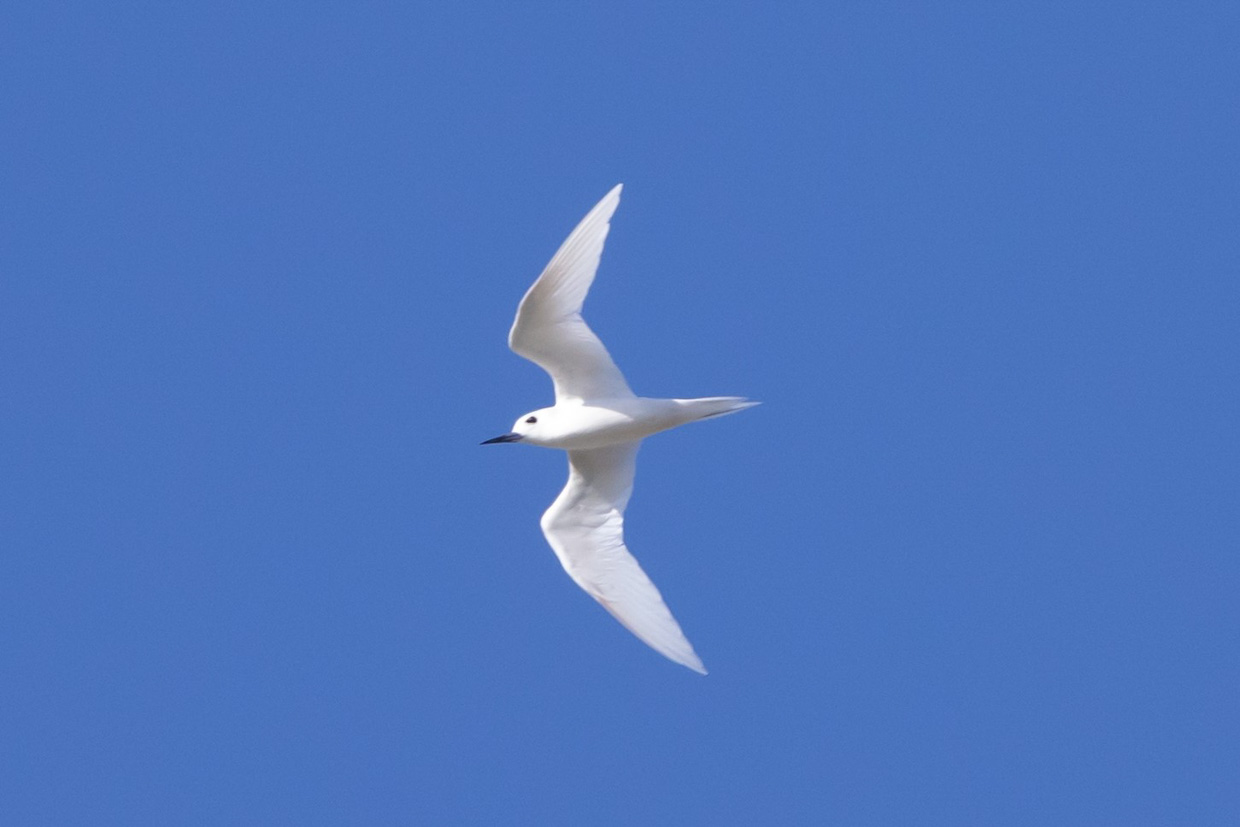
The survey commenced in Honolulu, where the intersection of urban development and tropical ecology is most pronounced. In the heart of the city, observers documented the persistence of the Blue-billed White-Tern (Gygis alba). Unlike many other seabirds that require remote nesting sites, these terns have adapted to the metropolitan environment, utilizing the trees lining Honolulu’s skyscrapers as nesting sites. The presence of juveniles in these urban corridors suggests a stable, if unconventional, breeding population within the city limits.
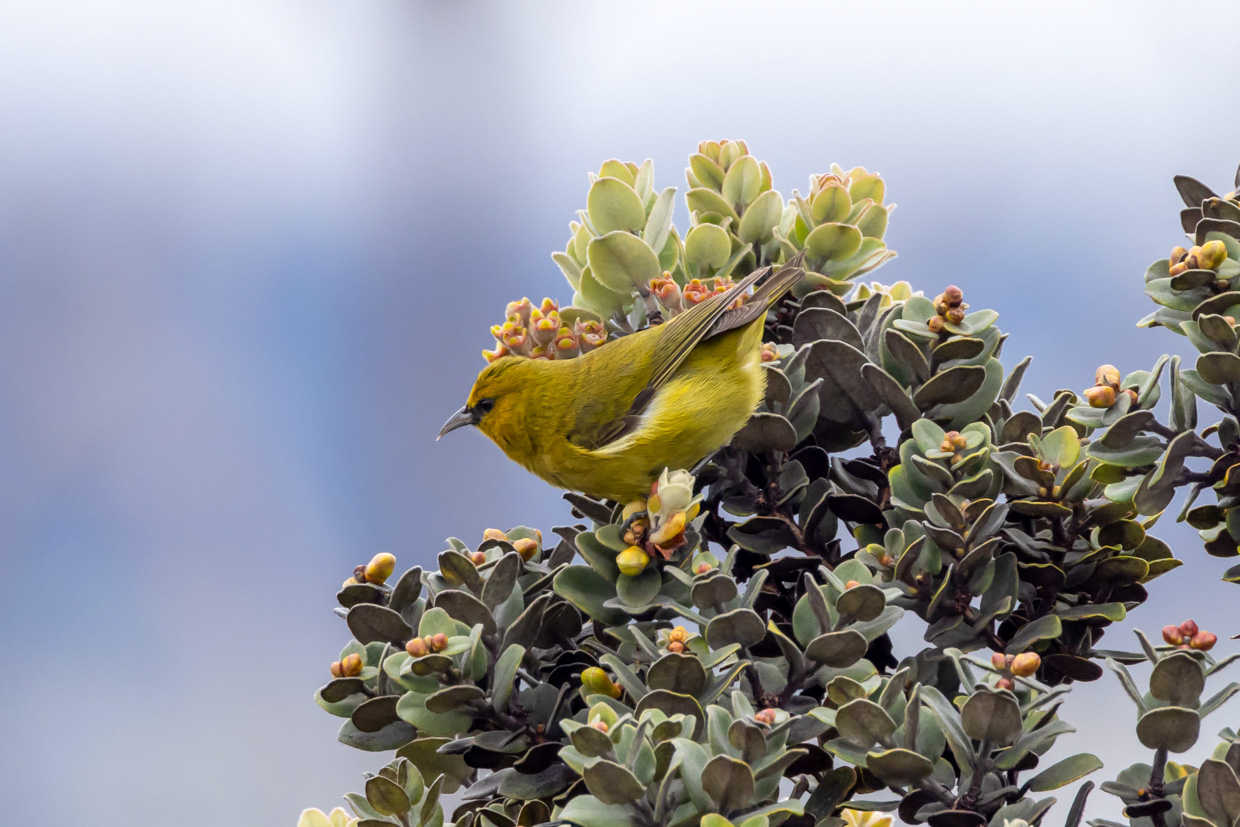
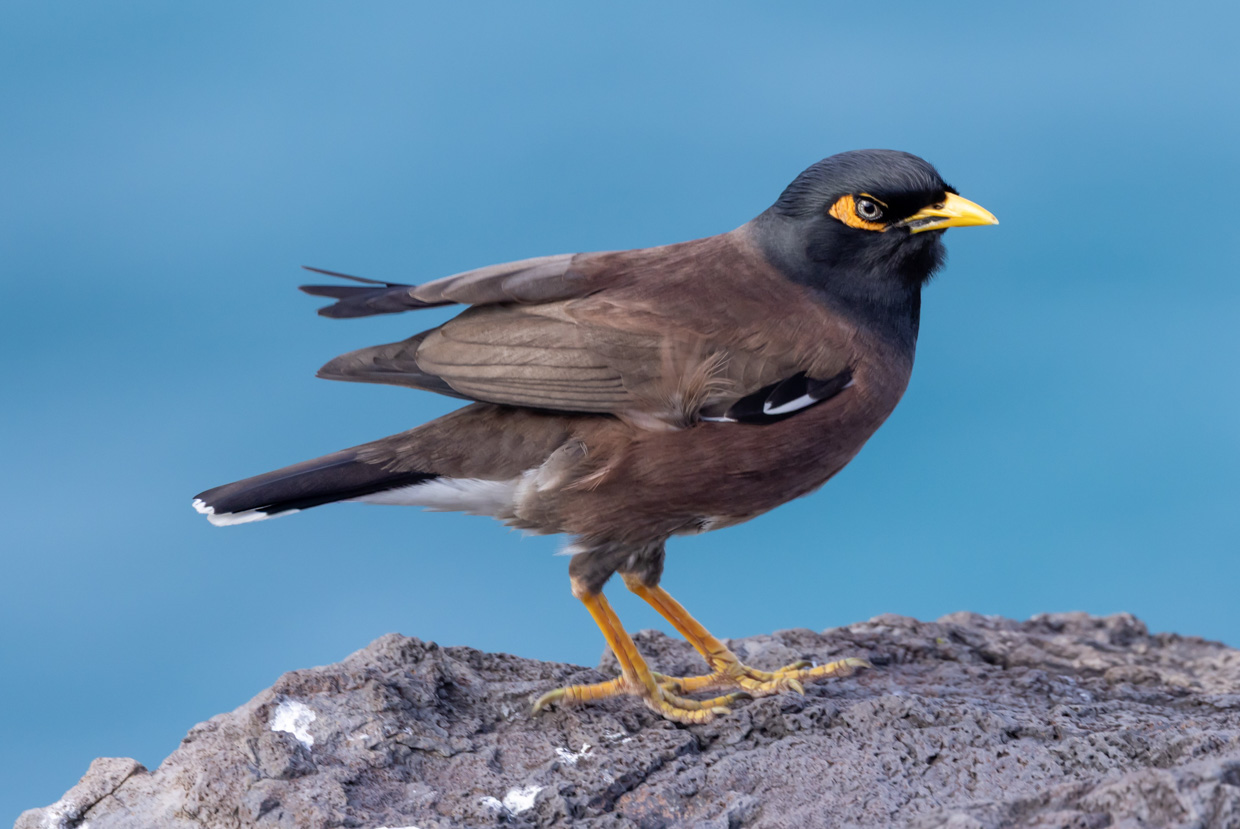
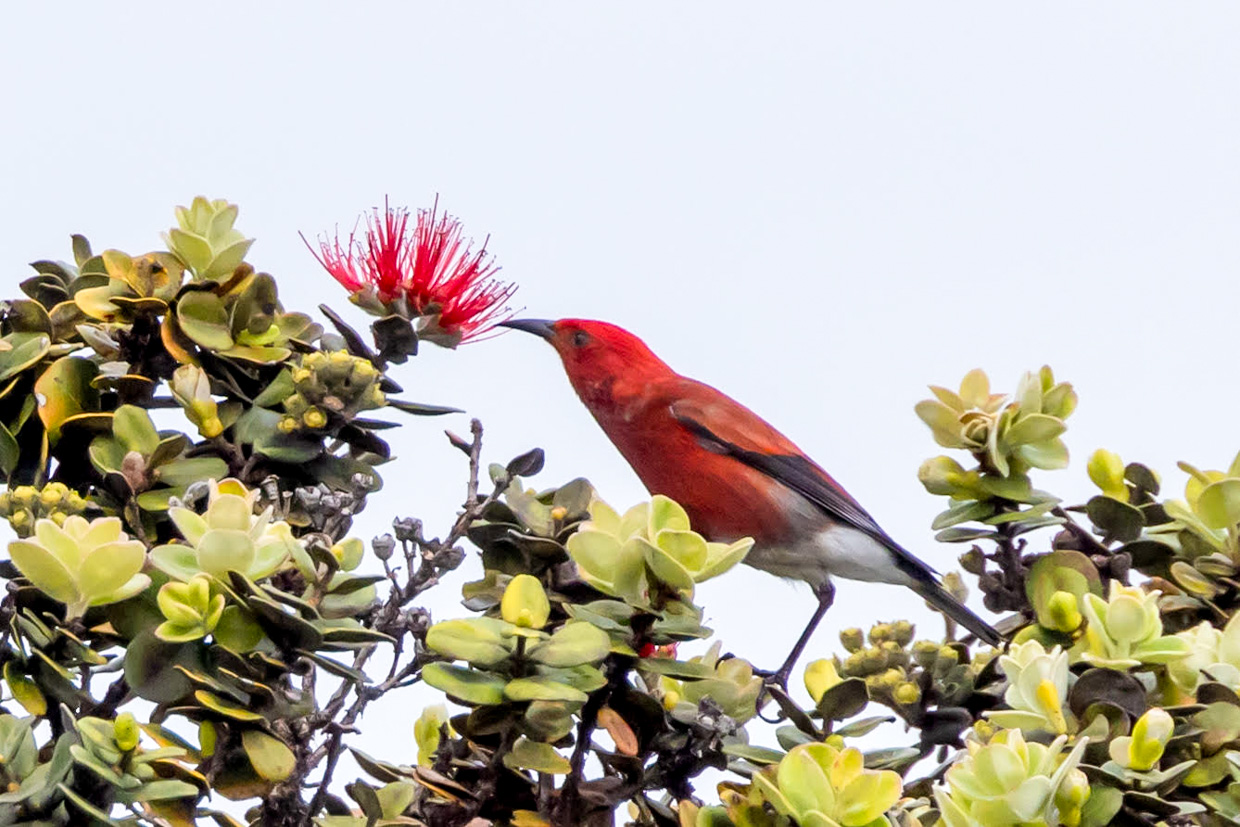
Moving beyond the urban center, the expedition transitioned to the high-country wooded trails above Honolulu. This region serves as a primary example of the "novel ecosystems" prevalent in Hawaii, where native and introduced species coexist. Initial sightings focused on several successful introduced passerines, including the White-rumped Shama, the Warbling White-eye, and the Red-crested Cardinal. However, the primary focus remained the Oahu Amakihi (Chlorodrepanis flava), a resilient species of Hawaiian honeycreeper that has managed to maintain populations in lower elevations where other native birds have succumbed to avian malaria.
The survey of Oahu also included coastal observations. At an oceanside golf course, researchers located the Bristle-thighed Curlew (Numenius tahitiensis), a species of significant conservation concern that migrates from Alaska to winter in the Hawaiian Islands. Further coastal scans revealed a healthy presence of Red-footed and Brown Boobies, as well as the Laysan Albatross. The observation of spouting humpback whales during these coastal surveys underscored the biological richness of the Oahu coastline during the winter months.
Kauai: A Stronghold for Waterbirds and Seabirds
The second phase of the survey took place on Kauai, the oldest of the main Hawaiian Islands. Kauai’s geography provides a diverse range of habitats, from lowland wetlands to the rugged cliffs of the Napali Coast and the deep interior of Waimea Canyon.
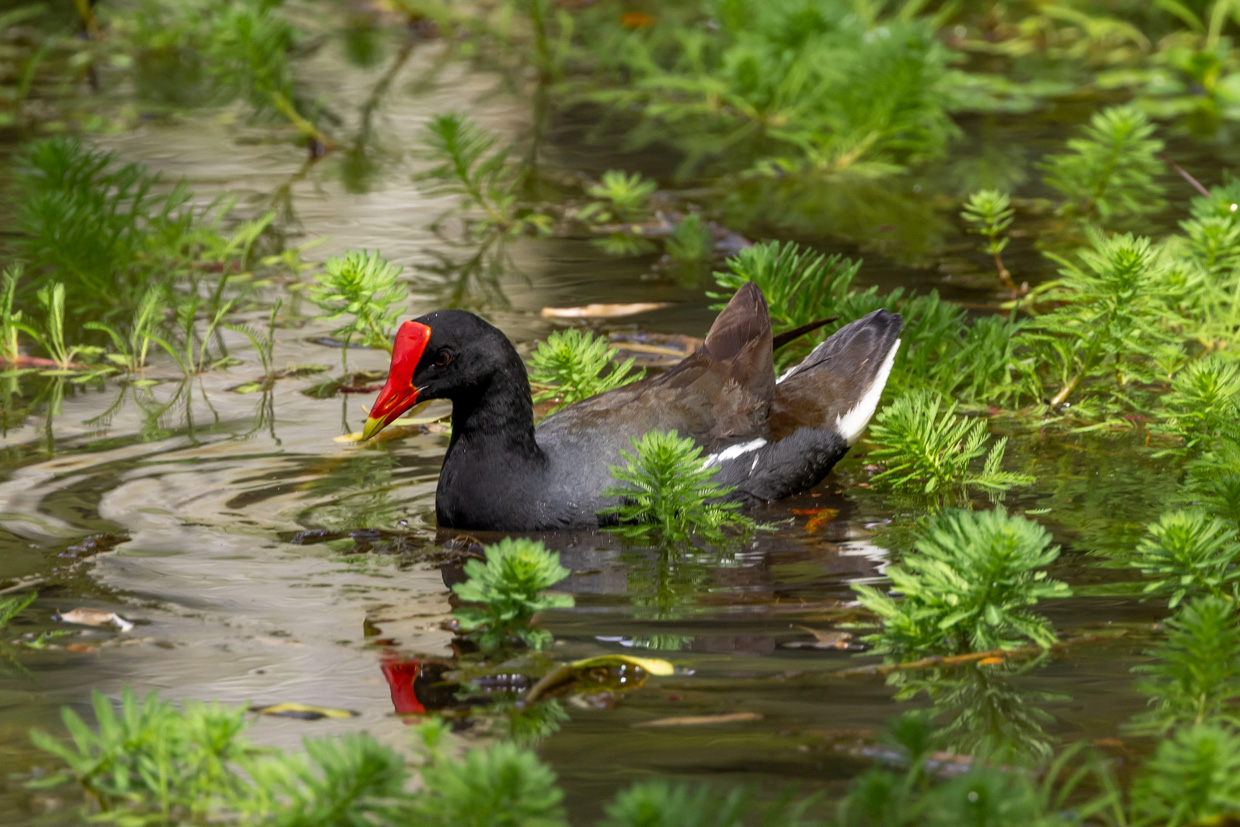
Upon arrival, the team focused on the island’s endemic waterbirds. Hawaii’s wetlands are home to several species that have faced near-extinction in the 20th century. Observations at local water bodies confirmed the presence of the Hawaiian Coot (Fulica alai), the Hawaiian Duck (Anas wyvilliana), and the Hawaiian subspecies of the Common Gallinule. Most notably, the survey recorded the Hawaiian Goose, or Nene (Branta sandvicensis), the state bird of Hawaii. Once reduced to a population of fewer than 30 individuals in the 1950s, the Nene has seen a significant recovery due to intensive captive breeding and predator control programs, though it remains a conservation-reliant species.
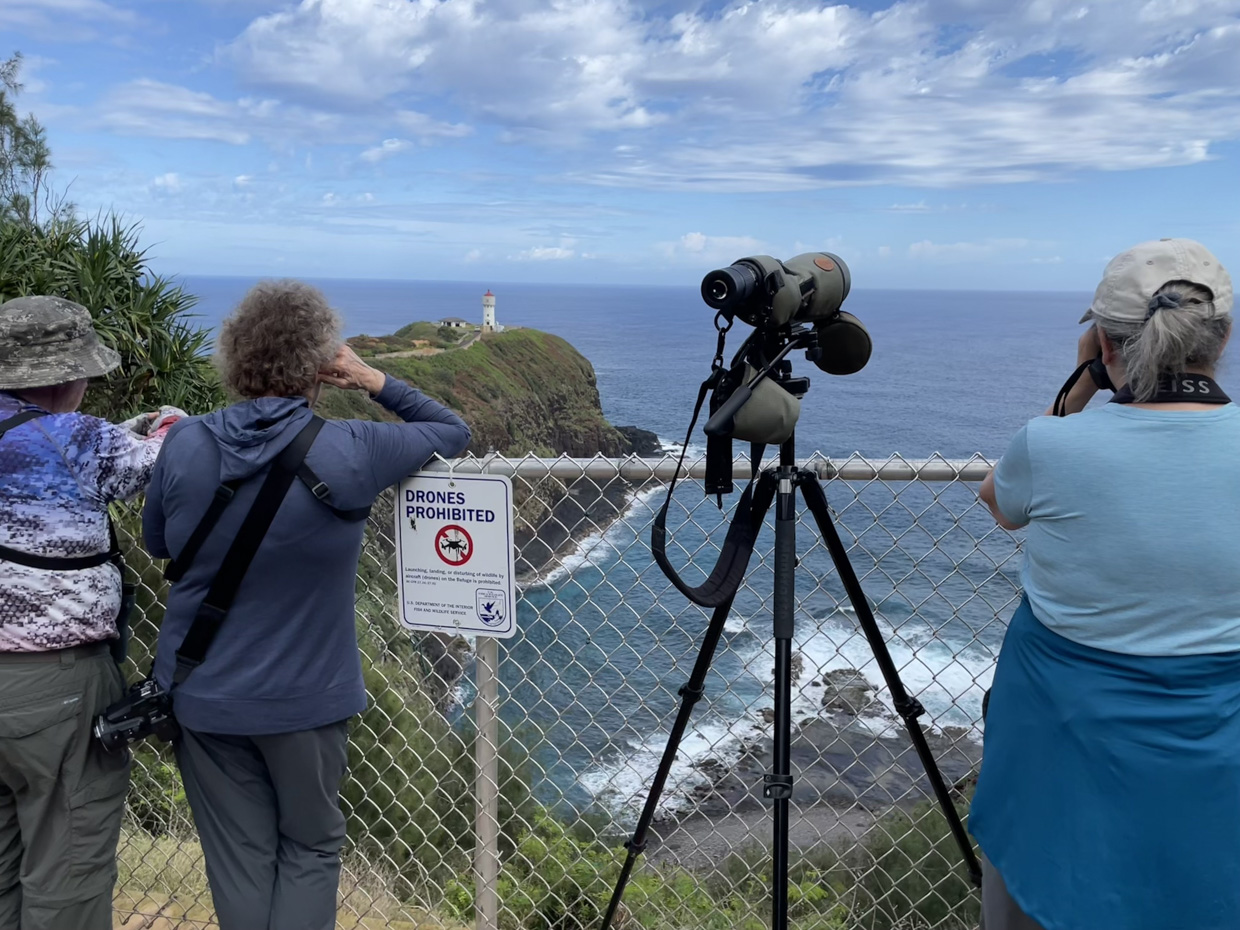
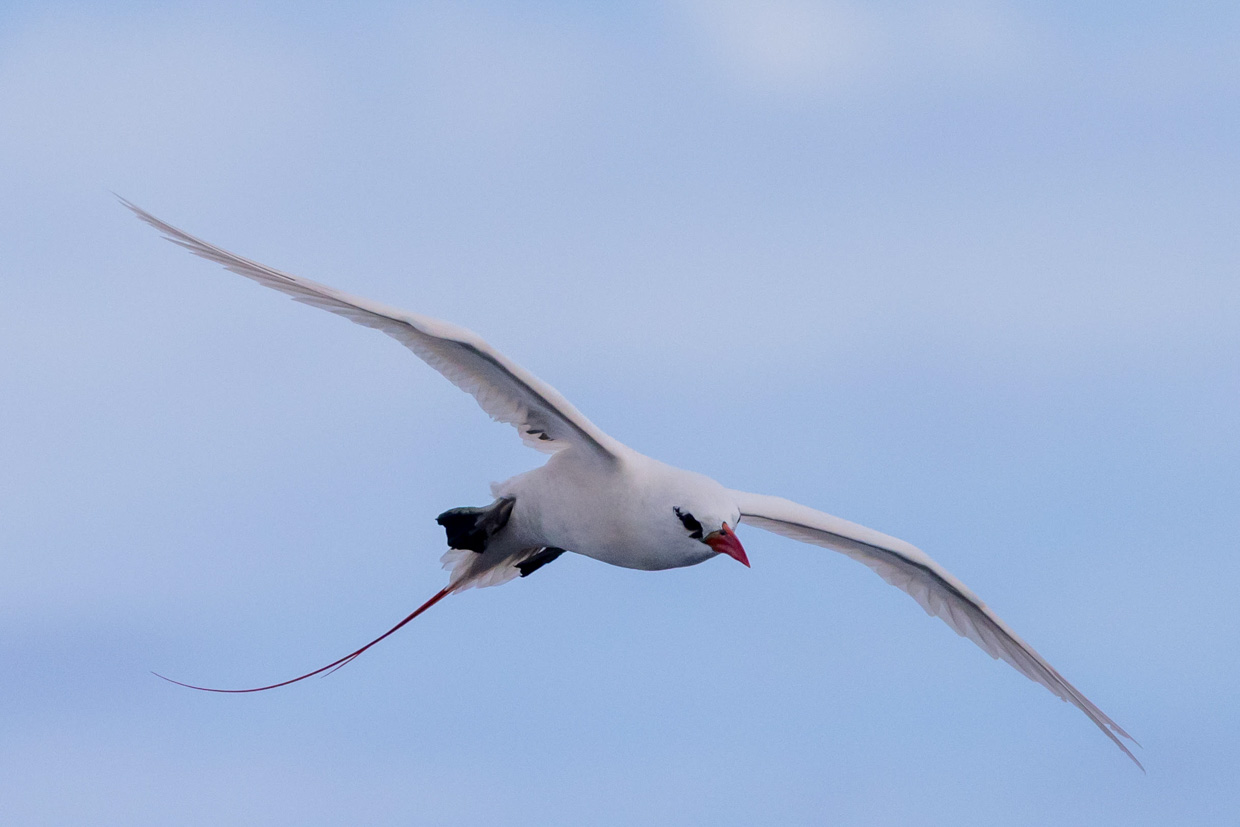
The seabird colonies of Kauai provided further data on the health of the North Pacific marine ecosystem. Near the Kilauea Point region, the survey documented Great Frigatebirds, White-tailed Tropicbirds, and Red-tailed Tropicbirds. A particularly poignant observation involved the Wedge-tailed Shearwaters, which nest in burrows along the coast. The team noted the unique "moaning" vocalizations of these birds and observed the kleptoparasitic behavior of Great Frigatebirds as they attempted to pirate food from returning Red-footed Boobies.
In the high-altitude forests of Kokee State Park and Waimea Canyon, the survey sought the island’s endemic forest birds. While the Apapane (Himatione sanguinea)—the most common of the red honeycreepers—was found in abundance, the rarer species proved more elusive. The team eventually secured sightings of the Kauai Elepaio (Chasiempis sclateri), an endemic monarch flycatcher that has shown more resistance to environmental changes than many of its honeycreeper counterparts. The high-country survey also noted the presence of the Pueo, the endemic Hawaiian subspecies of the Short-eared Owl, hunting over the open ridges.
The Big Island: Volcanic Disruptions and the Hakalau Sanctuary
The final and most intensive leg of the survey occurred on the island of Hawaii, commonly known as the Big Island. The expedition faced immediate logistical challenges as an unusually heavy storm system caused the closure of Hawaii Volcanoes National Park. This disruption forced a shift in the survey’s methodology, emphasizing the importance of local expertise in navigating Hawaii’s unpredictable weather patterns.
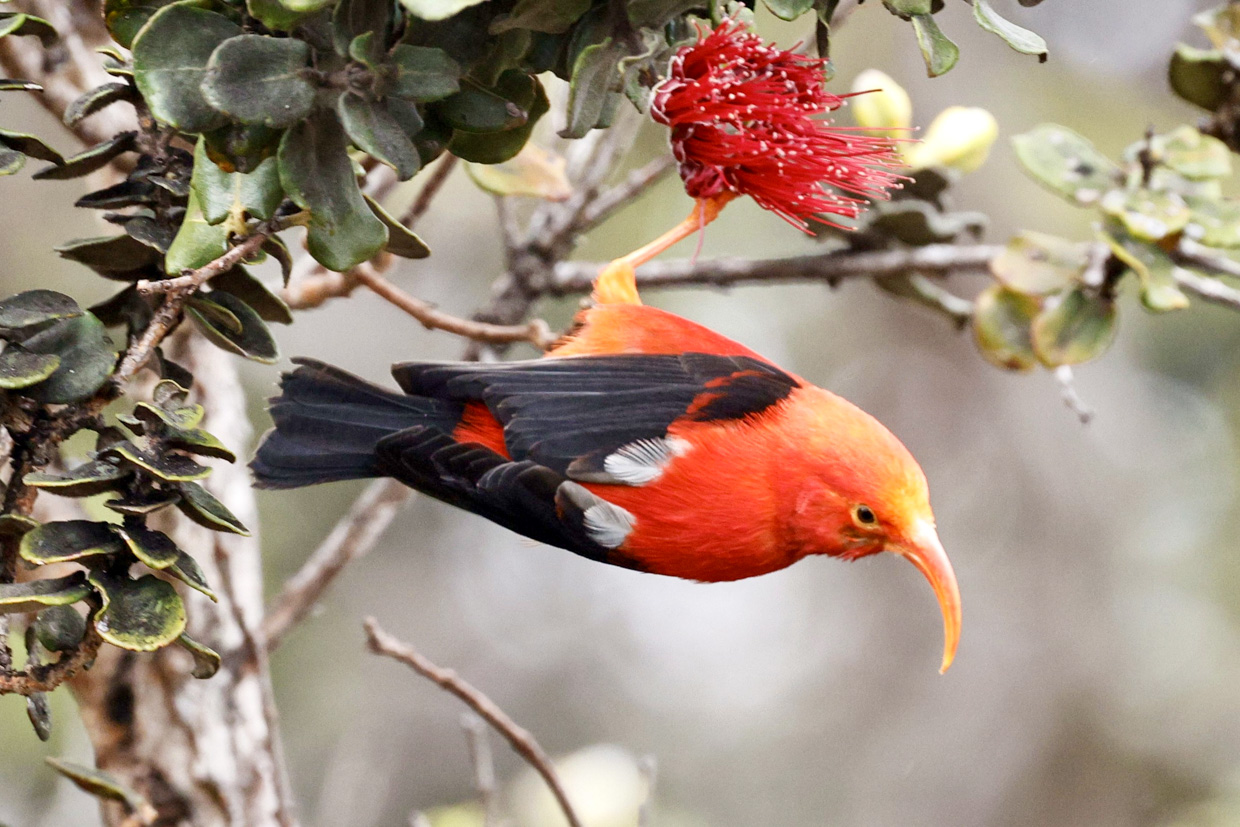
Under the guidance of local experts, the team explored forested trails outside the park boundaries, where they recorded the Iiwi (Drepanis coccinea) and the Hawaii Amakihi. The Iiwi, with its iconic curved bill and bright scarlet plumage, is perhaps the most famous of the surviving honeycreepers, yet it remains highly vulnerable to avian malaria. The survey also documented the presence of the Hawaiian Hawk, or Io (Buteo solitarius), the only hawk native to the islands, which was observed in both the Hilo and Kona regions.
The Significance of Hakalau Forest National Wildlife Refuge
The survey’s most critical data collection occurred at the Hakalau Forest National Wildlife Refuge. This 32,730-acre sanctuary on the windward slopes of Mauna Kea is widely regarded as the premier site for Hawaiian forest bird conservation. The refuge’s elevation—ranging from 2,000 to 6,500 feet—is its most vital feature. The cooler temperatures at these heights prevent the proliferation of Culex mosquitoes, the primary vectors for avian malaria and avian pox.
Inside the refuge, the team documented several of the rarest avian species on Earth:
- Akiapolaau (Hemignathus wilsoni): Often called the "Swiss Army Knife" of birds, this honeycreeper has evolved a unique bill morphology where the lower mandible is used for chiseling wood while the long, curved upper mandible probes for larvae.
- Hawaii Creeper or Alawi (Loxops mana): A specialized insectivore that behaves similarly to a nuthatch, foraging along the trunks of ancient Koa and Ohia trees.
- Hawaii Akepa (Loxops coccineus): A tiny, brightly colored bird with a specialized "crossed" bill used to pry open leaf buds in search of caterpillars.
- Omao (Myadestes obscurus): An endemic thrush whose haunting song is a hallmark of the Big Island’s intact montane forests.
The success of these species within Hakalau underscores the necessity of large-scale habitat restoration. The refuge has seen the planting of over 400,000 native trees, particularly Koa and Ohia, to replace former cattle ranching lands.
Analysis of Introduced Species and Ecological Shifts
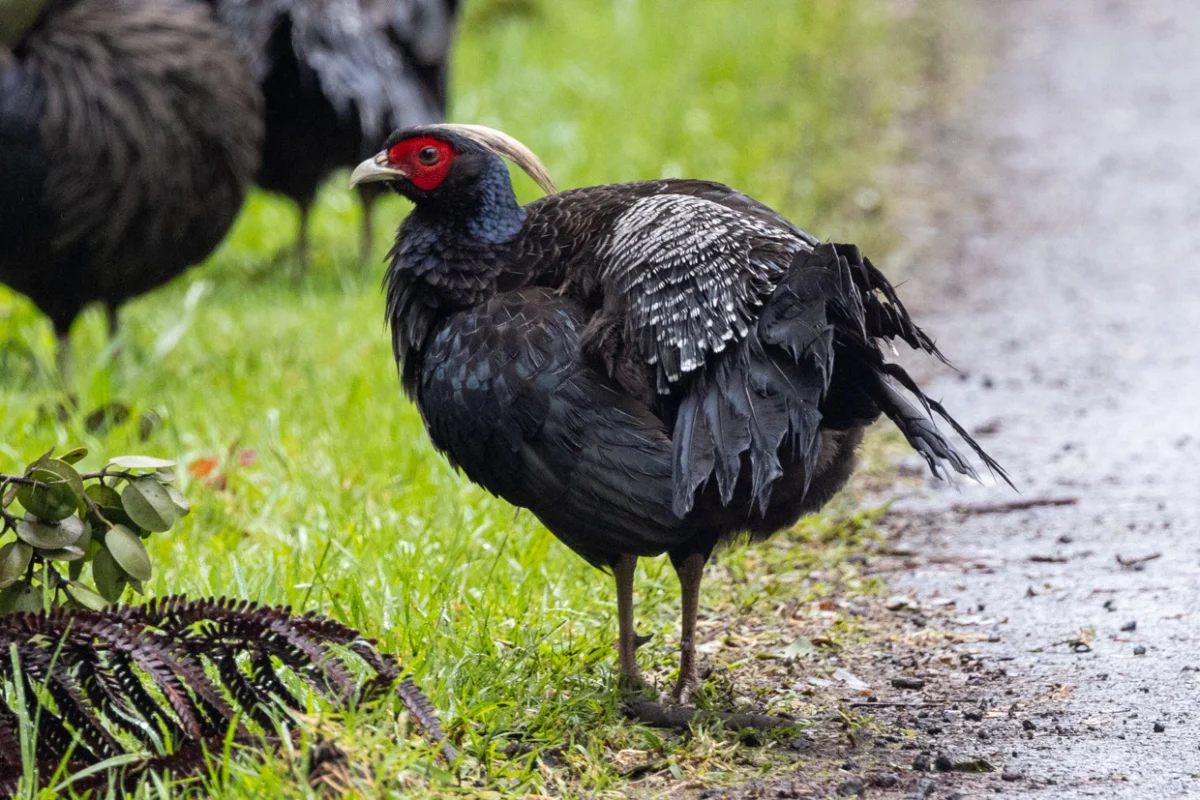
Throughout the archipelago, the survey highlighted the overwhelming presence of introduced bird species. From the Erckel’s Spurfowl and Black Francolin in the dry uplands to the Saffron Finches and Common Waxbills in the resort areas of Kona, Hawaii’s avian landscape has been permanently altered.
The discovery of the Chestnut-bellied Sandgrouse along the arid roadsides of the Big Island and the Rosy-faced Lovebirds in urban shopping centers illustrates the ongoing "naturalization" of exotic species. While these birds provide aesthetic value to some, they represent a significant ecological shift, competing with native species for resources and potentially acting as reservoirs for diseases.
The survey also recorded rare "vagrants"—birds that are not native to Hawaii but occasionally appear during migration. The sighting of a Dunlin on Kauai and an Osprey near Hilo provided valuable data on the frequency of these accidental arrivals.
Broader Implications and Conservation Outlook
The findings of this multi-island survey reinforce the critical state of Hawaii’s endemic avifauna. The survival of the honeycreepers is currently tied to a "bottleneck" of high-altitude habitat. As global temperatures rise, the "mosquito line" is moving higher up the mountain slopes, shrinking the malaria-free zones that birds like the Akiapolaau and Akepa depend on.
Conservationists are currently exploring radical interventions to mitigate this threat, including the use of Incompatible Insect Technique (IIT) to suppress mosquito populations and the potential for genetic resistance breeding. The data gathered during this survey—particularly the high density of native birds within managed refuges like Hakalau—suggests that while the threats are severe, intensive management and habitat restoration are effective tools in preventing total extinction.
In conclusion, the avian survey of Hawaii reveals a landscape at a crossroads. The coexistence of ancient endemic lineages and recent global arrivals creates a unique but fragile ecological tapestry. The continued monitoring of these populations is essential for the survival of the species that define the biological heritage of the Hawaiian Islands. The lessons learned from the resilience of the Oahu Amakihi and the restoration of the Hakalau Forest will likely serve as a blueprint for island conservation efforts worldwide.
