
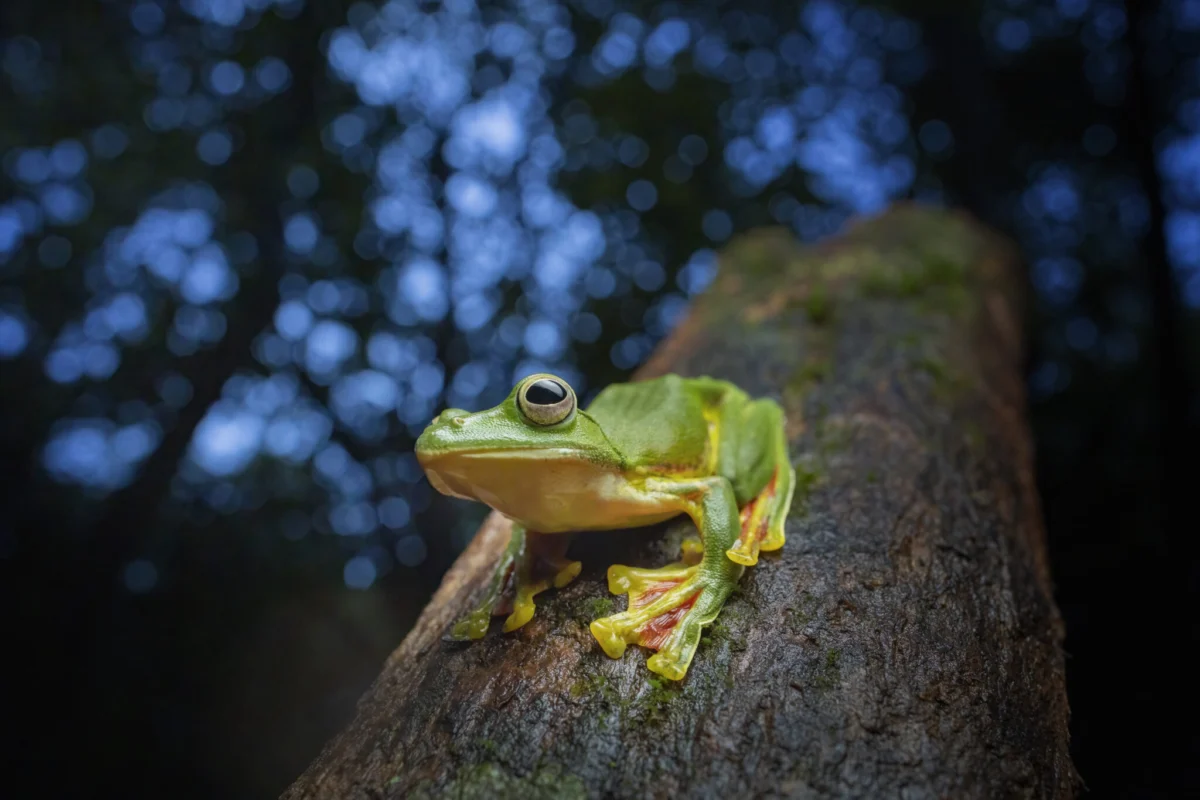
Wide-angle macro photography stands as a distinctive and powerful genre within nature imaging, enabling photographers to transcend traditional close-ups and create visually striking narratives that embed small subjects within their expansive natural habitats. This technique uniquely transports the viewer into the subject’s world, fostering a profound sense of immersion. By meticulously capturing both the intricate details of a diminutive organism and the broader context of its environment, these images highlight the delicate, often unseen, balance between life forms and their ecosystems. The result is more than just a photograph; it is an invitation to experience the world from a new, intimate perspective, revealing the interconnectedness of nature at a micro and macro scale.

The Genesis of a Perspective: Evolution in Nature Photography
The evolution of macro photography has seen a significant philosophical shift. Historically, macro photography primarily focused on achieving extreme magnification, isolating subjects against blurred backgrounds to emphasize intricate textures, patterns, and forms. While invaluable for detailed biological study and artistic abstraction, this approach often removed the subject from its ecological context. The rise of wide-angle macro photography, particularly in the last decade, represents a paradigm shift, moving beyond mere magnification to contextual storytelling. This genre seeks to answer not just "what does it look like?" but also "where does it live?" and "how does it interact with its surroundings?" This evolution is driven by both technological advancements in optics and a growing appreciation for ecological narratives in conservation photography. Renowned nature photographers and scientists increasingly leverage this technique to document biodiversity, highlight habitat loss, and engage public interest in fragile ecosystems, from the dense rainforests of Southeast Asia to the arid landscapes of the Australian outback. The ability to show a tiny frog perched on a vibrant leaf, surrounded by the misty depth of its forest home, creates a powerful emotional and educational impact that an isolated close-up might miss.

Why Context Matters: Beyond the Close-Up for Conservation and Science
The implications of wide-angle macro photography extend far beyond aesthetic appeal. For conservation, these images serve as compelling visual arguments. By illustrating how a species fits into its specific niche, photographers can effectively communicate threats to entire habitats, not just individual organisms. For instance, documenting an endemic insect within a unique microhabitat provides crucial data for conservationists fighting against deforestation or pollution. In scientific research, this approach offers invaluable in situ documentation, allowing biologists to study species behavior, camouflage, and interspecies interactions within their undisturbed environments. Traditional collection and laboratory study, while necessary, often strip away this vital contextual information. Wide-angle macro fills this gap, providing visual records that support ecological studies, species identification, and habitat mapping. Furthermore, for public engagement, these immersive images can transform abstract scientific concepts into tangible, relatable stories, inspiring a deeper connection to nature and fostering environmental stewardship among diverse audiences. The global reach of platforms like the Nature Photographers Network and major photography competitions has amplified the visibility of this genre, bringing these intricate ecological narratives to millions worldwide.

Technical Foundations: Essential Gear for the Wide-Angle Macro Photographer
Mastering wide-angle macro photography requires a specialized toolkit and a nuanced understanding of how each component contributes to the final image.

-
Cameras: The Digital Canvas:
While the adage "the best camera is the one you own" holds true for getting started, modern camera technology significantly enhances the wide-angle macro experience. Contemporary mirrorless cameras, in particular, offer a suite of features that streamline the process. Advanced autofocus systems, often incorporating animal eye detection and sophisticated focus tracking, are invaluable for capturing fast-moving or shy subjects at close distances. High dynamic range capabilities ensure that details are preserved in both the brightly lit subject and the darker, contextual background, a common challenge in this genre. Furthermore, weather sealing is crucial for photographers venturing into often damp or dusty natural environments, protecting valuable equipment. A high burst rate can increase the chances of capturing that decisive moment, especially with unpredictable wildlife. Features like live view and tilt/vari-angle screens greatly assist in composing shots from extremely low or awkward angles without requiring the photographer to contort themselves into uncomfortable positions, thereby minimizing disturbance to the subject and habitat. While professional-grade gear offers advantages, many entry-level and mid-range mirrorless or DSLR cameras possess sufficient capabilities to produce compelling wide-angle macro images. -
Lenses: The Heart of the Technique:
The lens is arguably the most critical piece of equipment. Unlike standard wide-angle lenses designed for landscapes, wide-angle macro demands a lens with an exceptionally low minimum focusing distance (MFD). This allows the photographer to get incredibly close to the subject while still capturing a broad background. Many dedicated macro lenses typically offer 1:1 magnification but might not be wide-angle. Conversely, many wide-angle lenses lack the close-focusing ability. Fortunately, a growing number of specialized lenses from brands like Laowa, Olympus/OM System, and others now bridge this gap, offering both wide fields of view and true macro (1:1) or near-macro capabilities. For instance, lenses like the Laowa 15mm f/4 Wide-Angle Macro or the Olympus M.Zuiko Digital ED 8mm f/1.8 Fisheye PRO (when adapted for close focus) are popular choices, allowing photographers to fill the frame with a small subject while simultaneously including extensive environmental context. Without a low MFD, the subject would appear too small, diminishing the impact of the environmental storytelling.
-
Illumination Strategies: Mastering Light with Flash and Diffusers:
Even when shooting during the day, an external flash is often indispensable. Wide-angle macro photography frequently requires a narrow aperture (e.g., f/11 to f/22) to achieve sufficient depth of field across both the subject and its immediate surroundings. This narrow aperture significantly reduces the amount of ambient light reaching the sensor, often leading to underexposed images. A powerful external flash compensates for this light loss, allowing for proper exposure while maintaining a desirable depth of field. Key flash features include ETTL (Evaluative Through The Lens) for automatic exposure, manual mode for precise control, a fast recycle time for continuous shooting, a high guide number (typically above 60 for sufficient power), and high-speed sync (HSS) for shooting at faster shutter speeds to overpower ambient light. Remote operation functionality is also crucial, enabling off-camera flash placement for creative lighting and avoiding harsh direct illumination.Equally important is the diffuser. Direct flash can create harsh highlights, especially on wet or glistening subjects (common with amphibians and insects). A diffuser softens and spreads the flash output, creating more natural-looking, even illumination. While standard macro diffusers exist, they are often designed for longer macro lenses (90-100mm) and can be problematic with wide-angle lenses due to their broader field of view, potentially showing the diffuser edges in the frame or drooping. Creative solutions are often required:

- Smaller Diffusers: Dome diffusers or mini softboxes can be used, though they may offer less diffusion.
- Custom Builds: Many wide-angle macro photographers construct DIY diffusers tailored to their specific lens and flash setup, often using flexible materials or specialized brackets to prevent sagging.
- Elevated/Off-Camera Setups: Mounting the flash and diffuser on an elevated trigger or using an off-camera flash with a disc-style diffuser for top-lighting provides greater control and allows for larger diffusion surfaces without encroaching on the frame. The trade-off here is increased complexity in managing gear in the field, especially when working alone. The principle remains: the larger the effective diffusion surface relative to the subject, the softer the light.
-
Field Essentials: Beyond the Camera Bag:
Beyond the core photographic equipment, practical field gear is essential for safety, comfort, and protection. Robust rain gear is critical, as many macro subjects thrive in humid, wet environments, and equipment needs protection from moisture. Proper footwear, such as waterproof hiking boots, provides stability and traction on uneven, often slippery terrain. Leeches, snakes, and other ground-dwelling creatures necessitate leech guards or gaiters, offering protection and allowing photographers to move confidently through dense undergrowth and marshy areas. Finally, effective mosquito and insect repellents are non-negotiable for sustained comfort during long shooting sessions in insect-rich habitats.
Navigating the Field: Optimizing for Time and Environment

The time of day significantly influences the feasibility and aesthetic outcome of wide-angle macro photography.
-
Daylight Opportunities: Revealing the Habitat:
The primary goal of wide-angle macro photography—to showcase the subject within its habitat—is most effectively achieved during daylight hours. Ambient light naturally illuminates the environment, allowing for a richer, more detailed background. However, many fascinating subjects, particularly reptiles and amphibians in tropical rainforests, are primarily nocturnal. This presents a unique challenge: how to capture these creatures in their active, natural state at night while still showing their environment. This is where meticulous planning and ethical considerations come into play. Extensive research into the location, the specific species present, and their diurnal behaviors (if any) is paramount. Collaborating with local naturalists or guides can provide invaluable insights into the best times and places to find subjects in situ. It is a strict ethical principle in responsible wildlife photography to never disturb or relocate an animal for the sake of a photograph. Capturing a subject naturally, without manipulation, ensures the authenticity and integrity of the image and respects the welfare of the wildlife. If an animal is found during the day in a natural, undisturbed state, that is the ideal scenario for a wide-angle habitat shot.
-
Conquering the Night: Lighting Nocturnal Worlds:
Photographing nocturnal creatures at night, especially with a wide-angle lens, poses significant lighting challenges. Without careful illumination, the outcome often resembles traditional macro: a well-lit subject against a dark, featureless background, completely losing the environmental context. This defeats the purpose of wide-angle macro.
However, advanced lighting techniques can overcome this. The "hack" involves using multiple light sources to illuminate both the subject and its background effectively.- Multiple Flashes: A common approach is to use a master trigger on the camera to wirelessly fire multiple slave flashes. These slave flashes are strategically positioned around the scene—one to light the main subject (often diffused) and others to illuminate elements of the background, such as foliage, tree trunks, or ground cover. This technique requires careful balancing of flash power and placement to avoid hot spots and create natural-looking illumination.
- Constant Lights: Alternatively, constant LED lights can be used to illuminate backgrounds at night. While less powerful than flashes, constant lights offer the advantage of "what you see is what you get," making it easier to compose and adjust lighting in real-time. This can be particularly useful for static subjects or when working with a team to hold lights. Both methods require practice and a deep understanding of light to achieve a balanced, contextual image that reveals the nocturnal world.
The Art of Composition: Framing Your Subject’s World

Composition is paramount in wide-angle macro photography, as it dictates how the viewer perceives the relationship between the subject and its environment. While standard compositional rules apply, special emphasis is placed on creating a sense of depth and immersion.
- Balancing Layers: The primary objective is to balance the subject, foreground, and background. Incorporating multiple layers or depth elements—such as a blurred foreground leading to a sharp subject, which then leads to a slightly softer background—adds visual interest and guides the viewer’s eye through the scene. For example, a leaf or branch in the extreme foreground can frame the subject, drawing attention to it while providing context.
- Experiment with Angles: Dynamic angles can dramatically enhance a wide-angle macro shot. Shooting from an extremely low perspective, often at ground level or even slightly below, can include the forest canopy or a vast sky, making a small subject appear monumental. Conversely, a slightly higher angle might reveal more of the forest floor, intricate roots, or a marshy landscape, offering a different narrative. These varying perspectives add drama and creativity.
- Leading Lines and Natural Frames: Utilize natural elements to guide the viewer. A winding root, a blade of grass, a flowing stream, or a pattern of leaves can serve as leading lines, directing the eye towards the main subject. Similarly, natural arches formed by branches, gaps in foliage, or even the subject’s own habitat can create organic frames that enhance focus and visual appeal. The interplay of light and shadow, especially dappled light in a forest, can also be used compositionally to highlight or subtly obscure elements, adding to the visual depth.
Overcoming Obstacles: Common Challenges and Expert Solutions

Wide-angle macro photography, while rewarding, presents several unique technical and logistical challenges.
- Distortion: Wide-angle lenses inherently exaggerate perspective, making objects closer to the lens appear disproportionately large and potentially introducing barrel or pincushion distortion. While this can be used creatively to emphasize a subject’s proximity, it can also lead to an unnatural or cartoonish look if not carefully managed. Solution: Be mindful of composition, keeping important background elements further from the edges of the frame where distortion is most pronounced. Post-processing software often has lens correction profiles to mitigate distortion.
- Depth of Field: At macro focusing distances, depth of field becomes incredibly shallow, even with a wide-angle lens. Achieving sharpness across both the subject and a meaningful portion of the background is difficult. Solution: Use the narrowest aperture possible (e.g., f/16 to f/22) to maximize depth of field, but be aware of diffraction, which can reduce overall sharpness at extremely small apertures. For advanced users, focus stacking (taking multiple shots at different focus points and combining them in post-processing) is an effective technique to achieve front-to-back sharpness.
- Lens Flare and Corner Softness: Wide-angle optics, especially when combined with extension tubes or adapters (which are less common for this specific genre but can introduce issues), are more susceptible to lens flare and often exhibit reduced sharpness at the edges or corners. Solution: Avoid shooting directly into strong light sources. Use a lens hood (if compatible) to block stray light. While extensions are generally avoided, be aware of their optical impact if used. Post-processing can sometimes correct corner softness to a degree.
- Blocking Light: Due to the extremely close working distances, the lens itself or even the photographer’s body can cast unwanted shadows on the subject. Solution: Strategic use of an external flash with a well-designed diffuser is crucial. Off-camera flash setups allow greater flexibility in lighting angles, minimizing shadows cast by equipment. Smaller, custom-built diffusers can also be less intrusive.
- Balancing Lighting: Macro subjects typically require strong, direct lighting (often from a flash), while the wide background benefits from natural, even ambient exposure. Balancing these two distinct lighting needs in a single frame is complex. Solution: This often involves blending exposures (using flash for the subject and ambient for the background), using fill lights for shadows, or employing multiple flashes as discussed for night photography. Gel filters on flashes can also help match the color temperature of artificial light to ambient light.
- Working Distance: Wide-angle macro setups often demand extremely short minimum focusing distances, sometimes mere centimeters. This makes it challenging to position the camera without disturbing the subject or its environment. Solution: Patience, a slow and deliberate approach, and sometimes specialized right-angle viewfinders or remote triggers can help. Being familiar with your gear’s MFD is essential for pre-visualizing shots.
- Size of the Gear: While larger diffusers provide softer light, an oversized setup can be unwieldy and easily disturb sensitive subjects or fragile environments. Solution: It’s a trade-off between diffusion quality and practicality. Smaller, more compact diffusers, or creative DIY solutions that maintain a low profile, are often necessary in tight spaces or with shy subjects.
- Stability: Shooting at such close distances with a wide-angle lens often requires extremely precise focus and rock-steady positioning. Any slight movement from the photographer or the subject is greatly magnified, leading to blurry images. Solution: A tripod or monopod can provide stability, though they can be cumbersome in dense environments. Often, bracing oneself against the ground, a tree, or using a beanbag is a practical solution in the field. High shutter speeds (achieved with flash sync) can also help freeze motion.
The Broader Impact: Conservation, Science, and Art

Wide-angle macro photography occupies a pivotal intersection of scientific documentation, conservation advocacy, and artistic expression. It allows us to reveal not only the intricate details of the smallest inhabitants of our planet but also the rich, complex environments they call home. While the technique comes with its share of formidable challenges—from lighting constraints and critically short working distances to the complexities of compositional balance—the right combination of specialized equipment, creative diffuser application, and thoughtful fieldcraft transforms these obstacles into unparalleled opportunities. By mastering the delicate balance between foreground subject and expansive surroundings, photographers can craft images that are simultaneously personal and expansive. These photographs go beyond simply capturing what a creature looks like; they tell the profound story of where it belongs, illustrating its vital role within the larger ecological tapestry. This genre is more than a technical pursuit; it is a powerful conduit for connecting human audiences with the smallest wonders of nature and the essential, interconnected worlds in which they thrive, fostering a deeper understanding and appreciation for biodiversity and environmental preservation.
In essence, wide-angle macro photography stands as a testament to the power of perspective. It compels us to lean in closer, to observe with greater intent, and to understand that even the most minute lives are inextricably linked to the grand narratives of our planet. Through these immersive images, photographers contribute significantly to both the scientific record and the collective human consciousness, urging a greater commitment to protecting these fragile, miniature worlds.
