
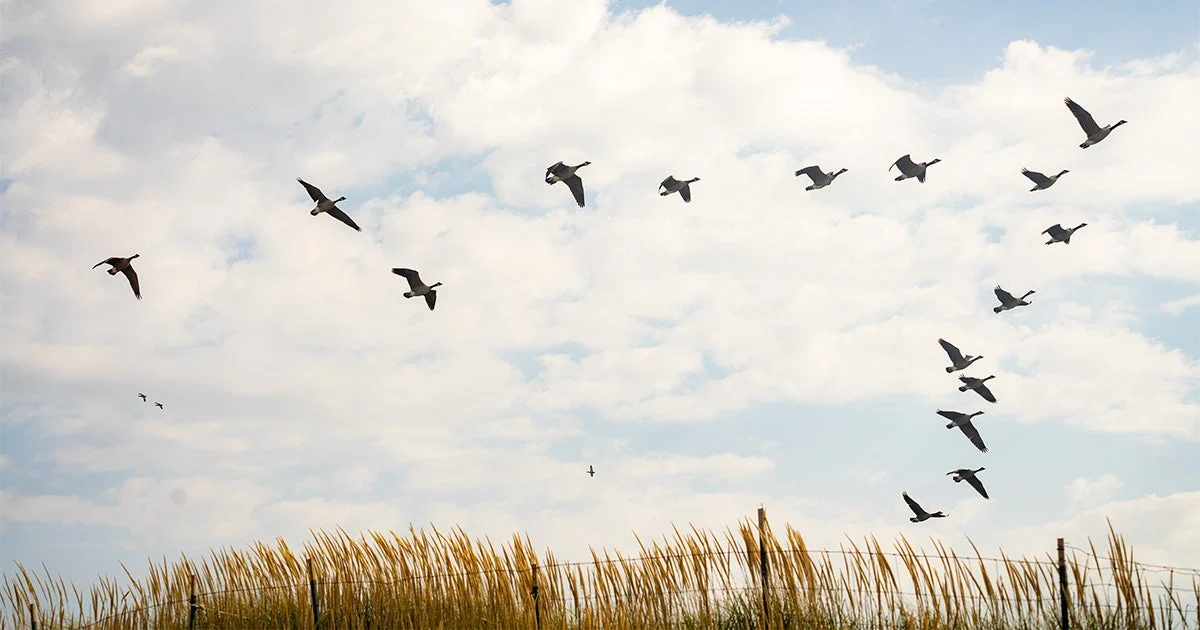
From the majestic sweep of Canada Geese across autumn skies to the determined flight of cranes traversing continents, the V-shaped flock is a ubiquitous and iconic spectacle of avian migration. This seemingly simple formation, adopted by a diverse array of species including pelicans, cormorants, ducks, and swans, represents one of nature’s most sophisticated energy-saving strategies, leveraging fundamental principles of aerodynamics with remarkable precision. Far from being merely an aesthetic arrangement, the V-formation is a testament to millions of years of evolutionary refinement, allowing birds to undertake arduous long-distance journeys with significantly reduced energetic cost. While conventional wisdom has long recognized its efficiency, scientific inquiry continues to peel back layers of complexity, revealing the intricate physics and nuanced social dynamics that underpin this airborne phenomenon. Researchers are perpetually uncovering new details about how these avian engineers "hack" the environment to enhance their flight efficiency, offering profound insights not only into bird behavior but also inspiring potential applications in human aviation.
The Physics of Flight: Unveiling Avian Aerodynamics
At the heart of the V-formation’s efficacy lies a sophisticated understanding, albeit an instinctual one, of fluid dynamics. Every bird in flight, much like an airplane, generates lift to counteract gravity and propulsive thrust to overcome drag. As a bird’s wings move through the air, they create complex aerodynamic forces. The primary mechanism at play involves the creation of wingtip vortices. These are swirling columns of air generated at the ends of the wings due to the pressure difference between the higher pressure air underneath the wing and the lower pressure air above it. This pressure differential causes air to curl around the wingtip, forming these energetic, spiraling vortices.
These vortices have distinct effects on the surrounding air. Directly behind the bird, the air is pushed downward, creating what is known as "downwash." However, in the areas immediately behind and to the sides of the wingtips, the air is brought upward, creating "upwash." Bret Tobalske, a distinguished biologist specializing in avian flight mechanisms at the University of Montana, vividly illustrates this phenomenon by comparing the vortex to a stretched-out Slinky. He explains that the bird following can strategically position itself to take advantage of this upward-moving air. "It’s like a surfer on a surfboard experiences upwash from a wave," Tobalske posits. "It’s energy in the environment that’s helping to assist this bird behind it, because this air is moving upwards." By positioning themselves precisely within these upwash zones, trailing birds receive an aerodynamic boost, effectively reducing the amount of work their wings need to perform to maintain altitude and forward momentum. This reduction in effort translates directly into significant energy savings, a critical factor for species undertaking migrations spanning thousands of kilometers.
Quantifying the Advantage: Energy Savings in Motion
The theoretical advantages of V-formation flight have been robustly supported by empirical research. When birds arrange themselves in a true V-formation—with a lead bird at the apex and each subsequent bird staggered slightly to the left or right of the one preceding it—the upwash generated by the bird in front provides a crucial lift assist to the bird directly behind. This strategic positioning minimizes the need for vigorous flapping, conserving precious metabolic energy. Studies have suggested that this formation can provide up to 10-14 percent of energy savings for the trailing birds, a figure that can mean the difference between life and death during grueling migratory passages.
One of the landmark studies illustrating these savings involved Great White Pelicans in 2001. Researchers attached miniature heart monitors to a group of these large, migratory birds, allowing for a direct measurement of their physiological exertion during flight. The data collected revealed a compelling correlation: the heart rates of birds flying in the trailing positions within the V-formation were demonstrably lower than those of the bird leading the formation. This reduction in cardiac effort indicated a significant decrease in metabolic expenditure, with overall energy savings for the trailing birds reaching up to 11 percent. This study provided compelling physiological evidence that the aerodynamic benefits translate into tangible, measurable energy conservation at a biological level.
The size of the birds also plays a crucial role in maximizing the benefits of V-formation flight. Species known for employing this strategy, such as geese, pelicans, and cranes, tend to be on the larger side. This is not coincidental. Larger birds typically exhibit slower flapping speeds compared to smaller, more agile birds. This slower, more powerful wingbeat generates more substantial and more persistent wingtip vortices. As Tobalske explains, the upwash created by bigger birds allows for optimal aerodynamics in V-shaped flight because their wake structure remains stable and effective for a longer duration and greater distance. In contrast, "In smaller formations with smaller birds, their wake structure might not persist, it might decay," he notes, rendering the energy-saving benefits less pronounced or even negligible. This highlights an evolutionary convergence where large body size and long-distance migration pressures have favored the development and refinement of this specialized group flight strategy.
Social Dynamics and Leadership in the V
The V-formation is not a static entity but a dynamic, cooperative system. The strenuous demands of generating the initial vortices and navigating through undisturbed "clean air" mean that the lead position is the most energetically costly. Consequently, all or most birds within a flock will eventually take their turn at the apex. Observers of migratory geese frequently witness these mid-flight leadership changes, a crucial mechanism for distributing the energetic burden among flock members. When the lead bird begins to tire, another bird from a trailing, less strenuous position will seamlessly assume the demanding leadership role, allowing the former leader to drop back into the energy-saving upwash zone. This rotation continues as each successive leader grows weary, ensuring the collective endurance of the flock.
The intricate social dynamics of V-formation flight were elegantly demonstrated in a 2014 study published in the Proceedings of the National Academy of Sciences (PNAS), focusing on flocks of Northern Bald Ibises. Researchers outfitted these highly social birds with lightweight GPS loggers and inertial measurement units (IMUs) to precisely track their flight paths, positions, and wingbeat frequencies. The study revealed that these ibises took turns leading frequently, sometimes as often as every few minutes, to optimize energy expenditure across the group. Interestingly, the research also observed instances where pairs of ibises would temporarily split off from the main formation, sharing leadership roles evenly to ensure both birds equally benefited from the upwash created by the other. The ibises in the study relied on sophisticated visual cues, particularly the precise timing of wing flaps, to position themselves optimally within the upwash zone of the bird in front. Furthermore, this intricate coordination extended to knowing precisely when to change places, preventing any single bird from becoming over-exhausted and jeopardizing the flock’s progress. This study underscored not just the physical benefits but also the remarkable cognitive and social coordination required for effective V-formation flight.
Learning the Sky: Acquired Behavior
While the ability to fly in a V-formation appears to be a highly refined and instinctual behavior, research indicates that it is not entirely innate but rather a learned skill, especially among younger birds. The 2014 study on Northern Bald Ibises, which tracked both adult and juvenile birds, provided compelling evidence for this. Young ibises, initially lacking an innate understanding of the complex group dynamics and the underlying physics of the V-formation, quickly developed proficiency once they began to fly with experienced adults. They learned through observation and practice to position themselves correctly within the upwash zones and to participate in the leader rotation strategy. This discovery highlights a fascinating aspect of avian cognition and social learning. It suggests that the precise spatial and temporal coordination required for efficient V-formation flight is not hardwired from birth but is instead acquired through experience and interaction within the flock, underscoring the importance of social transmission of knowledge for survival-critical behaviors.
Beyond the Classic V: The Compound Formation
Recent advancements in tracking and analysis technologies have allowed scientists to delve even deeper into the intricacies of avian flocking behavior, revealing patterns beyond the classic, idealized V-formation. In a groundbreaking 2019 study conducted at the University of North Carolina at Chapel Hill, led by postdoctoral researcher Aaron Corcoran and professor Ty Hedrick, scientists analyzed the flight patterns of various shorebirds, including the American Avocet, Dunlin, Short-billed Dowitcher, and Marbled Godwit.
Utilizing sophisticated 3D reconstruction technology applied to high-speed video footage, the research duo meticulously mapped each bird’s precise flight path and the overall structure of the flocks. This detailed analysis, which tracked the exact distances and alignments maintained by individual birds, uncovered a subtle yet pervasive pattern they termed the "compound V-shape." The findings revealed that regardless of species or individual bird size (some flocks were even mixed-species), each bird consistently maintained a specific spatial relationship with the bird directly in front of it: approximately one wingspan to the side and one and a half wingspans behind. This consistent spacing, even in large, seemingly amorphous flocks, suggests that birds are continuously applying the basic principles of V-aerodynamics, but on a much finer, tighter, and more integrated scale than previously understood.
Corcoran eloquently described the revelation: "It’s one of those things that, once you know the pattern is there, then you can’t unsee it. Your eyes are just drawn to these lines." He further noted, "The whole thing makes this sort of beautiful symmetry and geometry." This "compound V" concept indicates that even when a flock doesn’t present a perfectly symmetrical V to the naked eye, individual birds are constantly adjusting their positions to benefit from the micro-upwash zones created by their immediate predecessors. This continuous, dynamic optimization ensures that the energy-saving benefits are distributed throughout the flock, even in less rigid formations.
Evolutionary Imperative and Migratory Mastery
The evolution of V-formation flight is intrinsically linked to the immense energetic demands of long-distance migration. Many of the species that employ this strategy, such as Canada Geese and various crane species, undertake annual migrations spanning thousands of kilometers between their breeding and wintering grounds. For instance, some populations of Canada Geese migrate over 2,000 miles, while Sandhill Cranes can cover over 5,000 miles. Such journeys require extraordinary stamina and efficient energy utilization. Without strategies like the V-formation, the metabolic cost of these migrations would be prohibitively high, leading to increased mortality rates and ultimately, less successful reproduction.
The V-formation, therefore, represents a crucial evolutionary adaptation that enhances the survival and reproductive success of migratory birds. It allows flocks to cover greater distances, arrive at their destinations with more energy reserves, and better withstand environmental challenges encountered along the way, such as adverse weather conditions or limited foraging opportunities. This collective efficiency is a powerful example of natural selection favoring cooperative behaviors that confer a significant advantage to the group.
Biomimicry: From Birds to Aircraft
The elegant efficiency of V-formation flight in birds has not escaped the attention of human engineers and aviators. The concept of "biomimicry"—innovating by emulating nature’s designs—has led to active research into applying these aerodynamic principles to modern aircraft. If birds can save 10-14% of energy by flying in formation, could commercial or military aircraft achieve similar fuel savings?
Indeed, the potential is significant. Studies and experimental programs, often referred to as "Pelican" or "V-wing" flight, have explored the feasibility of autonomous aircraft flying in precise formations to reduce drag and conserve fuel. The idea is that trailing aircraft could position themselves within the upwash zones created by lead aircraft, much like birds, thereby reducing their individual fuel consumption. For military applications, this could extend mission range or reduce the need for in-flight refueling. For commercial aviation, even a modest percentage of fuel savings could translate into billions of dollars annually for airlines and a significant reduction in carbon emissions, addressing both economic and environmental concerns.
Challenges remain, particularly in the precise automation and safety protocols required for human-crewed aircraft to fly in such close proximity. Factors like turbulence, communication systems, and contingency plans for sudden maneuvers must be meticulously engineered. However, the foundational physics demonstrated by birds provides a compelling blueprint, suggesting a future where our skies might see human-made "flocks" navigating with the same elegant efficiency honed by avian evolution.
The Unfolding Narrative of Avian Aerodynamics
The V-formation, a seemingly simple arrangement of birds in flight, stands as a profound testament to the intricate wonders of the natural world. From the fundamental physics of wingtip vortices and energy transfer to the complex social learning and dynamic leadership within a flock, every aspect of this behavior underscores nature’s ingenious solutions to the challenges of survival. Scientific research continues to peel back the layers of this fascinating phenomenon, revealing ever more precise details about how birds master the air.
The ongoing discoveries, such as the "compound V-shape," remind us that even the most observed natural phenomena hold deeper secrets awaiting elucidation. As researchers continue to refine their tools and methodologies, our understanding of avian aerodynamics will undoubtedly continue to expand, offering further insights into animal intelligence, evolutionary adaptation, and the potential for biomimetic innovation. The synchronized dance of birds in a V-formation is more than just a beautiful sight; it is a living, breathing lesson in efficiency, cooperation, and the timeless elegance of nature’s design.
