
Washington, DC – The U.S. House of Representatives today passed the Farm, Food, and National Security Act of 2026, commonly known as the Farm Bill, a critical piece of legislation that includes robust support for voluntary, science-based conservation programs. This significant legislative action signals a move toward bolstering agricultural resilience while simultaneously addressing the severe decline in bird populations across the United States, a reduction estimated at three billion birds since 1970. The bill now progresses to the Senate for further consideration, carrying with it the hopes of conservationists, farmers, ranchers, and foresters who champion sustainable land stewardship.
The passage of the Farm Bill marks a pivotal moment in the ongoing national discourse regarding the intersection of agriculture, food security, and environmental preservation. At its core, the legislation provides essential funding and policy frameworks for a wide array of federal programs that impact the nation’s food supply, agricultural economy, rural development, and natural resources. For conservation advocates, particularly the National Audubon Society, the inclusion of strong provisions for working lands conservation is a testament to years of dedicated advocacy and collaborative efforts with agricultural communities. These programs are designed to integrate proven ecological practices into farming, ranching, and forestry operations, fostering both productivity and ecological health.
The Farm Bill: A Pillar of U.S. Policy
The Farm Bill is one of the most comprehensive and far-reaching pieces of legislation enacted by Congress, typically reauthorized every five years. While the current bill is designated for 2026, the legislative process often extends, making the present discussions critical for future policy. Its scope encompasses diverse titles, including commodity programs, crop insurance, nutrition assistance (such as the Supplemental Nutrition Assistance Program, or SNAP), rural development, research, and, crucially, conservation. The conservation title, often a bipartisan area of agreement, provides financial and technical assistance to landowners who voluntarily implement practices that protect and improve natural resources on their working lands. These programs are instrumental in promoting soil health, water quality, wildlife habitat, and climate resilience.
Historically, the Farm Bill has evolved from primarily supporting commodity production to increasingly recognizing the environmental services provided by agricultural lands. The shift reflects a growing understanding that healthy ecosystems are fundamental to long-term agricultural productivity and national food security. The previous Farm Bill, passed in 2018, included significant conservation components, but environmental organizations have consistently pushed for modernization and increased investment to meet current ecological challenges. The current legislative cycle for the 2026 bill began with extensive hearings, stakeholder consultations, and committee markups, culminating in today’s House vote.
Legislative Journey and Immediate Next Steps
The journey of the Farm Bill through Congress is a complex and often lengthy process. Following its passage in the House, the bill now moves to the U.S. Senate. In the Senate, it will undergo a similar process, starting with committee review, likely by the Senate Committee on Agriculture, Nutrition, and Forestry. Senators will debate and potentially amend the House-passed version, crafting their own proposal. Should the Senate pass a version that differs from the House bill, a conference committee composed of members from both chambers will be formed to reconcile the differences and produce a unified bill. This final reconciled version must then be approved by both the House and Senate before being sent to the President for signature. This intricate legislative dance underscores the collaborative effort required to pass such a monumental piece of legislation, highlighting the ongoing negotiations and compromises inherent in policymaking.
The urgency for reauthorization stems from the fact that many provisions of the previous Farm Bill have either expired or are nearing expiration. Delays in passing a new bill can create uncertainty for farmers, ranchers, and conservation programs, impacting planning and funding cycles. Therefore, the momentum generated by the House’s action is seen as vital for maintaining continuity and advancing critical initiatives.
The Ecological Imperative: Reversing Bird Declines
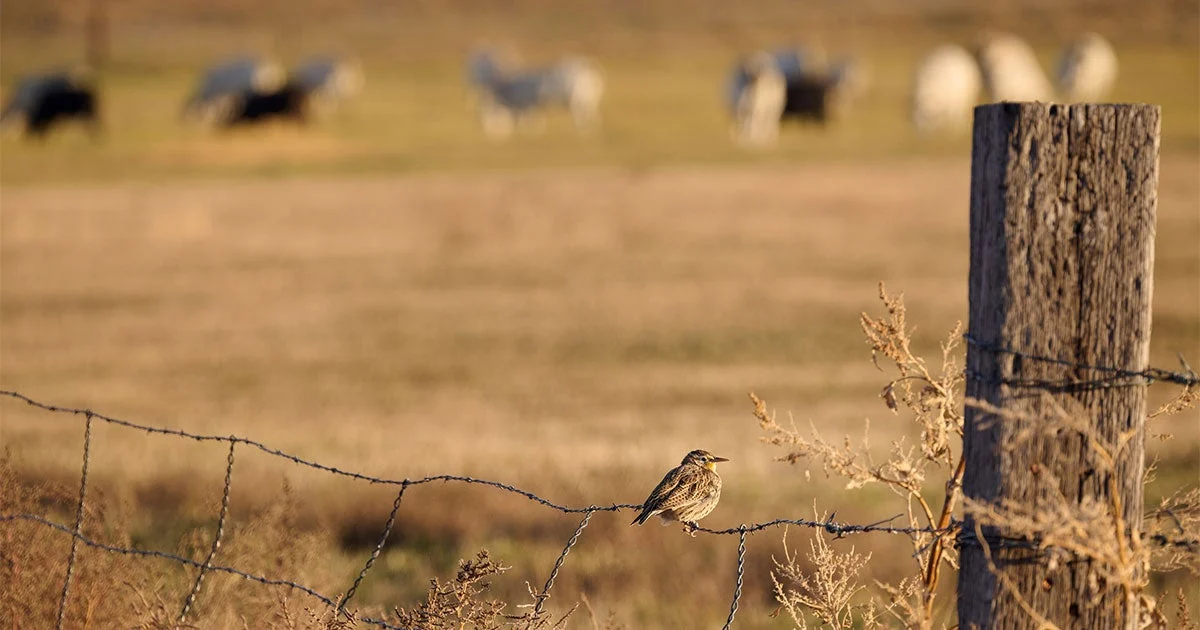
The core ecological justification for the conservation programs within the Farm Bill is stark: the dramatic decline of bird populations across North America. A landmark 2019 study published in the journal Science revealed that nearly three billion birds have been lost since 1970, representing a 29% reduction in the overall avian population. This staggering figure underscores a broader ecological crisis, as birds serve as critical indicators of ecosystem health. The declines are particularly acute among grassland birds, which have suffered a 53% reduction, and forest birds, with significant losses in species like the Cerulean Warbler and Northern Bobwhite, both explicitly mentioned by Audubon as beneficiaries of Farm Bill conservation efforts. The Western Meadowlark, highlighted in the article’s accompanying image, is another iconic grassland species facing considerable pressure.
These declines are primarily driven by habitat loss and degradation, intensified agricultural practices that reduce biodiversity, widespread pesticide use, and the escalating impacts of climate change. For instance, the conversion of grasslands to row crops, the draining of wetlands, and the fragmentation of forests directly remove essential breeding, foraging, and migratory habitats. The Farm Bill’s conservation programs offer a crucial counter-narrative, providing mechanisms to protect and restore these vital landscapes on privately owned working lands, which constitute the vast majority of land in the U.S.
Voluntary, Science-Based Conservation: A Win-Win Approach
The conservation programs championed by the National Audubon Society and included in the Farm Bill are fundamentally voluntary and science-based. This approach recognizes that farmers, ranchers, and foresters are key stewards of the land and that sustainable practices must align with their operational and economic realities. These programs provide financial incentives, technical assistance, and expert guidance to help landowners implement practices that benefit both their bottom line and the environment.
Key practices supported by these programs include:
- Healthier Soils: Techniques such as no-till farming, cover cropping, and diverse crop rotations reduce erosion, improve water infiltration, increase soil organic matter, and sequester carbon. These practices also support a richer soil microbiome, which in turn supports a healthier ecosystem for insects and birds.
- Better-Managed Grazing Systems: Rotational grazing, prescribed grazing, and silvopasture (integrating trees with pasture) improve pasture health, prevent overgrazing, enhance forage quality, and create diverse grassland structures vital for ground-nesting birds. Audubon’s Conservation Ranch Program, for example, works directly with independent ranchers to certify grasslands as beneficial bird habitats, providing market incentives for these sustainable practices.
- Restoring Productive Pasture and Accelerating Grassland Restoration: Converting marginal croplands back to native grasslands, restoring degraded pastures, and establishing pollinator habitats are crucial for species like the Western Meadowlark and Northern Bobwhite. These efforts not only create bird habitat but also improve water retention, reduce runoff, and provide drought resilience for livestock.
- Forestry Practices: Sustainable forest management, including selective logging, riparian buffer restoration along waterways, and controlled burns, can enhance forest health, prevent catastrophic wildfires, and create diverse habitats for forest-dwelling birds like the Cerulean Warbler.
The success of these programs is evident in various regions. For instance, the North Dakota Conservation Forage Program, cited by Audubon, demonstrates how state-level initiatives can deliver measurable benefits for landowners by integrating forage production with habitat conservation. Such models provide proof of concept for the broader federal programs.
Official Responses and Advocacy for Strengthening the Bill
Marshall Johnson, Audubon Chief Conservation Officer, emphasized the multifaceted benefits of the House’s action. "By investing in voluntary conservation programs, the House is supporting rural communities while helping ensure the long-term resilience of our food systems and the habitats that birds need to survive," Johnson stated. His remarks highlight the dual imperative of supporting agricultural livelihoods and ecological health, asserting that these goals are not mutually exclusive but rather interdependent. "Voluntary conservation helps producers keep lands working while improving ecosystem health, from healthier soils to better-managed grazing systems, delivering real benefits for both agriculture and birds."
Johnson further articulated Audubon’s call to action for the Senate. "We now urge the Senate to build on this momentum by strengthening and modernizing critical conservation programs, including supporting efforts to restore productive pasture and accelerate grassland restoration. We have a unique opportunity to build on proven efforts at the state level, such as North Dakota’s Conservation Forage Program, which has proven to deliver measurable benefits for landowners.” This statement underscores a strategic vision for continuous improvement and the integration of successful regional models into national policy.
Beyond Audubon, the House’s passage of the Farm Bill likely garners cautious optimism from various stakeholders. Farmers and ranchers, who are the primary participants in these voluntary programs, often welcome initiatives that offer financial and technical support without imposing onerous regulations. Agricultural industry groups typically advocate for policies that provide stability and flexibility for producers. Other environmental and wildlife conservation organizations generally align with the goal of strengthening conservation programs, though they may scrutinize specific funding allocations and program structures. Lawmakers, particularly those from agricultural states, often view the conservation title as a way to demonstrate support for both their constituents and environmental stewardship, often finding bipartisan consensus in this area compared to other more contentious aspects of the Farm Bill.
Broader Impact and Implications
The implications of a robust conservation title in the Farm Bill extend far beyond avian populations. The widespread adoption of sustainable agricultural practices contributes significantly to:
- Environmental Resilience: Improved soil health enhances carbon sequestration, helping mitigate climate change. Better water management reduces agricultural runoff, leading to cleaner rivers, lakes, and estuaries. Restored habitats support a broader range of biodiversity, including pollinators, beneficial insects, and other wildlife.
- Economic Viability of Rural Communities: Conservation programs provide direct financial assistance to farmers and ranchers, diversifying their income streams and helping them adopt practices that can reduce input costs over the long term. Sustainable agriculture can also open new market opportunities for "green" or "bird-friendly" products, adding value to agricultural outputs.
- Food Security: Resilient agricultural systems, supported by healthy soils and diverse ecosystems, are better equipped to withstand the impacts of climate change, such as droughts and extreme weather events, thereby contributing to a more stable and secure food supply for the nation.
- Policy Innovation: The Farm Bill serves as a national framework that can inspire and support state-level initiatives, fostering a dynamic interplay between federal policy and local action. The emphasis on voluntary, science-based approaches reflects a pragmatic recognition of private landownership and the power of incentives in driving conservation outcomes.
As the Farm Bill moves to the Senate, the debate will likely focus on securing adequate funding, ensuring equitable access to programs for all producers, and refining the language to maximize conservation benefits. The National Audubon Society, with its 120 years of science-based, community-driven impact, stands as a prominent voice in this ongoing conversation. Dedicated to protecting birds and the places they need, Audubon emphasizes that birds serve as vital indicators of the planet’s health, urging actions that benefit both avian species and human communities. With 800 staff and over 1.9 million supporters, Audubon’s collaborative and bipartisan approach seeks to drive meaningful and lasting conservation outcomes across the Western Hemisphere, reaffirming that what is good for birds is ultimately good for the planet and its people for generations to come. The successful final passage of this Farm Bill will be a critical step in addressing the urgent environmental challenges of our time while supporting the backbone of America’s rural economy.
