
America’s national forests, often conjuring idyllic visions of untouched wilderness, soaring mountain ranges, vibrant fall foliage, and critical wildlife habitats, are in reality dynamic ecosystems requiring constant, diligent stewardship. While these landscapes are cherished for their beauty and biodiversity, they face an array of escalating threats, from the accumulation of wildfire fuels and devastating storm damage to the relentless spread of invasive species and habitat fragmentation. Addressing these multifaceted challenges is complicated by the fragmented nature of land ownership across the United States, where federal, state, Tribal, county, and private lands often abut one another without seamless management strategies. It is within this complex mosaic that the Good Neighbor Authority (GNA) emerges as an indispensable tool, enabling the U.S. Forest Service (USFS) to forge collaborative partnerships with local entities, streamlining and expediting crucial restoration and maintenance projects where jurisdictional boundaries intersect.
The Imperative for Collaboration: Navigating Complex Landscapes
The challenges confronting America’s national forests are diverse and intensifying. In the arid West, decades of fire suppression coupled with changing climatic conditions have led to an unprecedented buildup of combustible vegetation, transforming once-manageable wildfires into catastrophic infernos that scorch millions of acres annually, threaten communities, and devastate ecosystems. According to the National Interagency Fire Center, federal agencies spend billions of dollars each year battling these blazes, with costs projected to rise. Meanwhile, in the East, an increase in the frequency and intensity of hurricanes and extreme rain events unleashes torrents that cause widespread erosion, damage critical infrastructure such like roads and recreation sites, and flood watersheds. The Upper Midwest grapples with shifting weather patterns, the pervasive threat of invasive species like the Emerald Ash Borer and various non-native plants, and the ongoing need to maintain a healthy and resilient mix of young and mature forests to support diverse wildlife and ecosystem services.
These issues are further compounded by the sheer scale and interwoven nature of U.S. forest lands. The USFS manages approximately 193 million acres across 154 national forests and 20 national grasslands, but these vast expanses are rarely monolithic. Instead, they are often intermingled with state forests, Tribal lands, county parks, and private holdings. A wildfire, a pest infestation, or a flood does not recognize a property line. Consequently, effective forest management demands a coordinated, cross-boundary approach, which historically has been hampered by bureaucratic hurdles and differing agency mandates. The GNA was specifically designed to bridge these gaps, fostering a spirit of shared stewardship that recognizes the interconnectedness of these landscapes and the collective responsibility for their health and resilience.
A Legislative Journey: The Evolution of the Good Neighbor Authority
The concept of the Good Neighbor Authority first took root in 2001 as a pilot program in Colorado. This initial foray demonstrated the immense potential of inter-agency cooperation in addressing forest health issues. Recognizing its efficacy, legislators began to explore expanding its scope. The GNA gained significant traction and was expanded nationwide through provisions in the 2014 Agricultural Act (commonly known as the Farm Bill). This landmark legislation authorized the USFS to enter into agreements with state forestry agencies to conduct forest, rangeland, and watershed restoration projects on national forests and grasslands. The success of this expansion led to further enhancements in the 2018 Farm Bill, which broadened the authority to include Tribal governments and county governments as eligible partners.
This gradual expansion reflects a growing bipartisan consensus in Congress regarding the necessity of pragmatic, cooperative land management. The GNA is lauded as one of the federal government’s most effective cross-boundary land management tools, facilitating the movement of vital conservation projects from the planning stage to on-the-ground implementation with greater speed and efficiency. Currently, legislators are actively considering further expansions to the GNA in the upcoming Farm Bill, a testament to its proven track record and the ongoing need for flexible, collaborative solutions to modern conservation challenges. This legislative journey underscores a fundamental shift towards more integrated and responsive environmental governance, acknowledging that a "one-size-fits-all" approach is insufficient for the diverse and complex needs of America’s natural heritage.
Mechanism of Cooperation: How GNA Functions
At its core, the GNA provides a legal and financial framework that enables the USFS to enter into long-term agreements with state forestry agencies, Tribal nations, and counties. These agreements allow the partner entities to carry out critical forest, watershed, and habitat management projects on federal lands. Crucially, the GNA allows states and other partners to utilize their own personnel, equipment, and contracting mechanisms, which can often be more agile and responsive than federal processes alone. This flexibility often translates into quicker project initiation and completion, reduced administrative overhead, and the ability to leverage local expertise and resources more effectively.
The scope of work permissible under GNA agreements is broad and directly addresses the aforementioned challenges. This includes, but is not limited to:
- Wildfire Risk Reduction: Thinning dense stands of trees, removing dead or overgrown vegetation, and creating defensible spaces to mitigate the risk of catastrophic wildfires.
- Post-Disaster Recovery: Clearing storm debris, replanting forests after fires or severe weather events, and stabilizing soils to prevent further erosion.
- Watershed Restoration: Implementing projects to restore stream banks, improve water quality, and enhance aquatic habitats, crucial for both human communities and wildlife.
- Infrastructure Repair: Repairing and maintaining essential public access points, such as roads, bridges, and recreational trails, which are vital for both forest management and public enjoyment.
- Invasive Species Management: Identifying, controlling, and eradicating non-native plants and pests that threaten native ecosystems and forest health.
- Wildlife Habitat Improvement: Implementing strategies to enhance biodiversity, create suitable conditions for various species, and restore critical migration corridors.
In essence, the GNA acts as a catalyst, transforming complex bureaucratic processes into streamlined actions on the ground. It allows for the pooling of expertise, crews, and funding across jurisdictions, ensuring that critical projects are not delayed by administrative boundaries but are instead accelerated through shared purpose and resources.
Case Study: North Carolina’s Post-Helene Recovery
A compelling and recent illustration of the GNA’s power can be found in North Carolina, where the USFS and the North Carolina Wildlife Resources Commission (NCWRC) announced a landmark $290 million Good Neighbor Agreement in 2023. This monumental agreement is dedicated to supporting the long-term recovery efforts in the wake of Hurricane Helene. While Hurricane Helene itself did not make direct landfall in North Carolina, its remnants in late 2024 brought torrential rains and powerful winds across the Appalachian Mountains, causing significant damage to the Pisgah and Nantahala National Forests. The storm triggered landslides, downed countless trees, washed out roads and trails, and severely impacted critical watersheds, jeopardizing both ecological integrity and local economies.
This $290 million agreement, one of the largest of its kind ever established under the GNA, represents a strategic, multi-year commitment to healing these vital public lands. Its comprehensive scope includes:
- Storm Debris Removal: Clearing vast quantities of downed timber and other natural debris that pose wildfire risks, impede access, and alter stream flows.
- Infrastructure Repair: Reconstructing and stabilizing damaged forest roads, bridges, and recreation sites, including popular campgrounds and trailheads, which are essential for public access and local tourism.
- Watershed Restoration: Implementing extensive projects to repair damaged stream banks, mitigate erosion, improve water quality for downstream communities, and restore critical fish habitats.
- Invasive Species Management: Addressing the opportunistic spread of invasive plants in disturbed areas, which can outcompete native vegetation and further degrade ecosystems.
- Wildlife Habitat Improvement: Restoring and enhancing habitats for a diverse array of species, including migratory birds, native fish, and other wildlife that depend on healthy forest ecosystems.
Officials from both the USFS and the NCWRC have emphasized the critical nature of this collaboration. A USFS spokesperson, speaking about the agreement, noted, "This Good Neighbor Agreement is a testament to what can be achieved when federal and state agencies work hand-in-hand. Hurricane Helene left a profound mark on these forests, but through this partnership, we can accelerate recovery, protect vital resources, and ensure these lands continue to provide for both wildlife and people." Similarly, a representative from the NCWRC highlighted the local expertise brought to the table: "Our state commission has deep knowledge of North Carolina’s ecosystems and communities. The GNA allows us to leverage federal resources with our on-the-ground experience to make a tangible difference, not just for the forests, but for the clean water, tourism, and overall well-being of our mountain communities." Local elected officials and leaders of conservation organizations have also voiced strong support, recognizing the agreement’s potential to safeguard both natural capital and economic livelihoods in a region heavily reliant on outdoor recreation.
Broader Impacts and National Reach
The North Carolina example, while significant, is just one of many ways the GNA is being deployed across the nation to address diverse forest management needs. From the arid landscapes of California to the dense forests of the Upper Midwest, the GNA is fostering collaboration and delivering tangible results. In California, GNA agreements are crucial for accelerating wildfire recovery and prevention efforts, helping to clear hazardous fuels and restore fire-adapted ecosystems in regions perpetually threatened by megafires. In Minnesota, GNA projects have focused on clarifying on-the-ground boundaries and implementing sustainable timber harvests to maintain forest health and support local economies, demonstrating the authority’s utility beyond disaster response. Louisiana has utilized GNA partnerships to restore critical wetlands and forested watersheds, which play a vital role in flood control and provide habitat for unique bayou ecosystems.
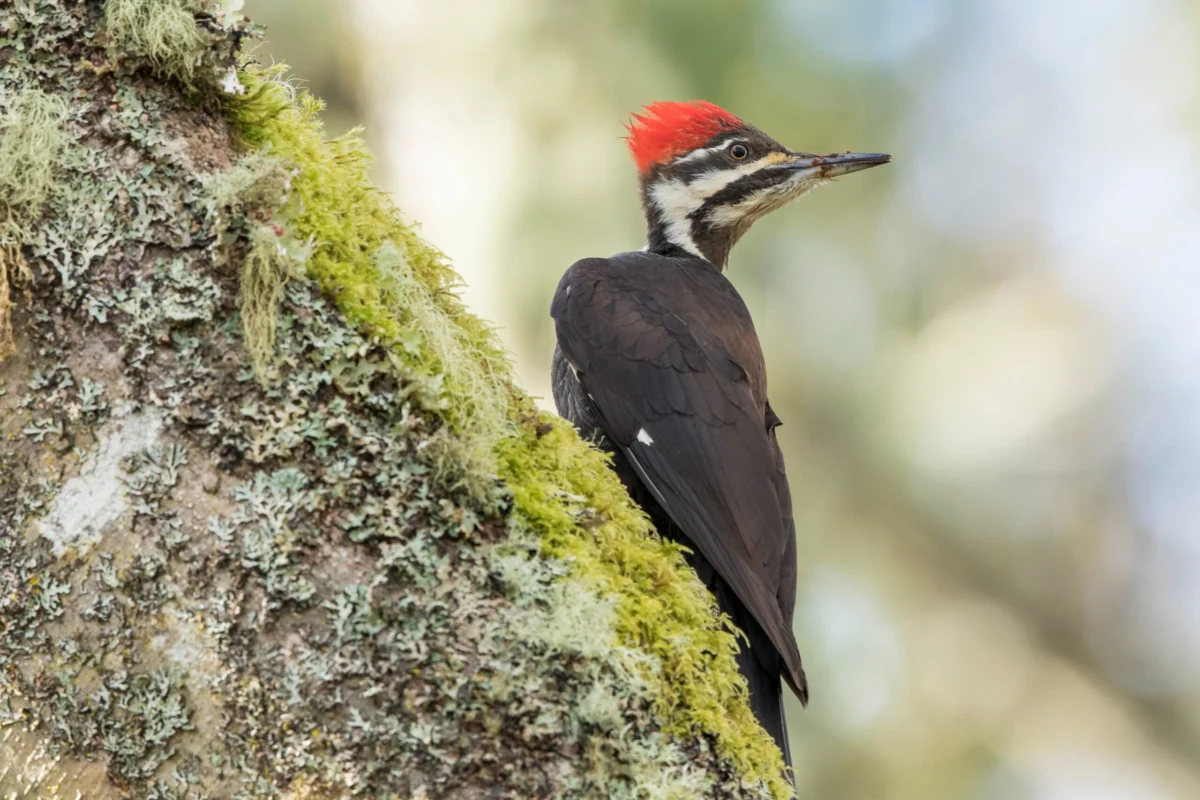
The ecological benefits stemming from GNA projects are far-reaching. Restored woodlands and watersheds provide essential habitats for migratory birds, such as the Pileated Woodpecker (as featured in the Audubon Photography Awards photo), native plants, diverse fish populations, and crucial pollinators. By reducing habitat fragmentation and creating more resilient, connected landscapes, GNA initiatives enable wildlife to better adapt to the stresses of a changing climate. Improved forest health also contributes to cleaner air and water, enhanced carbon sequestration, and a reduction in the spread of diseases.
Beyond ecological gains, the GNA yields significant economic and social benefits. By repairing roads and recreation sites, these projects ensure continued public access to national forests, supporting a thriving outdoor recreation industry that generates billions of dollars annually and sustains countless local businesses, from outfitters to hospitality providers. The work itself creates local jobs in forestry, conservation, and construction sectors, injecting capital into rural economies. Furthermore, by mitigating risks like wildfire and flooding, GNA projects enhance public safety and protect private property adjacent to federal lands, fostering stronger, more secure communities.
Addressing Climate-Driven Crises: GNA as a Resilience Tool
In an era defined by accelerating climate change, the GNA has become an increasingly critical tool for building resilience into America’s natural systems. As mentioned, the West faces longer, more intense wildfire seasons. GNA-enabled fuel reduction projects, such as prescribed burns and mechanical thinning, are not just about preventing fires but about restoring a natural fire regime, making forests healthier and more resistant to extreme events. In the East, where hurricanes and extreme rainfall events are becoming more common, GNA agreements facilitate rapid response and recovery, helping forests and infrastructure absorb and rebound from these shocks. The ongoing work in North Carolina following Hurricane Helene is a prime example of this proactive resilience-building.
Even in regions like the Upper Midwest, where challenges manifest differently – through changing forest compositions, invasive species pressures, and the need for adaptive silviculture – the GNA provides a framework for cooperative action. Maintaining a healthy mix of young and older forests, for instance, enhances biodiversity and ensures a robust ecosystem capable of adapting to new conditions. The shared stewardship philosophy inherent in the GNA is precisely what is needed to address these complex, region-specific climate impacts. No single agency, no matter how large or well-resourced, can tackle these monumental challenges alone. The GNA facilitates the pooling of expertise, crews, and funding across jurisdictions, allowing communities to respond faster, recover more effectively, and proactively manage their natural resources for a sustainable future.
The Future of Forest Management: Bipartisan Support and Continued Expansion
The Good Neighbor Authority, while rarely making national headlines, stands as one of the clearest examples of government working pragmatically and effectively. It embodies a less siloed, more cooperative, and profoundly results-oriented approach to land management. The bipartisan support it enjoys in Congress is a testament to its practical utility and broad appeal, demonstrating that environmental policy can be a realm of consensus rather than division. The ongoing discussions about expanding GNA’s scope in the next Farm Bill signal a collective recognition of its vital role in modern conservation.
As the North Carolina agreement illustrates, GNA projects can offer a blueprint for how to buffer forests from increasingly common extreme weather events, enhance ecological health, and safeguard local economies. Restored woodlands and watersheds are not just aesthetic improvements; they are foundational to supporting migratory birds, native plants, fish populations, and pollinators. Reconnected landscapes reduce fragmentation, allowing wildlife to adapt more effectively to a changing climate. Public access improvements mean more people can experience nature firsthand, fostering a deeper appreciation for conservation. The underlying principle that guides the GNA is both simple and profound: shared landscapes require shared responsibility. In an increasingly complex world, this cooperative model offers a beacon of hope for the future of America’s cherished national forests.
