
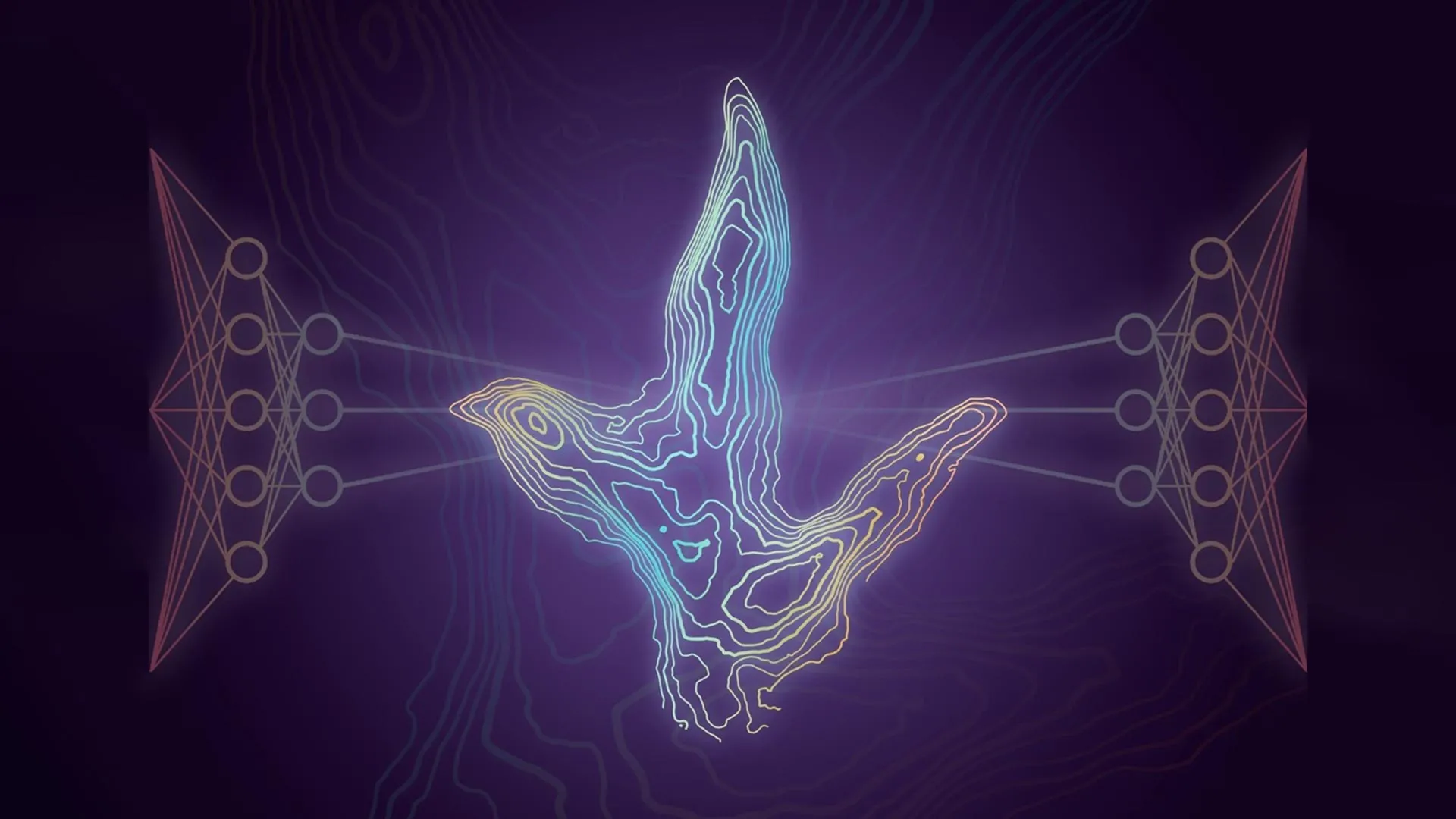
A groundbreaking application powered by artificial intelligence (AI) is transforming the field of ichnology, offering scientists and the public an unprecedented method to identify dinosaur footprints dating back millions of years. This innovative technology, detailed in a recent study, promises to unravel long-standing mysteries surrounding fossil tracks that have historically posed significant challenges to paleontological researchers. By providing an immediate, data-driven analysis of ancient impressions, the DinoTracker app marks a pivotal shift in how we understand prehistoric life and the creatures that roamed Earth.
The Enduring Enigma of Ancient Tracks: Challenges in Ichnology
For centuries, paleontologists have meticulously studied fossilized footprints, known as ichnofossils, as invaluable windows into the behavior, locomotion, and environments of extinct animals. Unlike skeletal remains, which offer insights into anatomy, trace fossils like footprints provide direct evidence of how dinosaurs moved, interacted with their surroundings, and even their social structures. However, the interpretation of these ancient imprints has always been fraught with difficulty. The field of ichnology, the specialized study of trace fossils, often grapples with a fundamental problem: associating a specific track with its maker.
The challenges are multifaceted. Over millions of years, the original shape of a footprint can be drastically altered by geological processes such as erosion, compression, and sediment infill – a process known as taphonomy. A sharp, distinct impression left by a dinosaur’s foot in soft mud can become distorted, flattened, or obscured as it fossilizes. This means that two footprints from the same dinosaur species, made under slightly different environmental conditions or preserved differently, might appear to be from entirely different animals. Conversely, tracks from different species might converge in appearance due to similar foot anatomies or preservation biases, leading to misidentification.
Paleontologists have long debated the origins of various tracks. Some imprints clearly suggest bipedal meat-eating predators (theropods), while others point to massive, four-legged plant-eaters (sauropods or ornithopods). Yet, many tracks have remained ambiguous, leading to vigorous scientific discussions and, at times, inconclusive classifications. The subjective nature of human interpretation, coupled with the inherent variability of fossil preservation, has often introduced bias into traditional methods, particularly when dealing with uncertain or disputed track identities. This has created a significant bottleneck in ichnological research, hindering a more comprehensive understanding of dinosaurian ecosystems.
Bridging the Gap: The Genesis of DinoTracker and AI Integration
To overcome these deeply entrenched challenges, a collaborative research team, spearheaded by the Helmholtz-Zentrum research centre in Berlin and working in conjunction with the University of Edinburgh, embarked on a mission to harness the power of artificial intelligence. Their goal was to develop an unbiased, data-driven system capable of recognizing the subtle yet crucial variations in dinosaur footprints that often elude human observation or traditional analytical methods.
The project culminated in the creation of DinoTracker, an AI-powered application designed to make sophisticated ichnological analysis accessible and instantaneous. The core innovation lies in its advanced algorithms, which enable computers to autonomously learn and identify the intricate morphological differences within dinosaur footprints. This represents a significant departure from previous methodologies that relied on manually curated computer databases, where human experts had to pre-define links between specific footprint types and known dinosaur species. While useful, such manual systems were inherently susceptible to the biases and uncertainties inherent in human classification. The AI approach, by contrast, seeks to identify patterns and features objectively, free from preconceived notions.
Machine Learning at Work: Training the Algorithm’s Eye
The effectiveness of any AI system hinges on the quality and quantity of its training data. For DinoTracker, the research team meticulously compiled a vast and diverse dataset. The AI system was initially trained on nearly 2,000 real fossil footprints, each meticulously documented and, where possible, assigned to a known dinosaur group by human experts. However, recognizing the limitations of relying solely on existing, often imperfectly preserved, fossil records, the team took a crucial step further. They augmented this dataset with millions of additional simulated examples.
These simulated footprints were not merely digital copies; they were intelligently generated variations designed to reflect the realistic changes that occur during the preservation process. The simulations incorporated factors such as different levels of compression in the substrate, varying degrees of edge displacement as the foot was withdrawn, and diverse sediment consistencies. This comprehensive training allowed the AI to develop a robust understanding of how a single dinosaur’s foot could produce a wide spectrum of track morphologies under different conditions, and critically, how to distinguish these variations from those genuinely indicative of a different species. This rigorous training regime equipped the AI with an unprecedented ability to discern subtle patterns and structural nuances, enabling it to ‘learn’ the complex taxonomy of dinosaur footprints without human intervention. The underlying architecture likely involved convolutional neural networks (CNNs), which are particularly adept at image recognition tasks, allowing the system to process visual data from photos or drawings of footprints.
Unpacking the AI’s Method: Deciphering Ancient Signatures
Once trained, the AI model developed an acute ability to recognize and differentiate eight key morphological features that distinguish one footprint from another. These critical identifiers included metrics such as the degree of toe spread, the precise positioning of the heel, the total surface area of the foot that made contact with the ground, and the distribution of weight across various parts of the foot during locomotion. By meticulously analyzing these parameters, the system could construct a detailed "fingerprint" for each track.
After identifying these intrinsic variations, the AI system then compared new, unclassified footprints with its vast knowledge base of known fossil examples. Through sophisticated pattern matching and statistical analysis, it could predict, with a high degree of confidence, which type of dinosaur most likely made the tracks. When evaluated against classifications made by experienced human paleontologists, the algorithm demonstrated remarkable accuracy, matching expert classifications approximately 90 percent of the time. This impressive performance extended even to species that are widely considered controversial or exceptionally difficult to identify using traditional methods, underscoring the AI’s capacity to resolve long-standing ichnological ambiguities. The objectivity of the AI’s analysis helps to reduce the inherent bias that can sometimes influence human interpretation, particularly when dealing with incomplete or ambiguous data.
Revolutionary Discoveries: Rewriting Evolutionary Timelines and Unveiling New Species
Beyond its impressive accuracy, the DinoTracker AI has already yielded profound and unexpected scientific insights, challenging established paradigms and offering new clues to ancient life.
One of the most striking findings emerged from the analysis of tracks dating back more than 200 million years, placing them firmly in the Late Triassic period. The AI detected startling similarities between certain dinosaur footprints from this era and the feet of both extinct and modern bird species. This discovery holds immense implications for avian evolution. The prevailing scientific consensus, largely based on skeletal fossil evidence like Archaeopteryx from the Late Jurassic (around 150 million years ago), suggests that birds emerged much later. If these ancient footprints indeed belong to early avian ancestors, it could mean that birds evolved tens of millions of years earlier than scientists have previously believed, pushing back the timeline significantly into the Triassic.
The research team prudently offered two main interpretations for this surprising link. One possibility is the direct evolutionary connection: that these Triassic tracks represent some of the earliest known bird-like dinosaurs or even proto-birds. The alternative, a possibility rooted in evolutionary convergence, suggests that some early dinosaur species simply happened to possess feet that closely resembled avian feet due to similar functional requirements or anatomical coincidences, without necessarily being direct ancestors of modern birds. Regardless of the precise interpretation, the AI’s ability to identify such subtle, cross-taxa similarities opens new avenues of inquiry into the origins of avian flight and the diversification of dinosaur lineages.
The system also offered invaluable new clues about the mysterious footprints found on the Isle of Skye in Scotland. These tracks, preserved in the muddy edge of an ancient lagoon around 170 million years ago during the Middle Jurassic period, have puzzled scientists for decades. The remote location and challenging preservation conditions of the Skye sites have long made their interpretation particularly difficult. However, the AI’s analysis provided a compelling new hypothesis: these footprints may have been left by some of the oldest known relatives of duck-billed dinosaurs, scientifically known as hadrosaurs.
Hadrosaurs were a highly successful and diverse group of herbivorous dinosaurs, famous for their distinctive "duck bills" and large herds. They flourished primarily during the Late Cretaceous period, making this potential Middle Jurassic identification exceptionally significant. If confirmed, these Scottish tracks would represent among the earliest examples of this important dinosaur group identified anywhere in the world, pushing back their evolutionary emergence by tens of millions of years and offering critical insights into their early diversification and geographical spread. The discovery on the Isle of Skye, a region already renowned for its rich dinosaur fossil record, further solidifies its status as a key site for understanding Jurassic ecosystems.
Beyond the Laboratory: Democratizing Paleontology Through Citizen Science
One of the most exciting implications of the DinoTracker app extends beyond academic research. The developers envision the technology as a powerful tool for citizen science, democratizing access to paleontological research. By enabling researchers and dinosaur enthusiasts alike to upload photos or drawings of footprints via a mobile phone and receive an immediate analysis, the app empowers a broader community to participate in scientific discovery.
This accessibility could lead to an unprecedented influx of data from amateur fossil hunters and members of the public who might discover tracks in their local areas. Such collective input, often referred to as "crowdsourcing science," has the potential to significantly accelerate the discovery and documentation of new fossil sites and individual footprints. Moreover, it fosters public engagement with science, transforming passive interest into active participation and education. Dr. Gregor Hartmann of Helmholtz-Zentrum research center emphasized this aspect, stating, "Our method provides an unbiased way to recognize variation in footprints and test hypotheses about their makers. It’s an excellent tool for research, education, and even fieldwork." This capacity to involve a wider audience ensures that valuable ichnofossil data, which might otherwise remain unrecorded, can contribute to the global scientific understanding of dinosaur life.
Voices from the Forefront of Discovery: Expert Perspectives
The scientific community has reacted positively to the DinoTracker app and its initial findings. Professor Steve Brusatte, Personal Chair of Palaeontology and Evolution at the University of Edinburgh’s School of GeoSciences, a leading figure in dinosaur research, lauded the study’s significance. "This study is an exciting contribution for paleontology and an objective, data-driven way to classify dinosaur footprints – something that has stumped experts for over a century," he commented. His statement underscores the long-standing challenge that the AI now addresses, providing a robust, impartial framework for classification where subjective interpretation once dominated.
Professor Brusatte further highlighted the profound implications of the AI’s discoveries, particularly concerning avian evolution. "It opens up exciting new possibilities for understanding how these incredible animals lived and moved, and when major groups like birds first evolved. This computer network might have identified the world’s oldest birds, which I think is a fantastic and fruitful use for AI." These remarks encapsulate the transformative potential of AI in paleontology, not just for confirming known data but for generating entirely new hypotheses that could redefine major evolutionary narratives.
The Future of Ichnology and AI in Scientific Discovery
The development of DinoTracker represents a significant milestone at the intersection of paleontology and artificial intelligence. By leveraging machine learning to process and interpret complex geological and biological data, researchers have created a tool that not only solves persistent problems but also uncovers entirely new avenues of scientific inquiry. The ability to quickly and accurately classify footprints, even those that are ambiguous or controversial, promises to accelerate the pace of ichnological research, allowing scientists to focus more on broader ecological and evolutionary questions rather than the arduous task of initial identification.
This project stands as a testament to the increasing role of AI in scientific discovery, demonstrating its capacity to move beyond data processing to generate novel insights and challenge long-held assumptions. The broader impact of such technologies extends to fields beyond paleontology, suggesting a future where AI-driven analysis will become indispensable across various scientific disciplines, from geology and biology to astronomy and medicine. The DinoTracker app is more than just a tool for identifying ancient footprints; it is a harbinger of a new era of accelerated, democratized, and data-driven scientific exploration, offering an exciting glimpse into the past and a powerful vision for the future of research.
The study detailing the DinoTracker app and its findings was published in the prestigious scientific journal PNAS (Proceedings of the National Academy of Sciences). Funding for this pioneering research was provided by a consortium of institutions, including the innovations pool of the BMBF-Project: Data-X, the Helmholtz project ROCK-IT, the Helmholtz-AI project NorMImag, the National Geographic Society, and the Leverhulme Trust, underscoring the collaborative and interdisciplinary nature of this scientific breakthrough.
