
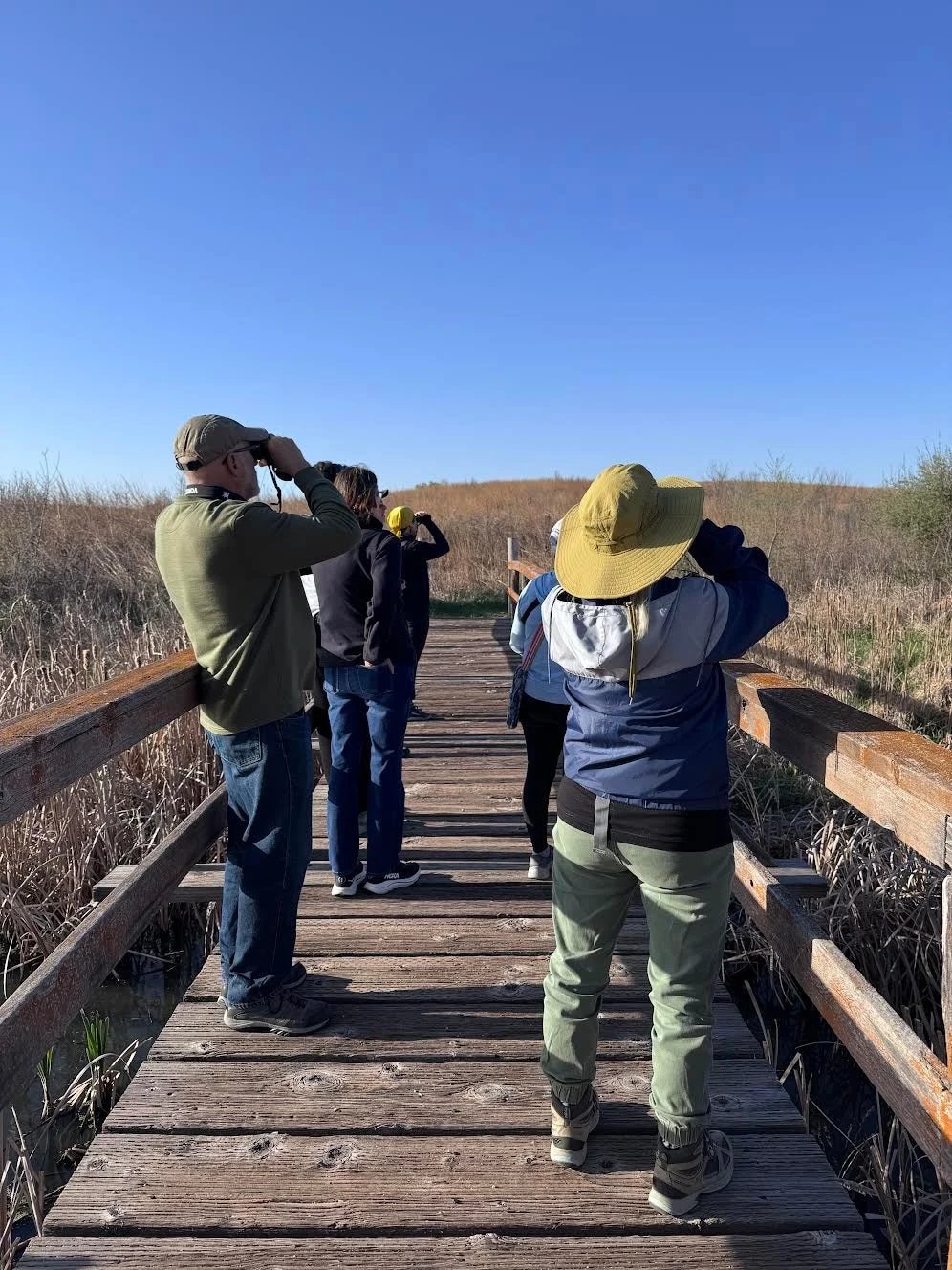
A recent April morning at the Spring Creek Prairie Audubon Center, bathed in brilliant sunshine and unseasonably warm temperatures hovering around 60 degrees Fahrenheit, drew a dedicated group of ten bird enthusiasts. While the pleasant weather undoubtedly enhanced the experience, the primary allure for attendees was the exceptional avian diversity on display, characteristic of the peak spring migration season. This gathering marked another successful installment of the "Third Tuesday Bird Outing," a regular monthly program designed to connect the community with the natural wonders of the prairie, led by Kevin Poague, the Center’s Operations Manager. Poague highlighted the dynamic nature of spring, noting that the chances of encountering new avian visitors increase almost daily as various species undertake their epic journeys along the Central Flyway.
The Spring Creek Prairie Audubon Center, a vital 6,100-acre tallgrass prairie preserve located just south of Lincoln, Nebraska, serves as a critical stopover and breeding ground for hundreds of bird species. Its mission extends beyond preservation to include environmental education and community outreach, making events like the "Third Tuesday Bird Outing" integral to fostering a deeper understanding and appreciation for the natural world. The Center’s diverse habitats, encompassing pristine prairie, wetlands, and riparian woodlands, create a mosaic of ecosystems that support an impressive array of flora and fauna, particularly during the biannual migrations.
The Dynamics of Spring Migration at Spring Creek Prairie
April represents a pivotal period in the annual bird migration cycle across North America. As winter’s grip recedes, millions of birds begin their northward journey from warmer southern climes, heading towards their breeding grounds. Nebraska, situated squarely within the Central Flyway, one of four major migratory bird routes on the continent, becomes a bustling corridor for these travelers. Spring Creek Prairie, with its abundant food sources and sheltered habitats, offers a crucial refueling and resting point. Kevin Poague elaborated on this phenomenon during the outing, explaining how changes in weather patterns, food availability, and instinctual cues trigger these vast movements. "Spring migration is a truly dynamic period here," Poague explained. "Every day brings new possibilities, and our prairie serves as a vital refueling station for birds making incredible journeys." He emphasized the importance of undisturbed natural areas like Spring Creek Prairie, not only for the birds themselves but also for the critical scientific data they provide regarding population trends and ecosystem health. The Audubon Society’s broader conservation efforts are deeply rooted in understanding these migratory patterns and protecting the habitats essential for their success.
The morning’s bird list quickly grew, encompassing both resident species and early migrants. Among the first confirmed sightings were a melodic Song Sparrow, its intricate tune a hallmark of the prairie undergrowth; a vibrant Tree Swallow, darting gracefully overhead in pursuit of insects; and the distinct silhouette of a Wood Duck, perhaps nesting in one of the mature trees along the creek. The powerful drumming of a Hairy Woodpecker echoed from a nearby copse, while a nimble White-breasted Nuthatch spiraled head-first down a tree trunk, showcasing its unique foraging style. These initial observations set a vibrant tone for the rest of the morning, underscoring the rich biodiversity of the preserve.
Participant Perspectives: A Shared Passion for Avian Wonders
The group of birders, ranging from seasoned enthusiasts to relative newcomers, shared a common thread of curiosity and reverence for nature. Renee, a local bird enthusiast, articulated the magnetic pull of the migration season. "I try to come to the prairie during migration to see the different birds," she stated, her gaze sweeping across the vast expanse. "I love Spring Creek’s natural habitat and all the birds it draws. The opportunity to witness new arrivals and observe their behaviors is unparalleled." Her sentiment highlights a broader appeal of birding: the thrill of discovery and the deep connection forged with an undisturbed ecosystem. For many, the prairie is not merely a landscape but a living, breathing sanctuary, offering moments of profound tranquility and wonder.
As the group moved deeper into the prairie, more species were added to the growing tally. A brilliantly plumed Pheasant flushed from tall grasses, a flash of iridescent color. The iconic call of a Red-winged Blackbird announced its presence from the wetlands, a characteristic sound of spring. An Eastern Meadowlark, a true emblem of the prairie, delivered its flute-like song from atop a fence post. The secretive Brown Thrasher was spotted flitting through dense shrubs, while a boldly patterned Northern Flicker showcased its undulating flight pattern. Each sighting brought a murmur of excitement and often, an insightful comment from Poague or a more experienced birder, enriching the collective knowledge of the group.
Marlin, another participant, shared a vivid anecdote that underscored the profound impact birds can have on human experience. He recounted a memorable motorcycle trip to Alaska, where he found himself waiting for a ferry on the Chilkat River, surrounded by "hundreds of bald eagles — more than he could count." He described it as "a great place to spend 90 minutes," a testament to the awe-inspiring power of large-scale wildlife encounters. His story resonated with the group, illustrating how birding extends beyond identification to encompass moments of sheer wonder and connection to the wild, leaving indelible memories.
The latter part of the morning continued to yield impressive sightings. A cheerful Eastern Bluebird was observed, its azure plumage a stark contrast against the budding greenery. A ubiquitous Brown-headed Cowbird made an appearance, alongside the bright yellow flash of a Goldfinch. The intricate patterns of a Yellow-rumped Warbler, often an early migrant, captivated the birders, while the industrious House Wren added its bubbling song to the chorus. These diverse sightings underscored the rich tapestry of avian life supported by the varied habitats within Spring Creek Prairie.
Ned, a self-described "new-ish convert" to birding, articulated the profound joy he has discovered in this pursuit. His enthusiasm was infectious as he laughed, "What don’t I love about birding?" He went on to describe his deep appreciation for "their songs, their bright colors, the melody of a bobolink." Originally from Pittsburgh, a city once notorious as "Smoke City" due to decades of heavy industrial pollution, Ned’s journey to birding represents a powerful personal transformation. He recalled a pivotal moment during his studies at Cornell College in New York, hearing the distinctive honks of Canada geese overhead as they passed his classroom. That seemingly simple encounter had a lasting impact. "I’m away from Pittsburgh, in nature, where I need to be," he recalled thinking, reflecting on the restorative power of natural environments. His experience highlights how birding can offer an escape, a sense of belonging, and a deep connection to the elemental rhythms of the natural world, particularly for those who grew up in less pristine surroundings.
The Broader Impact: Conservation, Community, and Well-being
The sense of being "where you need to be" is a sentiment frequently echoed by visitors to Spring Creek Prairie Audubon Center. This protected expanse offers not just a haven for birds but also a sanctuary for people, providing opportunities for reflection, education, and rejuvenation. The Center’s commitment to conservation is intrinsically linked to these broader benefits for both ecosystems and human communities.
Additional species observed during the productive morning further illustrated the rich biodiversity. An Eastern Phoebe was seen performing its characteristic tail-bobbing motion, while the familiar cooing of a Mourning Dove provided a soothing backdrop. A cheerful House Finch added its warbling song, and a stately Cormorant was observed gliding over the wetlands, showcasing the aquatic life supported by the prairie. Finally, the ever-present honking of a Canada Goose underscored the enduring presence of these iconic birds.
By the conclusion of the "Third Tuesday Bird Outing," the April birders had successfully identified and enjoyed more than 30 distinct species. This impressive tally is a testament to the ecological health of Spring Creek Prairie and the expertise of its staff and volunteers. Such events are crucial for monitoring bird populations, engaging the public in citizen science, and raising awareness about the importance of habitat preservation. The data collected by birders, even during informal outings, contributes to larger scientific efforts to track migration patterns, understand population dynamics, and identify conservation priorities.
Beyond the scientific contributions, these monthly birding walks foster a strong sense of community. Participants share knowledge, develop new skills, and build lasting connections with fellow nature enthusiasts. The experience of witnessing the intricate beauty and resilience of avian life, set against the backdrop of a thriving prairie, is profoundly enriching. It serves as a reminder of the delicate balance of ecosystems and the vital role that protected areas play in sustaining biodiversity. The mental and physical health benefits of spending time in nature, often referred to as "forest bathing" or "nature therapy," are increasingly recognized, and birding offers a perfect conduit for these restorative experiences. The quiet observation, the focus required for identification, and the physical activity of walking all contribute to enhanced well-being.
The Spring Creek Prairie Audubon Center continues to invite the public to join its monthly birding walks, held from 8:00 AM to 10:00 AM on the third Tuesday of each month, with the program extending through October. These outings provide an invaluable opportunity for individuals of all experience levels to immerse themselves in the natural world, learn about local avian populations, and contribute to the ongoing efforts of conservation. The unanimous sentiment among participants is clear: engaging with the prairie and its feathered inhabitants is an experience that consistently delivers joy, education, and a profound sense of connection, leaving participants grateful for the opportunity.
