
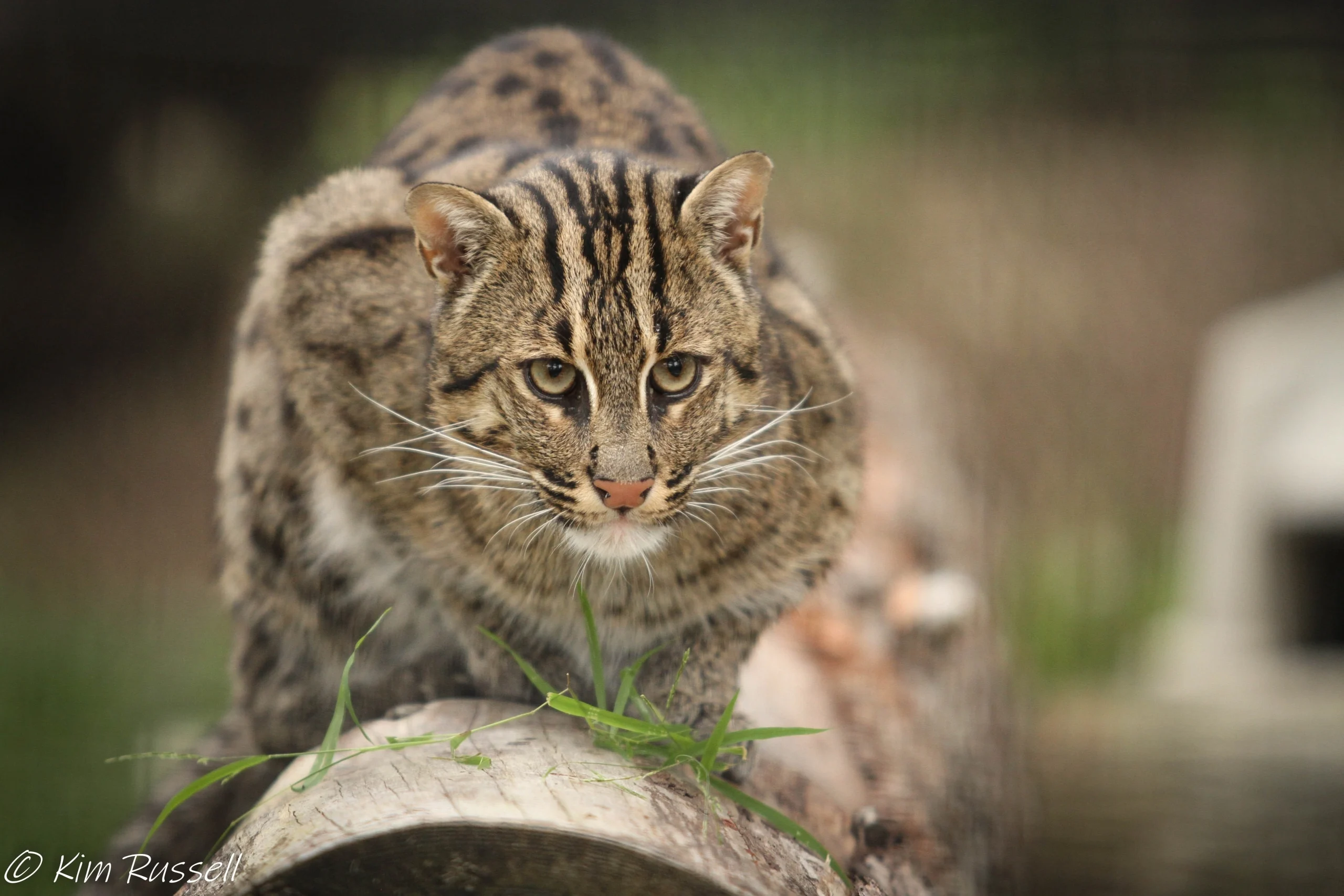
March 3rd marks the annual observance of World Wildlife Day, a global event dedicated to celebrating and raising awareness for the world’s diverse fauna and flora. This year’s theme, "Partnerships for Wildlife Conservation," underscores the critical need for collaborative efforts to protect endangered species and their habitats. At the forefront of this vital initiative is the story of River, a charismatic six-year-old fishing cat residing at the Hawk Creek Wildlife Center, whose presence serves as a powerful ambassador for her species and a catalyst for conservation action.
The fishing cat (Prionailurus viverrinus) is a species facing significant threats, reflected in its vulnerable status on the International Union for Conservation of Nature (IUCN) Red List. Population declines are a stark reality, exacerbated by a general lack of public awareness regarding their existence and the challenges they confront in their natural environments. River, through her role as an ambassador animal, is instrumental in bridging this knowledge gap, inspiring thousands of individuals to develop a deeper understanding and appreciation for fishing cats and the urgent conservation needs they represent. Donations made to Hawk Creek Wildlife Center on World Wildlife Day directly contribute to ongoing fishing cat conservation efforts, providing crucial resources for research, habitat preservation, and educational outreach.
The Elusive Fishing Cat: A Glimpse into a Threatened World
Fishing cats are semi-aquatic felines native to Southeast Asia, inhabiting mangrove swamps, wetlands, and riverine areas. Their distinctive adaptations, including partially webbed paws and a thick, waterproof coat, are perfectly suited for their primary hunting strategy: catching fish. However, these specialized environments are increasingly under pressure from human activities. Habitat loss and degradation due to agricultural expansion, aquaculture, urbanization, and pollution are the most significant drivers of their declining populations. Furthermore, fishing cats are often victims of retaliatory killing by local communities who perceive them as threats to livestock or fisheries, and they are also susceptible to poaching for their skins and body parts.
The secretive nature of fishing cats makes them exceptionally difficult to study in the wild. Their nocturnal habits and preference for dense, often inaccessible habitats mean that dedicated researchers must employ advanced techniques and significant patience to gather meaningful data. This inherent elusiveness poses a substantial hurdle for conservationists seeking to understand population dynamics, ecological requirements, and threats accurately. Without this fundamental knowledge, developing effective conservation strategies becomes an uphill battle.
A Landmark Collaboration: Bridging Research and Conservation
The significance of River’s role as an ambassador is amplified by the recent visit of the founder of the Fishing Cat Conservancy to Hawk Creek. This visit represents a crucial intersection of practical conservation and scientific inquiry. The opportunity for the founder to directly observe and study River’s behavior provided invaluable insights. Despite the inherent challenges of observing any wild animal, particularly one as elusive as a fishing cat, the controlled environment of the wildlife center allowed for detailed observation of River’s movements and her remarkable fishing techniques. The founder was able to meticulously document how River utilizes her paws, a key adaptation for her aquatic hunting, providing empirical data that is exceedingly difficult to obtain in the wild.
This collaborative approach, where ambassador animals like River serve as living laboratories, is a cornerstone of modern conservation. By studying the behaviors and physiological responses of captive individuals, scientists can extrapolate vital information that informs conservation programs for their wild counterparts. This includes understanding dietary needs, preferred environmental conditions, social behaviors, and stress indicators. Such knowledge is indispensable for designing effective breeding programs in captivity, managing existing wild populations, and restoring or creating suitable habitats. The data gathered from River’s study is expected to contribute directly to the Fishing Cat Conservancy’s ongoing efforts to protect these animals in their natural ranges.
The Fishing Cat Conservancy: A Multifaceted Approach to Preservation
The Fishing Cat Conservancy is actively engaged in a comprehensive strategy to safeguard the future of fishing cats. Their work encompasses several critical areas:
Establishing Nature Preserves
A primary focus of the Conservancy is the establishment and protection of dedicated nature preserves in key fishing cat habitats. These preserves aim to safeguard remaining populations by providing safe havens free from the immediate pressures of habitat destruction and direct human conflict. The selection of these sites is guided by scientific data on fishing cat distribution, breeding grounds, and critical corridors for movement. These preserves are not merely protected areas but are managed to maintain the ecological integrity of the wetland and riverine ecosystems that fishing cats depend upon.
Partnerships with Landowners
Recognizing that natural habitats rarely adhere to political boundaries, the Fishing Cat Conservancy actively seeks to forge partnerships with private landowners whose properties encompass or abut important fishing cat territories. This collaborative model involves working with farmers, foresters, and other landholders to implement conservation-friendly land management practices. This can include restoring degraded wetland areas, establishing buffer zones around waterways, reducing pesticide and herbicide use, and creating wildlife corridors. By incentivizing and supporting landowners in these efforts, the Conservancy aims to expand the effective range of protected habitats and foster a sense of shared responsibility for wildlife conservation.
Inspiring Change Through Education and Advocacy
Beyond direct conservation interventions, the Fishing Cat Conservancy places a strong emphasis on education and advocacy. Through outreach programs, public awareness campaigns, and the dissemination of scientific findings, they strive to foster a deeper understanding and appreciation for fishing cats among local communities, policymakers, and the global public. The goal is to shift perceptions from viewing fishing cats as pests to recognizing them as integral components of healthy ecosystems. This includes highlighting the ecological services they provide, such as pest control within their natural environment and their role in maintaining the health of aquatic ecosystems.
Supporting Data and the Scale of the Challenge
The IUCN Red List assessment for the fishing cat highlights the severity of their conservation status. While precise global population figures are difficult to ascertain due to their elusive nature, estimates suggest a significant decline over recent decades. For instance, in some parts of their range, populations have reportedly decreased by over 30% in the last decade alone. This alarming trend is directly linked to the conversion of their wetland habitats, which are among the most threatened ecosystems globally. Wetlands are being drained for agriculture, aquaculture, and urban development at an unprecedented rate, often outpacing efforts to conserve them.
The economic value of healthy wetland ecosystems, which fishing cats inhabit, is substantial, encompassing water purification, flood control, and support for fisheries. The decline of species like the fishing cat serves as an indicator of the broader degradation of these vital natural resources. Furthermore, the interconnectedness of ecosystems means that the loss of a top predator can have cascading effects on other species and the overall health of the environment.
Timeline of Conservation Efforts and Future Outlook
While specific historical timelines for fishing cat conservation are complex and vary by region, the establishment of dedicated conservation organizations and the formal listing of the species on the IUCN Red List represent key milestones. The formal recognition of the fishing cat’s vulnerable status in the early 2000s, followed by subsequent reassessments, has spurred increased research and conservation initiatives. The formation of the Fishing Cat Conservancy and its ongoing partnerships, like the one with Hawk Creek Wildlife Center, represent a more recent and intensified phase of dedicated, on-the-ground conservation action.
The current focus on "Partnerships for Wildlife Conservation" signifies a maturation of the conservation movement, recognizing that isolated efforts are insufficient. The success of initiatives like the one involving River and the Fishing Cat Conservancy hinges on the ability to build and sustain these collaborative networks. The future outlook for fishing cats depends heavily on the expansion of protected areas, the successful implementation of community-based conservation programs, and the continued dedication of organizations like Hawk Creek and the Fishing Cat Conservancy to raise awareness and secure funding for critical research and habitat restoration projects.
Broader Impact and Implications of Partnership
The success of partnerships, exemplified by the collaboration between Hawk Creek Wildlife Center and the Fishing Cat Conservancy, has far-reaching implications for wildlife conservation beyond the fishing cat. This model demonstrates how:
- Captive breeding programs can directly contribute to wild conservation: Ambassador animals provide invaluable data and can serve as a genetic reservoir.
- Cross-organizational collaboration enhances impact: Pooling resources, expertise, and networks amplifies the effectiveness of conservation efforts.
- Public engagement is a powerful tool: Educating and inspiring the public can translate into tangible support for conservation initiatives.
- Habitat preservation is a shared responsibility: Engaging landowners and local communities is essential for long-term success.
The story of River is more than just a heartwarming tale of an ambassador animal; it is a testament to the power of collaboration in addressing complex conservation challenges. As World Wildlife Day reminds us, the fate of species like the fishing cat rests on our collective ability to forge strong partnerships and act decisively to protect the natural world. The ongoing work of organizations like the Fishing Cat Conservancy, supported by centers like Hawk Creek, offers a beacon of hope for the survival of these fascinating and threatened felines. Further information and opportunities to contribute can be found at fishcat.org.
Photo by Kim Russell
