

Woodpeckers, avian marvels of resilience and adaptation, are frequent and cherished visitors to backyard feeders, injecting a dose of entertaining activity into our outdoor spaces. Beyond their captivating presence, these birds, often referred to as "wondrous," possess an extraordinary array of biological and physical adaptations that enable them to thrive in what could be described as a life of perpetual, high-impact labor. Their existence, characterized by the relentless drumming against trees, highlights a remarkable evolutionary journey that allows them to withstand forces that would prove catastrophic to most other avian species, and indeed, even to humans.
The Science Behind the Drumming: A Masterclass in Avian Engineering
The act of excavating a cavity or drumming for communication involves a woodpecker striking a tree’s surface at astonishing speeds, often reaching up to 13 miles per hour. The resultant impact generates a force of approximately 10 Gs, a magnitude that would inflict severe brain trauma on most birds. For comparison, the human brain is estimated to be three times more susceptible to concussion at such speeds. The mental image of a bird repeatedly impacting a hard surface at full velocity conjures a sense of inevitable injury, yet woodpeckers not only survive but flourish.
Scientific inquiry into this phenomenon has revealed a suite of sophisticated adaptations that protect the woodpecker’s brain. A primary factor is their unique skull structure. Unlike the relatively rigid skulls of many birds, a woodpecker’s skull is composed of lightweight, spongy, and air-filled bone. This structure is not only exceptionally strong due to an intricate internal network of bony support struts but also remarkably effective at dissipating shock. Furthermore, a crucial aspect of their cranial design is the disproportionately small size of the brain relative to the skull’s volume. This creates minimal space for the brain to move or "rattle" within the cranial cavity during impact, significantly reducing the likelihood of concussive injury. This ingenious biological engineering allows them to endure the repeated concussive forces inherent in their foraging and communication behaviors.
Sustaining the Chisel: Bill Resilience and Self-Sharpening Mechanisms
The persistent pecking required for excavating nests, searching for insects, or communicating raises a logical question: why doesn’t a woodpecker’s bill wear down to a useless stub? While wear does occur, woodpeckers possess a remarkable regenerative capability at the tip of their bills. Specialized cells continuously replace the material lost through impact and abrasion. This constant renewal process ensures that the chisel-pointed bill remains robust and resilient. Moreover, the very act of striking hard surfaces contributes to a unique self-sharpening mechanism, maintaining the bill’s efficacy as a tool for their demanding lifestyle. This continuous repair and sharpening are vital for their survival, enabling them to access food sources hidden deep within tree bark and to excavate the precise cavities they need for nesting and roosting.
Environmental Protection: Natural Defenses Against Debris
The vigorous activity of woodpeckers in excavating wood inevitably creates a significant amount of airborne debris. To mitigate the risks associated with this flying material, woodpeckers have evolved their own sophisticated protective systems, akin to personal protective equipment for human workers.
-
Nasal Protection (The "Dust Mask"): Tufts of stiff, bristle-like feathers grow densely over their nostrils. These specialized feather structures act as a natural filter, preventing small wood particles and dust from entering the respiratory system during excavation. This is a critical adaptation, as inhaling such fine particulate matter could lead to respiratory distress or infection in many other creatures.
-
Ocular Protection (The "Safety Goggles"): Woodpeckers possess a unique anatomical feature: a transparent nictitating membrane, often referred to as a "third eyelid." This membrane can be rapidly drawn across the eye, much like a protective shield, to safeguard the cornea from flying debris. This rapid-reflex mechanism ensures that their vision, essential for navigating their arboreal environment and identifying food, remains uncompromised by the hazards of their work.
These specialized adaptations underscore the profound level of evolutionary refinement that woodpeckers have undergone to thrive in their niche. They are not merely birds that peck; they are highly specialized organisms engineered for a demanding and unique lifestyle.
Attracting These Resilient Wonders to Your Backyard
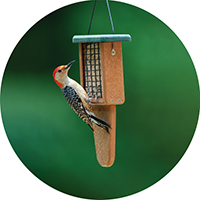
The captivating resilience and engaging behaviors of woodpeckers make them a highly desirable addition to any backyard bird sanctuary. Fortunately, attracting a variety of these fascinating species is achievable with the right food offerings. Wild Birds Unlimited (WBU) provides a range of specialized products designed to appeal to woodpeckers and other cavity-nesting birds.

-
High-Energy Suets and No-Melt Doughs: These calorie-dense foods are particularly attractive to woodpeckers, especially during colder months when natural insect populations dwindle. WBU’s suet cakes and no-melt doughs are formulated with essential fats and proteins to provide sustained energy.
-
Bark Butter Products: Developed by WBU founder John E. Porter, Bark Butter is a high-fat, peanut-based spread that mimics the natural food sources of many woodpecker species. It can be smeared on tree trunks or offered in specialized feeders, drawing birds that forage on bark.
-
Shelled Peanuts and Nut Blends: Peanuts are a favorite of many woodpecker species, including the Downy, Hairy, and Red-bellied Woodpeckers. WBU’s shelled peanuts and their proprietary TreeNutty® Plus Blend offer a nutritious and appealing option.
-
Specialized Seed Cylinders: The Woodpecker Cylinder is specifically designed to cater to the feeding habits of woodpeckers, often incorporating nuts, seeds, and suet in a compact, long-lasting format that can be hung from a feeder.
By offering these targeted food sources, backyard enthusiasts can provide woodpeckers with the sustenance they need to thrive, creating opportunities for close observation of their remarkable adaptations and behaviors. The presence of woodpeckers can serve as an indicator of a healthy backyard ecosystem, reflecting the availability of food sources and suitable nesting sites.

A Deeper Dive into the World of Woodpeckers
The allure of woodpeckers extends beyond their physical resilience. Their drumming, often perceived as mere noise, serves vital communication functions. It is used for territorial defense, attracting mates, and even warning of danger. The unique patterns and rhythms of these drumbeats can vary between species, acting as a form of avian signature.
The ecological role of woodpeckers is also significant. By excavating dead or diseased trees, they create cavities that are subsequently used by a multitude of other bird species, small mammals, and insects. This process of creating "snags" or standing dead trees contributes to forest health and biodiversity, making woodpeckers keystone species in many woodland ecosystems. Their larvae-hunting activities also help to control insect populations, including those that can be detrimental to tree health.
The study of woodpeckers has been ongoing for decades, with ornithologists and biologists continually uncovering new insights into their physiology, behavior, and evolutionary history. Research often involves detailed observation, acoustic analysis of drumming patterns, and sophisticated anatomical studies to understand their remarkable adaptations. The ongoing exploration of these birds continues to inform our understanding of avian evolution and the intricate relationships within natural environments.
Understanding the Implications for Conservation and Education
The widespread appeal of woodpeckers makes them excellent ambassadors for bird conservation and environmental education. Their readily observable behaviors and unique adaptations provide tangible examples of the wonders of the natural world, inspiring interest and engagement, particularly among younger audiences.
Organizations like Wild Birds Unlimited play a crucial role in this educational mission. By providing resources, expert advice, and accessible products for backyard bird feeding, they empower individuals to become active participants in supporting local bird populations. The podcast "Nature Centered," produced by WBU, further extends this reach, offering in-depth discussions on topics ranging from bird feeding best practices to the ecological significance of various species, including detailed episodes dedicated to the wonders of woodpeckers.

The information shared through such platforms not only fosters a greater appreciation for these birds but also highlights the importance of habitat preservation and the interconnectedness of ecosystems. As human development continues to impact natural landscapes, understanding the needs of species like woodpeckers becomes increasingly critical for effective conservation strategies.
A Look Ahead: Continued Fascination and Research
The study of woodpeckers is far from complete. Ongoing research promises to reveal even more about their complex social structures, migratory patterns (for some species), and the subtle nuances of their communication. The continued fascination with these tough, wondrous birds underscores their enduring appeal and their vital role in the natural world.
As backyard observers continue to fill their feeders with specialized foods, they contribute not only to the well-being of local woodpecker populations but also to a broader understanding and appreciation of avian resilience. The woodpecker, a symbol of persistence and ingenious adaptation, remains a captivating subject, reminding us of the extraordinary marvels that exist in the wild, often just beyond our windows. Their ability to thrive in the face of seemingly insurmountable challenges serves as a powerful testament to the enduring power of evolution and the remarkable diversity of life on Earth. The ongoing dialogue between scientists, educators, and the public ensures that these drumming wonders will continue to be studied, appreciated, and protected for generations to come.
